“What makes a heart?”
That was the first thing I ever asked Joeri Woudstra.
The context doesn’t really matter. All you need to know is that we’d just met. Friends of friends of friends. Aprilfest in Amsterdam. Somewhere between the ferris wheel, sangrias, and trading cigarettes, I decided it was the appropriate moment to pull a folded love letter out of my bag.
About 20 minutes earlier, I’d been sitting in a writing workshop where we were asked to write one.
What makes a heart? That was the opening line I’d landed on.
So naturally, I outsourced the question to someone I’d known for all of 6 minutes.
The conversation spiraled. Nostalgia. Music. Missing things before they’d even ended. Self-inflicted heartbreak for the fun of it. Just about everything and anything.
Somewhere between that conversation and making our way to the next stop, a karaoke bar, I mentioned Laak. I’d been wanting to go for months. Every audiophile friend I had seemed to agree that it was the best club in the Netherlands at the minute.
His friends casually informed me that it was his club.
Interesting.
A couple of weeks later, Joeri, who many people will know better as Torus, announced something that immediately felt like one of those events where you don’t even bother checking your calendar.
You just get the ticket.
A friend of mine once told me that The Hague is the birthplace of sad ambient boys.
I had absolutely no evidence to support that claim, but this certainly wasn’t disproving it. So naturally, I had to get to the bottom of it.
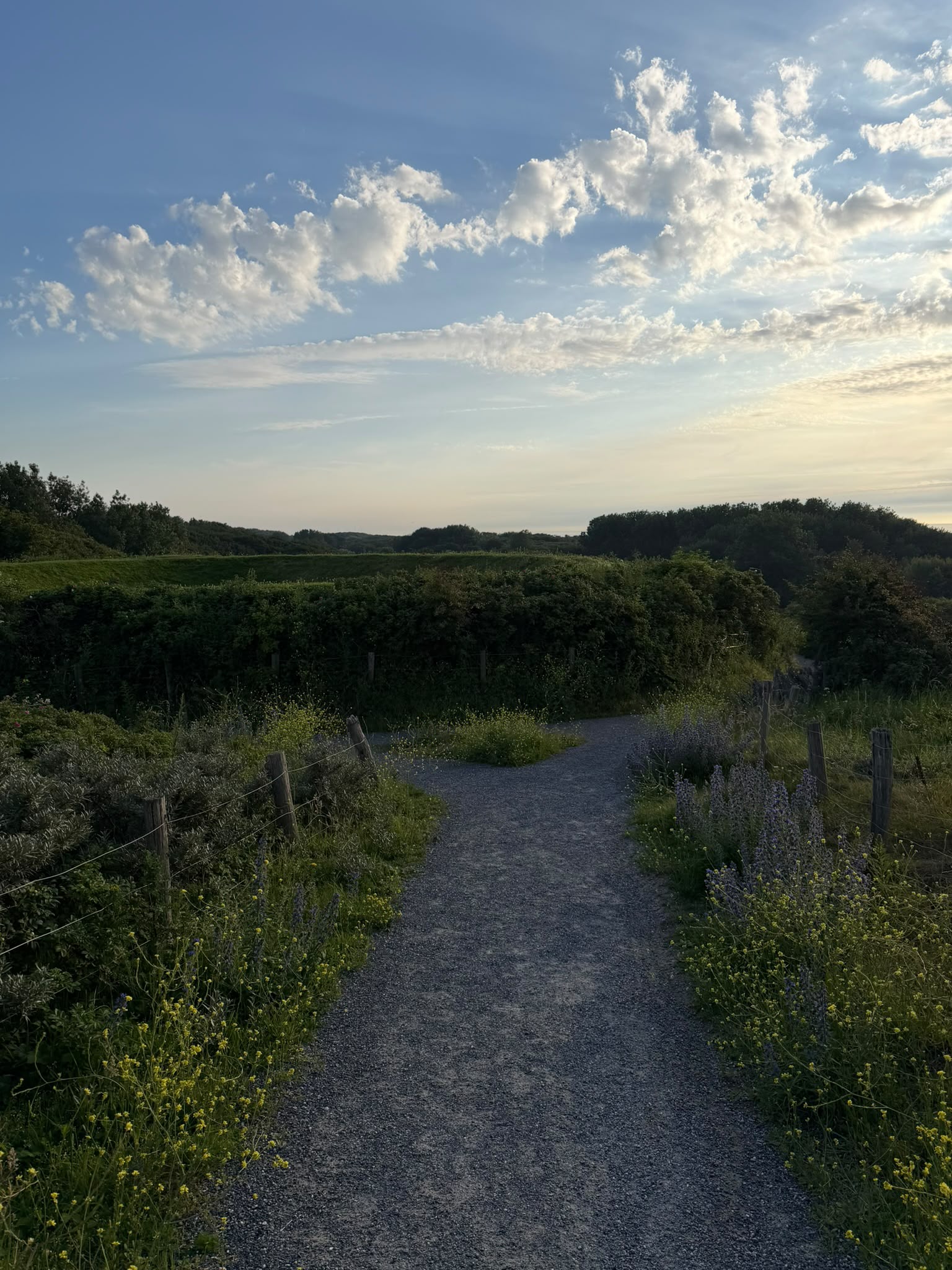
I got on the train.
Summer Solstice. A solitary adventure. That excitement that comes from knowing you’re probably about to experience something magical.
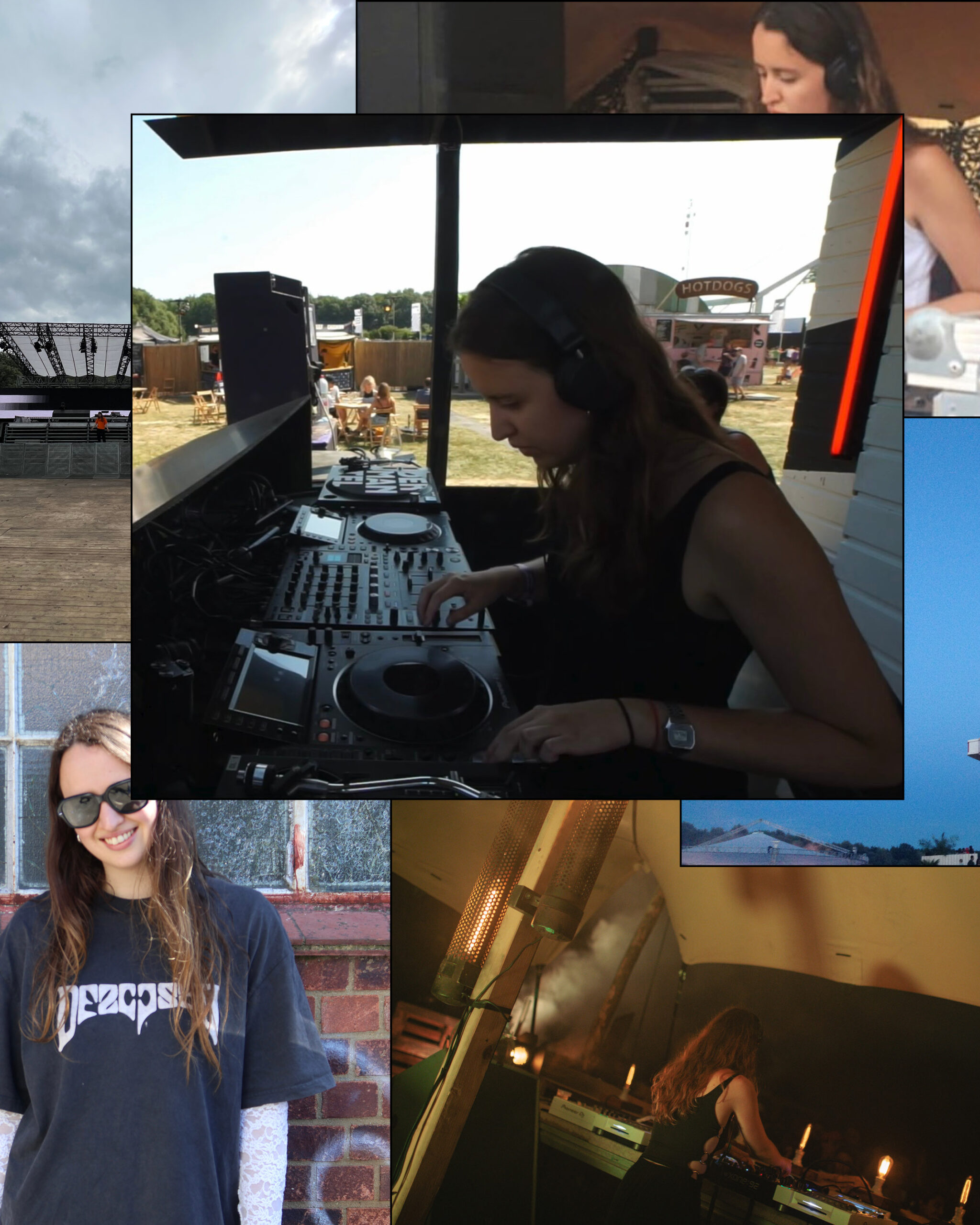
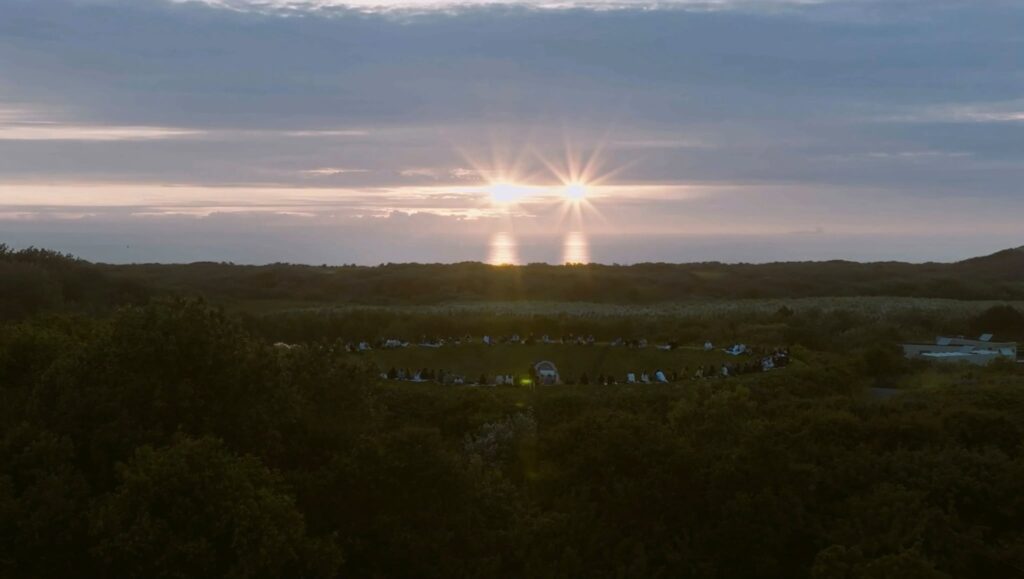
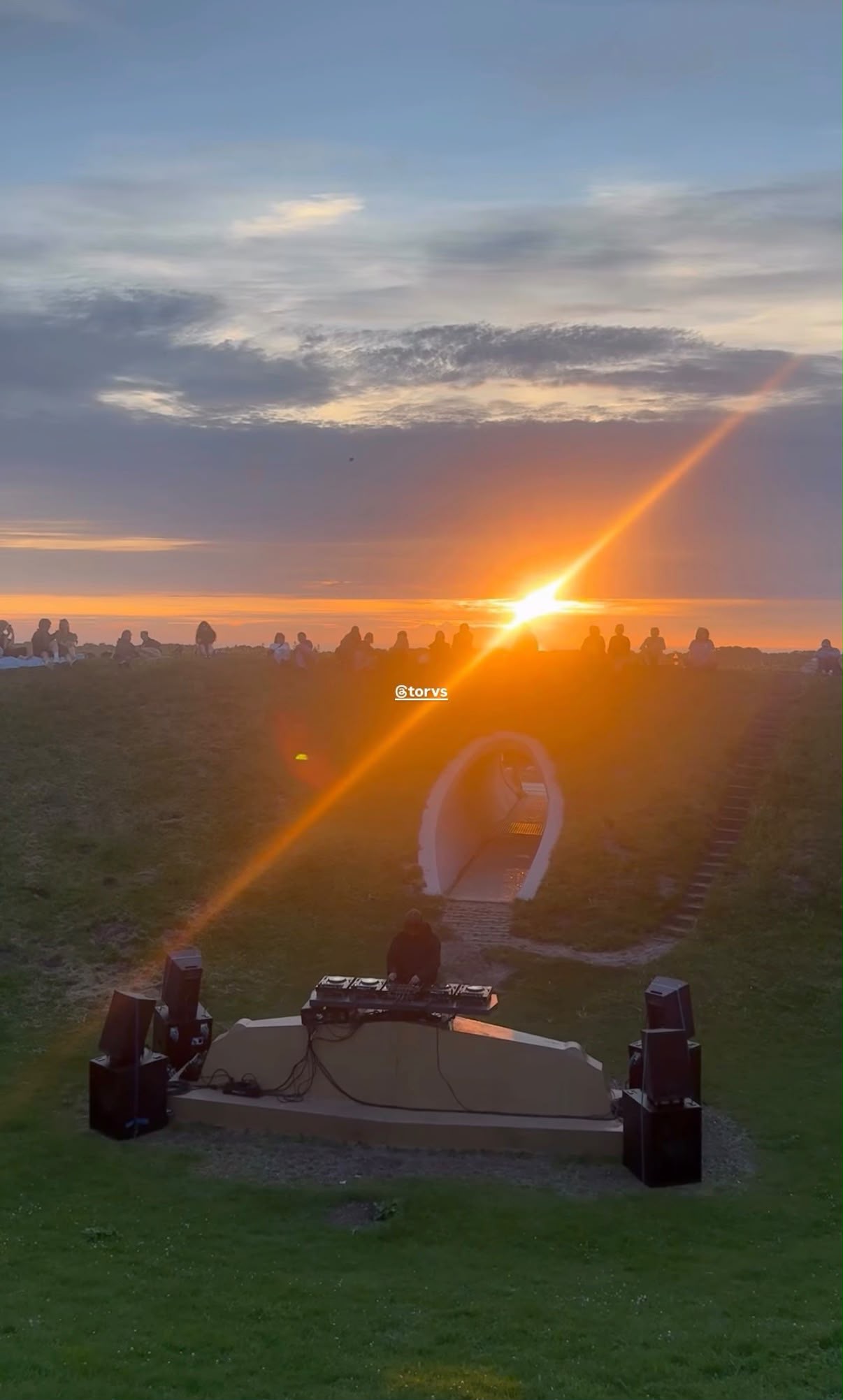
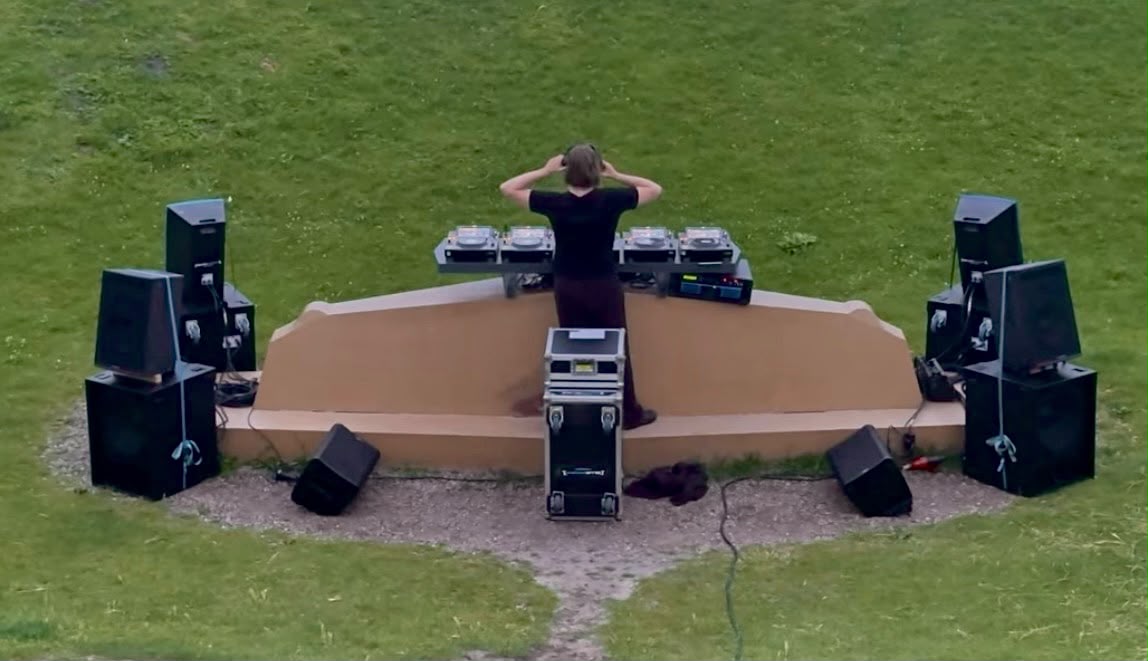
An hour before the performance, I’d made my way to James Turrell’s Hemels Gewelf. We settled into the grass at the top of the stairs leading to the observatory.
I assumed we’d spend the next hour talking about Summer of Love.
Instead, we spent most of it talking about beauty.
Not beauty in the conventional sense, but beauty as conviction. As the driving force behind every decision. The instinct that makes someone sample 8 seconds of a Taylor Swift song because they are perfect. The understanding that rarity itself creates meaning. That things become more beautiful because they end.
We spoke about clichés, yearning, love, and the possibility that they were all pointing towards the same thing.
Awa: Is this the last performance of Summer of Love?
Joeri: That is what I announced it as, but you never really know. I just finished a new record and I’m trying to move away from random gigs and bring more intentionality into my practice. These performances become complete experiences, with a special CD, an installation, an offsite location. People tune in on a much deeper level.
Awa: Making something finite. Closing the loop. In music these days, that seems more difficult to achieve.
Joeri: Everyone is so hyperfocused on being ultra-accessible. Having your music everywhere. Being obsessed with the hypersaturation of your output. It becomes such a forgettable thing.
Awa: The perishable aspect of things is often what makes them beautiful. I think that’s why the Summer Solstice feels so fitting. It builds towards something for months, until suddenly it’s the longest day of the year. And then… what?
Joeri: You only get one each year. So you have to make it count.
I’m performing at James Turrell’s Hemels Gewelf, in my hometown The Hague. That’s special because I haven’t performed this record here at all, even though it’s been out for two years.
“I started making music long before I ever DJ’d. Then DJing taught me a completely different way of interacting with an audience.
Once I’d explored that, I almost returned to composing through DJing.
”
Awa: How did the record come about?
Joeri: I was looking back at old DJ recordings and reliving those moments. When I DJ, I improvise and combine lots of harmonics. Every now and then I’d hear something and think, this could be a whole song.
I collected those moments and almost put the record out as a throwaway project. But it became something really special and resonated with people in a way I never expected.
I think that’s because it didn’t come from this place of, I have to make a beautiful album.
Only after releasing it did I realise, this is actually a really special record.
Awa: Sometimes we unintentionally capture a moment in time. I think that’s what makes something feel so universal.
Joeri: I 100% agree. I don’t think you can force these things. If you try, you usually end up with the opposite effect.
It almost felt like these songs came to me. I took specific loops from existing songs and built them into much larger harmonic compositions.
The power of that is that you’re distilling the strongest emotion a song or reference evokes, then multiplying it by 16. I have 16 different samples in a track, all adding their own perspective. That’s the type of accidental magic I’d been missing when I was composing everything from scratch.
Awa: Do you think making Summer of Love changed the way you’ve approached music ever since?
Joeri: Totally. I started making music long before I ever DJ’d. Then DJing taught me a completely different way of interacting with an audience.
Once I’d explored that, I almost returned to composing through DJing. I started recording my sets, ended up with all these terrible iPhone recordings, and thought, I should remake these in Ableton.
That’s how it all happened. I was really just combining experiments and got blown away by what came out of them.
Awa: Symbiotic, almost.
Joeri: It’s like 1 + 1 is 3.
I don’t force myself to sample, but I also don’t force myself not to. When I lack inspiration, I’ll grab something I’ve been listening to that sounds like it could fit in my head, and throw it into whatever I’m working on. Maybe it doesn’t stay in the final track, but it gives me a completely new perspective on the melodies I’m writing.
Awa: Why did you call it Summer of Love?
Joeri:
I love that these songs all stem from clichéd references. There are very obvious pop songs in there. The Postal Service. A Taylor Swift instrumental. The Veronicas.
When I tried to translate that into a visual or linguistic world, it felt like the title had to reflect that same unpretentiousness without losing its weight of romance and beauty..
“Take “Lose Control.” Most people probably don’t realise there’s a Taylor Swift sample in there. It’s from a terrible song, but there’s this tiny section that’s incredibly beautiful. Loop that, combine it with another a cappella and another layer, and suddenly all these really unpretentious references evoke something profoundly emotional.
”
To me, Summer of Love does the same thing.
It’s a clichéd phrase, but it’s also real.
I want the record to unlock that same lack of self-consciousness. To make people think, I’m in my summer of love, and I don’t give a fuck if that’s basic or normie.
Awa: That’s exactly what a summer of love is.
An almost sticky, sickening, completely infatuating experience you can have with someone.
And then there’s the fact that summer itself is temporary. Love comes and goes. Summer comes and goes. Having both happen at the same time is almost unbearably dramatic.
Joeri: You can completely lose your grip on reality through an overly emotional experience.
I love that Summer of Love speaks to one season, but the feelings that come out of that strict period of time make you want to stay there forever.
The songs work in exactly the same way. I want to take these tiny moments and live inside them, drown in them. That’s why I get obsessive over looping.
“Even if summer isn’t forever, I want to fantasize about a summer of love that never ends.
”
Joeri: Making this record unlocked something that speaks to my core. My most honest, pure feelings. The sounds that trigger the most elusive fantasies and creativity.
Presenting that in a random black box feels like a shame.
No shade to clubs. I love clubs.
But getting the chance to present this record the way I always wanted to—even if I only realised what that way was afterwards—feels special.
What happens if I present at a place that already means something to me? Does it get more meaning?
Everyone has their own summer of love. By performing it here, in my hometown, I’m adding a personal layer.
People can still project their own experiences onto it, but they also get a glimpse of mine.
Awa: Listening to Summer of Love, I couldn’t help but think of German Romanticism.
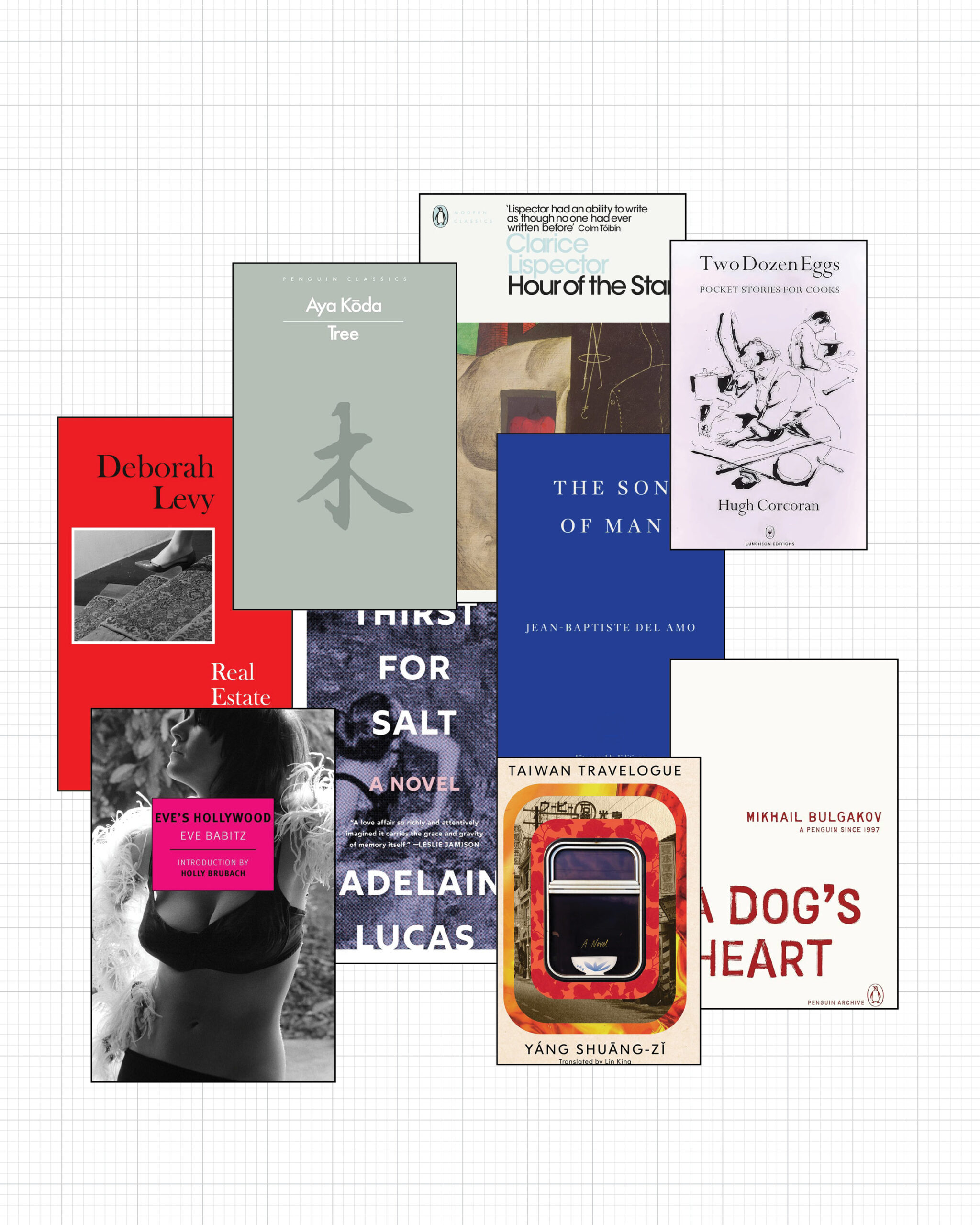
Not romance in the contemporary sense, but the early 19th-century literary movement. Goethe’s The Sorrows of Young Werther. Young men wandering into forests, intoxicated by love, projecting their inner worlds onto nature, convinced that beauty and suffering were inseparable. Complete emotional surrender. Escapism. Yearning. The belief that feeling too much was almost a virtue.
Joeri: 100%.
There’s actually one image that always makes me think of that. To me, it describes my music perfectly.
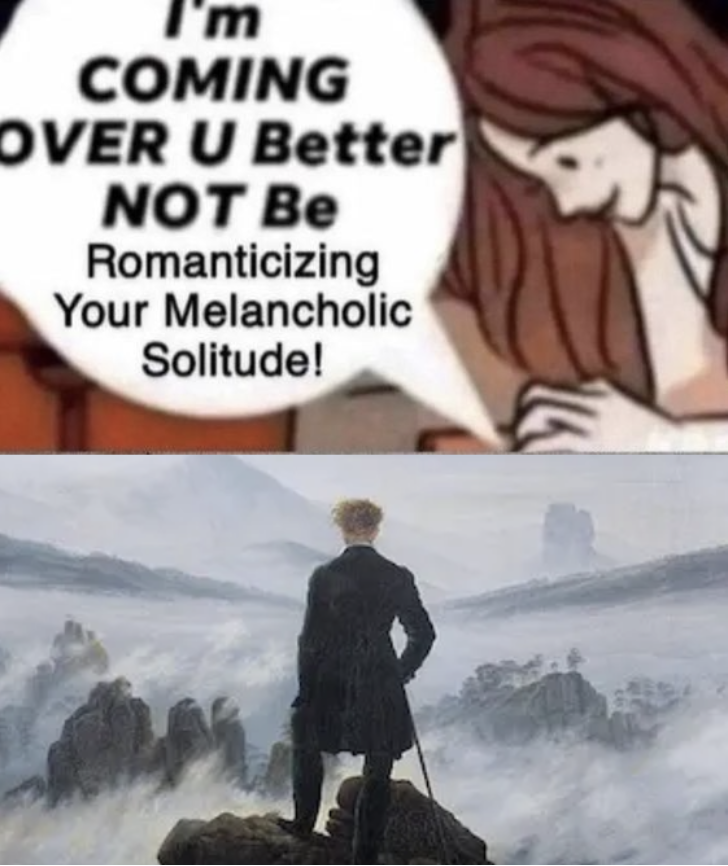
Awa: Walking to the edge of the world. Am I going to fall? Or am I going to fly?
Joeri: It doesn’t matter,
the sacrifice would be worth experiencing the beauty of that decision.
Sometimes intensity and suffering around love, is what gives it meaning. The more you suffer, the more that person or that moment must have meant.
The record is very melancholic. The title sounds so light, but you listen to it, and it feels like a stab to the heart.
Maybe it’s just as much a summer of heartbreak.
“In the same way death defines life, heartbreak defines love.
”
Awa: All those corny sayings… the older you get, the more you realise they’re true.
“To love is to lose.”
Joeri: I think those platitudes endure because they’re true.
I enjoy being a walking cliché of the human experience.
There’s something profound in that.



Awa: This is such an intimate record. What was it like inviting collaboration into something so personal? For example, how did the track with Malibu come about?
Joeri: I would never collaborate on something this personal unless I completely trusted the other person. Malibu is probably the person I’ve collaborated with most throughout my career.
We’ve been making music together since 2017.
We started sending music back and forth, which eventually became The Flash. Since then, we’ve developed a really organic way of working.
Whenever I make something new, she’s one of the first people I send it to. Sometimes we’ll actively collaborate, but more often I’ll throw one of her acappellas onto a sketch and it just works.
Our music overlaps perfectly.
It feels like we create from the same source.
Awa: What shaped you as an artist? You’ve worked across so many different mediums. How do they all speak to one another?
Joeri: I started making music when I was fifteen, just looking for a creative outlet. Then I went to art school for visual arts and design.
I never wanted to limit myself to one discipline, and because I was already making music, I didn’t want anyone guiding that process. Art school taught me conceptual development, but it took a long time before all those different parts of my practice came together.
This project feels like the culmination of that.
Events, installations, architecture, visual art, music. I spent years refining each discipline individually before letting them borrow from one another.
Growing up, I would listen to trance in my dads car, while my mum introduced me to Café del Mar compilations and ambient music. From lounge, I took the serenity and deep listening. From trance, the intoxicating melodies. And you can find those same qualities in pop music too.
“Then there was LimeWire. Peer-to-peer services. Accidentally discovering Aphex Twin when I was 10. I completely grew up on the internet, back when there were no algorithms or guidelines. You’d just stumble across things.
”
I always grew up with contrast.
When I later became part of different scenes, I realised how quickly people became pretentious or dismissive of anything outside their niche. I never wanted that for myself.
Following whatever genuinely moves me, regardless of where it comes from, has always been the most liberating thing.
Awa: There’s an arrogance in being hardline about things you’ve never even experienced.
Joeri: You can’t hate something you don’t know. And if you’re going to hate it, at least know why.
I’ve always wanted to stay close to the things I love, and to their contrasts. New music, old music, different eras, different influences. They should all be able to flow into one another.
Awa: What is your goal when making music?
Joeri: Beauty.
That’s the only goal.
“The only thing I care about is whether it speaks to my heart. Whether it moves me on a subconscious level.
”
If it makes me cry, it’s done.
Awa: And how do you hope people leave here tonight?
Joeri: Overwhelmed.
A bit later, sitting inside James Turrell’s Hemels Gewelf, I finally understood what he meant.
As the sun slowly disappeared into the sea, the observatory became less of a building and more of an instrument. The sky shifted almost imperceptibly. Light, music and landscape dissolved into one another. Nobody seemed interested in filling the silence.
It was one of the most tender, beautiful and existential performances I have ever experienced.
I thought back to our first conversation. To the folded piece of paper I’d pulled from my bag.
What makes a heart?
I still don’t know.
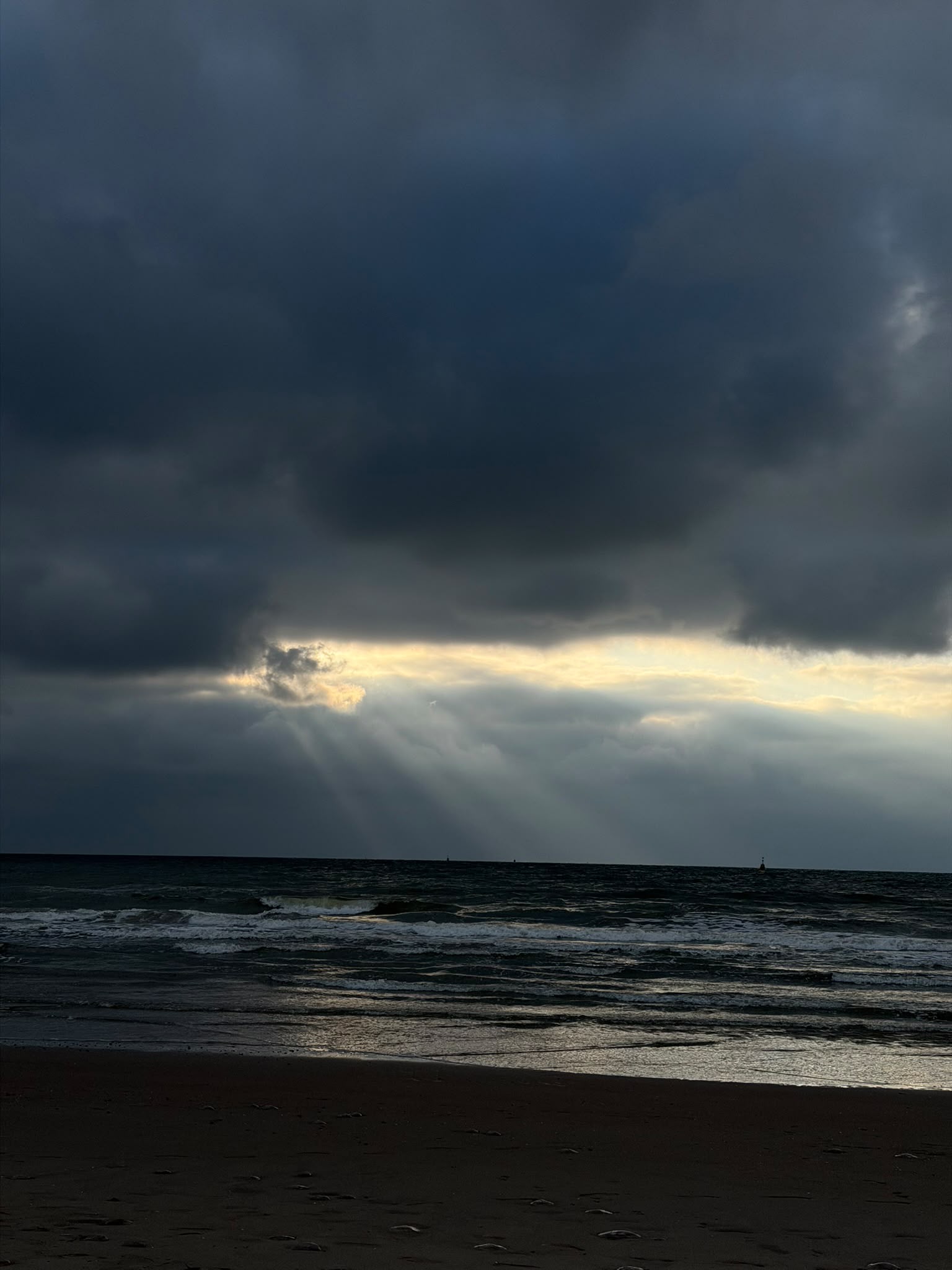
But I know what it feels like when one recognises itself. So I took my overwhelmed self to the beach.