Jane Schoenbrun’s Teenage Sex and Death at Camp Miasma is a love letter to slasher films, queer desire and the things that happen when fiction gets a little too personal.
There are films you watch, films you love and films that, somewhere along the way, become a cornerstone of your personality.
For anyone who has ever developed an unhealthy attachment to a fictional character, watched the same scene approximately 400 times or found themselves emotionally indebted to a piece of media that probably had no business shaping their adolescence, Jane Schoenbrun has made another film for you.
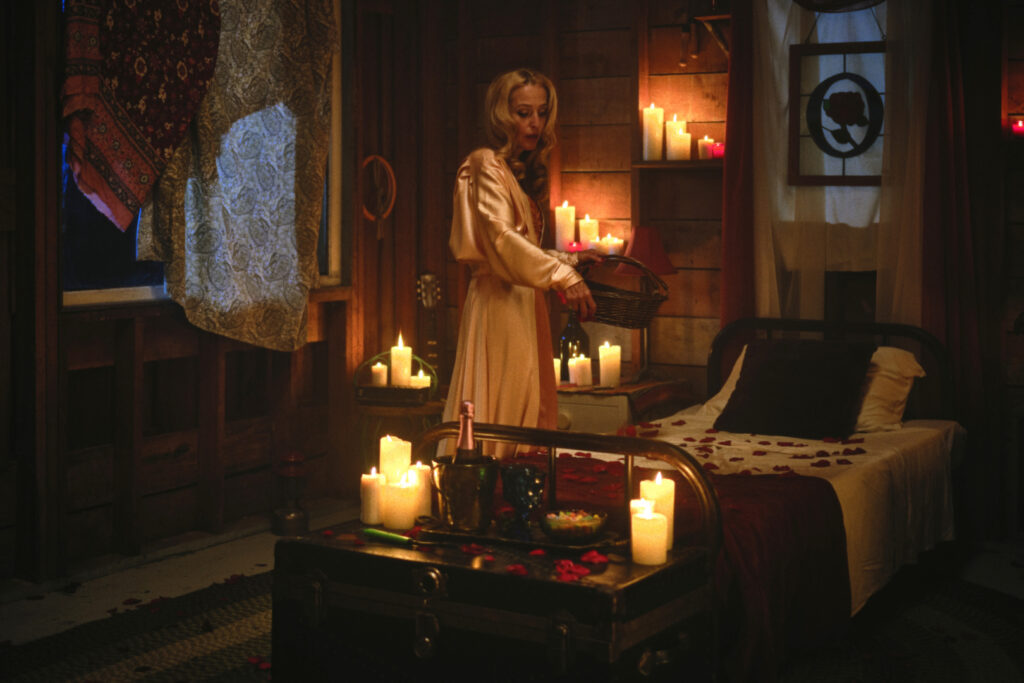
And this time, there is considerably more blood, sex. And to everyone’s overjoyment Gillian Anderson.
Following We’re All Going to the World’s Fair and I Saw the TV Glow, Schoenbrun returns with Teenage Sex and Death at Camp Miasma, their third feature, which opened Un Certain Regard at Cannes and took home the Queer Palm. A film about horror films, the people who love them and what happens when the distance between watching something and wanting to be part of it becomes increasingly difficult to maintain.
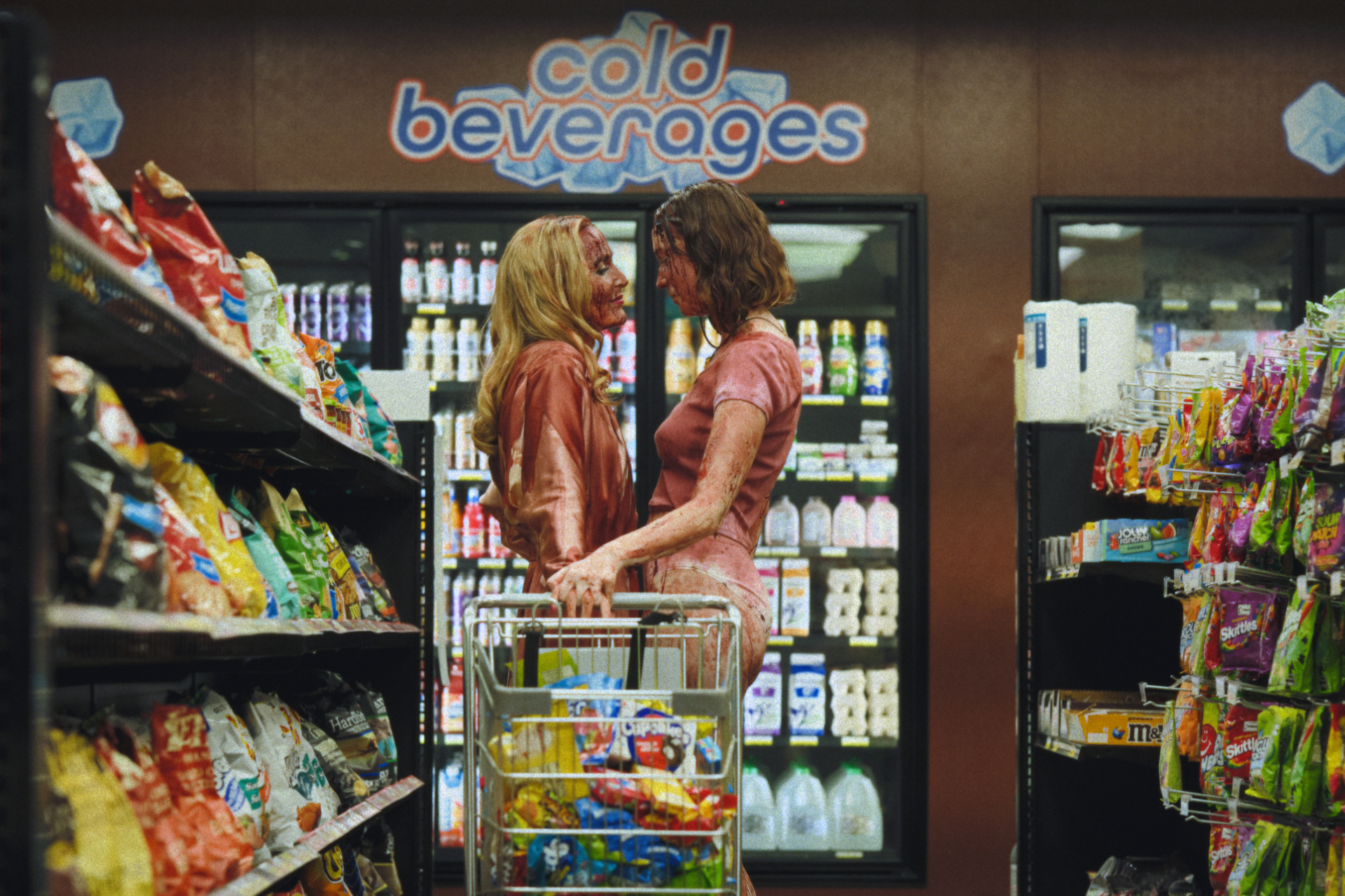
Our protagonist is Kris (Hannah Einbinder), an ambitious young filmmaker tasked with resurrecting Camp Miasma, a fictional slasher franchise that has survived 14 installments and, apparently, several opportunities to call it a day.
To bring the series back to life, she seeks out Billy (Gillian Anderson), the original film’s Final Girl, who has since retreated into a rather elaborate form of self imposed exile.
Naturally, things get weird.
What begins as a professional encounter quickly becomes something else. Admiration turns into obsession, obsession into desire, and the distinction between the film Kris grew up watching and the reality unfolding around her becomes increasingly questionable.
Schoenbrun has never been particularly interested in keeping fiction and reality in their respective lanes. Their previous films explored the ways media can become a refuge, a mirror and sometimes the only available vocabulary for feelings we have yet to understand. Camp Miasma takes that fascination somewhere considerably more playful.
It is funny, horny and just the right amount of bloody. And underneath all the screaming, there is something rather tender going on.
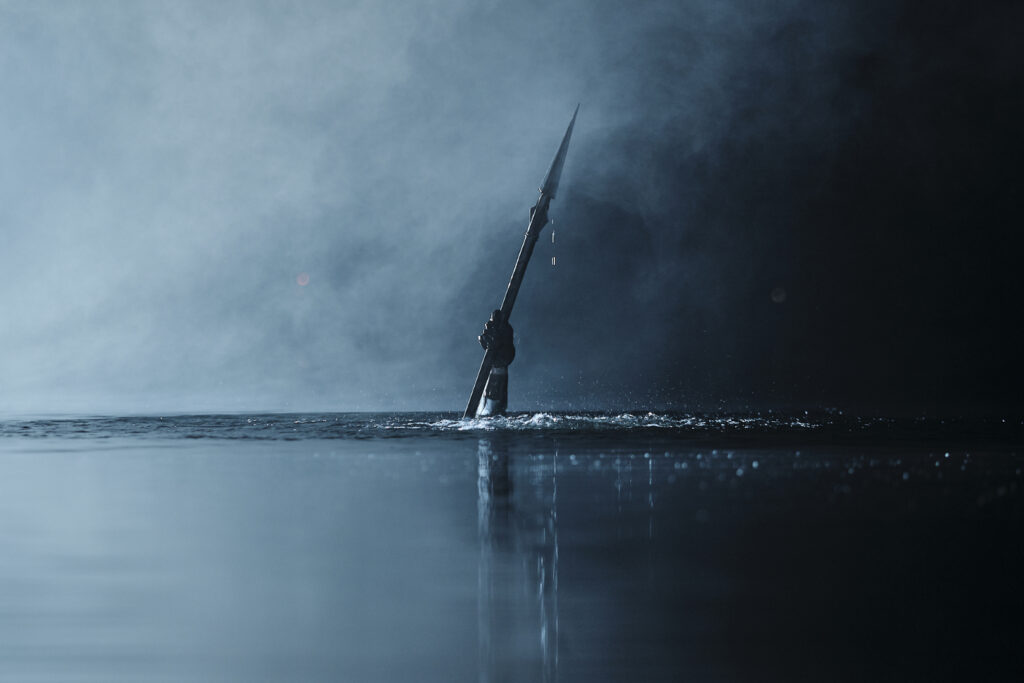
The references are plentiful. Friday the 13th provides much of the architecture, from the ominous lake to a masked killer who has somehow become a commercial enterprise. Sleepaway Camp is another important point of reference, particularly in the film’s interrogation of the slasher genre’s complicated relationship with gender and sexuality.
Because what happens when you grow up loving something that does not necessarily love you back? When the films you found comfort in also made people like you the punchline, the threat or the monster?
Rather than simply rejecting those references, Schoenbrun takes them apart and makes something new from the pieces.
“At the centre of it all is Little Death, the franchise’s masked killer, played by Jack Haven. The name, of course, is a reference to la petite mort, the French expression for orgasm. Subtle? Not particularly. But neither is the film’s interest in the relationship between fear, pleasure and desire.
”
Kris has spent years obsessing over a single moment in the original film, an extreme close up in which Little Death appears reflected in Billy’s eye. A fraction of a second that has somehow occupied a considerable portion of her adult life (something we can all relate to in some capacity).
Then there is Gillian Anderson.
As Billy, she is magnetic. Guarded, mysterious, occasionally terrifying and very much aware of the effect she has on the young filmmaker sitting opposite her. Einbinder, meanwhile, gives Kris that particular brand of intellectual nervousness belonging to someone who can explain every possible interpretation of a feeling except the one that requires actually experiencing it.
Together, they make for a wonderfully strange pairing. Their chemistry gives the film its emotional centre, even as everything around them becomes progressively more unhinged.
Alex G’s score adds another layer to the experience, moving between delicacy and unease, while the soundtrack makes room for some wonderfully unexpected musical choices. Schoenbrun understands the emotional devastation that can be achieved by placing a sentimental song somewhere it has absolutely no business being.
And perhaps that is what makes Camp Miasma so enjoyable. For all its references, theories and existential questions, it never forgets to have fun. It allows itself to be ridiculous, occasionally excessive and deeply sincere, sometimes all within the same scene.
It is not necessarily interested in fixing the slasher genre. It is more concerned with what happens when we take the things that shaped us, including the ugly, uncomfortable and embarrassing bits, and decide they belong to us too.
After all, growing up is partly about realising that the things you once watched from a distance might have been telling you something about yourself all along.
“And remember, if it gets too real, you can always turn it off.
”
Except perhaps you shouldn’t.
Teenage Sex and Death at Camp Miasma streams exclusively on MUBI from October 2, 2026.