Spring has sprung and we love making lists. You know what that means.
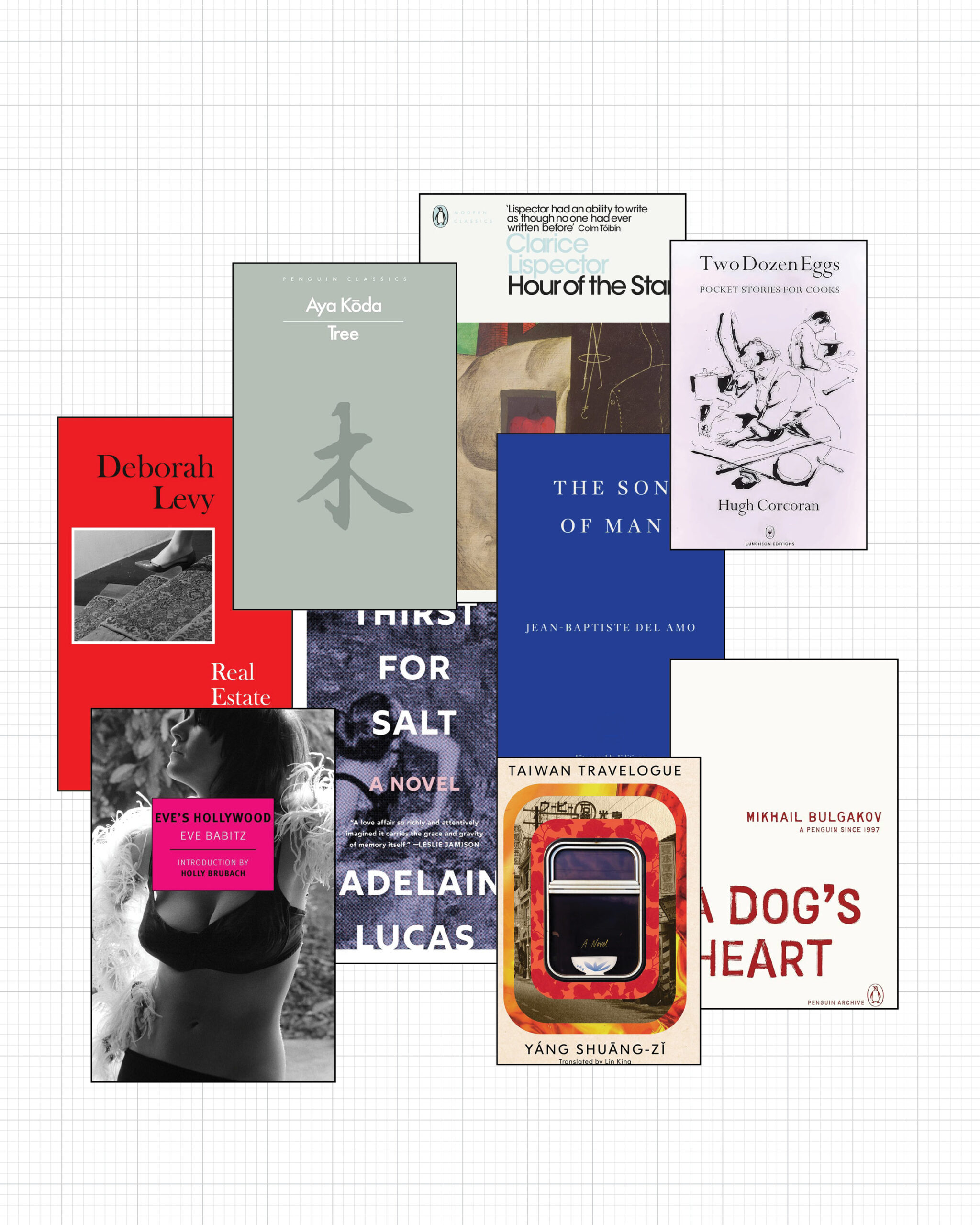
We are back with our seasonal reading list. Four of us, four very different relationships with spring, four bookshelves that have absolutely nothing in common except that they are all worth raiding. From Lispector’s fragmented meditations on consciousness to Baldwin’s ache of belonging, from Zola’s suffocating 19th century Paris to Susan Sontag on the politics of looking, from poetry that makes you want to lie in the grass indefinitely to short stories that will ruin you for days afterwards (in a good way ofc).
Some of us shed our winter layers and went looking for light. Some of us kept one foot in the dark because scary stories do not have a season. All of us read something that made us feel more alive, more curious, or more usefully unsettled.
List by Awa Anne, Nanuka Jorjadze, Zaina Pakabomba and Aida Pachedji
Nanuka’s Reads
Spring always feels like a kind of quiet shedding. The heavy layers come off, the days stretch out again, and things don’t just bloom, they unravel a little too. After winter’s insulation, you start asking what’s underneath everything you’ve been holding together. These are books for that in-between state, when narrative loosens, identity flickers, and time stops behaving the way it should. All of them, in different ways, sit with the same question: what’s left when the structure disappears? When time breaks, when the self thins out, when story no longer holds?
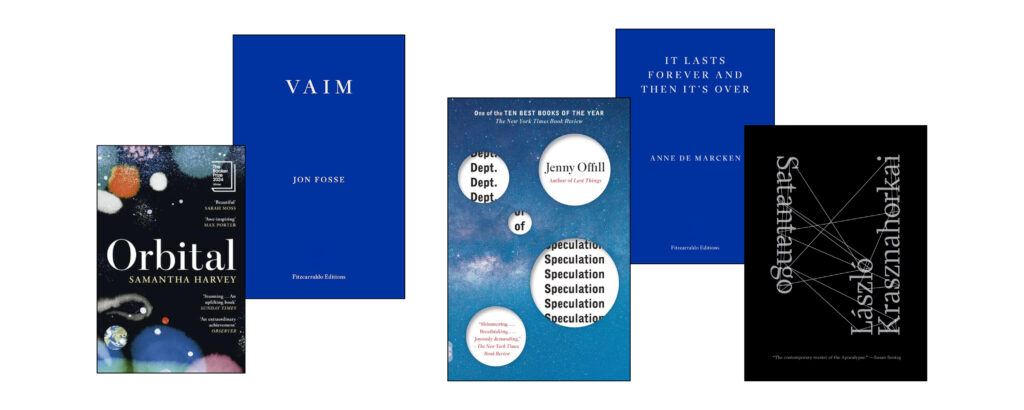
Satantango — Laszlo Krasznahorkai
A decaying village, endless rain, and people caught in a slow, almost hypnotic collapse. Krasznahorkai stretches time until it feels unbearable, like the last days of winter that refuse to end. It’s bleak, cyclical, and strangely mesmerizing—a world where movement exists, but nothing really changes.
Fosse writes like someone thinking out loud in a quiet room. Repetition, fragments, a voice circling itself. Identity feels unstable here, like it could dissolve at any moment. It’s sparse, intimate, and almost prayer-like. Less a story, more a state of being.
Six astronauts orbit Earth, watching it turn beneath them. No real plot—just observation, reflection, and the strange calm of distance. Time becomes circular, almost irrelevant. It’s quiet and expansive, the kind of book that makes you feel both very small and very aware of being alive.
It Lasts Forever and Then It’s Over — Anne de Marcken
A narrator drifts through a washed-out world, carrying fragments of memory that no longer quite belong to her. Identity slips, language thins, and everything feels just slightly out of reach. It’s eerie but oddly tender—a quiet meditation on what remains when the self starts to fade.
Dept. of Speculation — Jenny Offill
A marriage told in fragments, thoughts, jokes, memories, and quiet devastations scattered across the page. The narrative never fully settles, and neither does the self. Time feels disjointed, looping through moments of intimacy and distance. It’s sharp, intimate, and quietly unraveling,less about what happens than what slips through.
Awa’s Reads
There is something almost aggressively tender about spring. The way it insists on itself, silently at first and then all at once, until suddenly everyone is outside, sprawling and buzzing with new energy, new ideas, and a renewed appreciation for simply being alive. The flowers leave their smell on everything. Light pools in rooms at angles it hasn’t reached in months. Long days bleed into long nights, and somewhere in the middle of it all, a particular whimsy sets in, equal parts contemplation and restlessness, wind in your face and sun on your skin and the distinct feeling that something is about to happen. I feel like a spring leaf myself. All bundled anticipation. Waiting to bloom. These books have been keeping me company through it, offering solace, inspiration, and the perfect excuse to lie in the grass a little longer.
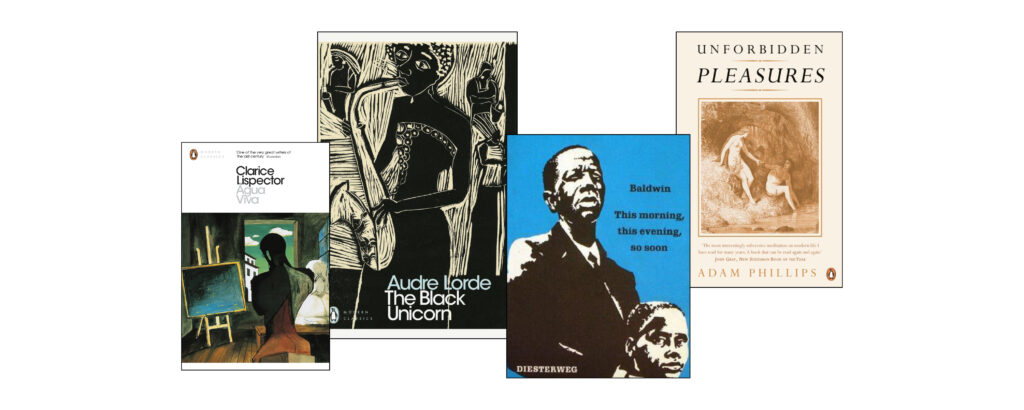
I loved my experience of reading Água Viva from start to finish, and I will most likely never find the right words to encapsulate what it did to me. Fragmented, raw, and completely alive, it is less a novel than a meditation on time, consciousness, and the act of being itself. Lispector writes the way spring feels: insistent, tender, and almost violently present. It made me want to dive headfirst into my own heart.
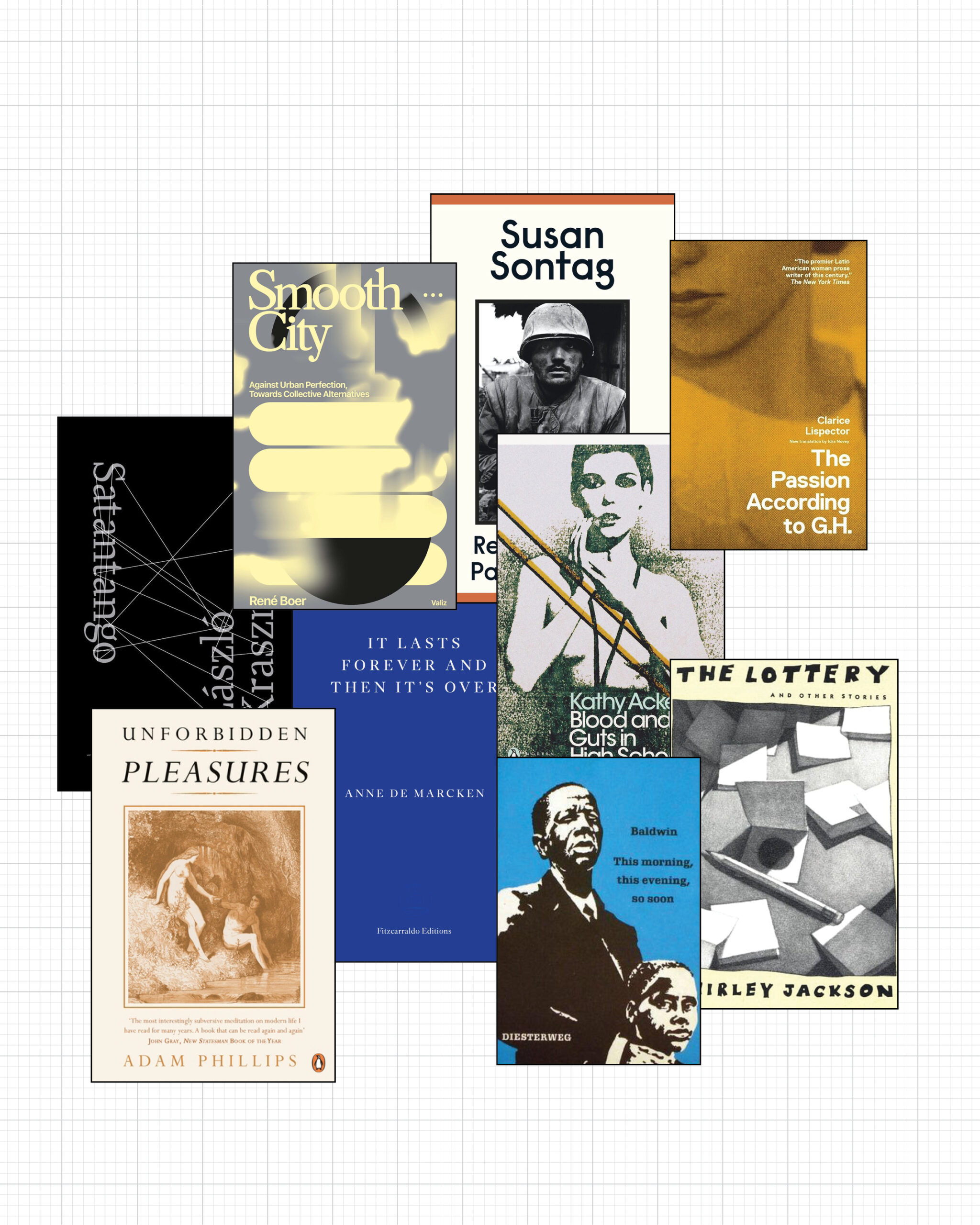
Unforbidden Pleasures – Adam Phillips
Adam Phillips has a way of making you feel like every thought you have ever had about yourself is worth examining more closely. In Unforbidden Pleasures he asks a deceptively simple question: if something is not forbidden, can it still bring us pleasure? From Genesis to Oscar Wilde to Freud, he pulls apart the relationship between desire and restraint, and the way rules, and our temptation to break them, have confused our understanding of what we actually want. I finished it with a head full of questions and several pages of notes. The best type of reading hangover.
The Black Unicorn -Audrey Lorde
Audrey Lorde described herself as a black lesbian, mother, warrior poet, and every single one of those words lives inside this collection. The Black Unicorn is beautiful, delicate, and electric all at once, a gathering of poems that transforms suppressed rage, identity, and the experience of black womanhood into something mythical and deeply enticing. Eroticism and power sit side by side.
This morning, this evening, so soon – James Baldwin
I read this in one sitting and could not have stopped if I tried. Baldwin captures the ache of belonging nowhere and everywhere at once, following an Black American expatriate on the eve of his return to the United States after 12 years in Paris, a city where he has been allowed, for the first time, to simply exist. Race, identity, fatherhood, and the weight of going back to a place that never quite let you be yourself.
Zaina’s Reads
Oh spring! After the daunting winter I take my first breath, crawl out of the dark, slowly unfold my limbs. There are shards of light and I squint my eyes. It’s otherworldly and life-changing every time it comes around. Everything is in transition. So, I recommend to you some books that are both rejuvenating and misty. And also a couple that hold on to some of winter’s darkness because I love scary stories.
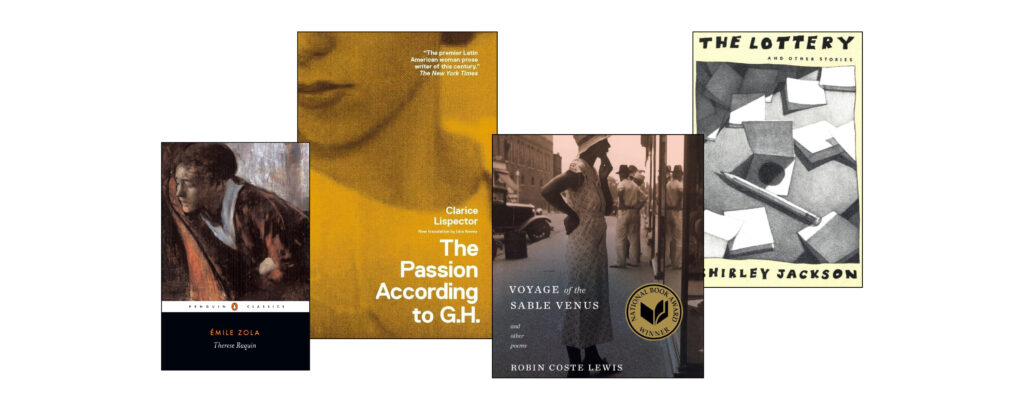
In the damp backstreets of 19th century Paris, Thérèse is trapped in a suffocating marriage. When she meets someone who resurrects her spirit, she binds herself inescapably to her new lover in the darkest of ways. Zola writes beautifully and lays his characters bare, dissecting them down to their most human impulses. All actions, even the holy ones, are motivated by primitive forces: desire, guilt, and self-preservation
The Passion According to G.H – Clarice Lispector
A woman enters a room and kills a cockroach. This unravels her until she spills into a winding, identity-crumbling, existential crisis. Not much plot or character in this one, but if you enjoy turning inward, Lispector can always touch on the microscopic sensations that usually feel unnameable. In her own hallucinatory, intimate language.
Voyage of the Sable Venus and Other Poems – Robin Coste Lewis
Part biographical, part reflection on the collective. A poetry collection exploring depictions of the black female figure in art and self. Lewis introduced me to the method of creating entire poems out of words plucked from other artworks. Complex, moving, and an opportunity to watch fragments of language (spanning from ancient times to present day conversations) be reassembled and redefined.
Another one of my favourite childhood reads. Everyone in a seemingly perfect town gathers on freshly cut grass for an annual ritual to welcome in the new season. It’s slowly revealed how the town purges themselves of their bad omens. I couldn’t stop thinking about this one for days afterwards, it ignited my love for creepy stories and realization that terror is often agreed upon.
Aida’s Reads
Spring came and unfolded the winter’s weight; it unravelled what had been stored in bookshelves during the colder months. Gently unfolding the pages, letting the letters connect into words, and setting them free under the sun, out in the streets. Here are my book recommendations for spring – books that you can read with a window open or outside, surrounded by the blossoming flowers. They carry the heavy memory of the winter, but it releases its heaviness gradually, as spring does between shadows and rays of the sun.
Smooth City: Against Urban Perfection, Towards Collective Alternatives – René Boer
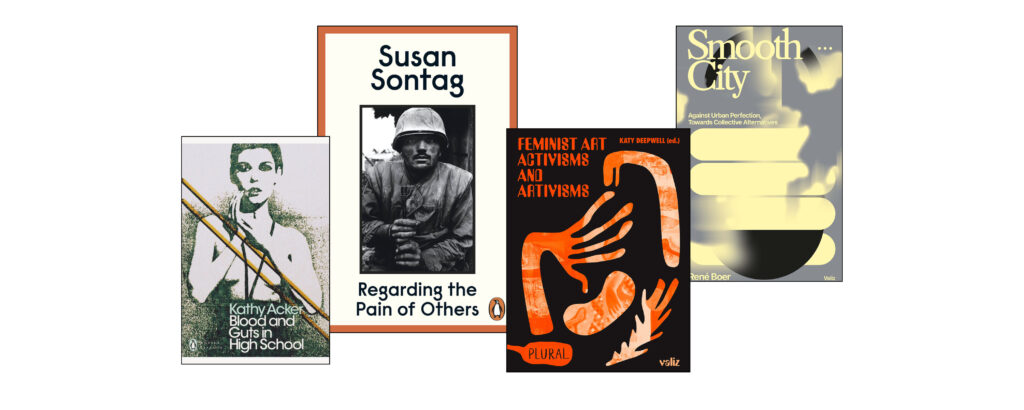
Smooth City explores the rise of smooth cities, characterised by concept stores, homogeneous aesthetics, and minimalist shopping windows. The book challenges the obsession with urban “perfection.” It centres on Amsterdam’s efficiency and control, which creates a sterile, clean environment and questions what the alternatives are in smooth cities. It won the Student Jury of Best Dutch Book Designs of 2023.
Feminist Art Activisms and Artivisms – Katy Deepwell
Art is a way of imagining new worlds and futures by manifesting change, gender equality, and critiquing the status quo. The anthology of Feminist Art Activism and Activisms brings together feminist thinking, examines the role of the intersection between politics and art, and dissects the catchword “activism.”
Regarding the Pain of Others – Susan Sontag
Sontag examines the visual representation of war and suffering and questions what it means to look at images of atrocity and what purpose they serve. The book remains highly relevant as we are experiencing a shift in media consumption, mainly on social media, and the overload of images that has a worrying numbing effect.
Blood and Guts in High School – Kathy Acker
Kathy Acker is a counter-culture icon who started her own underground literary circle in New York City in the 1970s. The book is a post-punk feminist provocation that centres on the life of Janey Smith through prostitution, imprisonment, and underworld gangs. By connecting a collage of poems and drawings to the novel, Acker’s book is a radical critique of Western literary tradition and how institutional power controls the female body and image.