When you think of artist-focused exhibitions, acting isn’t exactly what comes to mind. A controversial performance artist making you walk through naked bodies? Sure. An abstract painter forcing you to contemplate every conceivable shade of red? Fine. But an actor opening up their creative process and offering an intimate look at the collaborative spirit that drives their craft? That’s not something you’d typically expect. Which is why Eye’s latest exhibition came as such a surprise: Ongoing, a show centered around actress Tilda Swinton. Since opening last September, and now extended through March 15, the show has attracted unprecedented international buzz and turned Amsterdam into an unlikely celebrity hotspot.
After months of work-induced hibernation, I finally made my way to Noord on a chilly December afternoon to see what all the hype was about. Accustomed to Eye’s high standards, I wasn’t expecting a mere lackluster retrospective. Yet the show that unfolded before me surpassed all expectations. Apparently, it took four years, a team of 100, the creative force that is Tilda Swinton, and seven of her closest collaborators to bring this show from idea to reality. It’s a testament to Eye Film’s immersive production capabilities and Swinton’s sharp creative vision. The experience doesn’t end at the exhibition itself but includes an entire program of events built around it, inviting each of Swinton’s chosen collaborators for performances and talks, all accompanied by an extensive film program in Eye’s cinemas.
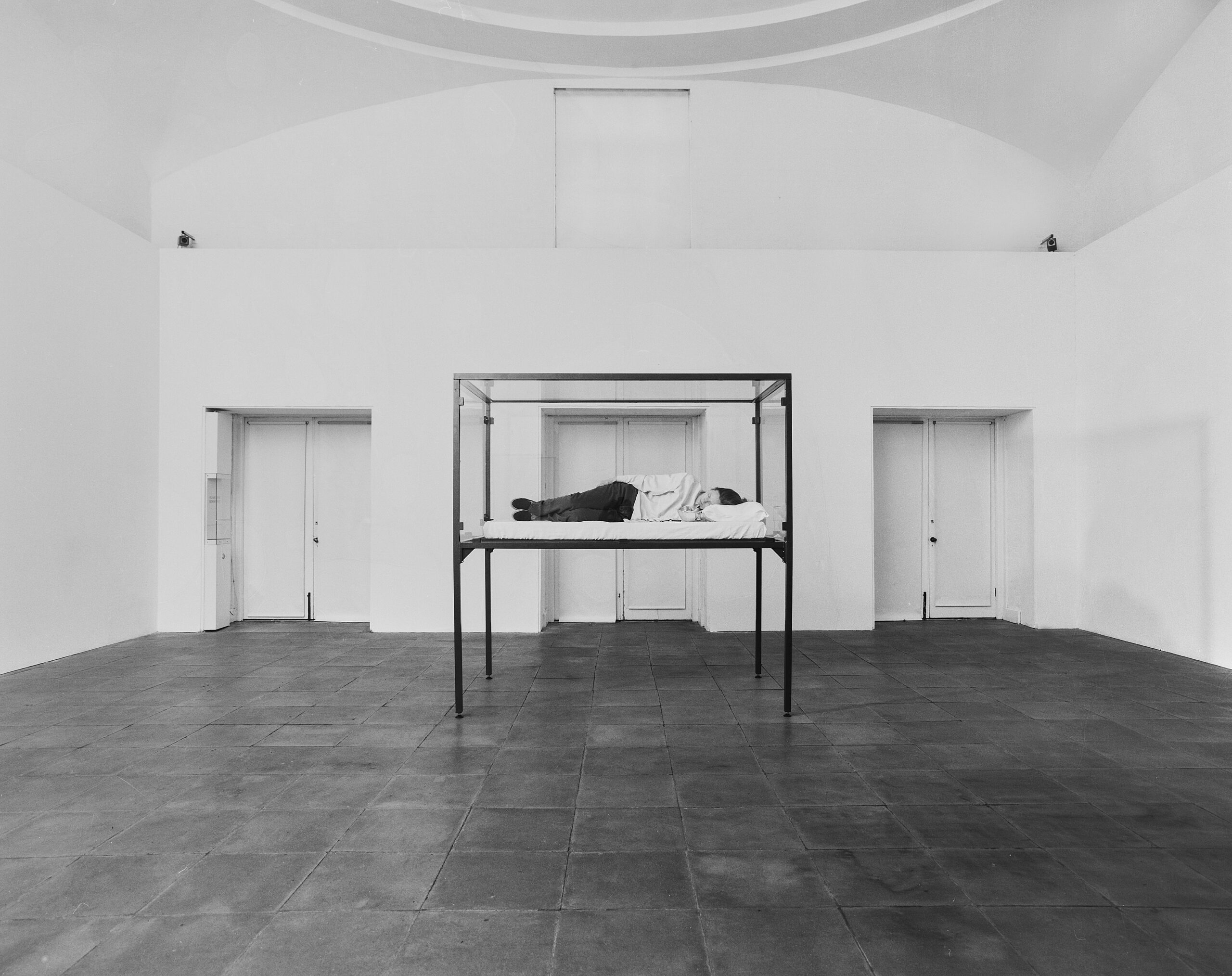
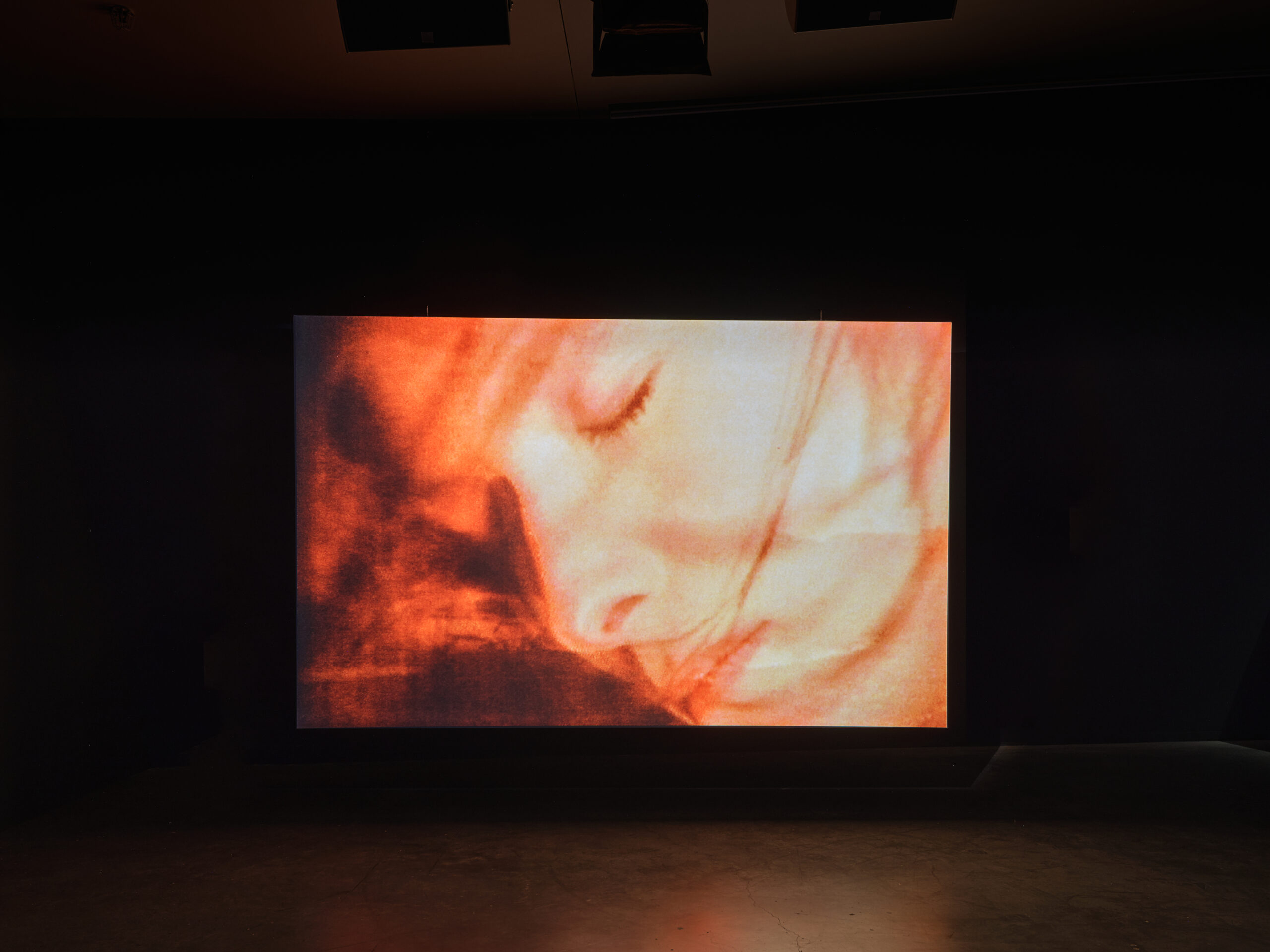
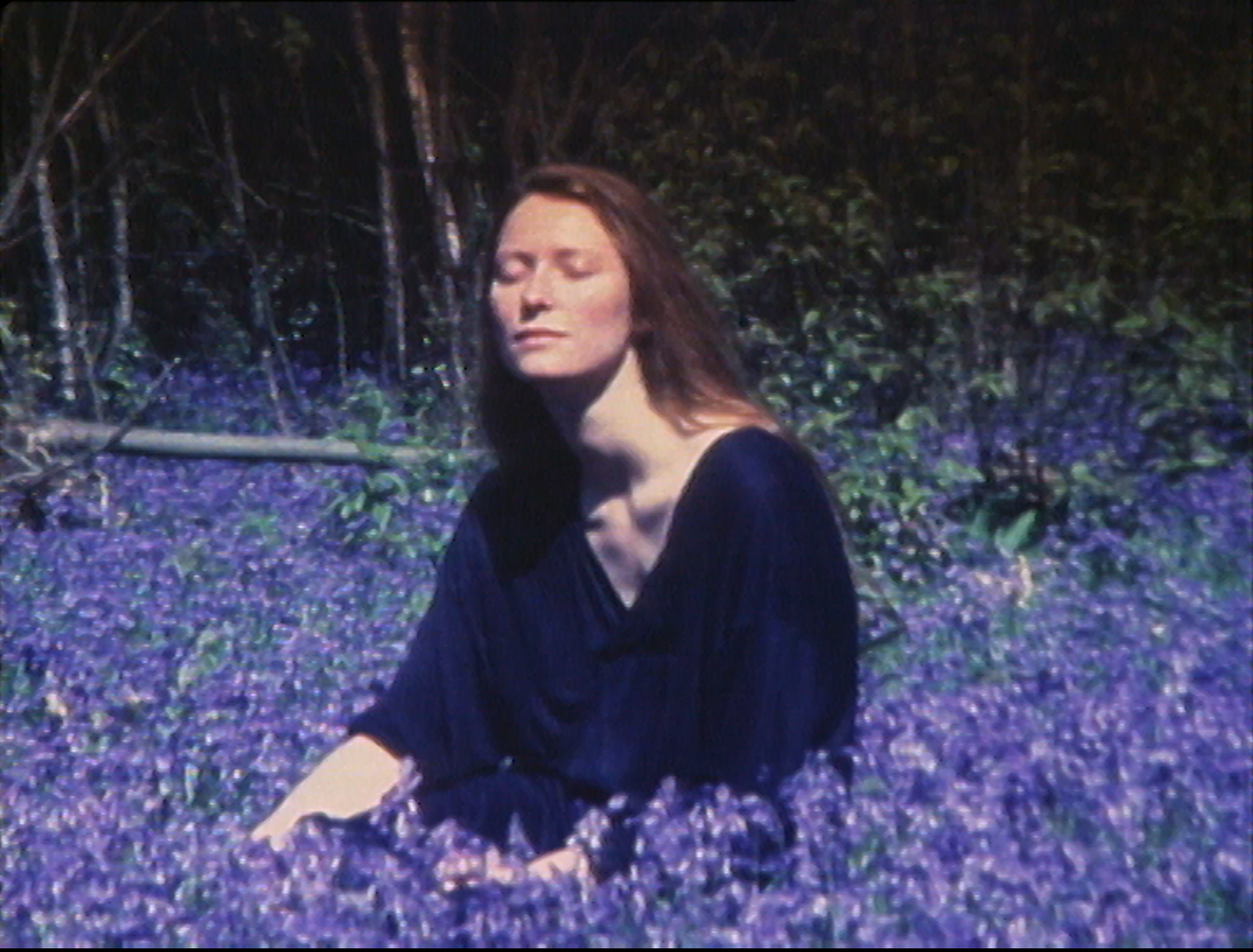
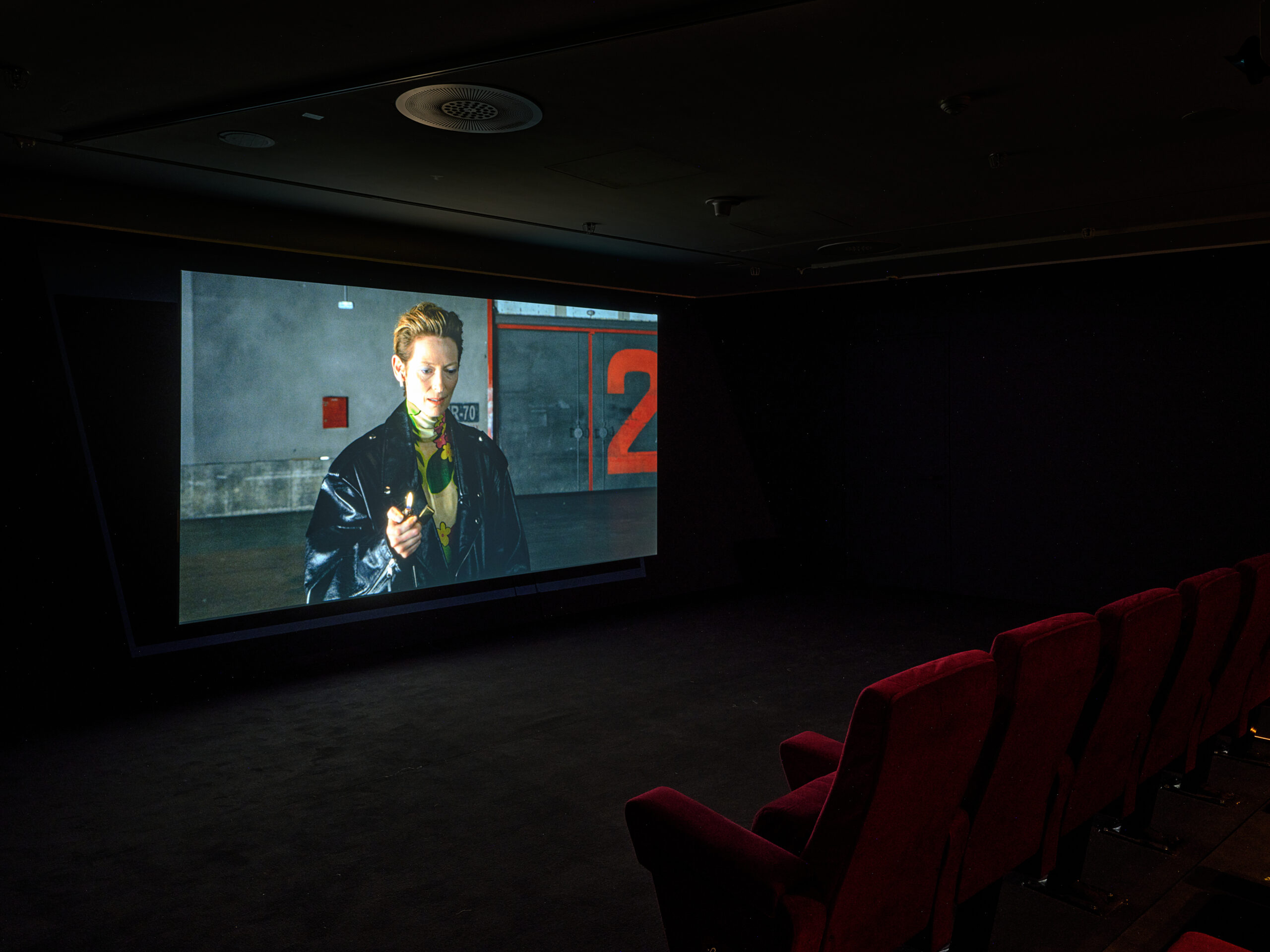
Back in the exhibition space, what stood out most was the meticulous detail in curating and creating each work, with most made especially for the show. There’s a mysterious and comic Jim Jarmusch short reimagined with footage from his 2019 film The Dead Don’t Die, casting Swinton as a hyper-badass zombie-slaying samurai and co-starring Chloé Sevigny and Adam Driver. An immersive recreation of Swinton’s London apartment, reconstructed from her memories in conversation with longtime collaborator and friend Joanna Hogg. Even a monumental bronze bust sculpted for the occasion by Luca Guadagnino himself. All of this alongside works by Swinton’s remarkably talented collaborators over the years, including Pedro Almodóvar, Tim Walker, Derek Jarman, Apichatpong Weerasethakul, and Olivier Saillard.
The exhibition and its surrounding program set a new precedent: not as a one-time event but as an entire universe imagined by some of the most talented people across film, photography, performance art, and costume design – who also happen to be friends. Throughout my visit, I kept wondering what it took to bring this show to life. Luckily, executive producer Julia Kozakiewicz, who worked closely with Swinton on the exhibition, agreed to give me a peek behind the scenes.
Tilda Swinton’s Ongoing has been extended until March 15. We’re teaming up with Eye to give away tickets to 4 of our newsletter subscribers. To apply sign-up here and send an email to hi@doubleamagazine.com with the subject line “Ongoing Giveaway” + your favorite Tilda Swinton movie before February 12th.
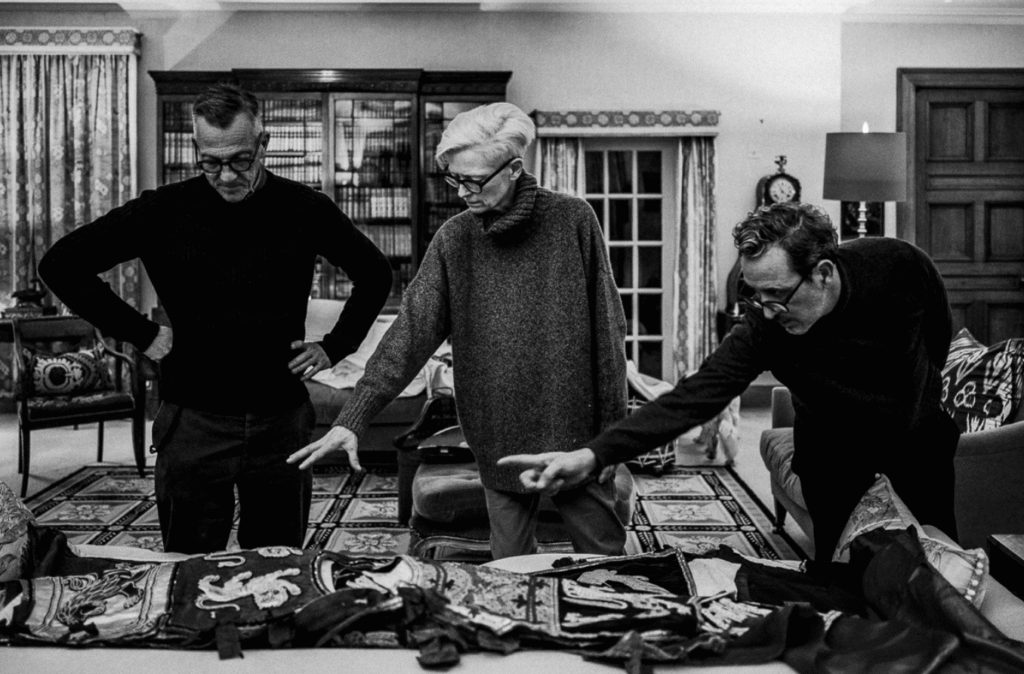
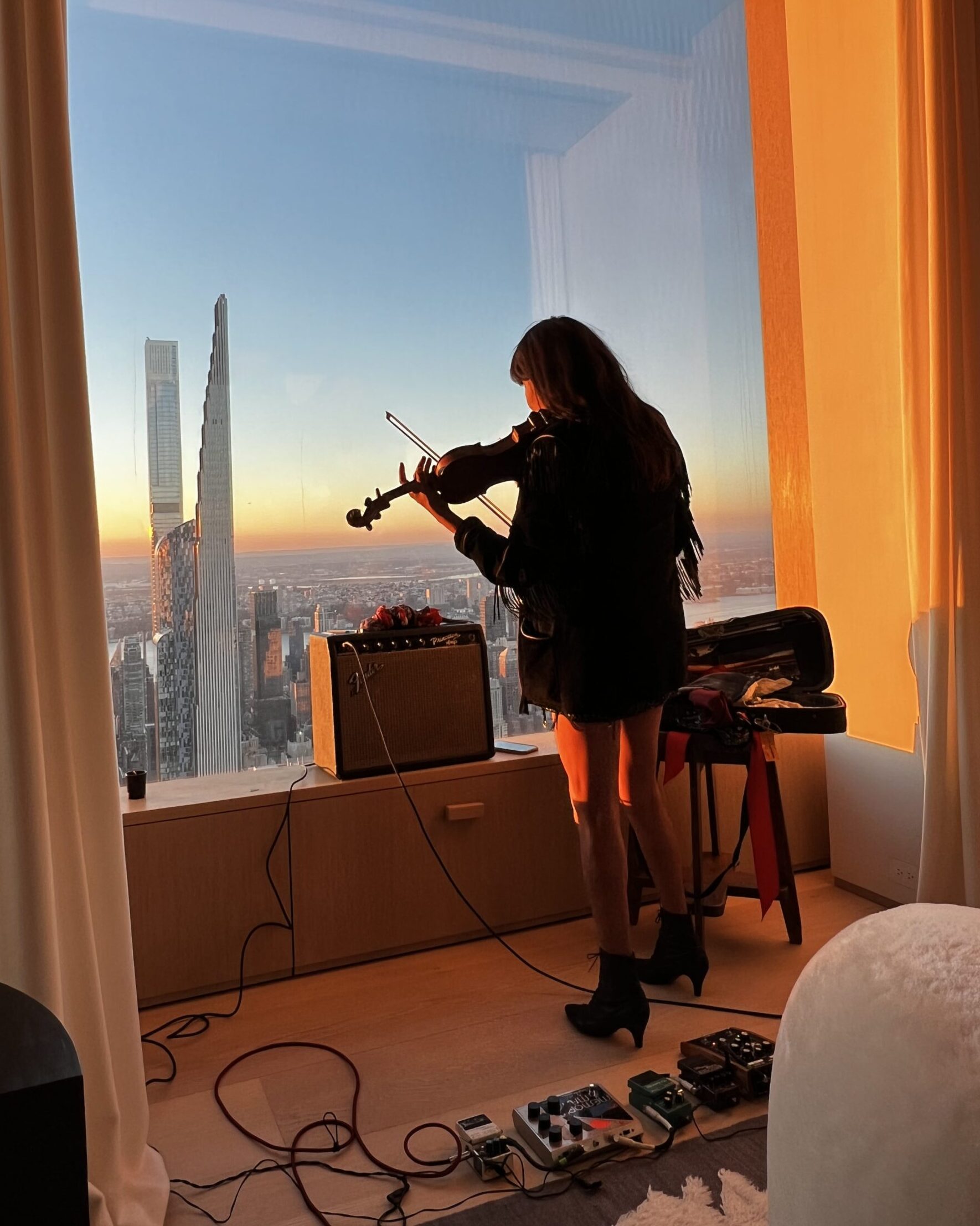
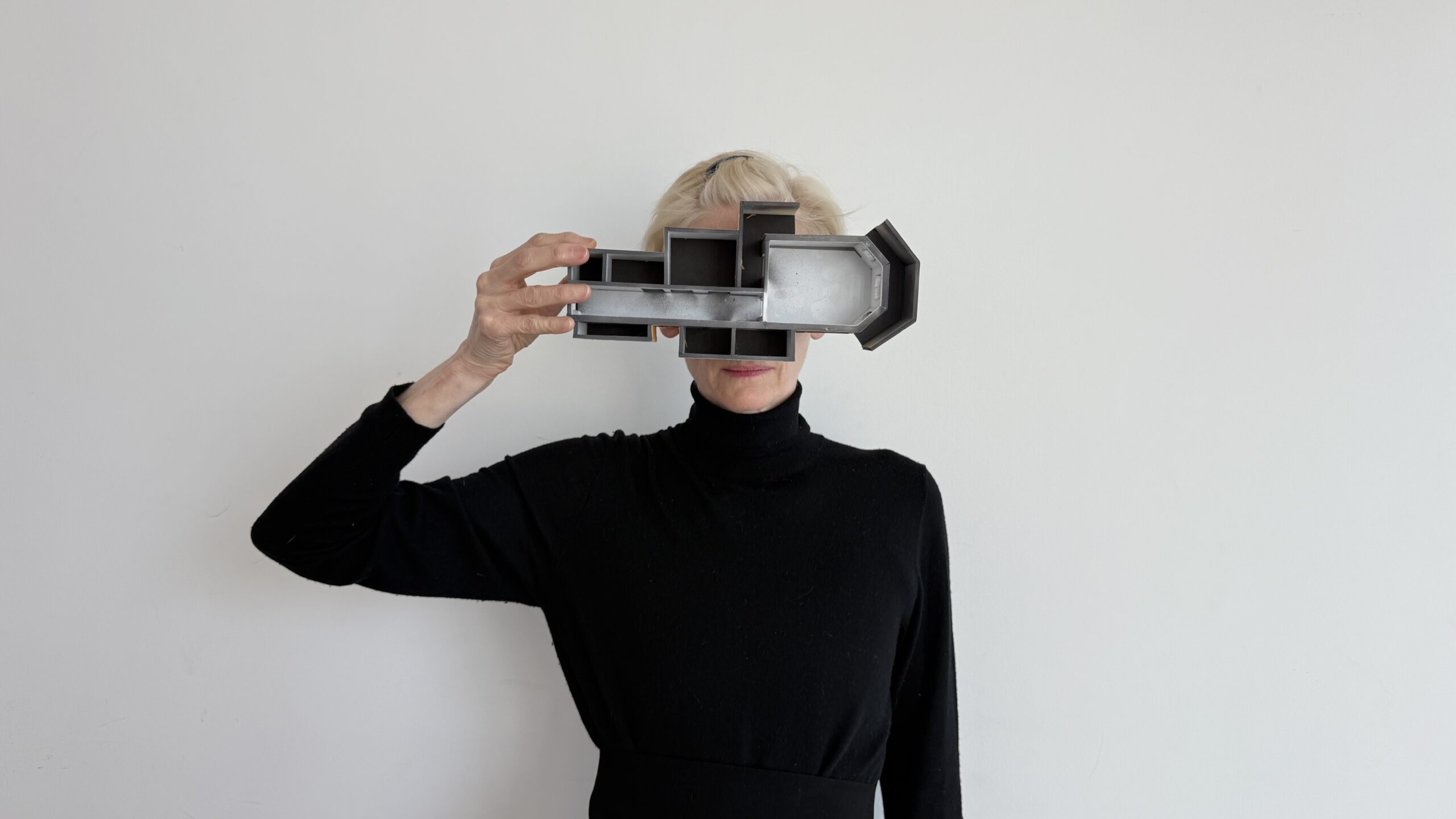
Scotland, 2024. Photographed by Ruediger Glatz, courtesy Olivier Saillard and Tilda Swinton © Ruediger Glatz
Hi Julia, thanks for making time to speak with me. I’ll dive right in: what was your experience working on this show?
It was a crazy timeline, but incredibly rewarding to work with Tilda. The show took about four years to put together, which sounds like a lot, but because of Tilda’s other commitments we had to squeeze everything into the windows we had. The first three years were mostly conceptualization, but the last year was intense: full production mode, work, work, work. We also produced a book to accompany the show in five months. It was tight, but we managed with a team of around 100 people.
That’s a really big team. Is that typical for Eye exhibitions? And do you usually start planning four years ahead?
We usually know only two years ahead, so this timeline was quite special. As for team size, it’s usually smaller, more like 60 people. This one involved the publishing team from Rizzoli, so we had wider teams than usual. It was more international, more connected—just a bigger project overall.
How was the idea born, and what were the first steps in making it happen?
Tilda was invited by our former director, Sandra den Hamer, to do something at Eye: a completely open invitation that could have been a film program or an exhibition. She was initially apprehensive about putting on a show about a living artist and felt uneasy with the idea. For about a year, it was unclear what form the collaboration would take, until she decided that instead of a classic retrospective centered on herself, she wanted the show to explore more philosophical questions about co-creation. What is the position of the performer within the wider art of film? How do different artistic disciplines interact? How do directors work with performers? She wanted to give an inside look into this creative space and the friendships within it. So instead of focusing on herself, she invited seven of her friends to create something that went beyond any one person, something all about collaboration.
As a producer and project manager, what was the biggest challenge in putting together such a multimedia show with so many works made especially for it?
Getting it all together. We were working with people who have extremely tight schedules. Jim Jarmusch and Luca Guadagnino had premieres of their new films in Venice in September, right around the opening of our show. All of the collaborators were busy with their own creative processes, but because they’re so close to Tilda, they made time to create works for the exhibition. Accommodating their timelines with our deadlines and piecing the whole puzzle together were the biggest struggles, but everyone did an amazing job. Obviously, it was stressful as a producer to make sure we had everything on time to process the files, but we were lucky to be working with some of the best professionals in the world. Everything came together incredibly well in the end.
“It’s inspiring for people my age,whether you’re a producer, curator, or other creative professional,to see that you always create with friends. It’s all the people around you that help you make things better.”
Julia Kozakiewicz
Was there a work or installation that was the most difficult to install or challenging to bring to life?
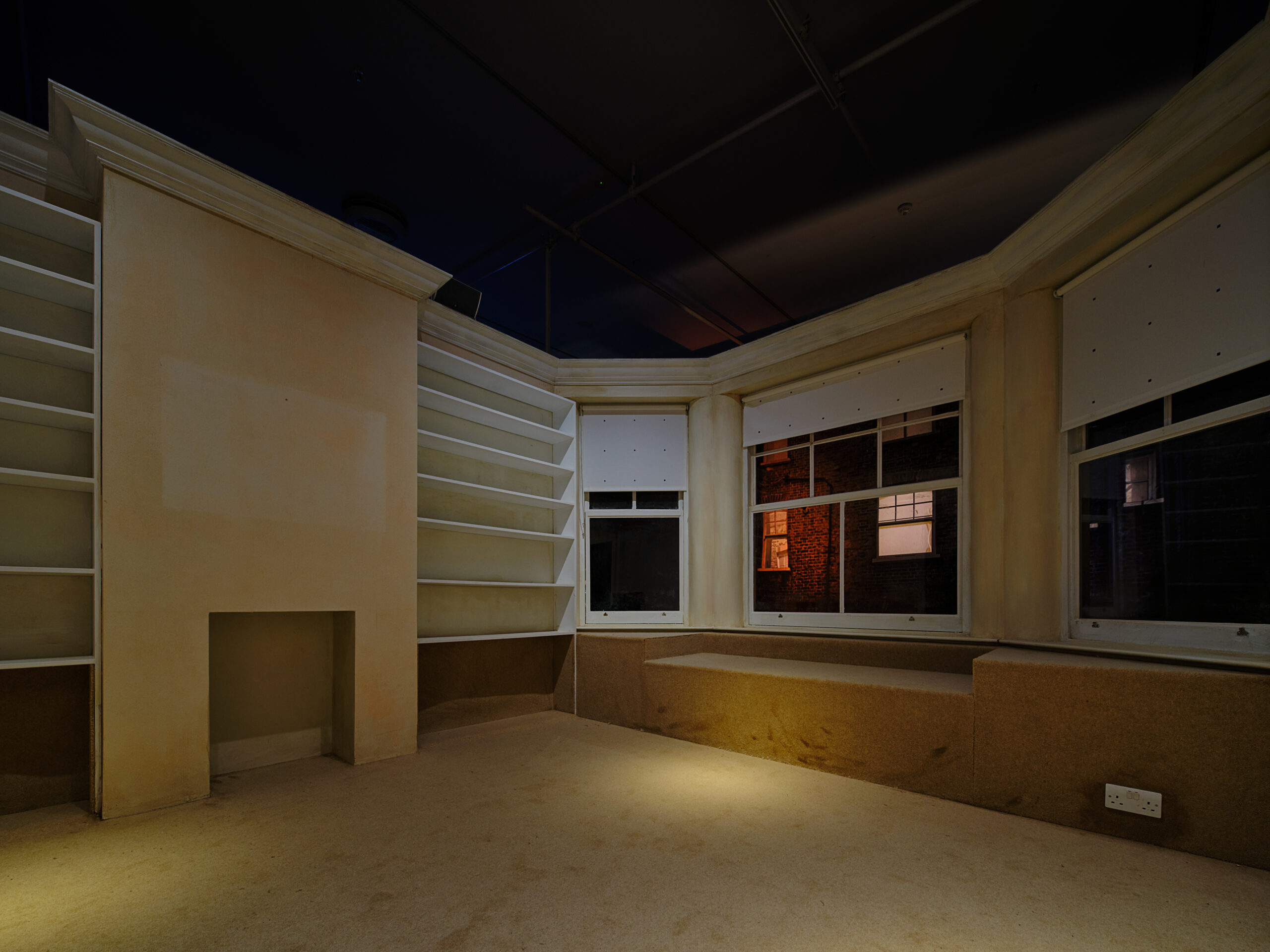
Flat 19, Joanna Hogg’s installation, definitely required the most work. We recreated an entire London flat that Tilda used to live in, which took months to complete. The challenge was that it wasn’t based on photos but recreated entirely from Tilda’s memory of the space. The final installation looks like a film set from the outside and feels like an archive of her memories on the inside. It’s the culmination of a creative process that spanned months: Joanna and Tilda would have calls where Joanna asked about every detail—what the door handles looked like, how it felt to move through the apartment. There are also voice recordings in each room connected to a memory from that specific space. In the main room, you can hear general recollections of how many guests visited and little stories connected to the window: how she used to sit there, look out, hear people fighting and buses driving close by. It’s a 32-channel audio installation, so it’s pretty complex.
What’s your favorite part about the exhibition or the process behind it?
Working with Tilda, especially her generosity in sharing personal insights into her world and creative process. I think it’s amazing to see the backstage of how people think and create in this super fast-paced world. It’s inspiring for people my age,whether you’re a producer, curator, or other creative professional,to see that you always create with friends. That’s how you do things. It’s not because you had a great idea and decided to do it yourself. It’s all the people around you that help you make things better. That realization was really reassuring to me: we can all just create with friends.
You also programmed a whole series of events around the exhibition, which feels very fitting with the title Ongoing. Was that something you wanted to do from the beginning?
Whenever we do exhibitions, we have an extensive program around them: film screenings, live events, talks, and so on. That’s our standard policy. For this one, we obviously wanted to invite all the people Tilda collaborated with for the exhibition. We managed to invite almost everyone: Luca Guadagnino, Joanna Hogg, Wes Anderson, Pedro Almodóvar, and others. There’s also a program of 40 films that Tilda starred in, accompanying the exhibition, curated by Anna Abrahams, our senior programmer. We always want to make sure the exhibition is contextualized in our cinemas as well.
Would you say this exhibition is very different from past ones, and if so, how?
In some ways, yes, because I don’t think we’ve ever focused on a performer before. But I think it’s telling of the future of our programming. We think of cinema as an expanded form, and we want to showcase all the people who work within that universe, not only the big directors: cinematographers, performers, sound designers. Tilda seemed like the perfect match because not only is she an incredible performer, but she’s also a great thinker and artist who has a lot to say. She’s had an amazing career and continues to work on very interesting projects at the intersection of arthouse cinema and blockbuster films. It’s a unique position between worlds, and we think of ourselves as a museum between the worlds of art and film.
Do you think Ongoing is going to change the way you approach programming and producing exhibitions in the future?
I think we’ll just continue to do things our way. Quality content is our biggest guiding principle, and we’ll keep focusing on voices that aren’t necessarily obvious. This exhibition is an example of both our history and our future—a good in-between.
I imagine you’re already deep in the process of bringing the next show to life. What will it be?
It’s opening on April 2nd, and is called Eye(s) Open. It’s about new perspectives on colonial film heritage.
I really like how the programming goes from focusing on an individual to a more collective endeavor. Super interesting.
Yes, totally. We’re trying to put on shows that are quite varied with different focuses.
Well, really exciting. Hopefully I’ll come back to see that one too. Thanks for your time!
Tilda Swinton’s Ongoing has been extended until March 15. We’re teaming up with Eye to give away tickets to 4 of our newsletter subscribers. To apply sign-up here and send an email to hi@doubleamagazine.com with the subject line “Ongoing Giveaway” + your favorite Tilda Swinton movie before February 12th.