Photos by Kaylee Kepple
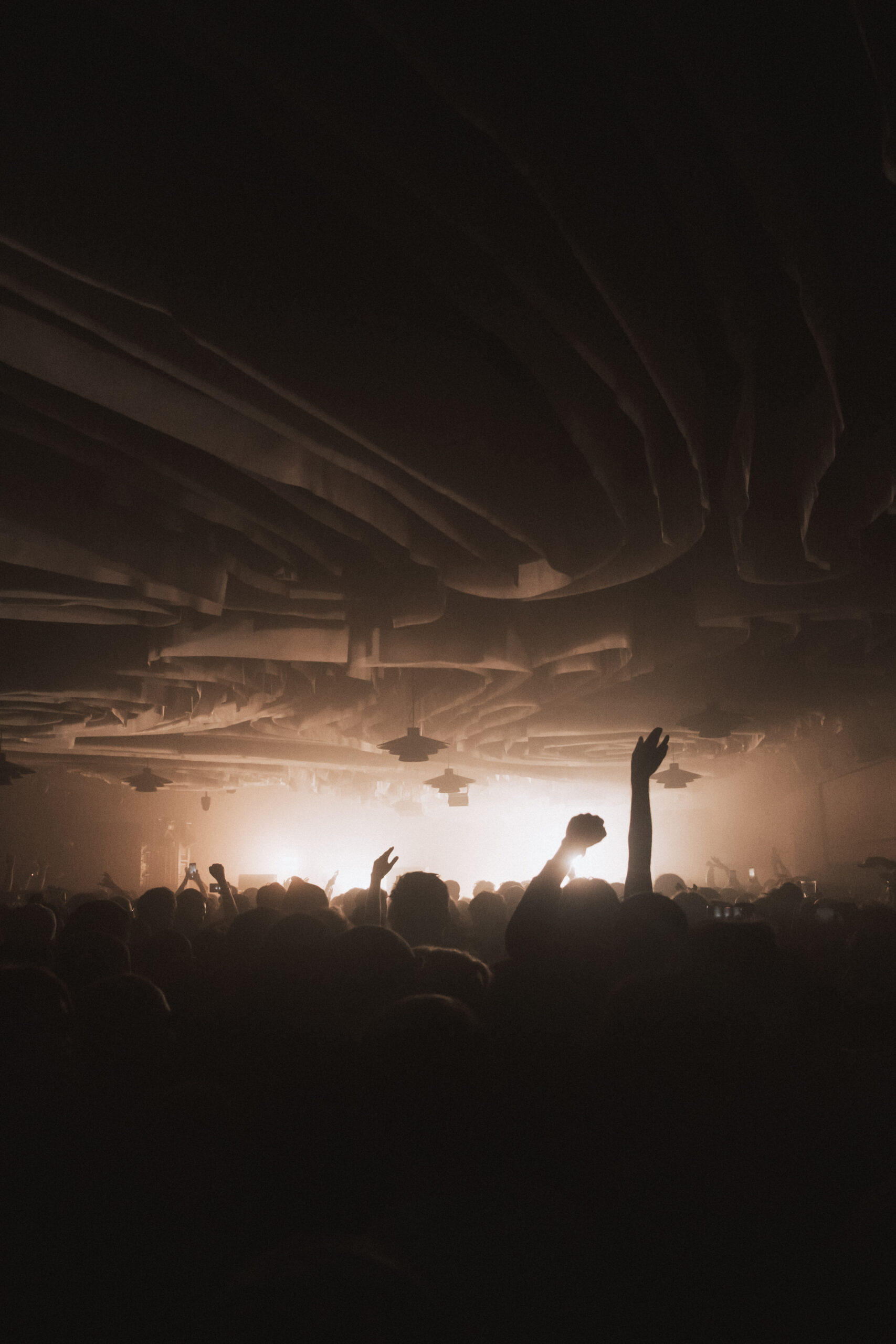
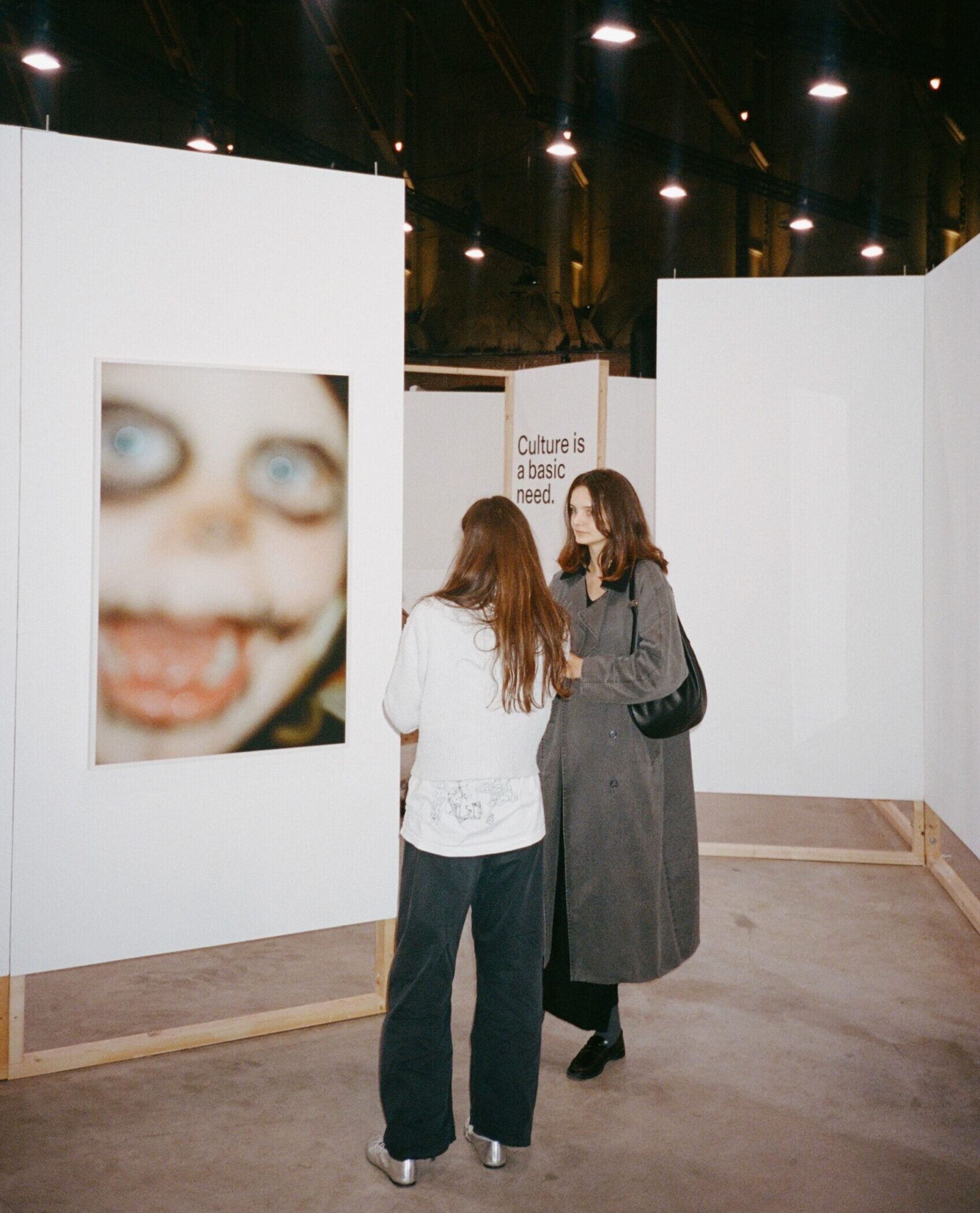
Selecting only six artists to interview at UNFAIR26 was not an easy task. Every year, the event brings together a thoughtful curation of emerging and established talent, showcasing their multi-disciplinary work over the span of four busy days. It’s a refreshing alternative to traditional art spaces, bypassing intermediary galleries to foster direct, unfiltered dialogues between the makers and their audience. From painting and photography to textiles and installation, each artist box is a microcosm of personal experience, cultural observation, and layered self-expression. Each one starkly unique, providing its own opportunities for awe and reflection.
And yet, as I wandered around the labyrinthine room, I found myself repeatedly running into similar themes. Themes like shifting identities, memories of migration, subconscious returns to childhood, and a deep need for more presence and stillness. If each box was its own individual microcosm, then Gashouder revealed itself to be a universe of shared experience. As it often happens, contemporary art became a mirror to what it feels like being human in today’s world. Amidst the chaos of consumerism and digital overload, the works seemed to call on us to return to the centre – to reconnect with our authentic selves, challenge ideals and embrace our roots in a more intentional way.
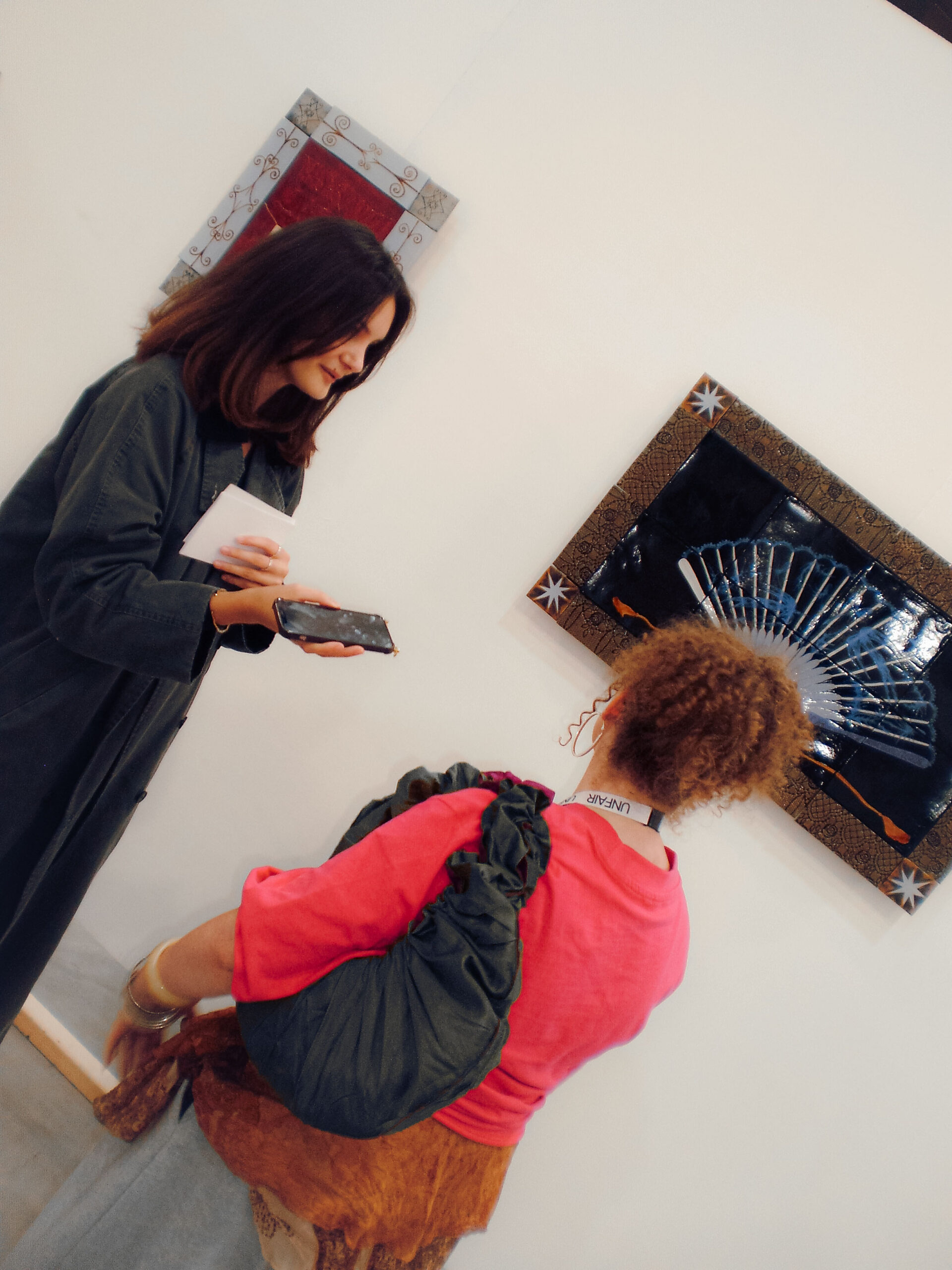
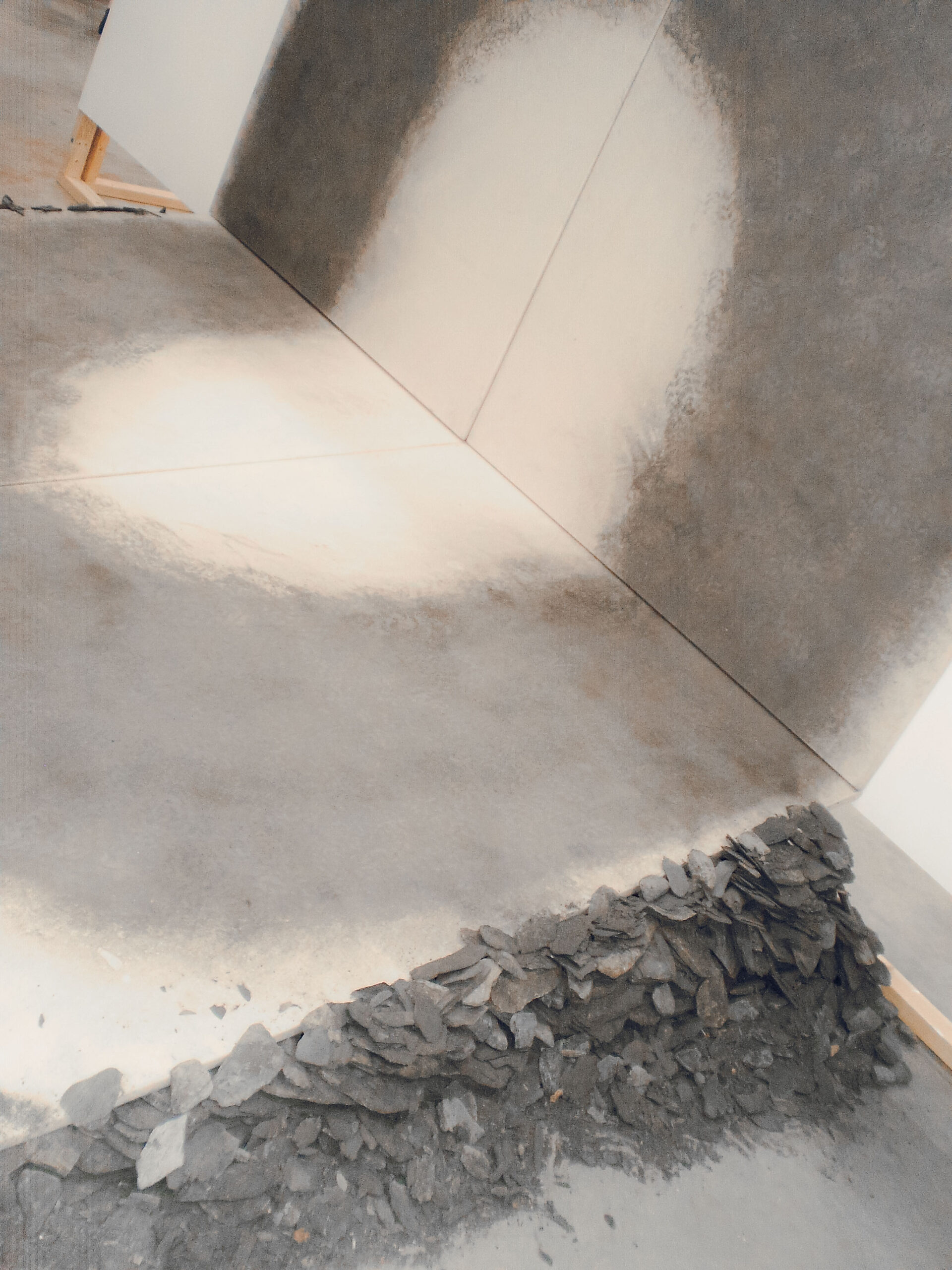
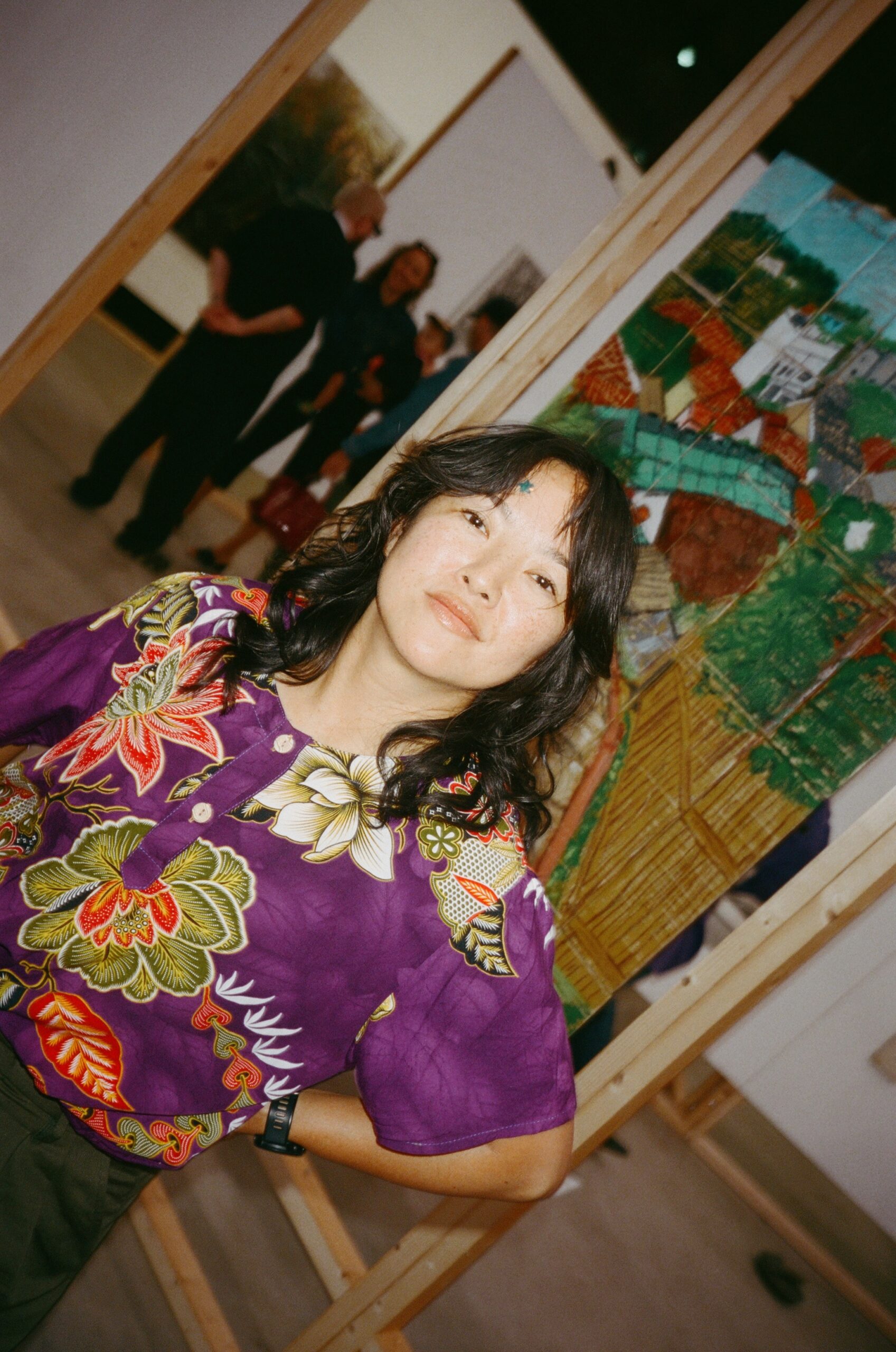


I wanted to explore this sentiment further, in conversations with Kris van Gendt, Benjamin Francis, Wendy Owusu, Pris Roos, Rein Kooyman and Verena Blok – six very different artists, working across different disciplines, yet connected by a silver thread. It was a pleasure to follow along this thread and ask each of them a few short questions to better experience their remarkable talent.
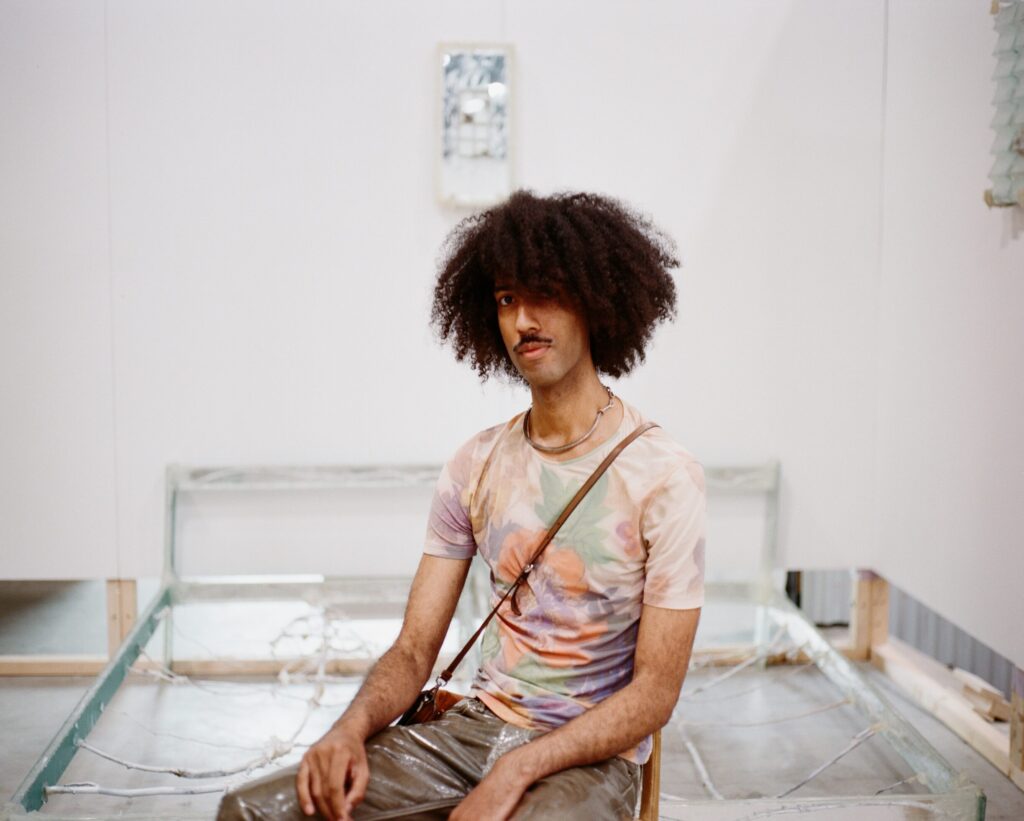
Benjamin Francis
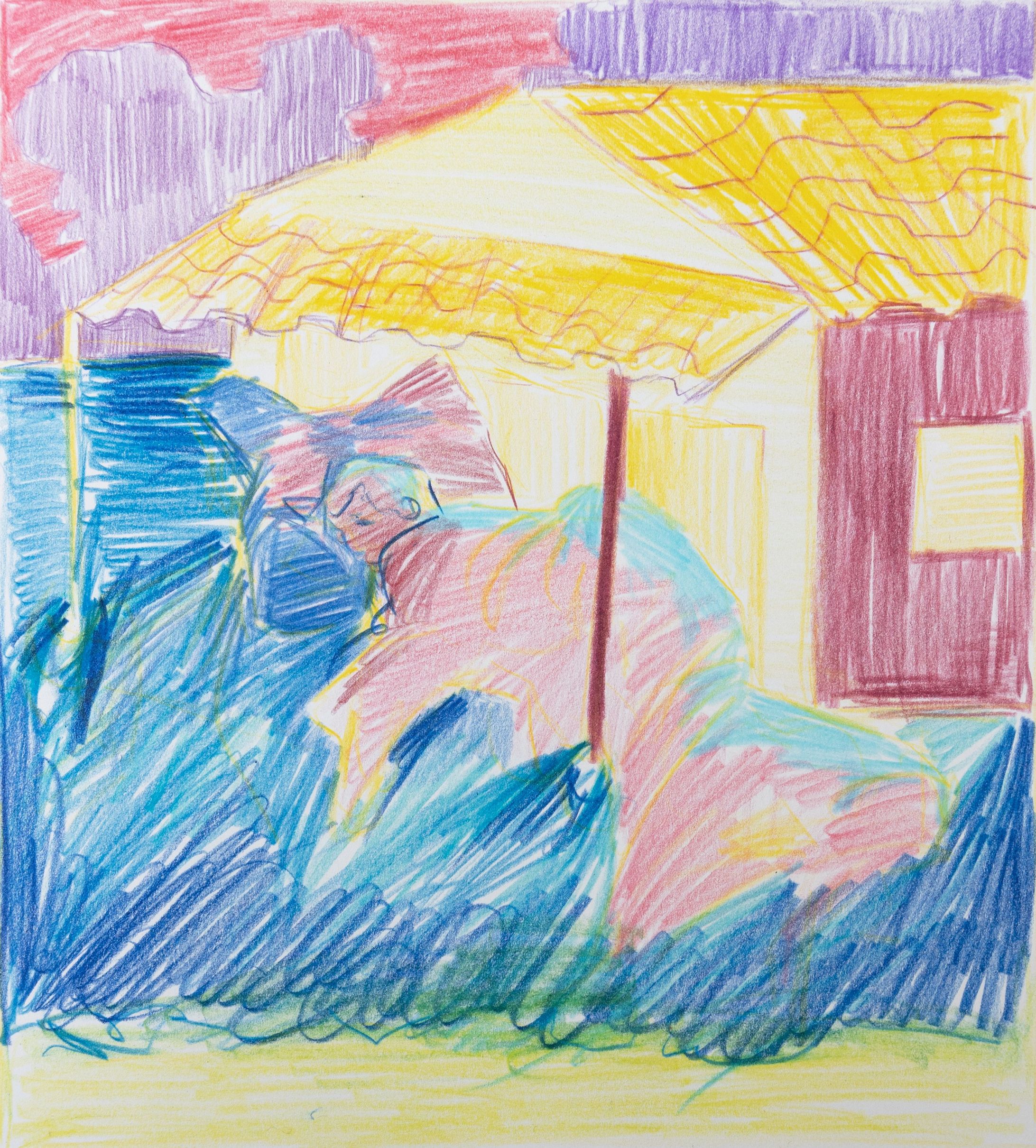
What’s the story behind this central bed installation?
It’s called Death Bed. Or Love Bed. Depends on what name you’d rather call it. I made it during a time when my ex-girlfriend and I were together. She was moving to another house and, while normally we would be sleeping in the same bed, not sleeping together at the time made me feel like mourning inside. It was such a strange feeling. It made me realise that love is like a ball of yarn. When you are coming together you create this ball, and when you go away this ball falls apart. And you constantly have to remake the ball when you’re together. It’s a really active process being with someone. This bed was part of my performance Am I An Object?, exploring the feeling of being an object to another person.
You grew up getting constantly corrected because of your dyslexia. How did that experience influence your work?
A lot of my work is about hidden authority and how that authority shapes us as human beings. As a person who is dyslexic, I’m always aware of my mistakes. There’s a feeling of righteousness that comes with correcting other people. A need to control other bodies. The idea of correction feeds the need of being pure. The works are about what it means to be pure, clean or hygienic.
Why is it important for people to feel uncomfortable sometimes when interacting with art?
The feeling of discomfort is very intrinsic to us. It’s something that we feel without even thinking about it logically. I like this notion that there are things we find dirty, or foods we don’t like, and we can’t even explain why they’re wrong. I want people to experience dirty or unconventional environments and think about how they feel inside them.
How would you describe being an artist in Amsterdam?
Segregation. Not everyone can be where they want to be. At the same time, Amsterdam is also very inspiring. It’s vibrant. Everyone can dream. I see both sides.
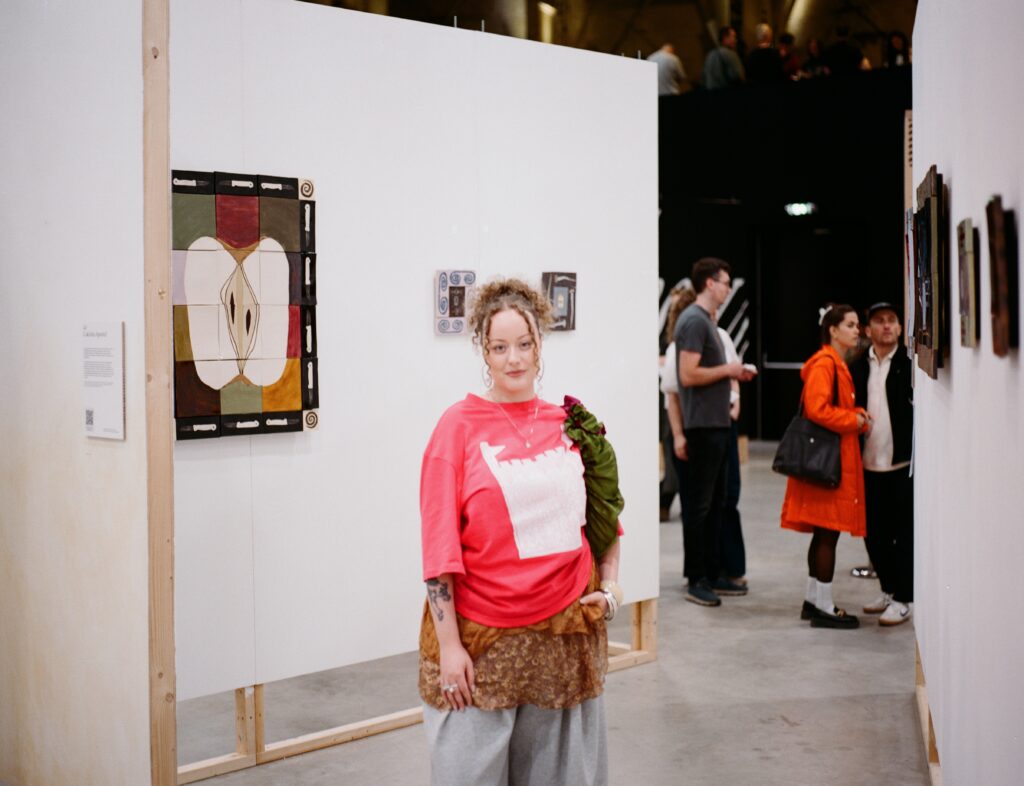
Kris van Gendt
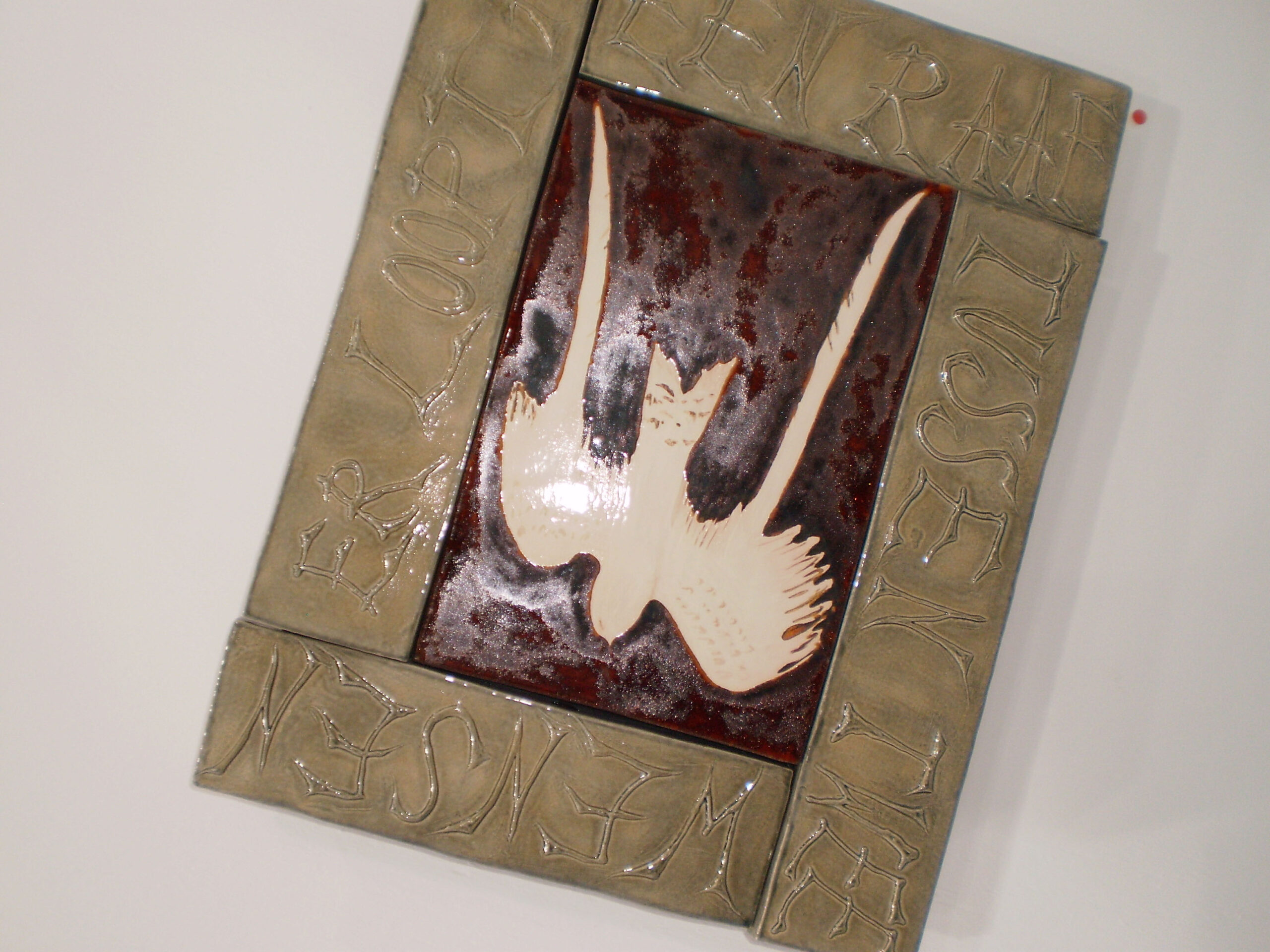
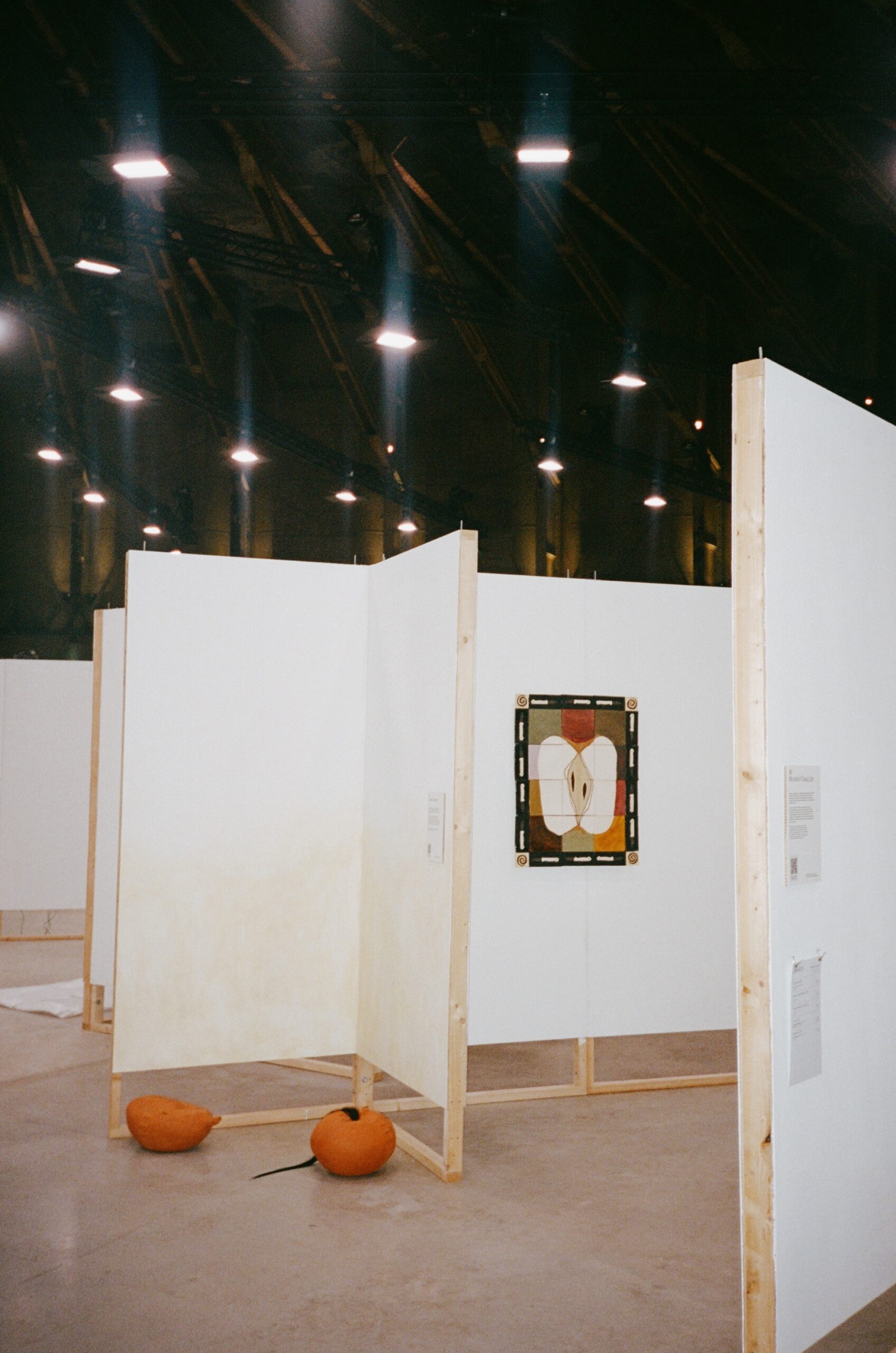
Your tilework is a visual diary for expressing and processing your emotions. How did you discover that art can be a form of therapy?
Honestly, I think it always has been. I’ve had many forms that I’ve worked with, but my focus has always been about trying to understand myself. Clay really gripped me because of the time it takes. It’s really lengthy work, a minimum of three weeks each.
“It’s nice to allow yourself the time to really understand your feelings. To then put the tiles through the heat and solidify those feelings is a beautiful ending to the process.
”
You say that you both reveal and hide within your work. How do you decide what to share and what to keep private?
It’s really instinctive. Sometimes I just know. When a sentence is looping in my mind, when it becomes a mantra for me, it automatically appears in my work.
You’ve created this visual language of symbols. Let’s unpack some of them.
We are now next to the fan [Met Beide Handen Tegelijk, 2026]. It’s really based on the fact that I grip onto life with both hands. It’s a blessing and a curse. If you recognise yourself in this, you might know that it’s really nice to be this passionate, but it can also break your own heart sometimes.
As an Eindhoven native, what is your highlight of this weekend in Amsterdam?
Eindhoven versus Amsterdam is always a funny one, but I think people here and there are really similar. The highlight for me is greeting people on the street and feeling at home still. There’s a similar energy. It was nice to realise that.
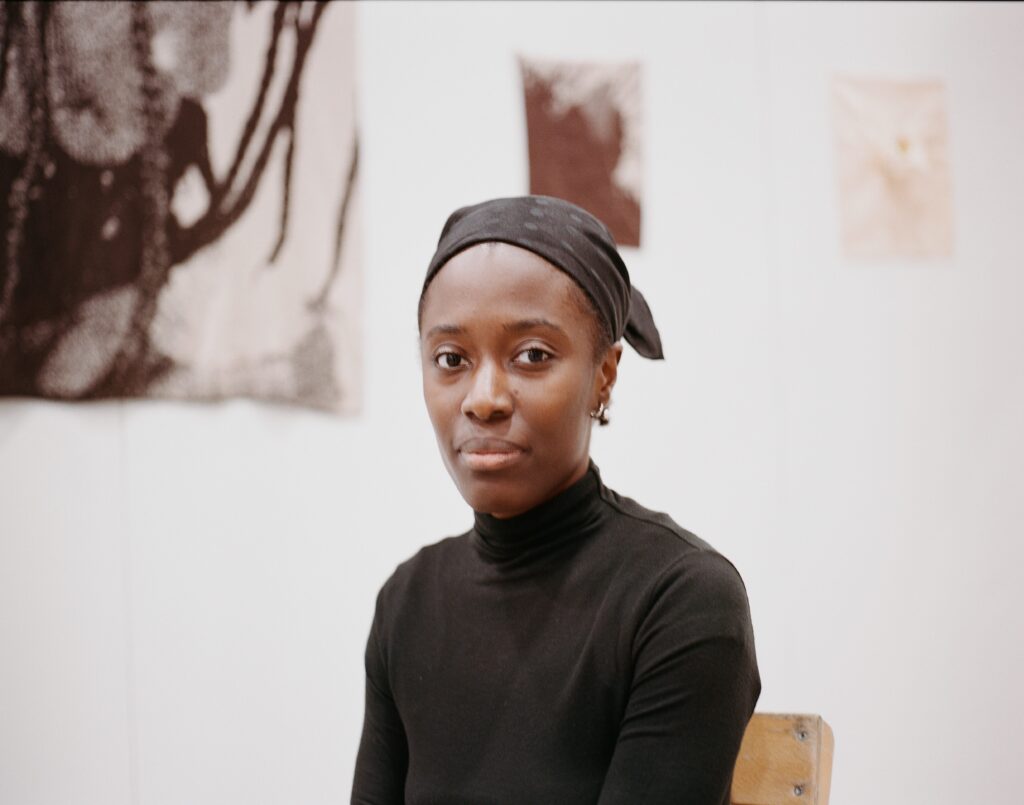
Wendy Owusu
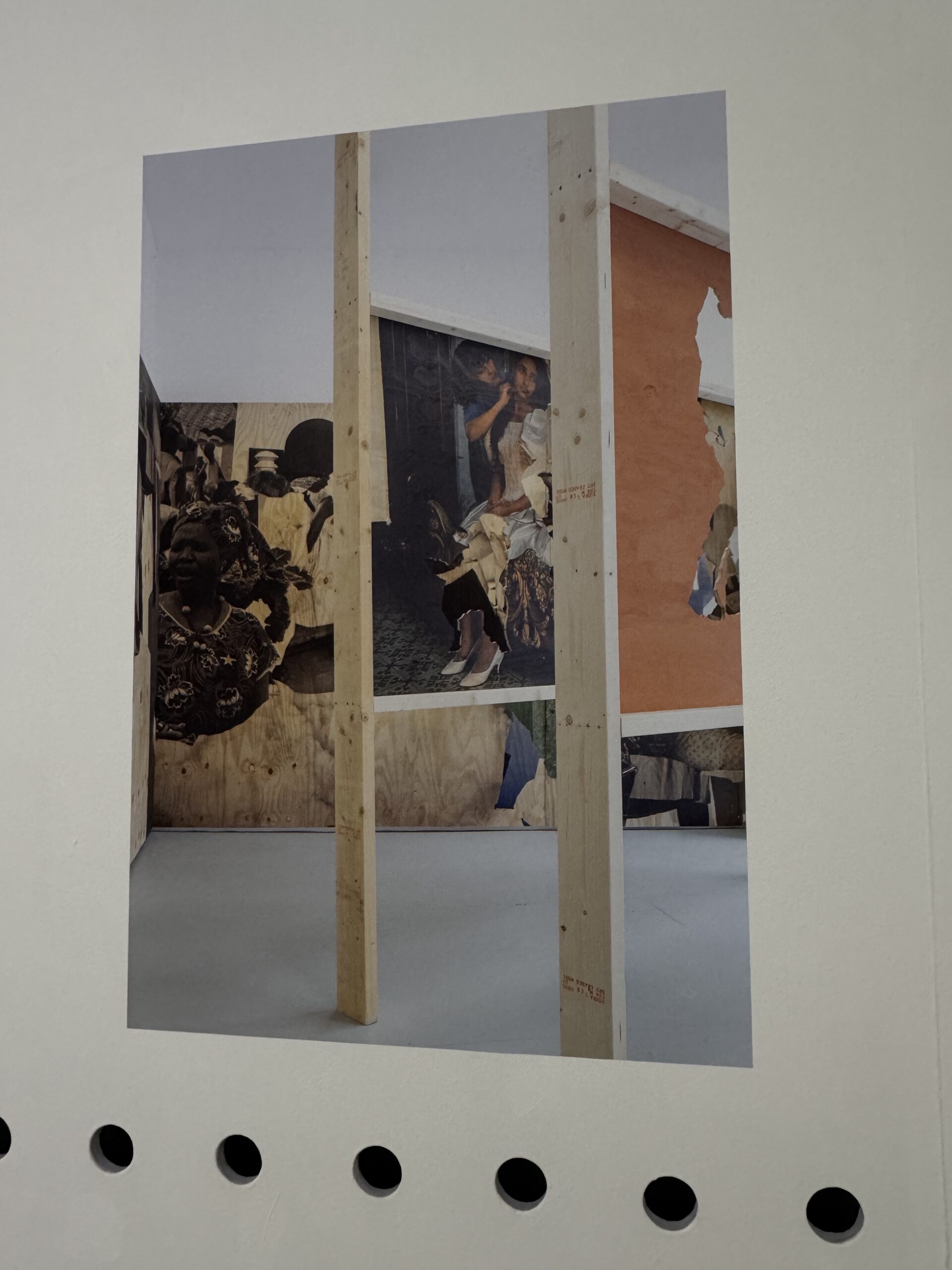
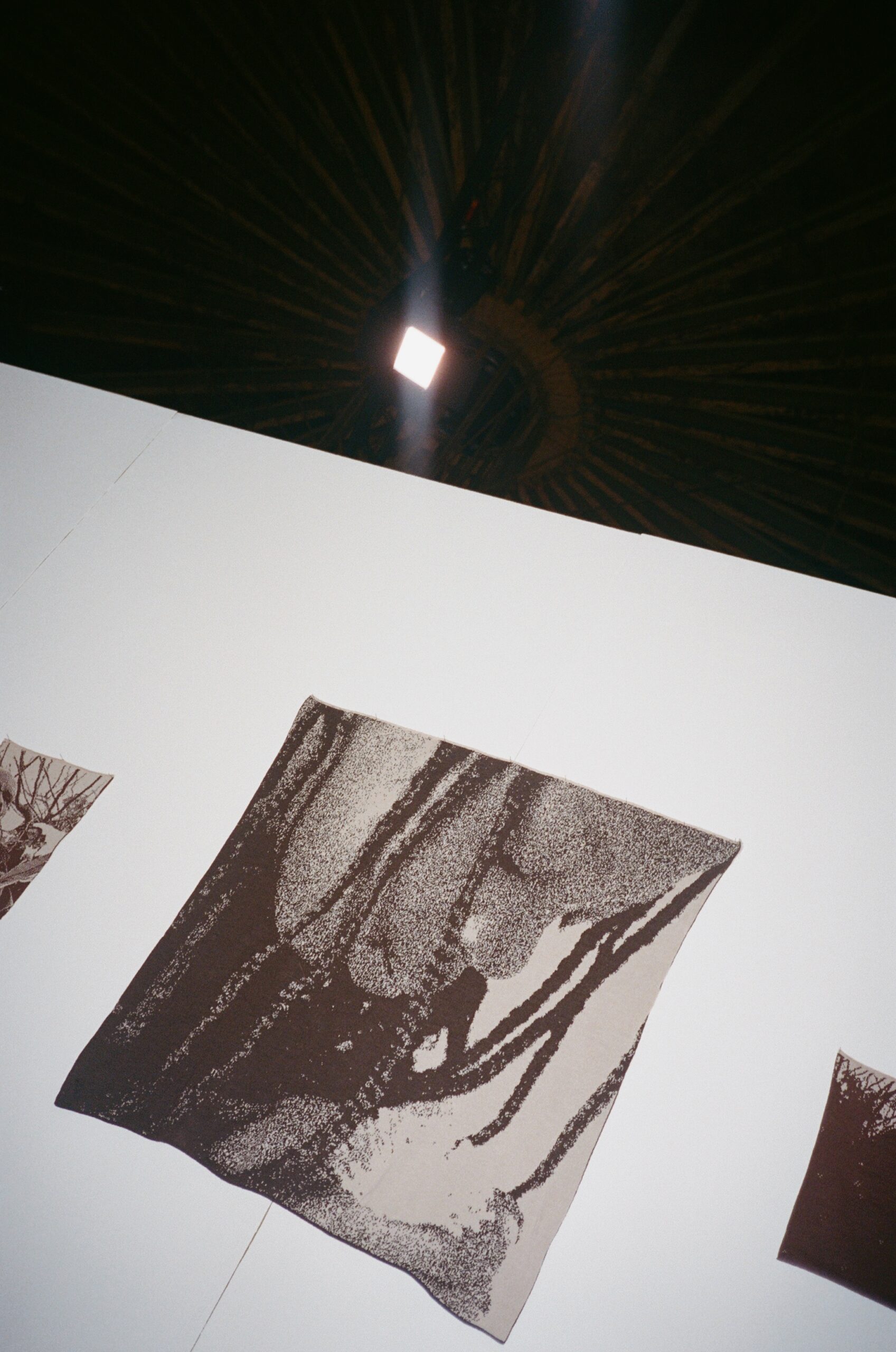
Tell us about the scenes you’ve captured in these panels?
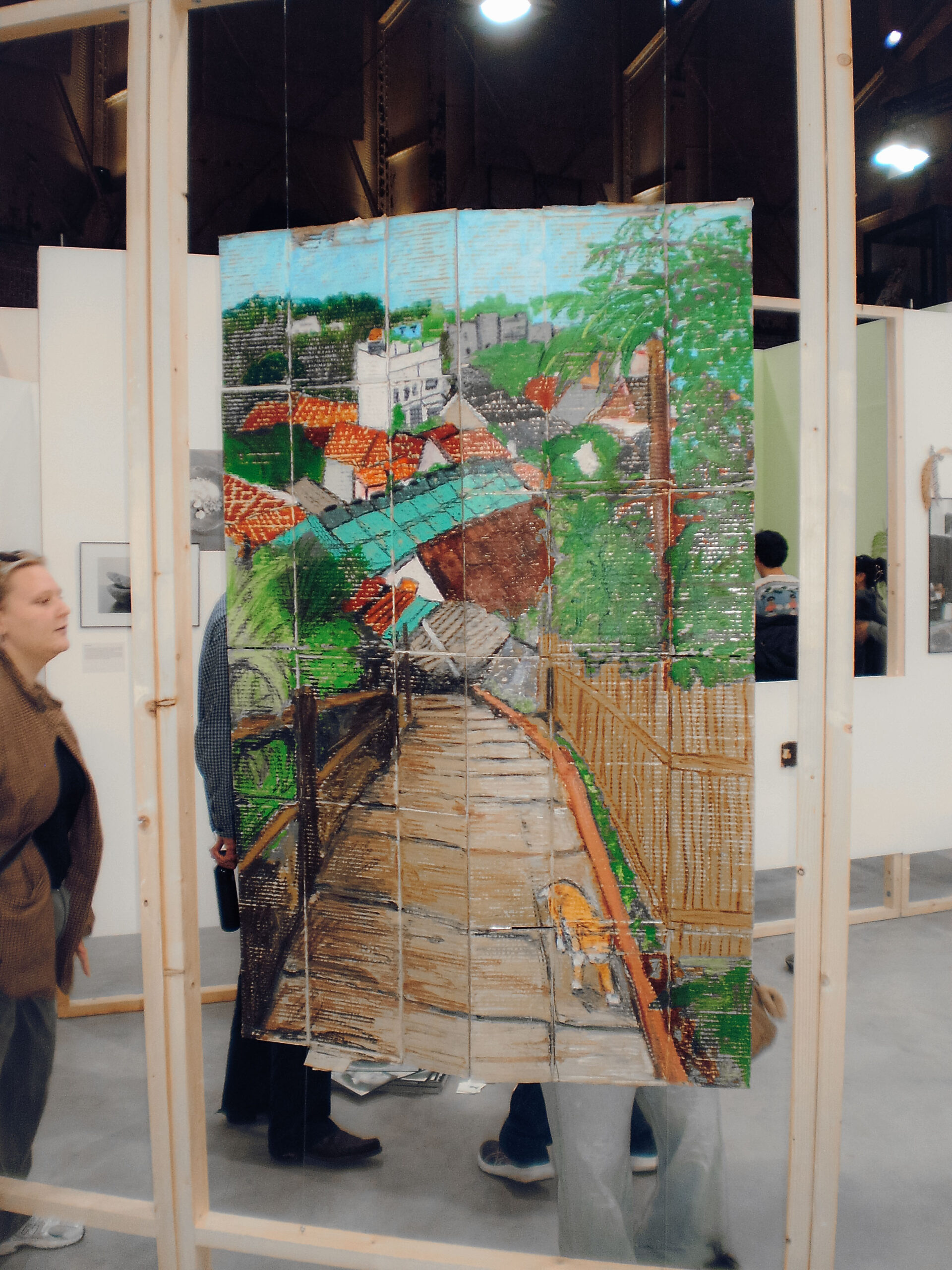
I tried to recreate moments and objects from my childhood, and from a place that has now disappeared – a housing estate I grew up in, in the eastern suburbs of Paris. The person in one of the middle panels is actually my dad, holding fake flowers. For me they are kitsch, but they are also comforting and beautiful in their own way. I called this series Beauté Modeste, which translates to cheap, modest beauty.
Your work has a strong archival aspect. What does your research process look like?
For this research, I went to the archive centre of the city hall and looked at pictures from before and during the neighbourhood demolition. I also take a lot of photos myself and try to memorise interesting things, or I create mind maps with lots of connected words and pictures.
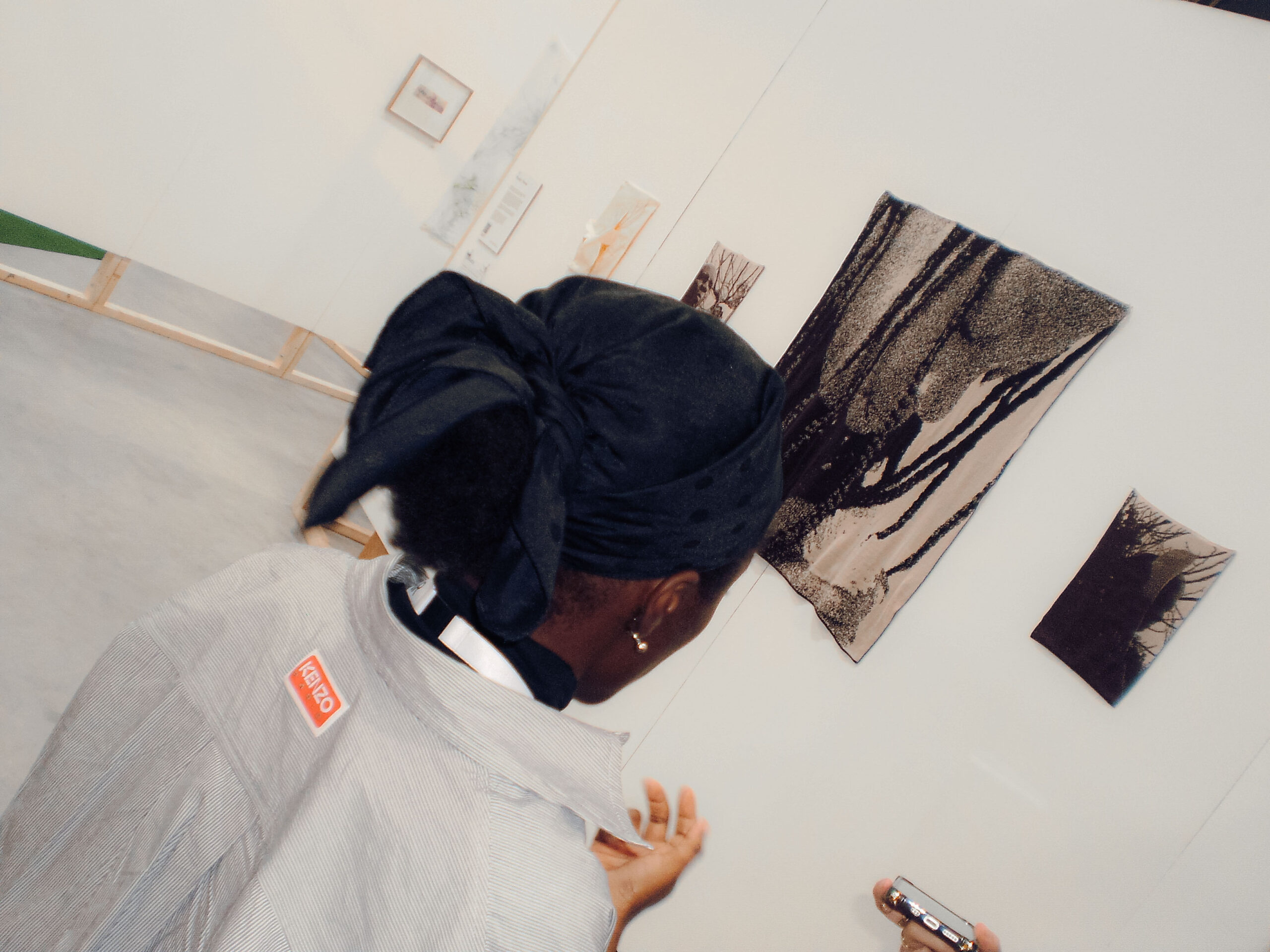
What is your personal connection to jacquard knit?
“Textile has been a narrative tool for me since the beginning of my art practice. I was drawing a lot of clothes as a child as a way to express myself.
”
Also, my parents are from Ghana where they sometimes wear clothes embroidered with adinkra symbols – each one with a different meaning. I’m used to seeing people tell stories with textiles.
Where do you find inspiration while in Amsterdam?
I walk around a lot. I look at patterns, gestures, architecture, and I try to understand how a city works and how people behave within it.
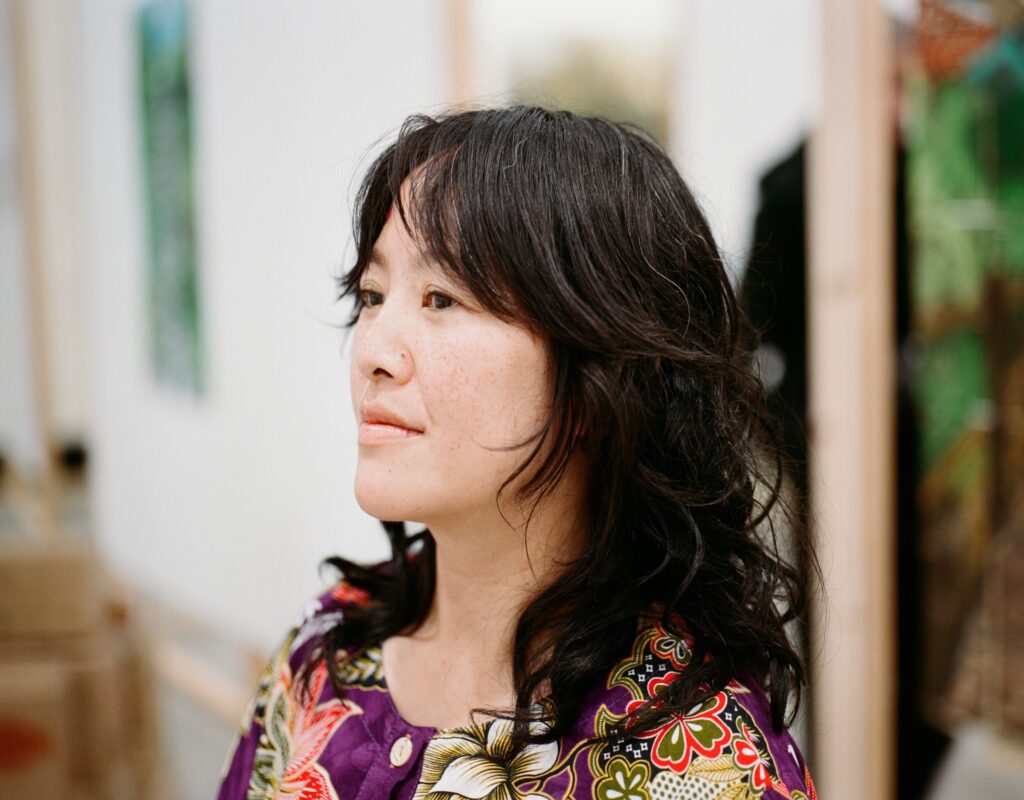
Pris Roos
Set the scene – what was it like growing up in your family’s toko? What were the sounds, the smells, the colours surrounding you?
The sounds I most remember were the metallic utensils against the wadjan. I would wake up and go to school, and everybody was already cooking up something in the kitchen. The smells were the herbs and spices of all the curries that were brewing. All the senses were heavily involved. My dad and aunts were cooking the whole day.
Do you think growing up in such a sensorially stimulating environment also influenced your visual expression?
For sure. Things that shape you when you are younger come back to you as an artist.
“Being an artist is all about touching your inner child. I think that’s the most beautiful thing.
”
Do you feel a responsibility as an artist to share stories of your heritage?
I’ve always felt a responsibility to step up. To show up. I think my responsibility as a successful artist is to set an example, educate and support. This series at UNFAIR26 is especially focused on my own background. I find it very personal and emotional, because it goes into the generational trauma that everyone with a migrant background experiences.
It’s very interesting that, when you become older, you are finally confident in who you are as a person. I finally accept myself, especially as a queer woman of colour. I am Dutch, I am Indonesian, and my face has Chinese origins – nobody can tell who I actually am based on my appearance. The only one who knows is me. And the fact that I know is the starting point.
You have a beautiful mural on Van Hogendorpstraat in Amsterdam. Why was it important for you to place your art in a public setting?
The municipality of Amsterdam wanted to stimulate more street art from female artists of colour. The piece is called Aan Tafel. I made it as an answer to all these classical paintings of knights and Dutch noble men sitting around the table. Most of the time, women and people of colour are portrayed in the back as servants. So here I chose to set up a table of different women of colour.
When I make a piece about a certain part of the city, I really want to get to know the people. I didn’t want to make a mural about an iconic person, but just about you and me – women from different backgrounds. It’s a tribute to everybody who is a female doing silent labour. To those people who don’t see themselves as a hero, even though they are.
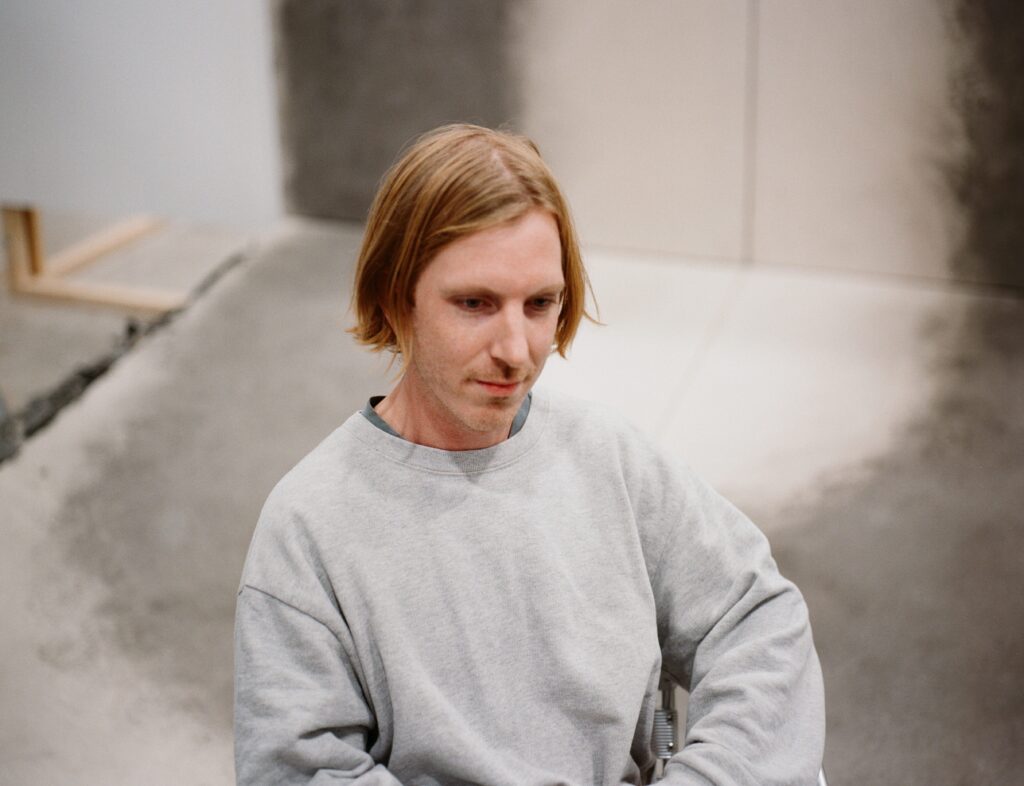
Rein Kooyman
How did the circle piece, 1086 kilometers walked on Canvas, come to be? What is the story behind it?
I’ve been collecting rocks now for more than ten years in the French Alps. My work is always a little bit about homesickness. That’s why I bring the rocks back to my studio because I cannot be in the Alps all the time.
So you’re homesick for the Alps?
Yeah, not the other way around. Normally, I’m always driving a small car to the Alps to collect the stones, and then I walk there and pack the stones into my bag. But this time I thought, let me walk from my studio to the source of the river, and then just do the whole walk again on a big canvas, putting the slate dust and mud from the river into a circle. I just wanted to be in touch with that material all the time. It was a walk, everyday, five days a week. Starting at 8am, finishing around 4 or 6pm.
What did you think about while walking?
I think the whole idea was not to think about anything. I really try to feel this connection with the walks. Sometimes I try to shut my eyes, but then I get confused a little bit [laughs].
“The work is really about simplifying options, thoughts and emotions. Being present and okay with it.
”
You must be so attuned to the landscape around you.
Everything we find in nature is very interesting. We’re producing so much stuff all the time, and we already have so much around us. So many different types of stones, materials, leaves… My work is activism, in that sense. I started making a garden, for example, to appreciate Dutch nature a bit more.
If your garden could speak, what would it say?
Sometimes there’s an event going on, and I hear the plants saying, “Ow, you’re sitting on me!” But, at the same time, the garden is really inviting people to calm down. You can be there in silence, in conversation with your thoughts, taking a break from everything. You can make tea from herbs in the garden for free all year long. It’s a protest against buying all the time, especially because the garden is in De Pijp where everything is so much about consumerism.
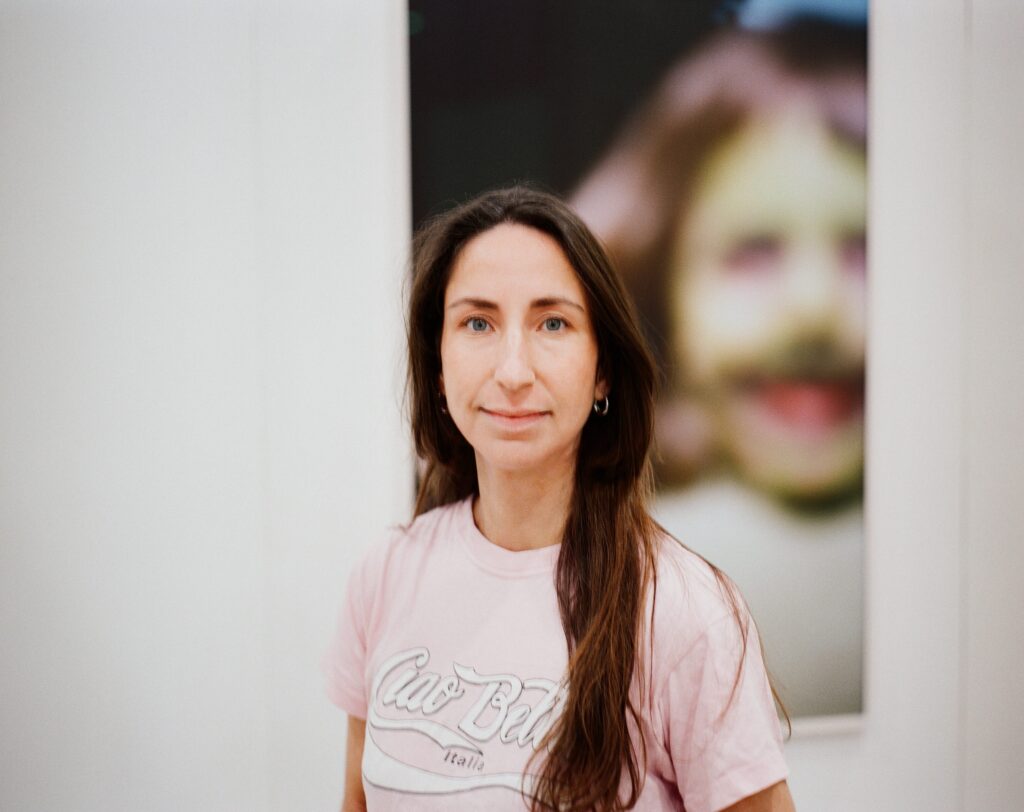
Verena Blok
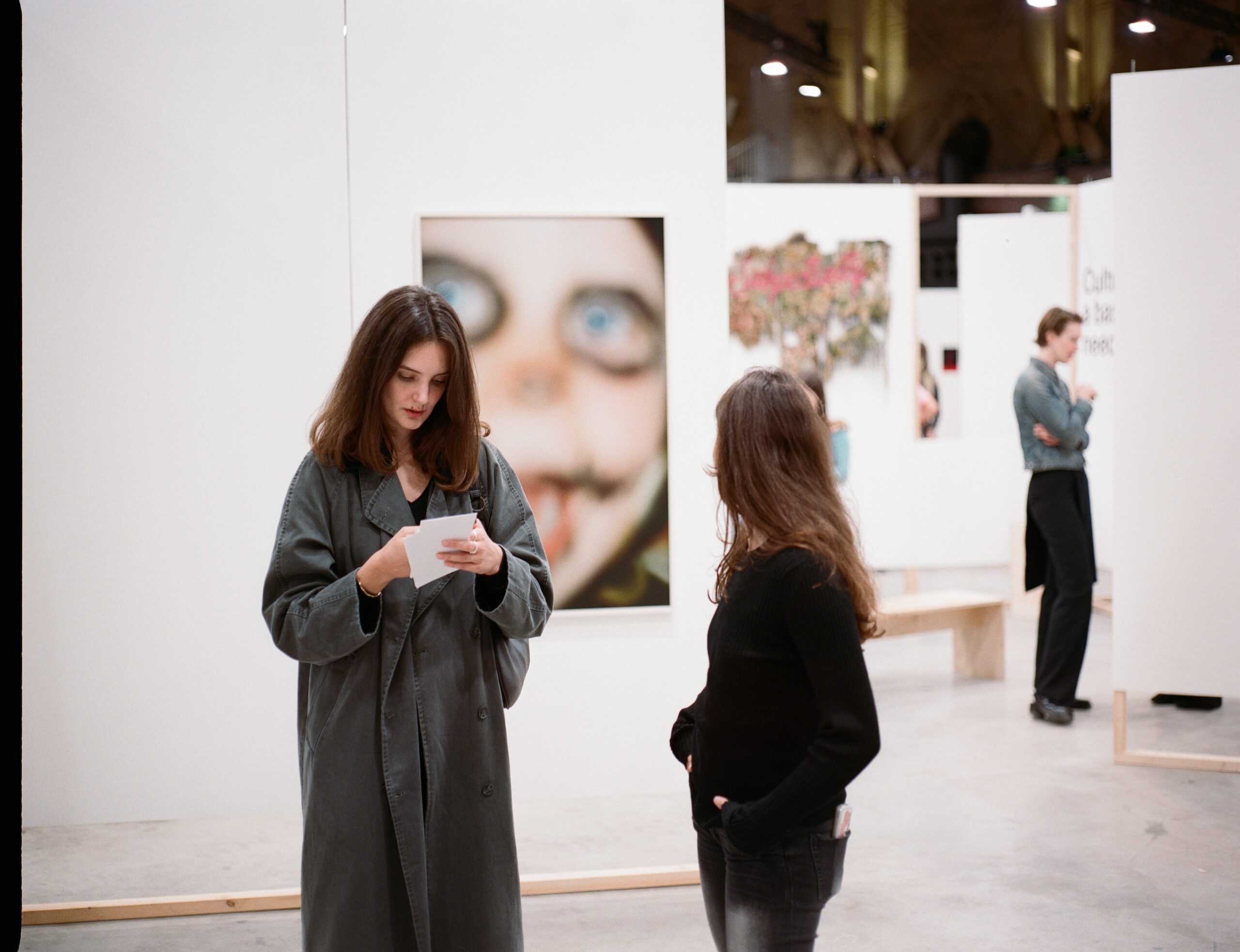
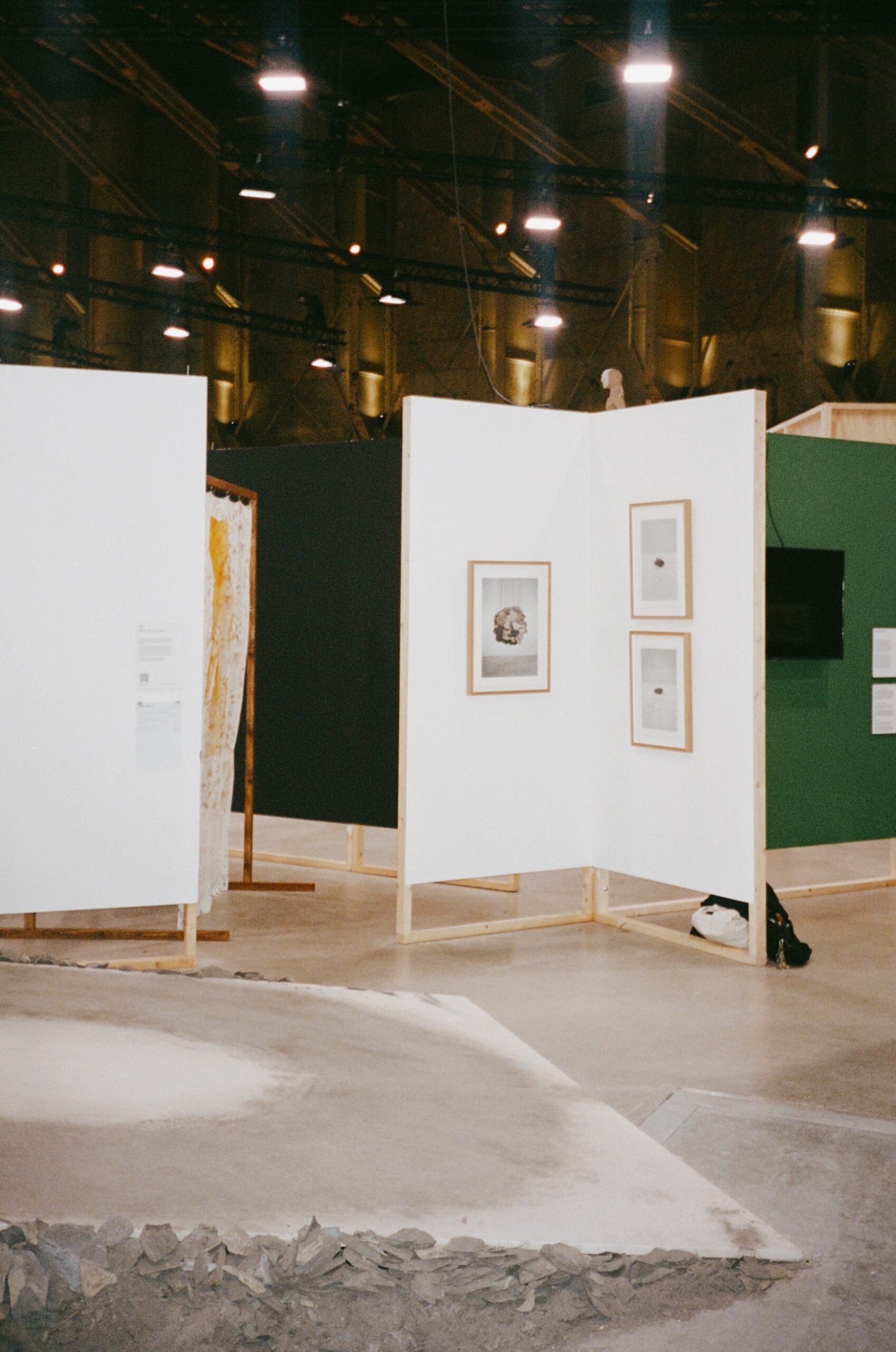
Your series Love Shit focused on motherhood. Here, you’re turning the lens specifically on children. Tell us about these photographs.
What I really like about these images is that a lot of things happen at the same time.
“They capture the fleetingness of growth and transformation. To me, they’re about the transience and fragility of life.
”
I like that the children are painted as characters that they also fear. I like this ambivalence. Really, it’s a new exploration into the meaning of the portrait, because they’re unrecognisable, unsharp. It’s a new visual experience.
How was this process for you?
It’s very different from how I usually work. When I take portraits, there tends to be a lot of time, focus and stillness surrounding us. But this was completely chaotic, in sound and in movement. I never really knew when I had the shot because there was so much going on.
The children are all captured in a moment of play. How important is play for you as an artist?
I think when you have children, you have to embrace the playfulness because your life becomes completely chaotic. You cannot always control what happens and when. I think I came to enjoy having less control. Deregulating can be very fun, interesting and inspiring.
Do you have a childhood memory that really stayed with you? Something that shaped your creative sensibilities or your eye as a photographer?
I have a lot of childhood memories from summers in Poland. We would spend all our time in the garden, climbing trees. I remember eating these really specific berries, poziomki, which you don’t really get anywhere else. They go bad very quickly. They’re transient, just like the moments in these works – it’s a funny connection. I remember the sensual experience of picking the berries. I think my childhood was a full-on sensory experience.
You’re an observer of people. What is the best spot for people-watching in Amsterdam?
I love people-watching at markets. Noordermarkt is a great place for that. I think it’s because it attracts a lot of different kinds of people. So often I would get distracted by a person, by a face… This is what is very important to me, in general. Surrounding myself with environments outside of the art world. Being in touch with people that don’t look like me or have the same job as me.