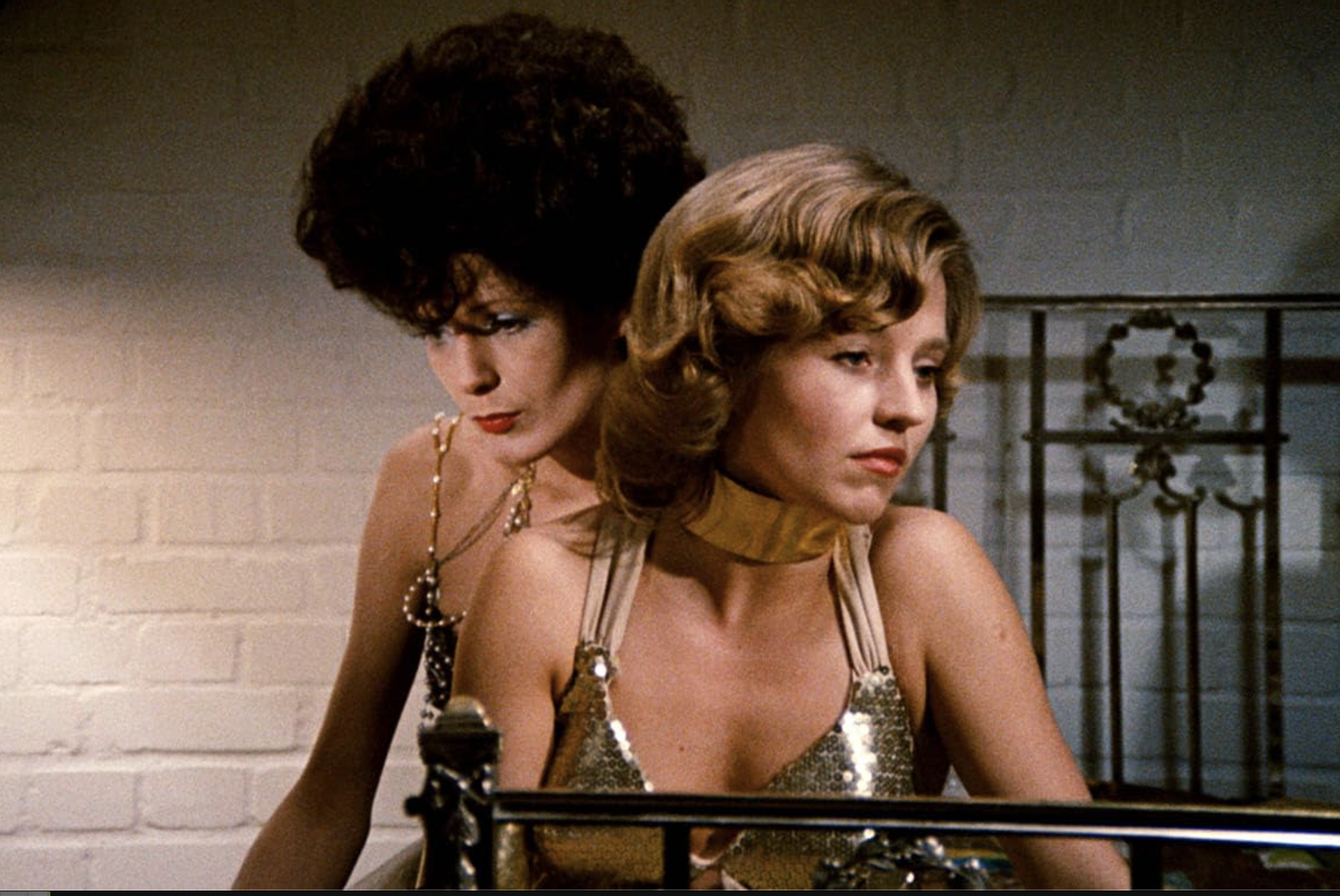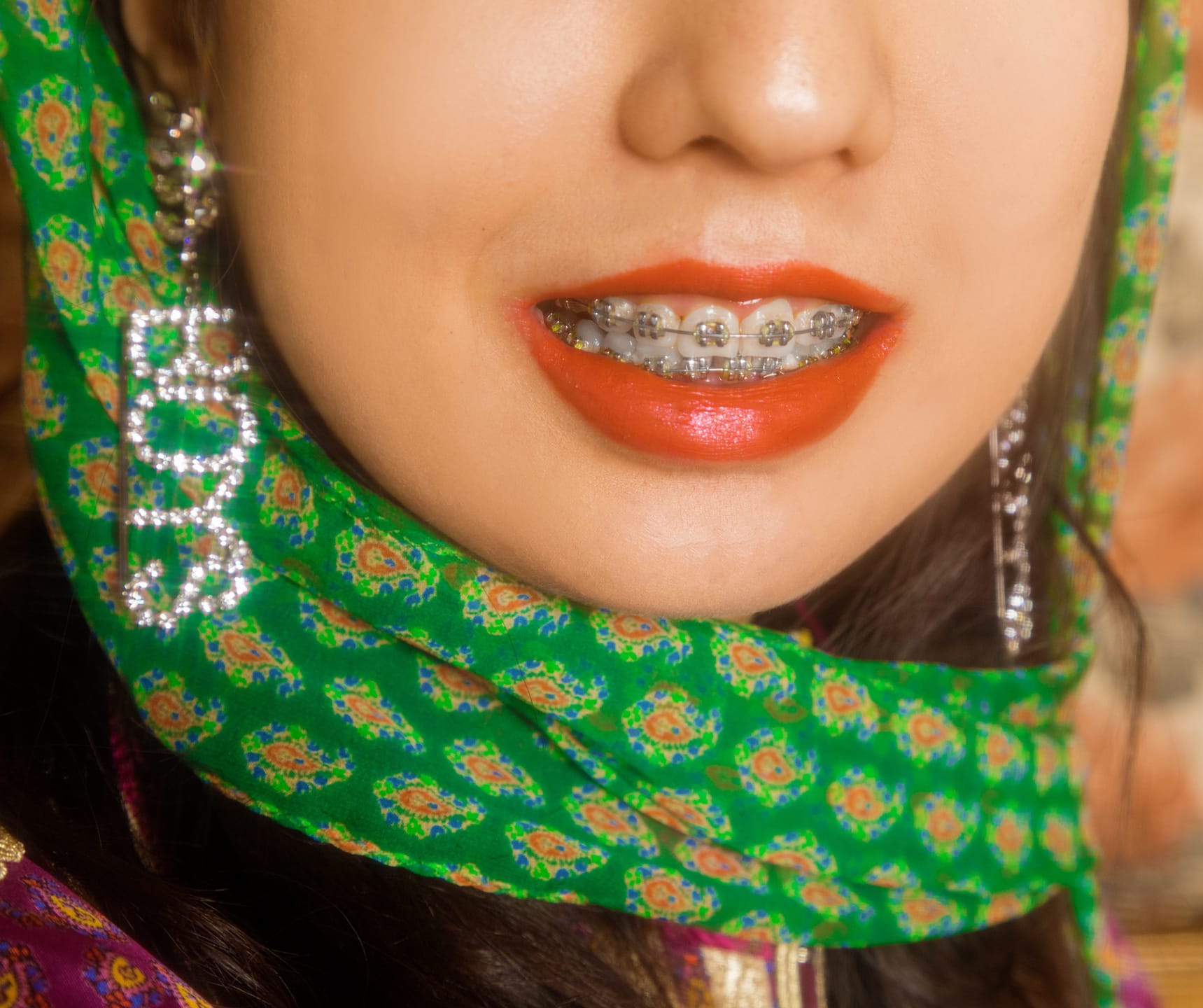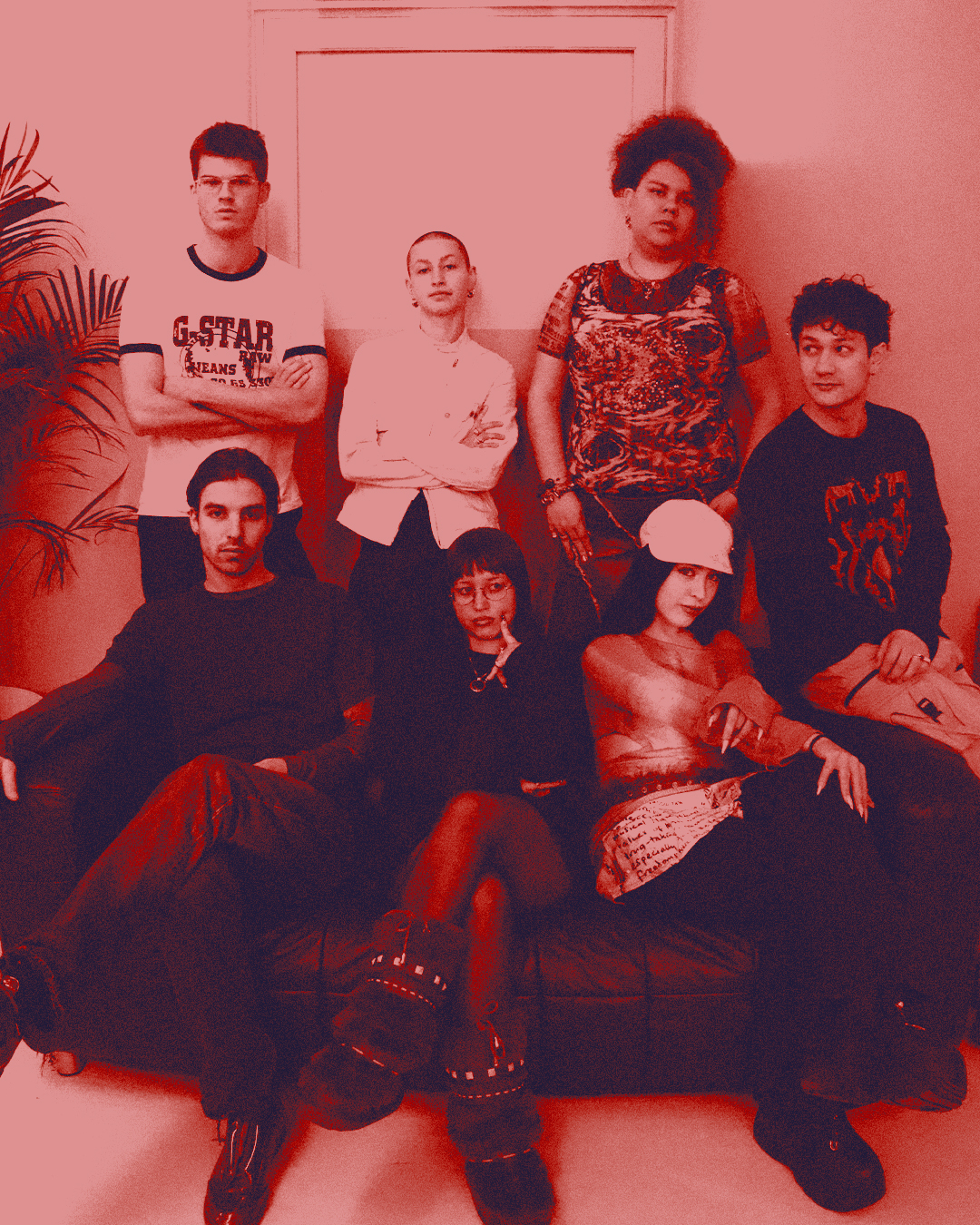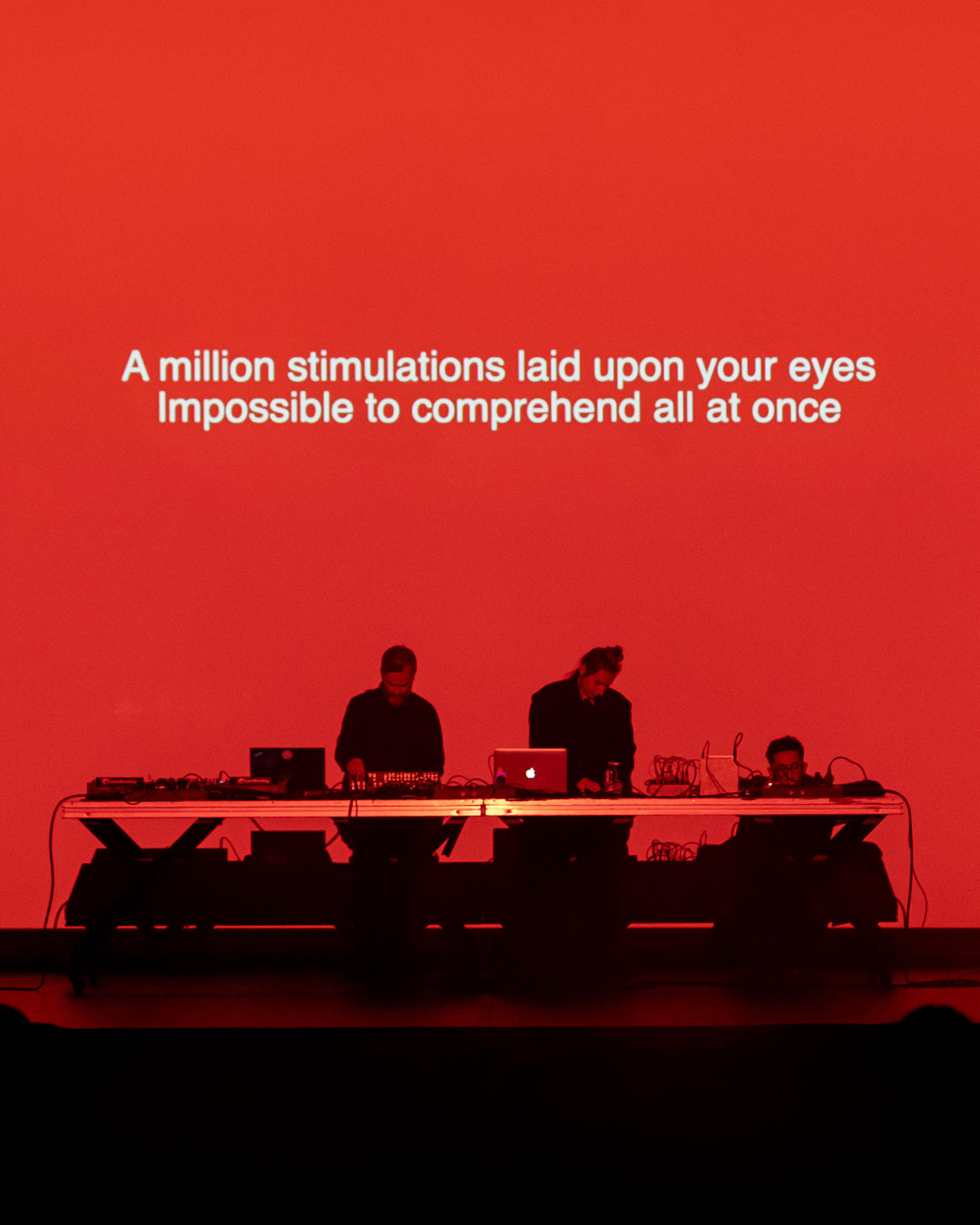
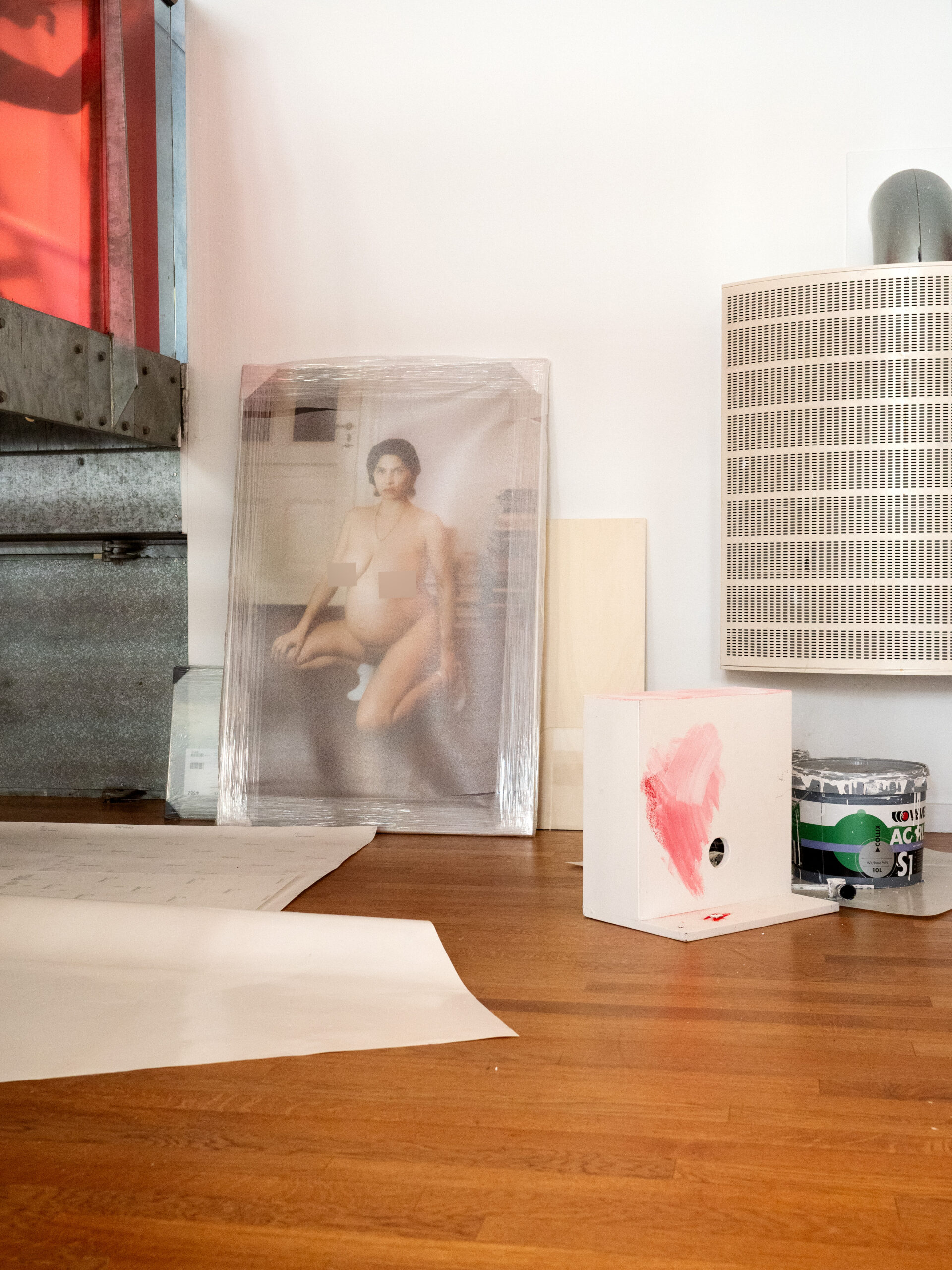
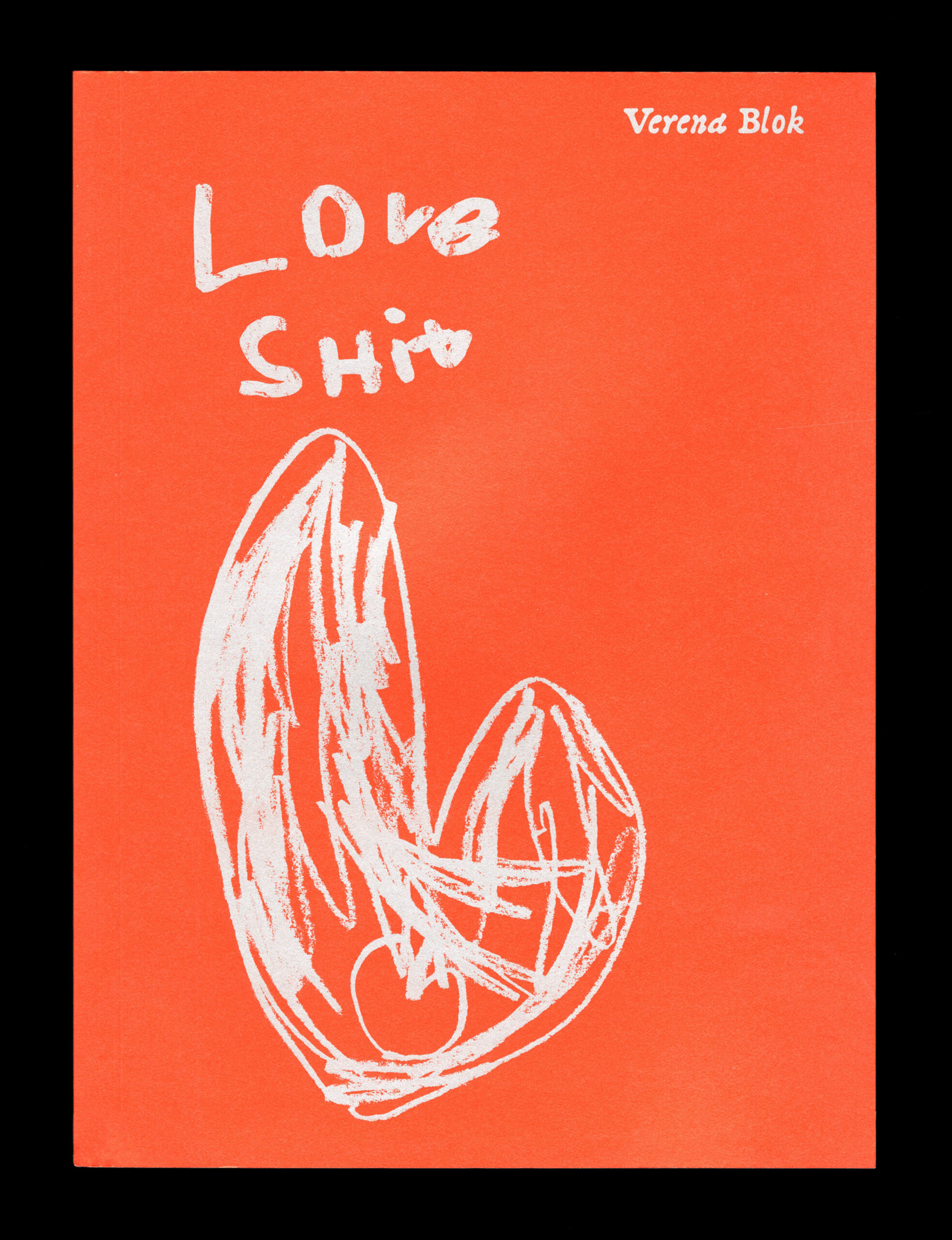
With her new project Love Shit now on view at Foam, photographer Verena Blok opens up a deeply personal archive of encounters that explore pregnancy, autonomy, and the emotional contradictions surrounding reproductive rights.
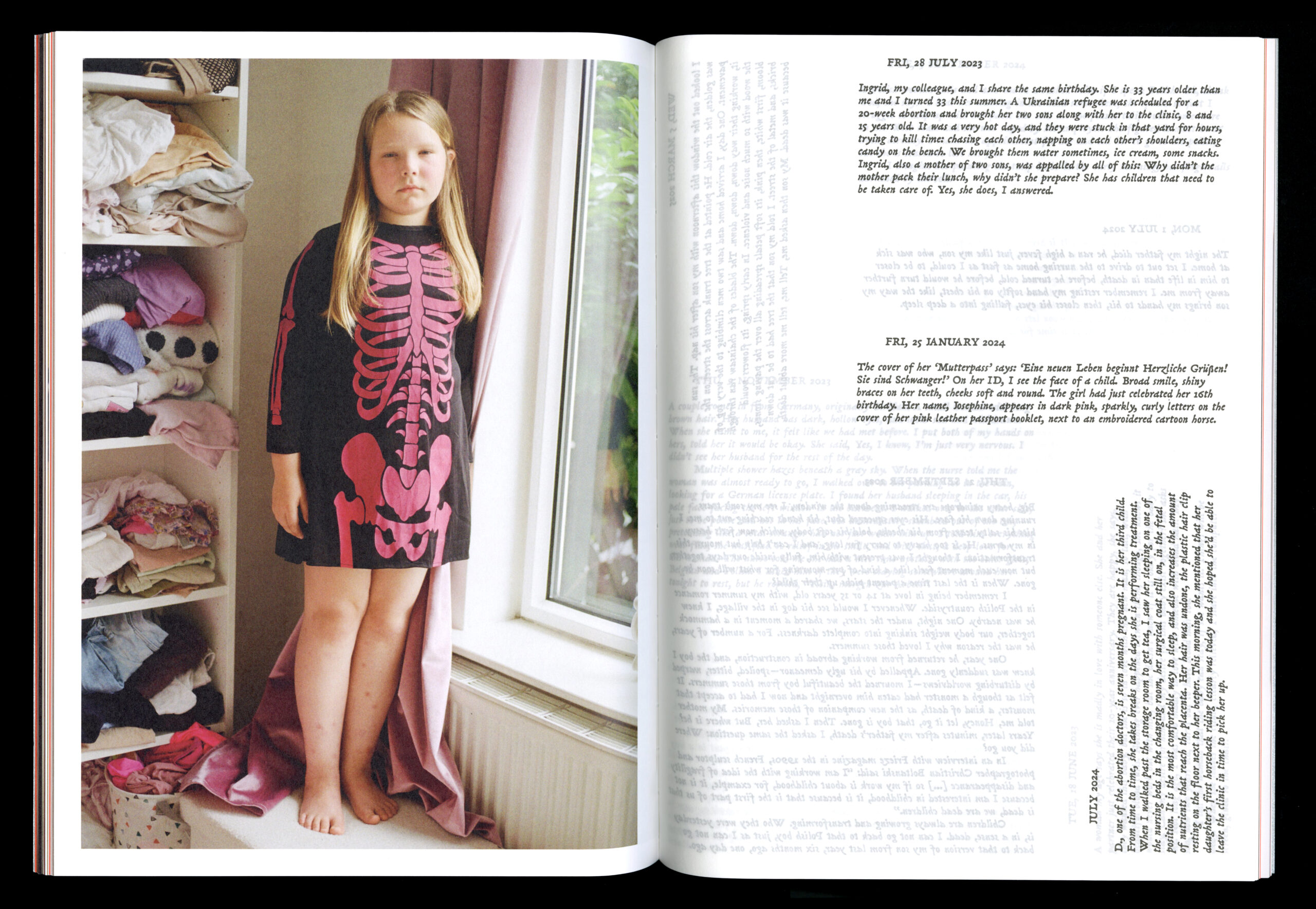
Developed over several years, the project grew out of two parallel experiences: working inside a Dutch abortion clinic while going through her own pregnancy. What emerged from this period is a body of work that moves between intimacy and discomfort, bringing together portraits, fragments of everyday life, diary notes, and sharp observations gathered across multiple countries.
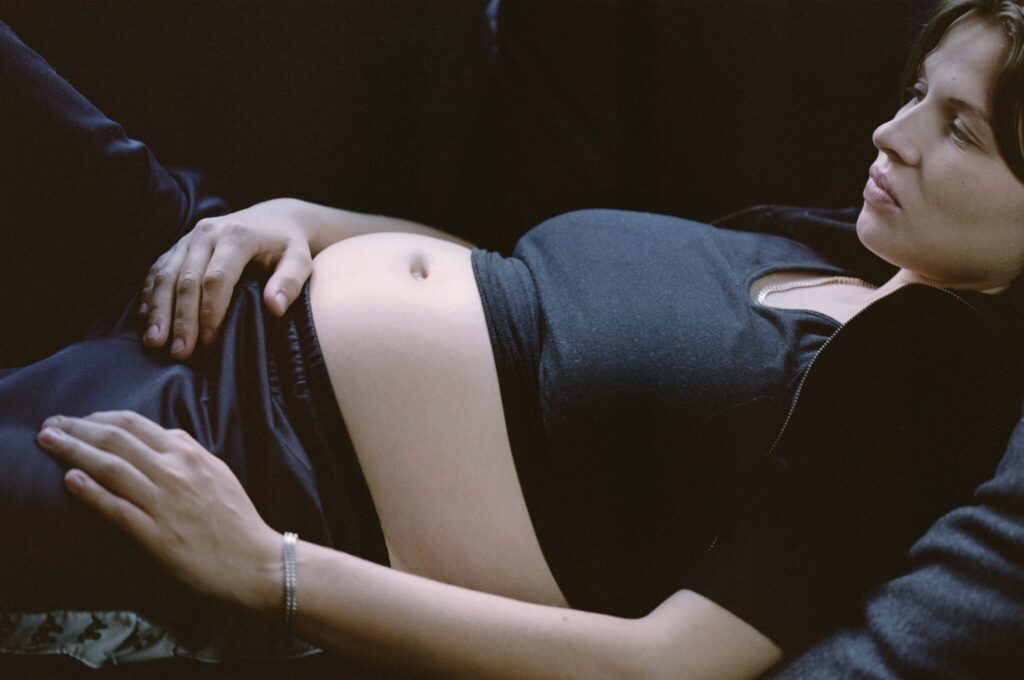
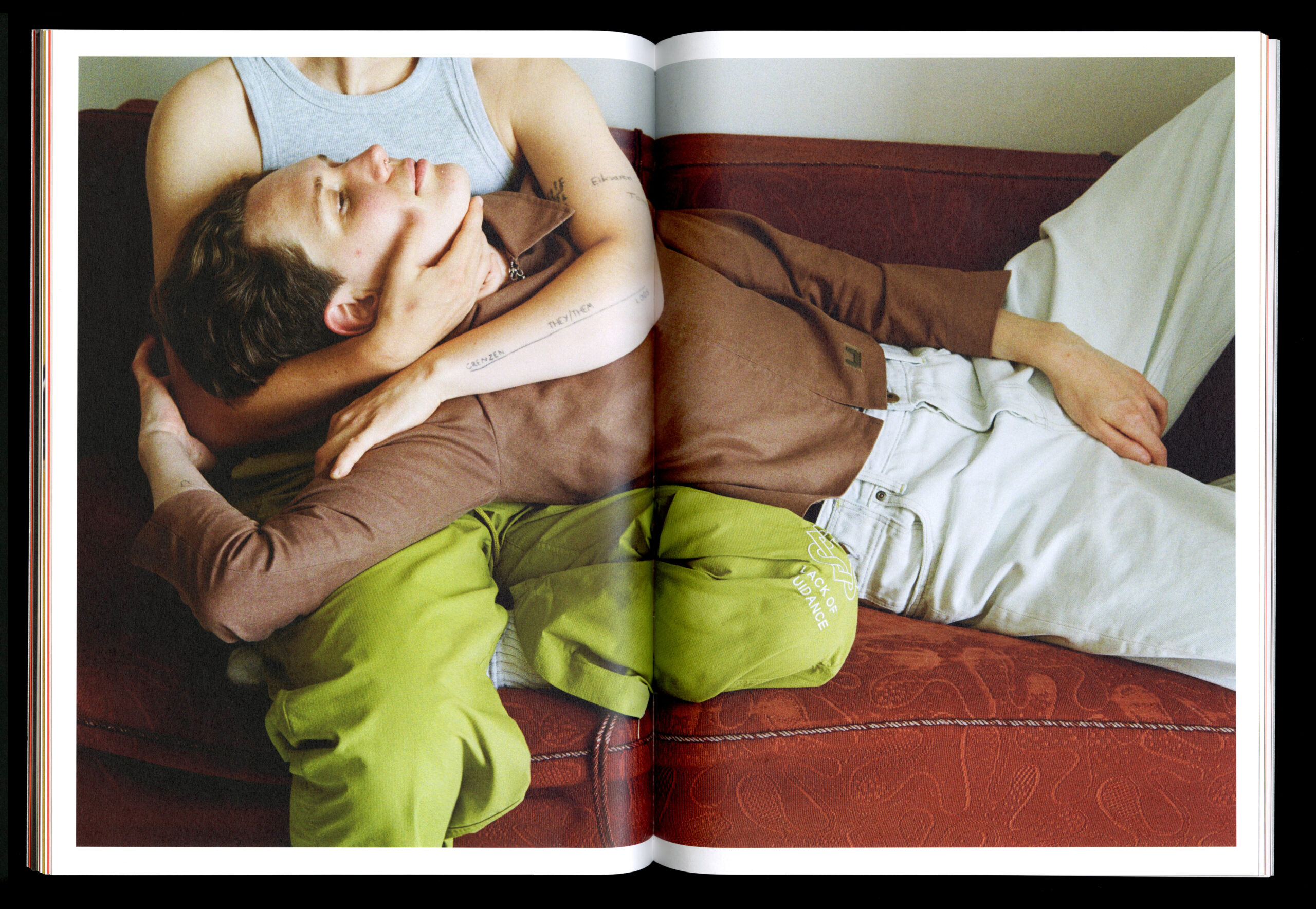
Using an analogue small-format camera that allows closeness without intrusion, Blok embeds herself within the lives of the people she photographs. The result is a series of images that feel both personal and political, revealing the fragile space where desire, doubt, motherhood, and choice intersect.
Now presented as both a book and an exhibition, Love Shit invites viewers to reconsider the cultural narratives surrounding fertility and reproductive rights.
Ahead of the exhibition opening, we spoke with Verena about working inside an abortion clinic, photographing pregnancy beyond romantic clichés, and why reproductive rights remain one of the most contested terrains of our time.
How are you feeling today?
Still quite jetlagged, so I am moving through a slightly sleepy, dreamy state. But I am also very excited. I just came back from Mexico City, where I spent the last month working on a project, and almost immediately moved into full build-up mode for the show at Foam. I am really looking forward to seeing everything come together.
Love Shit grew out of two parallel experiences: working in a Dutch abortion clinic and going through your own pregnancy. When did you realize these two worlds needed to exist inside the same project?
In our society, these worlds are often treated as opposites, when actually both are equally part of women’s history. Over 50% of the clients at the clinic are already mothers, often in stable relationships and between 30 and 35 years old. That reality goes completely against the stereotype of the young, irresponsible student.
I tend to work with a certain kind of discomfort in my projects, so intuitively I knew these two worlds needed to exist together in order to challenge that stigmatization. Ultimately, both experiences start with pregnancy, which is and has always been a political field in itself. For that reason, they belong together.
For two and a half years you photographed pregnant people in countries where abortion laws are restricted or illegal. What stayed with you most from those encounters?
Everyone has a different story, but at the same time they are all part of a shared history. What surprised me most was the mutual understanding that developed between us. The fact that I had worked at an abortion clinic and was also a mother often broke the ice immediately.
There is still a strong taboo around doubts during pregnancy. Abortion is often framed as something frightening, associated with trauma or loss. Finding people willing to participate was not easy at first. Pregnancy can make people feel physically and emotionally disoriented. Hormonal changes can be more intense than adolescence. This transition into motherhood is even recognized as a developmental phase called matrescence, a term coined in the 1970s by Dana Raphael.
But once we met, there was often an immediate bond. Almost like a temporary free space opened up.
What also stayed with me was the judgement many people experienced from healthcare providers. I met people from Germany and Poland whose doctors threatened to report them to authorities simply for considering abortion. That obsession with protecting life often refers only to the first weeks of pregnancy, a cluster of cells, while ignoring the realities of the life that comes after birth.
Parenting requires community, affordable housing, childcare, support from the state. Women and mothers are still not taken seriously, and that failure begins in politics.
“Photography, at least in the way I practice it, is a form of love. It is about seeing people and allowing them to feel seen.”
Verena Blok
How did working inside an abortion clinic shape the way you see choice and autonomy?
It was an incredibly complex and fascinating environment to be part of. Becoming a mother and working at the abortion clinic are probably the most feminist experiences I have had so far. After giving birth I actually became even more radical in my understanding of freedom of choice.
Many people were surprised that I worked at the clinic while having a newborn at home. They assumed it would be emotionally difficult to spend the day around abortion and then pick up my baby from daycare. But in reality it was the opposite. I loved working there.
At the clinic I encountered people from many different socio economic and cultural backgrounds. I was often the first person they spoke to and sometimes the only person close to their age. Because of the vulnerability of the situation, people were often very open.
Some encounters felt almost cinematic. People arriving with children because they had no one to leave them with. Couples arguing. Someone’s mother quietly waiting in the waiting room. A boyfriend crying at the desk because he loved his partner so deeply.
The shame and secrecy surrounding abortion is still enormous. Many people had to cross borders for treatment and could not tell anyone. The loneliness and lack of support was striking.
How did your own pregnancy change your understanding of motherhood?
Before becoming pregnant I understood reproductive rights mostly on a theoretical and political level. But once you go through the embodied experience yourself, everything becomes more urgent and much clearer.
At the same time I discovered a kind of love that goes far beyond anything I had experienced before. That transformation also changed the way I see my own mother. Spending time with her during that period made me realize she was reliving aspects of raising me.
My mother grew up in Poland in the 1950s, in a family that lost many relatives during the war. Thinking about her childhood made time feel multidimensional. Recently I started imagining my parents as children themselves. What games they played. How they were comforted and loved — or not loved.
There is a beautiful film by Céline Sciamma called Petite Maman where a young girl befriends another girl in the forest who turns out to be her mother as a child. That delicate and slightly magical way of thinking about maternal relationships stayed with me.
What does your process look like when you enter a space like this? Are you working instinctively or very deliberately?
Usually I begin with a direction in mind. My studio wall is covered with printed images I collect from books, magazines, film stills, or online references. I need to surround myself with images before starting. It creates a mental atmosphere.
Earlier in my practice I worked more spontaneously. Now I prepare more, but spontaneity still exists within that structure.
For Love Shit I had often never met the people I photographed before, so every meeting was a kind of guess. Sometimes I asked for help with styling, especially with couples. Clothing, texture, and color can really shape an image.
But the most important element is the relationship with the person I photograph. That trust forms the basis of every image. Some sessions lasted for hours and felt almost dreamlike. Those moments when everything else disappears are when I feel most free.
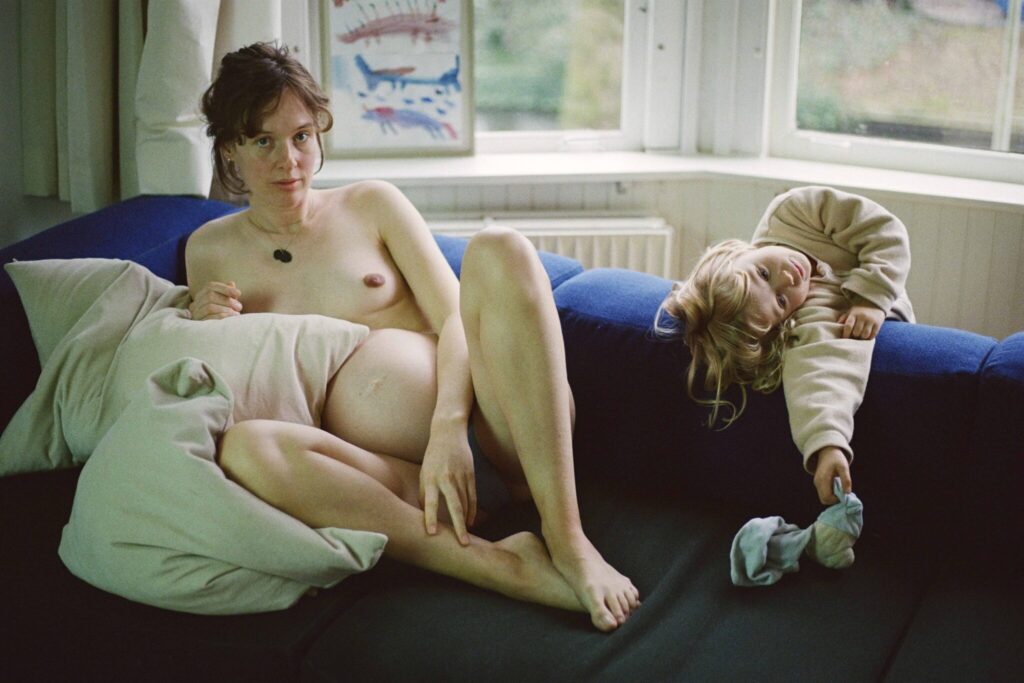
Your images feel intimate but never intrusive. How do you build trust with the people you photograph?
My parents were cultural anthropologists, so growing up we spent long periods of time visiting friends and communities across Europe. We rarely stayed in hotels. We stayed in people’s homes.
Because of that I became very comfortable with the strangeness and beauty of entering someone else’s environment. Being surrounded by their objects, their routines, their stories.
People can feel when they are truly being listened to. That sincerity is a form of love. And photography, at least in the way I practice it, is also a form of love. It is about seeing people and allowing them to feel seen.
Trust builds naturally when you show up with genuine curiosity and respect.
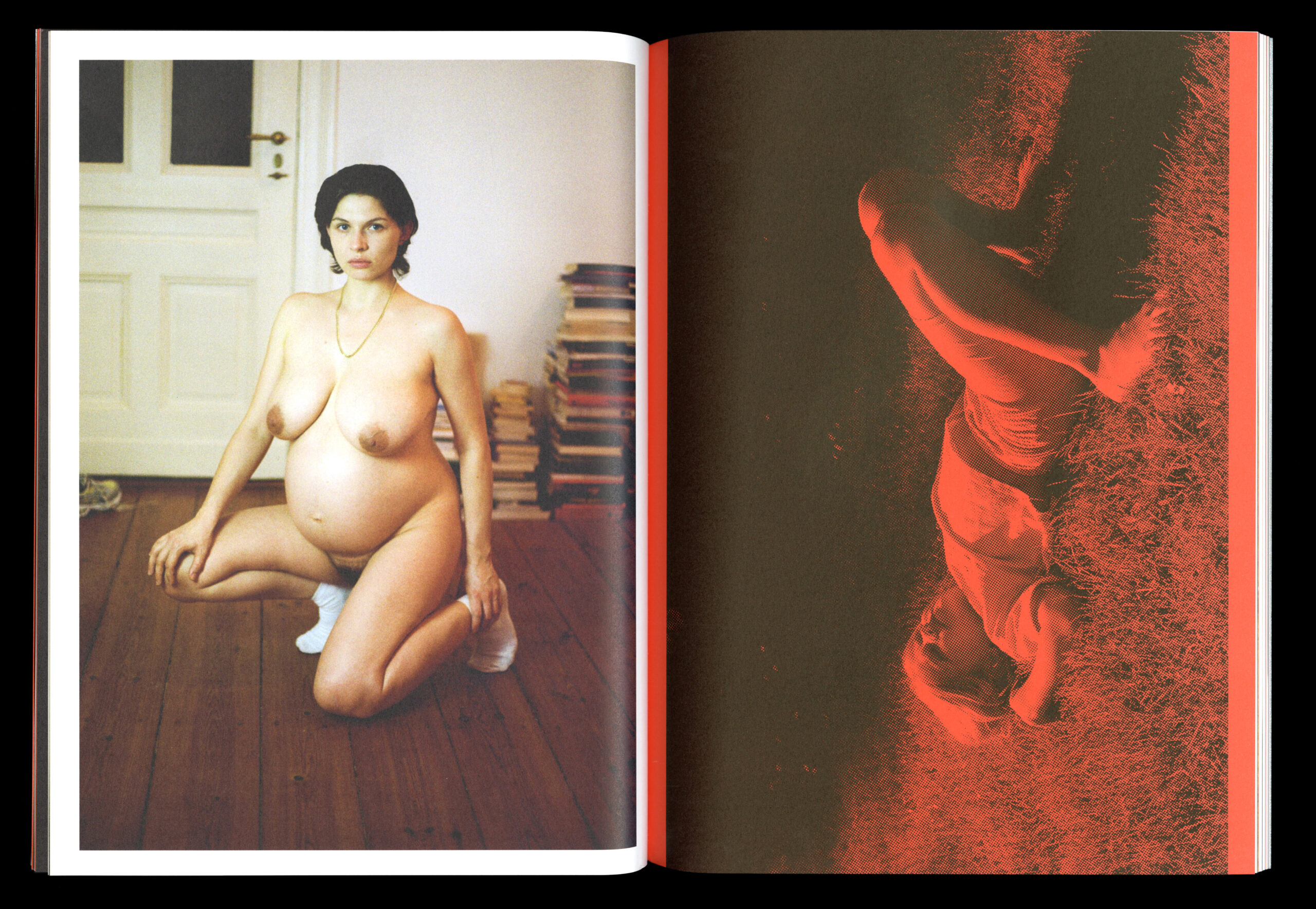
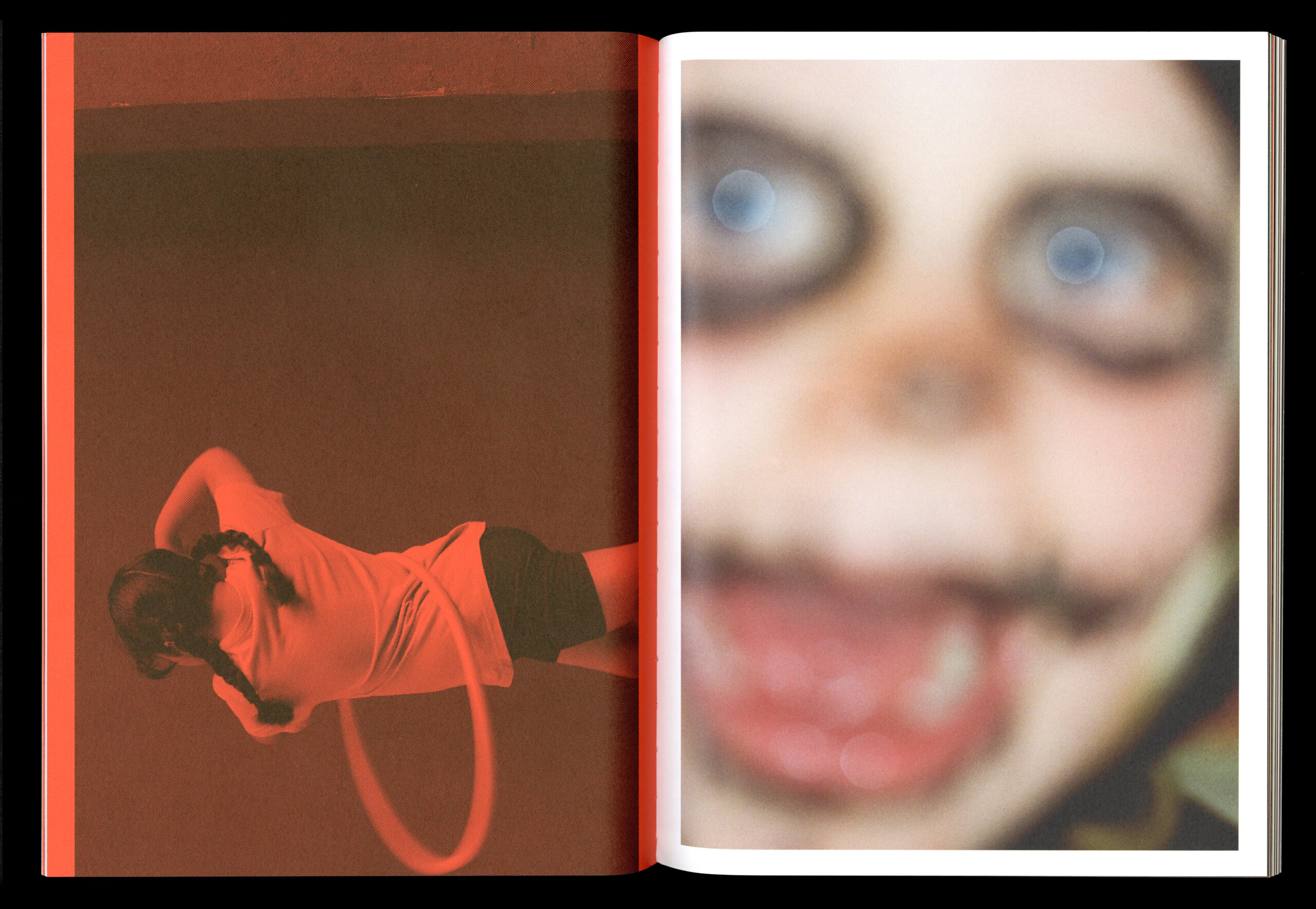
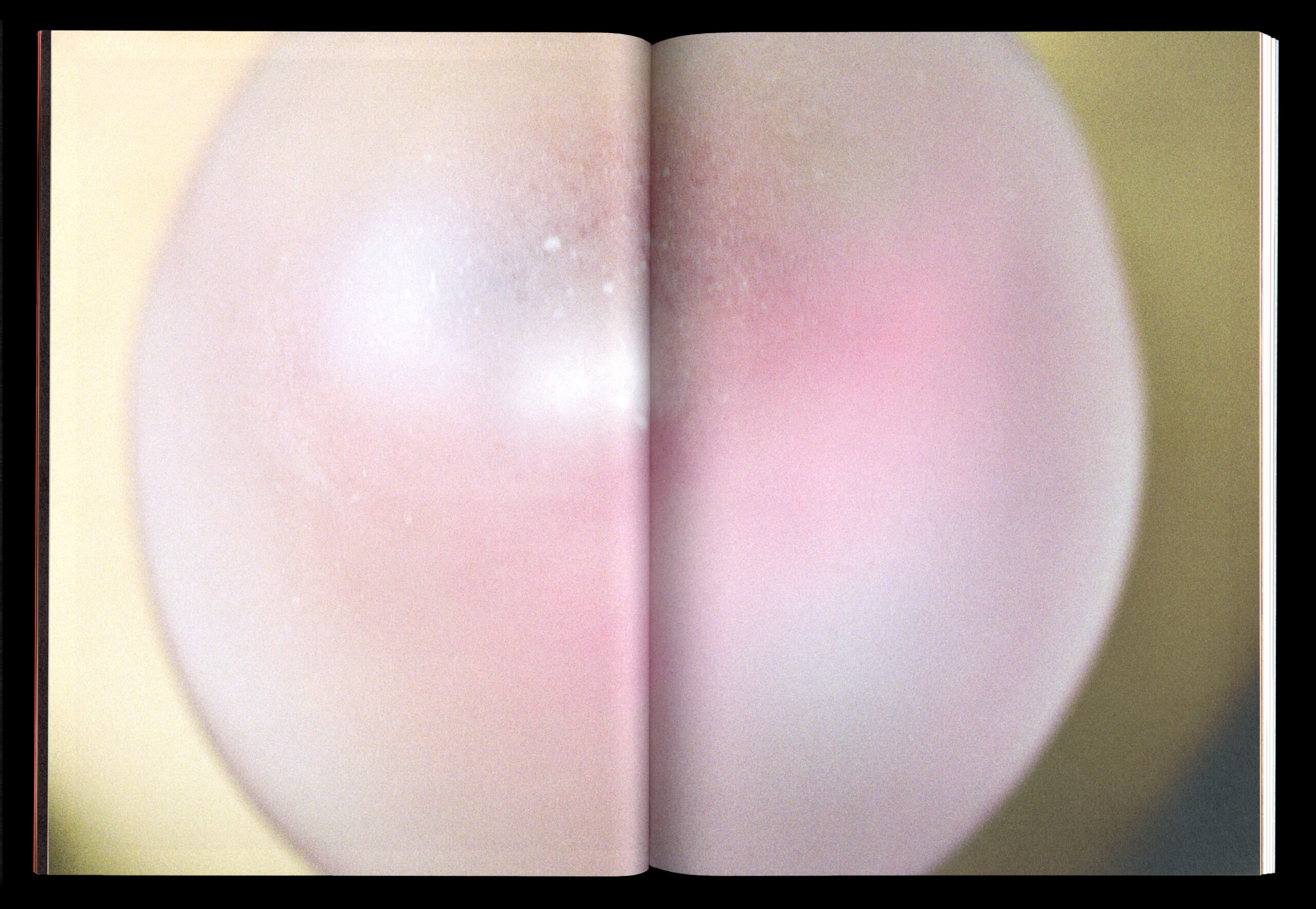
The book weaves portraits together with close ups of toys, kissing teenagers, and children at play. How did you decide on that visual rhythm?
It developed very intuitively. Pregnancy was the starting point of the project, but through those encounters the stories naturally expanded into topics like abortion, desire, ambivalence, and childhood.
Working inside the clinic also shaped the visual rhythm. I witnessed small everyday moments that stayed with me. Couples arguing. The sound of a kiss in the hallway. Children playing outside in the garden because they were not allowed inside the clinic.
The project became about the messiness of fertility. Many things can happen within one life. So it felt important to include those different layers.
The work moves between tenderness and discomfort. Was it important that the project did not resolve into something clear or comforting?
Yes, absolutely. Discomfort is important. It creates space for reflection.
The imagery we usually see of pregnancy tends to be very polished and romantic. Think of the famous Vanity Fair cover of Demi Moore photographed by Annie Leibovitz in the 1990s. That image created an entire trend of glamorous pregnancy photography.
For me that kind of imagery feels very flat. Pregnancy has many sharp edges. Emotional ambivalence, uncertainty, fear, desire.
I was especially interested in photographing the early stages of pregnancy where those doubts still exist.
You combine photographs with diary fragments and notes. When do you know an image needs language next to it?
The combination of image and language can create interesting tensions. Words can guide interpretation but also mislead the viewer in productive ways.
In Love Shit I deliberately avoided attaching specific texts to specific photographs. I did not want the images to become illustrative.
As a viewer you never fully know who is who or which story belongs to which image. That ambiguity allows the narratives to move through time.
Ultimately the project could be about anyone. Fertility affects all of us.
Reproductive rights are increasingly under pressure worldwide. Did the urgency of this political climate shift the direction of the project while you were making it?
Very much so. When I began my residency at the Rijksakademie in 2020, Poland made abortion almost completely illegal and massive protests followed.
In 2021 Roe v. Wade was overturned in the United States. That same year I became pregnant myself.
In the years after abortion laws became more restrictive across several countries. All of that made the urgency of the project even clearer.
The title comes from a drawing by a five year old child named Sadie. What did the phrase Love Shit unlock for you?
I was immediately drawn to its directness. Applying that kind of child-like honesty to topics like bodily autonomy and reproductive rights felt powerful. The drawings also have an anarchistic quality that corresponds with fighting for those rights.
At its core the project is about love. But it is also about everything messy that comes with it.
Love Shit now exists as both a book and an exhibition. How does it feel to see the work move into space?
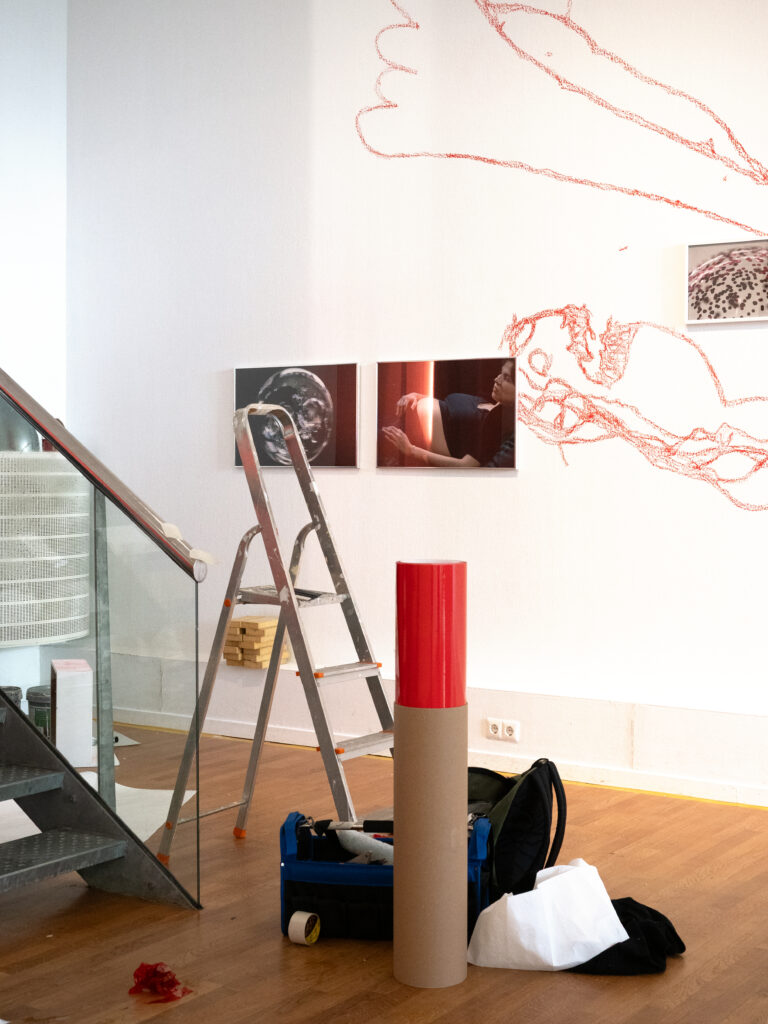
The exhibition adds new layers. The drawings now run through the space like a literal red thread between the photographs.
Seeing the images at a larger scale changes their physical presence. Some feel much more confronting or vulnerable when they occupy space.
What did success look like for you with this project?
Success is when the work resonates emotionally with people. When they recognize something of themselves in it. Both abortion and motherhood remain heavily stigmatized topics. I am glad the project helped open conversations around them.
If the work encourages people to share more with each other and carry fewer secrets, then it has already done something meaningful.
Now that it is out in the world, what are you still sitting with?
I notice I am concerned with the position of the child, or the idea of a child — not only with regard to the oppression of reproductive rights, but also ecological destruction, the manosphere, the genocide in Gaza, the Epstein files. It feels surreal to raise a human being at this time when there is so much we need to fight for. This project showed me how to connect the dots which I am very grateful for, and has kept a fire burning. I hope to expand Love Shit into something more, it feels like this is only the beginning.
Love Shit is on view at Foam Amsterdam until May 25th.