International Documentary Film Festival Amsterdam (IDFA) is widely regarded as the most influential (and best) documentary film festival in the world. It features numerous world, international, European and Dutch premiers. Every year the festival brings hundreds of documentaries, spanning from experimental essay styles to hard-hitting investigative journalistic works and hybrid docu-fiction pieces. While the festival features several official competitive sections, it is not merely a competition, but rather a celebration of the art of documentary filmmaking.
The festival takes place from November 12th to November 22nd offers an overwhelming amount of titles. This parsing serves as a guide in themes and perspectives, but for those who don’t want to limit themselves to one topic, but rather explore a little bit of everything we offer our own “best of” list!
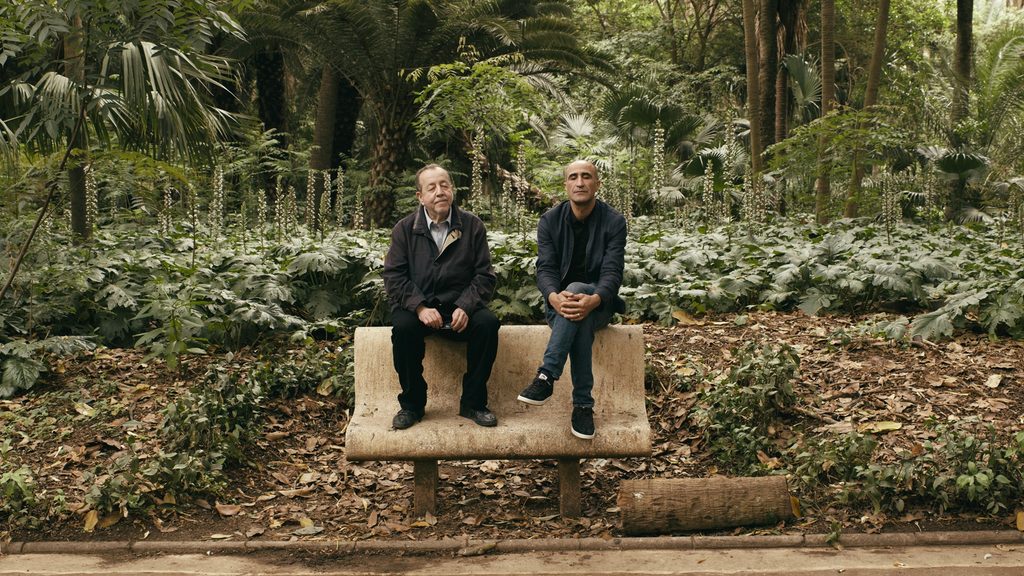
The movie follows Algerian novelist and intellectual Ameziane Fehrani on his quest to research Jacaranda trees. Imported from South America, these purple trees are part of the landscape of Algiers and look like “botanical fireworks” among its white buildings and city-scapes. Fehrani’s son, Hassan, follows and documents his father’s mission, capturing intimate moments between the two of them and with the city itself. The film explores what it means to feel like a tourist in the very place that has inspired Ameziane’s life’s work.
Fri, November 13, 11:45 / Tuschinski 4
Mon, November 16, 12:45 / Rialto de Pijp
Tue, November 17, 13:45 / The Pulse 2
Fri, November 20, 17:45 / The Pulse 1
Sat, November 21, 19:30 / Pathé noord 6
Ana Vaz spent ten years making Hanabi, and the patience shows. Built around Yoko Hayasuke’s Journal of a Radioactive Brain, the film is an essay in the truest sense: part diary, part testimony, part meditation on a danger you can’t see. Voice-over, text messages and survivors’ accounts drift together, while the Geiger counter’s ticking keeps the unease close.
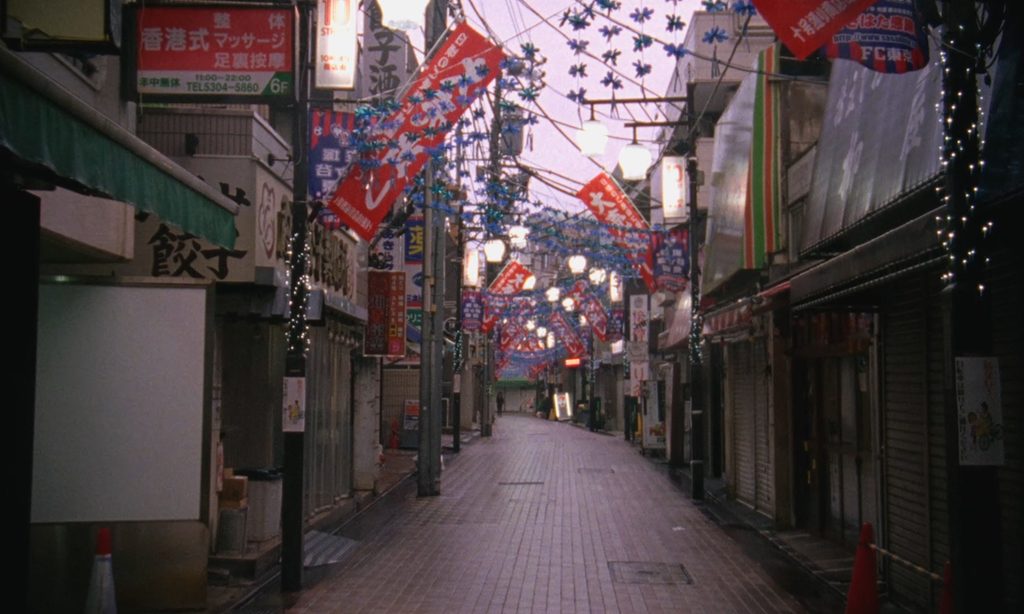
I loved the form and its idiosyncraticity. Vaz trusts the viewer to sit with ambiguity, and the imagery is often stunning, none more so than the setting sun that returns throughout the film. But the questions it raises (how do you live alongside a threat you can’t gauge?) landed hard. As someone prone to climate anxiety, I found a lot to carry out of this film. It’s a beautiful, hypnotic film, though perhaps not one to watch on a bad day.
Fri, November 13, 16:45 / The Documentary Pavilion
Sat, November 14, 15:30 / Ketelhuis
Mon, November 16, 21:45 / Tuschinski 4
Sat, November 21, 09:30 / Tuschinski 4
3. Maiken Baird’s “Edward Said: Between worlds” (2026)
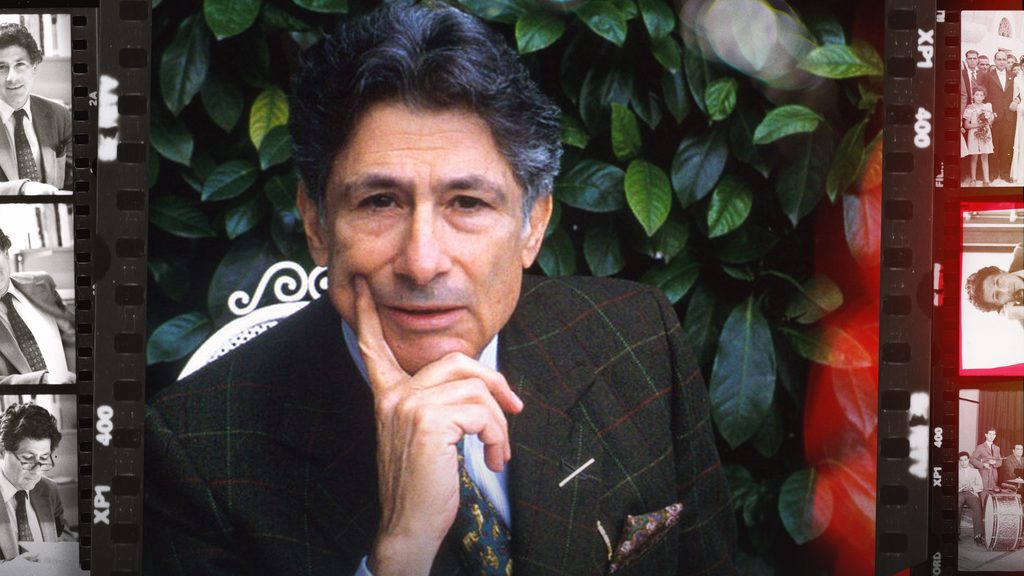
I owe much of how I understand the world to Edward Said, so when I saw this documentary on the list, I knew I had to watch it. Maiken Baird’s film traces Said’s life from his childhood in Jerusalem and the trauma of the Nakba to his groundbreaking work on Orientalism, weaving together family films, television debates and interviews.
What struck me most is how personal it gets. Said’s own story and the collective Palestinian struggle are never treated as separate threads, and I had chills more than once watching the life of such a prominent figure unfold on screen.
It’s also an essential watch right now. The film makes plain that these struggles stretch back decades and are rooted in history, not something new. For anyone who knows Said’s work, it’s deeply moving. For anyone who doesn’t, it’s a powerful place to start.
Fri, November 13, 14:00 / Pathé City 3
Sat, November 14, 20:15 / Rialto SILO Room 1
Sun, November 15, 12:45 / Eye: Cinema 2
Tue, November 17, 17:30 / Tuschinski 1
Wed, November 18, 15:00 / Podium Mozaïek
Sat, November 21, 18:30 / De Balie: Main Hall
4. Hussein Al-asadi’s “She was not alone” (2026)
Surrounded by water, swaying reeds and birdsong, She Was Not Alone follows Zaira through her daily routines in the ancient marshlands of southern Iraq: tending her water buffalo, cutting reeds, gathering firewood, baking bread. The shots are poetic and meditative, from dewdrops on the reeds and the glow of wood fires in the dark to Zaira alone on her wooden boat, rowing in all kinds of weather.
Observational in approach, the film uses natural soundscapes and intimate close-ups to give us a view into Zaira’s inner world. Over four years, the water level falls, the birdsong thins and the buffalo grow leaner. Nearly everyone leaves, forced out by the climate crisis. Except for Zaira.
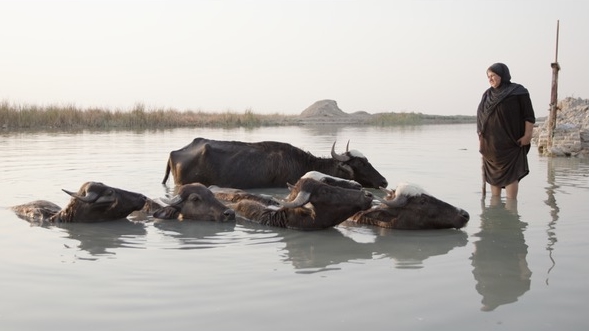
It’s striking to watch an elderly woman whose ties to her land are strong enough to withstand hardships that would, and does, drive anyone away. She has her animals, her admirable will and her connection to the land. It’s a moving portrait of a place under threat, and of the woman who refuses to give it up.
Sun, November 15, 16:30 / Pathé City 2
Mon, November 16, 19:15 / Pathé City 7
Tue, November 17, 13:45 / Pathé City 7
Wed, November 18, 17:00 / Kriterion 1
Fri, November 20, 09:30 / Rialto SILO Room 1
Sat, November 21, 14:30 / Tuschinski 3
Sun, November 22, 12:45 / Podium Mozaïek
5. Gabriel Tejedor’s “The Big Boom!” (2026)
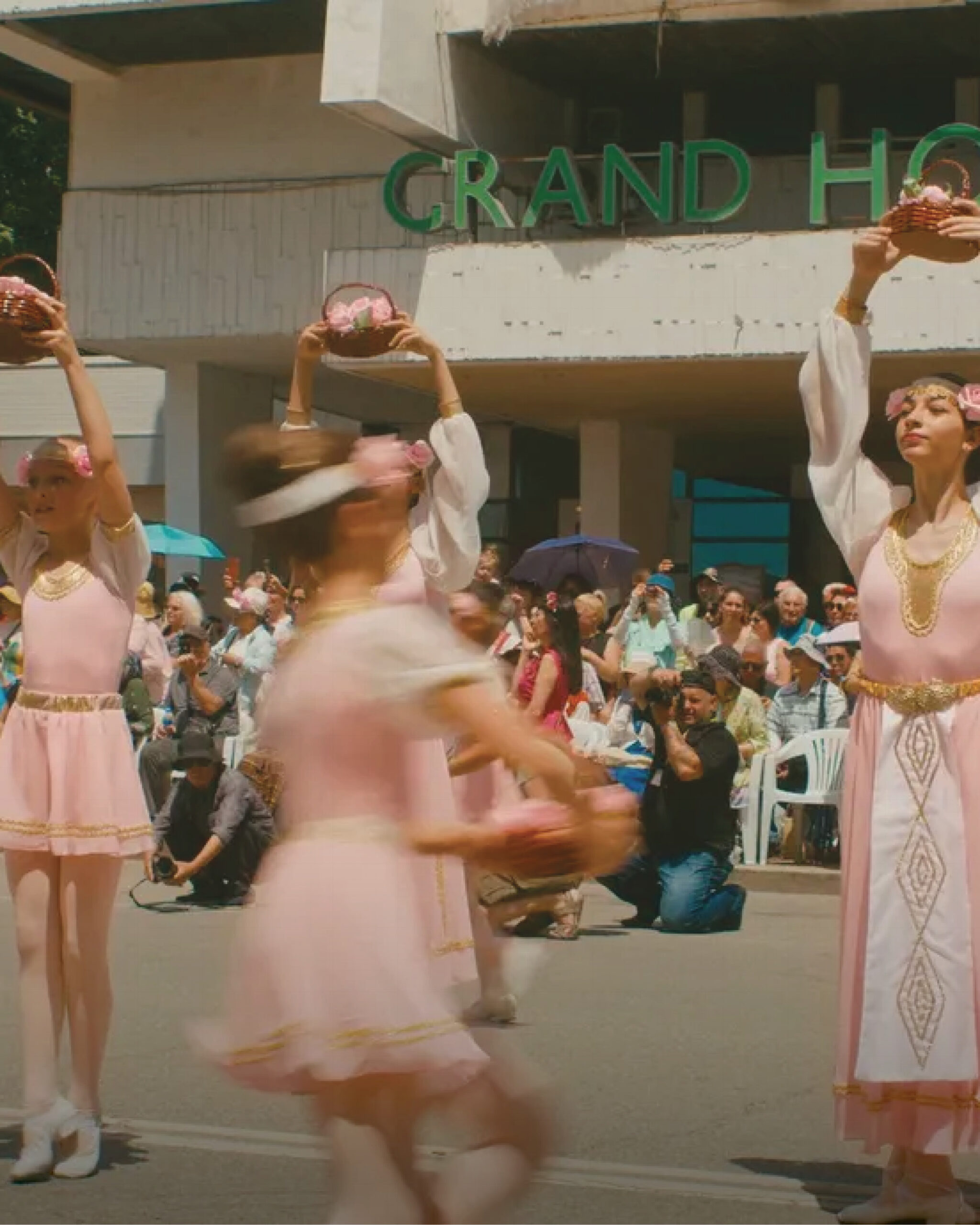
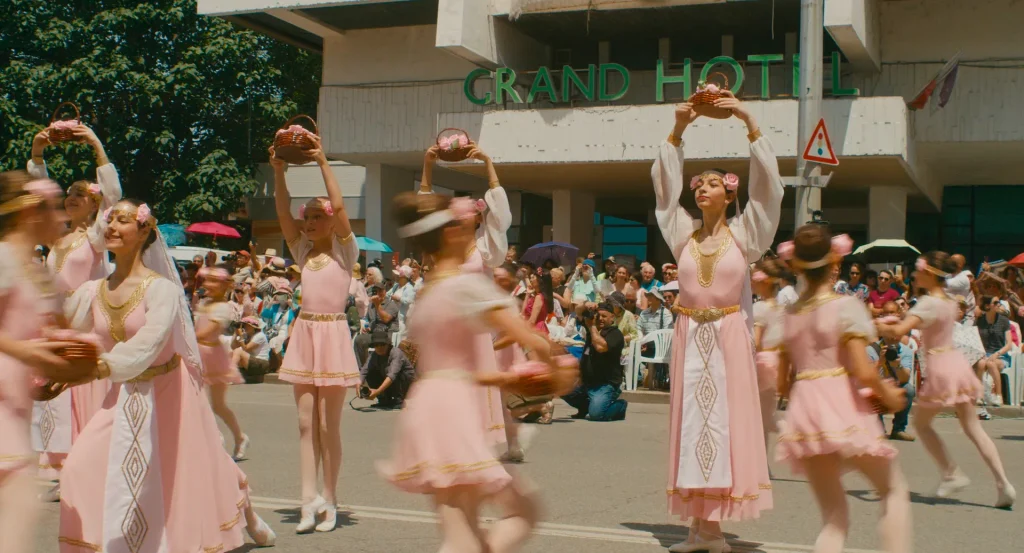
In Kazanlak, the Bulgarian town known as the Valley of Roses, the harvest has a darker companion: a vast arsenal whose ammunition ends up on Ukraine’s front lines. Swiss filmmaker Gabriel Tejedor, in The Big Boom!, follows four residents whose livelihoods depend on it, even as many of them still feel a pull toward Russia.
The result is a portrait of a place where absurdity sits comfortably in daily life. Rifles are put together on the factory floor, while at folklore fairs, children are taught to handle guns. Tejedor doesn’t pass judgment on the workers. Instead, he lets their contradictions speak, asking what happens when a belief in peace runs into the need to pay the bills.
Told with irony and warmth, it’s a sharp look at how Europe’s current conflicts reach into ordinary lives, far from any battlefield.
Sat, November 14, 20:45 / Tuschinski 4
Sun, November 15, 10:00 / Tuschinski 1
Tue, November 17, 11:00 / Pathé City 4
Wed, November 18, 18:00 / The Pulse 1
Thu, November 19, 20:45 / The Pulse 2
Fri, November 20, 22:00 / Pathé City 7
6. Oksana Koklonska’s “Up in the air” (2026)
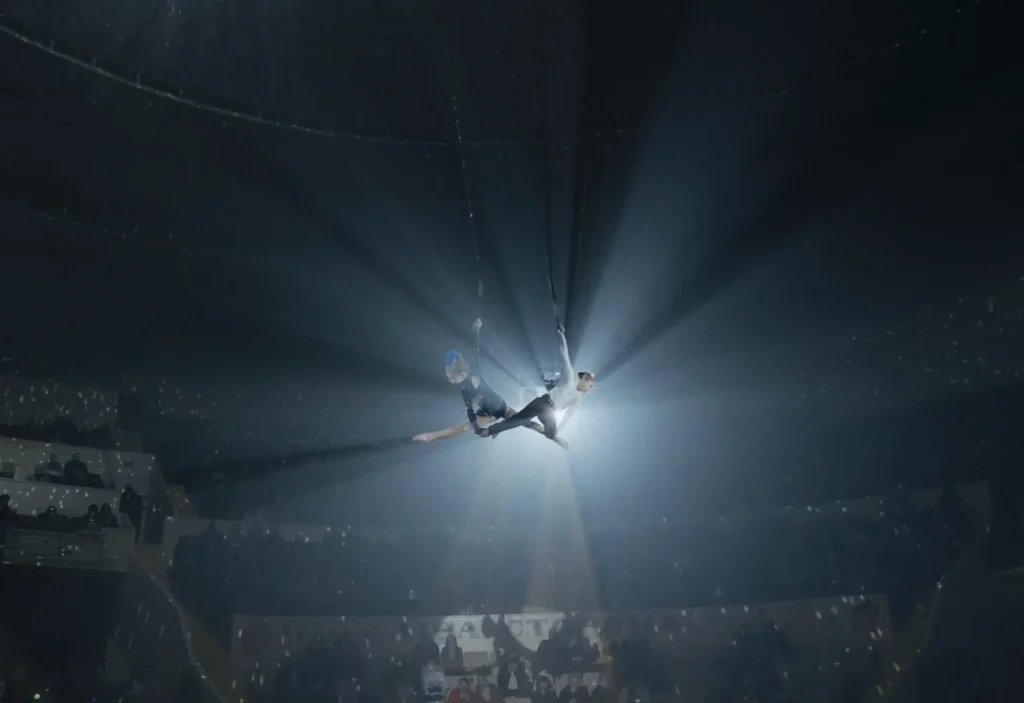
Up in the Air is a deeply emotional portrayal of nine year old Sasha, a trainee at a circus in Ukraine. Excellent at his artistic practice, Sasha pours every spare hour into aerial acrobatics, guided by his strict teacher, Svitlana. When Russia’s full-scale invasion begins, she evacuates him and his fellow students to Budapest, where they train for an international competition.
I loved seeing Sasha’s journey; he finds his footing as an artist while the world around him falls apart. Patient, observational camerawork lets us stay close to him throughout the movie and get emotionally invested in his life.
It’s an incredibly strong character study, and a story about growing up in the air while everything on the ground is uncertain.
Sat, November 14, 20:15 / Tuschinski 6
Sun, November 15, 21:15 / Rialto De Pijp: Upper Room
Tue, November 17, 09:00 / Pathé City 1
Tue, November 17, 18:45 / Ketelhuis
Fri, November 20, 15:00 / The Pulse 1
Sat, November 21, 18:30 / Cinema De Vlugt – Red Hall