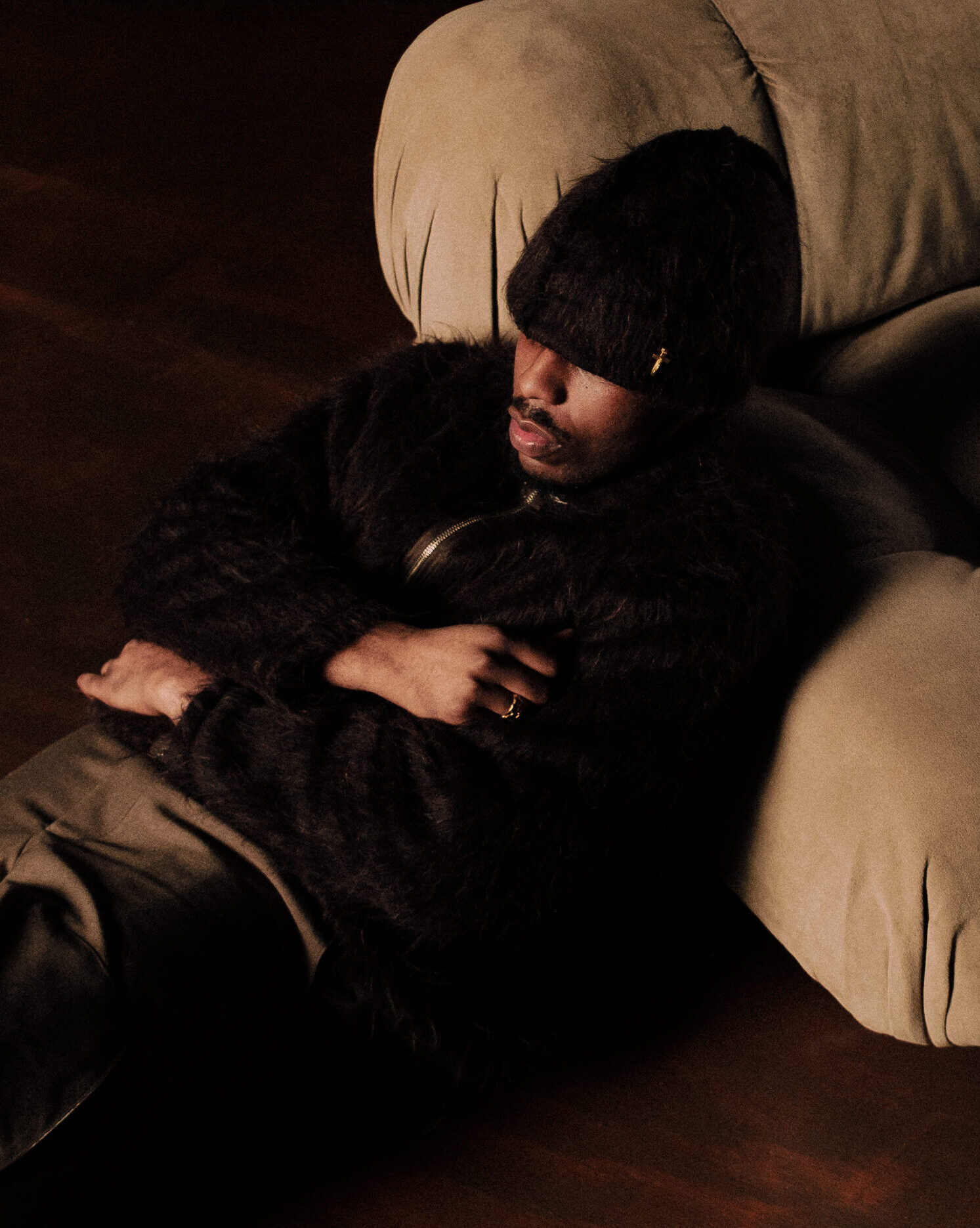
When you’re a kid, the world around you seems so vast. The city you grow up in appears endless, your room feels like your universe, and your dad seems like Superman. That was what it felt like for Benjamin Ankomah, otherwise known as Bnnyhunna, a multi-instrumentalist, music producer, songwriter, and fellow Amsterdammer.
I had the pleasure of meeting with him, ahead of the release of his latest album, Psalm Funk. We discussed what it was like growing up in Zuidoost, and how the eclectic neighbourhood has shaped him into the artist that he is today.
Ethel: Your journey as an artist has been unfolding in Amsterdam. Does the city feel different to you now than it did when you started releasing music? Or do you think that you’ve changed more than the city itself?
Benjamin: It definitely feels different from when I started. As a kid, the city seemed so huge. Now that I’ve grown as an artist and a local, it feels as though the city has gotten smaller, but not in a bad way. I’ve just come to know the city at the back of my hand. I love this city. I feel at home. And I love being surrounded by the people and their creative energy.
E: Would you say that the city of Amsterdam has shaped the way you write your music? If so, how has it shaped the way you wrote your new EP?
B: Yes, 100%. Amsterdam is very multicultural. Growing up in Zuidoost, you’d see marching bands rehearsing on every street corner, barbecues with people from all walks of life, and kids playing street soccer. This is the epitome of multiculturalism. As a kid, you absorb everything around you like a sponge. Being surrounded by such an enriching environment at a young age shapes you. It makes you who you are, and in my case, it has made me who I am today, both in my music and my daily life.
Being an artist isn’t just about making good music, but the right music. To create in such a manner that resonates with the audience, who are the pillars behind every community.
E: Amsterdam’s music scene is small enough that everyone kind of knows each other. Does that push you creatively, or does it ever feel limiting?
B: It does feel like I’m in a bubble, but to be fair, I think that applies to most industries. We naturally form coalitions with people of similar working styles. Inevitably, we all end up in our own bubbles, in some sort of way. The key is to step out of these bubbles every once in a while. To give yourself time to explore new environments and people. It’s a given that Amsterdam is such a small city, yet it is extremely diverse. I am constantly inspired by my environment because there is always something new going on. Just as the city inspires me, I hope to be an inspiration to other people.
E: ‘Waiting for You’ feels very you, but also very current. At what point did you realize you weren’t making this for anyone else’s expectations but for yourself?
B: Before my first project, I had always been a producer or musician for other artists. When I started my first project at the peak of COVID in 2021, everything slowed down. I wasn’t as busy as I used to be. It gave me time to rethink what I wanted to do. What I needed to offer to the world as an artist and a creative.
That’s how I started this journey solo. At the start, it felt a little lonely. I was chasing new sounds and cutting out any external noise that came my way. I didn’t want to be distracted or to create music that had someone else’s sound. This allowed me to create space for my own authenticity. In doing so, you need to tap into yourself to discover your own inhibitions. Once you get comfortable, it’s easier to venture into the unfamiliar.
E: And what is the main message behind Psalm Funk?
B: Amidst our trials and tribulations, this EP is a reminder that we are blessed with the comfort of our neighbours and God. And through it all, to be thankful for a life we can celebrate. No matter how rough or mundane it can be, there are a multitude of other reasons to take joy in.
E: How has growing up in a church shaped your philosophy in writing and producing music?
B: My dad was a musician at the church. He played the guitar and attended every Sunday service. As a kid, I admired him so much; everything he did amazed me, especially his commitment to music in the service of others.
When I was 5, he bought me a keyboard and taught me how to play. As I heard a melody on the TV, I sat in front of it with my keyboard and started matching the pitch by ear. Now that I think about it, I would have been hyped if my kid did that! My parents recognised my talent early and committed themselves to creating a nurturing and growth-filled environment for me.
By the age of 10, I started playing at the church, and haven’t stopped since. Being a musician at the church has taught me many life lessons. Artists in the music industry are met with the need to constantly rebrand themselves while managing the expectations that people have placed on them. It can jeopardise an artist’s personal life. Fortunately for me, the church has come to be my safe place. Its environment is what keeps me grounded and helps me take my craft seriously. At the church, we don’t play about music!
I believe that every person has a unique gift and purpose. The gifts that God gives us aren’t meant to be limited or hidden, but shared. As a believer, I feel a responsibility to use my gifts to reach and inspire people around the world. Sunday services at the Paradiso are especially meaningful to me. Those moments remind me why I do what I do: to create a space where people can feel comfortable, joyful, and open to worship.
That kind of environment isn’t very common in Amsterdam, and when it does happen, it can sometimes come across as gimmicky (more like entertainment) than something rooted in genuine spirit given purpose.
As a believer within the industry, there is a hard line to draw. The challenge is learning how to use the influence you have as an artist in a way that serves the message, not yourself. In doing so, you allow your work to impact people without letting the credit rest entirely on you.
E: Considering your previous experiences in playing music for the church or even composing for the Dutch National Opera, what skills/ instincts did you pick up from those experiences, and how did they play a part in this EP?
B: Writing for the opera wasn’t a skill that I lacked; it was more the lack of experience I had with it. It was interesting, but I’ve always tried to write conceptual music ideas.
The opera positioned me not only as a musician, producer, or artist, but as someone with a creative vision that combines those things with music. It pushed me to dive deeper into how I could create music in connection to feeling. That was my biggest takeaway from the experience. It was amazing. I worked two months in the opera while working on my album (Psalms Funk) at the same time. It was a strenuous cycle. I had to lock myself up every day at 10 a.m. in the studio until 12 a.m. at night for two months straight. But that only motivated me more to go for what I wanted, and it really worked.
E: Would you say you’re a perfectionist?
B: I used to be, but not anymore. Back then, I worked with a product-driven mindset, focused on how perfect the final piece should be instead of enjoying the journey as it comes.
Over the last few years, I’ve been decompressing from those perfectionist tendencies. As things become more intuitive, you start trusting your initial choices instead of second-guessing yourself.
I’ve also come to see music as a form of language. Sometimes people might stutter when they speak, but that doesn’t make what they’re saying wrong. And someone can speak very clearly, but not really say anything meaningful. To me, it’s the same with music; it’s about expression and communication, not perfection.
E: And be honest, does that (perfectionism) change with age?
B: Yes, I think it does! When you get older, you’ve gained more experience in life and your craft, and you can just filter out the noise. I’ve become more unapologetic about being myself.
E: If someone listened to your entire discography from start to now, what do you think they’d learn about you as a person, not just as a musician?
B: Let’s say I’m a chef serving a variety of courses. If someone tasted everything on the menu, they would probably notice that every dish has a common ingredient. Every meal is served with intention and connected back to a sense of love and warmth. That is the recurring pattern throughout all of my albums. The intention of making the people around me feel as comfortable and joyful as can be.
E: It feels like your discography is a collection of milestones you have gathered within the past few years, and each album or song is tied to a significant memory. Kind of like how listening to a certain song brings you back to a certain point in your life.
Let’s say a year passes from now, what would be your core memory behind Waiting for you?
B: There are a lot of memories attached to this project; it’s hard to pick. But last year I won an Edison (Dutch version of the Grammys), which was a huge achievement for me. While I received that award, I was making the current album, Psalms Funk. I felt a ton of pressure to make this the right sophomore album. I think second albums can be difficult for artists because there are high expectations after the first one.
At the same time, I’ve gained so much confidence in the studio while working through that challenge. I brought together a lot of people I love creatively and musically, so many of the sessions are full of really fond memories.
The interlude recordings with the choir bring me back to moments in the studio where I had to record an entire choir. Recording that and writing the lyrics were core moments for me. To have the opportunity and freedom to do something like that still feels crazy.
There were also all these creative meetings about what the visuals should look like. Nowadays, I think about the process even more than the outcome itself. Every step that went into piecing this project together and sending it into the world is going to stay with me. Those are the moments where you put in the most effort, where you learn the most, and where you take those lessons into the next experience in life.
Meeting different people along the way (the choir and instrumentalists) has been another rewarding part of the journey. When the songs start coming together with all these people involved, it feels incredibly rewarding. It really is a blessing.
Like songs that bring you back to a time in your life, the same goes for Benjamin’s discography. Each of his projects act as an eidetic tool guide that transports him back to the consolidation of each memory; the places, people, and emotions he felt.
Rather than chasing a definitive outcome, Benjamin has found himself valuing the accumulation of moments through the learning process and the shared effort required to bring this project to its conclusion. And listeners can now be a part of these fulfilling memories.
The single Waiting For You, feels like an entry point into Benjamin’s recent memorabilia. Psalm Funk, which came out on the 27th of March, is a record shaped by trust, joy, and the gratitude found in community. It will hone the belief that these intangible moments shaped by collaboration are the core of every song.