Turning ourselves into consumers and products in the digital dating market
When I still used dating apps, I’d curate my profile well enough to present myself as what I wanted to attract; I would then swipe left nonstop for 15 minutes, until I eventually swiped right. Within 5 minutes, the Hinge app notified me that I had a match. I did not know him, but I knew that he was 23, White, and Agnostic. I knew he lived within a 6 km radius from me, was a University of Amsterdam alumnus, smoked weed socially, and drank occasionally. He was a Liberal, open to children, and seeking a long-term, monogamous relationship.
Which is to say I knew everything the app’s algorithm needed for a transaction –– My curated identity in exchange for the app’s data “match”. And just like that I turned myself into a commodity, for a 23 year old, White, Agnostic man.
The “Swipe” has become a phenomenon of our digital dating era. We swipe left and right, in hopes of finding love or just great sex. This has turned contemporary dating culture into an addictive digital game we can play on our phones, that both validates and thrills us. Whereas the generation before us was set up on blind dates, having no idea what to expect, but holding trust in the friend setting them up. There was something exciting about that, like opening a mystery box.
Today, we seek for a partner based on filters, a curation of an “ideal” partner that may only exist on our screen. There is something unsettling about creating a dating profile and filling in the boxes for ethnicity, job, and political views. A part of it makes sense as we all have a dating “preference”; however, it feels more like data management than actually trying to find true love, and more like a way to control our own desires. At best, it’s handy. At worst, it is a mechanized narrowing of the human experience.
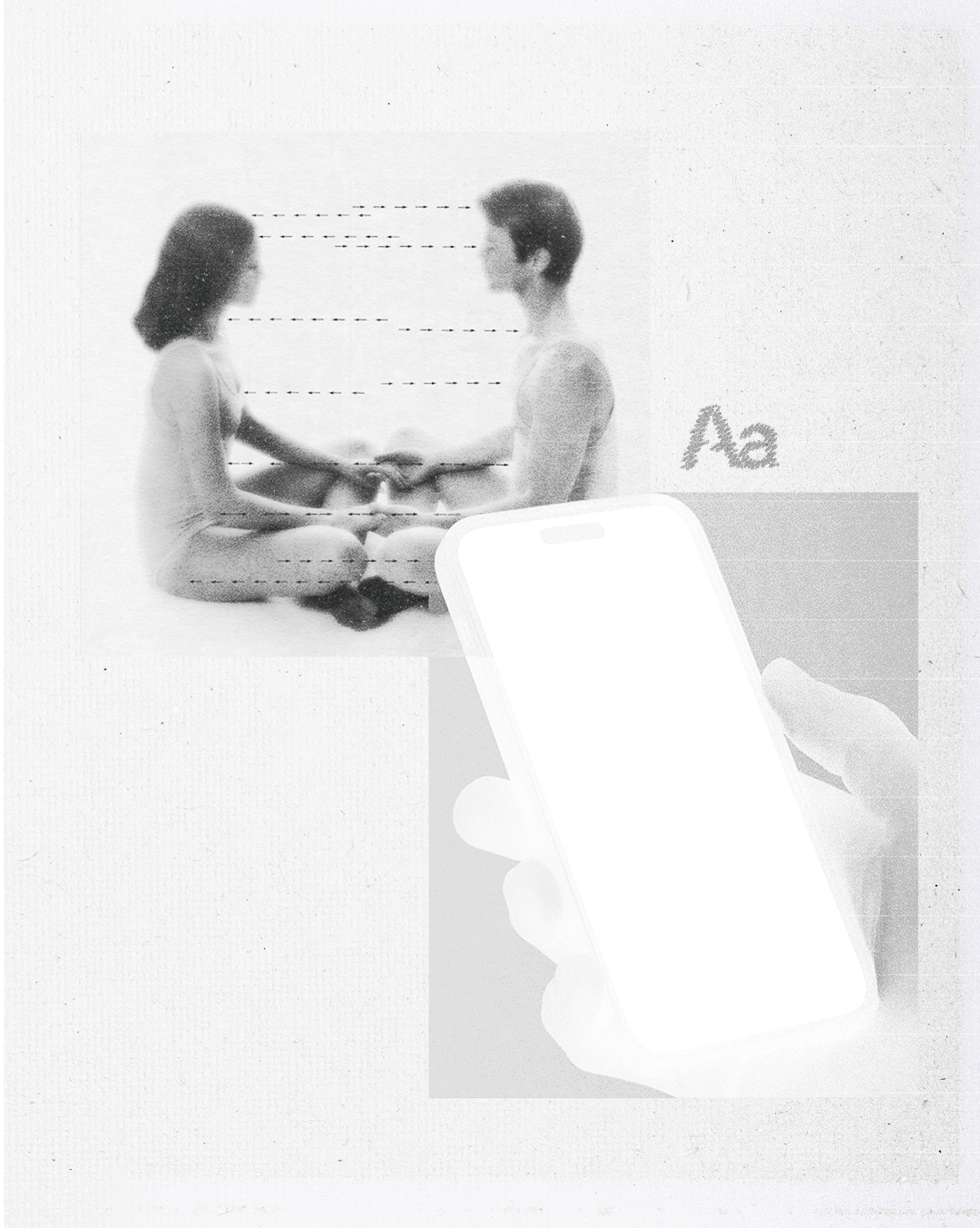
Many dating apps today vary their filters depending on their “open-mindedness”. There are apps for kinks, apps for the LGBTQ+ community, apps for religious beliefs, exclusive invite-only apps for creatives or influencers, and luxury dating apps for the high-profile. Each app represents a distinct social class, a specific (sexual) desire, and sexuality. But the curation goes beyond just education or job titles; it is in judgement of the pictures they chose to display themselves with, their body types, personal style, hobbies, poses, and prompts. These apps are designed for a constant state of assessment. Slowly indulging in own unconscious biases — racism, sexism, ageism, ableism, sizeism or religious prejudice. This creates the unethical market, where we shop for our potential match, with the same detachment we use to doomscroll on our phone, but instead of scrolling down, we scroll sideways.
In this market, the line between fetish and preference is extremely thin. We don’t see human beings, we just see our ” types”. We objectify as we scroll, whether we are conscious of it or not. And as we use these tools to find a partner, we don’t realize we are part of a digital market system. By turning others into objects for our own desires or fetishization, we also submit ourselves in the same market inventory. We too, are a part of someone’s filter.
Tinder statistics reveal a very structural collapse of this market where there is a big gender imbalance. Men swipe right 36.8% of the time, where women swipe right 5.3% of the time. Even like this, women are more likely to have a match than men. Creating the very environment where incels and their predatory online behaviors are born.
To truly be ethical on a dating app feels nearly impossible. One cannot know who holds a genuine preference or who is a predator operating through filters. A 50 year old can set their age limit to 19 — a predator invisible to the world unless you happen to set your own filters to meet them. It’s a market where everyone is both the consumer and the product, waiting to be sold.
My usage of dating apps stopped, because I no longer want to be a product. I want to find love, through friends, school, work and hobbies. Real life already provides filters through the life we actually live. Connections are more strong when they are formed through real life experiences, rather than data. I believe that if we reclaim the courage to approach one another, we might find a match that wasn’t calculated, but simply found.