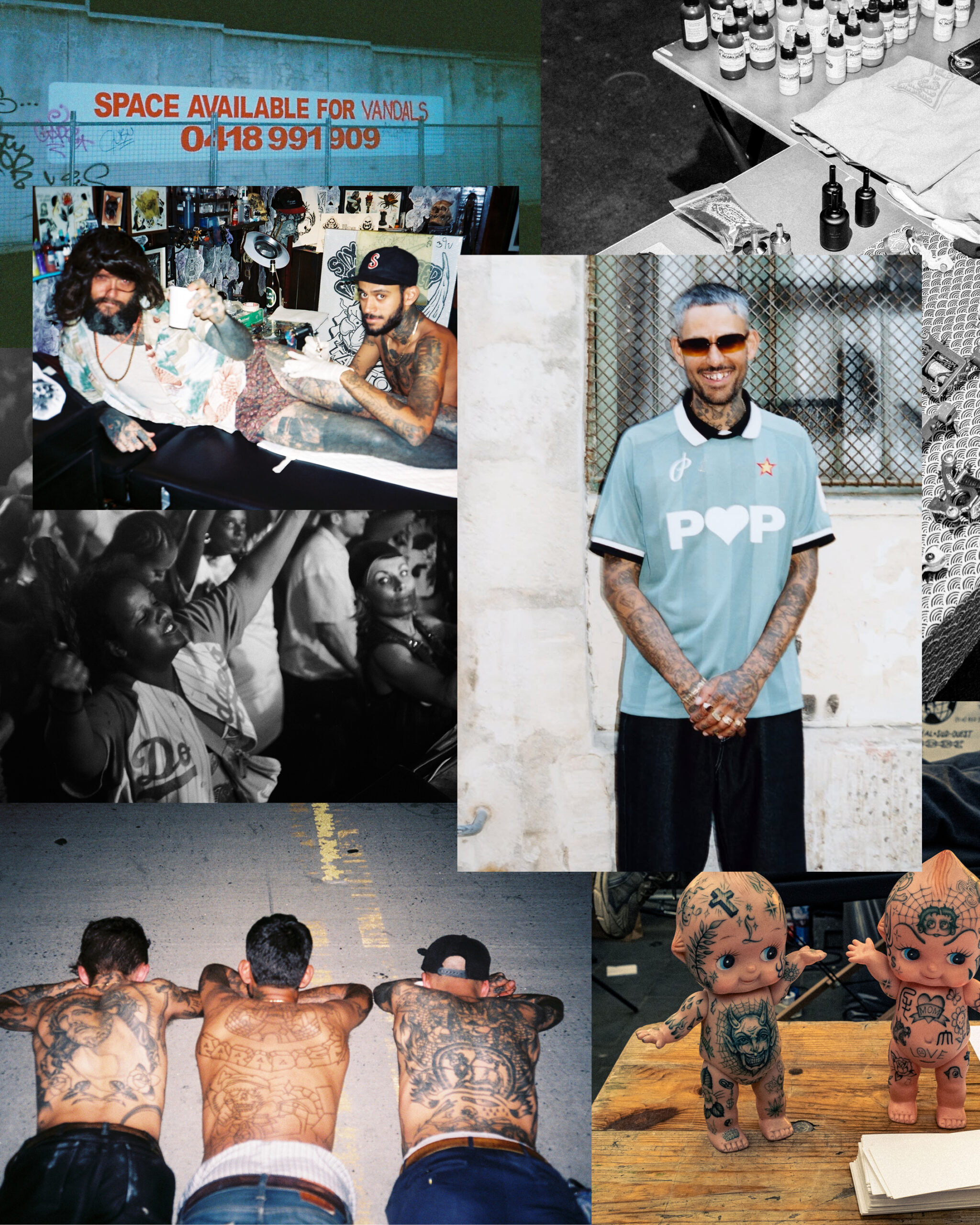
Amsterdam has always had a strange relationship with the worlds that made it famous. The red light district built its mythology on chaos, nightlife, and a steady flow of people who arrived looking for trouble, driven by curiosity, or seeking out some version of freedom that felt harder to find elsewhere. Tattoo shops grew alongside it naturally. Both attracted people chasing something a little outside the ordinary, making choices that raised eyebrows in some circles and were completely unremarkable in others, big or small, depending on who you asked.
That version of the city has slowly shifted. Regulations tightened (we live in a city where a mighty aperitif or two on the street results in a hefty fine), windows closed, and entire streets started looking a lot more Brooklyn-esque. The neighbourhoods that once carried a genuinely feral energy have been reorganised into something tidier, more digestible, for better or for worse. Tattoo culture shifted along with it. What once belonged to rebels and rock stars now also sits on the skin of managers and mothers. Styles changed, universes broadened.
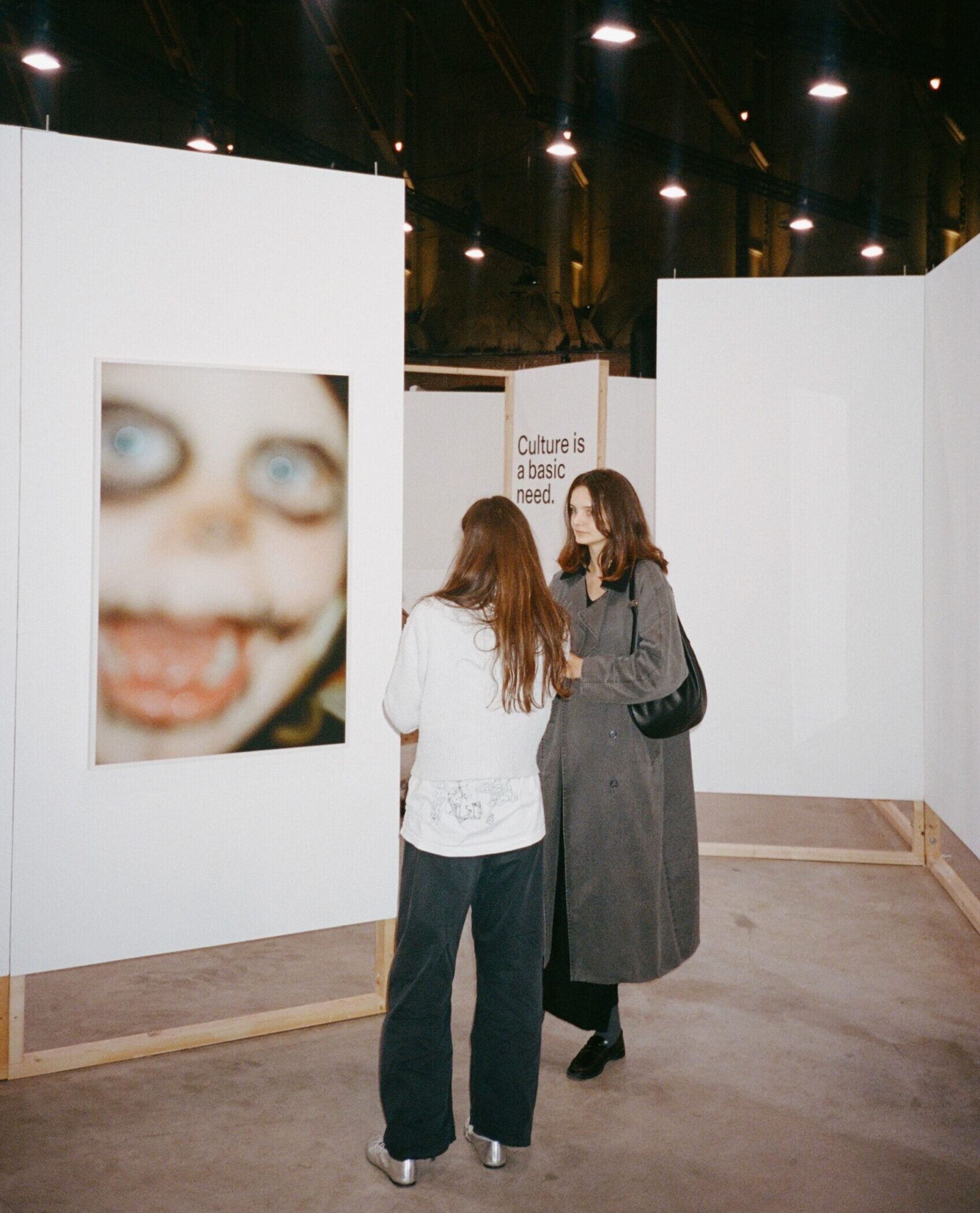
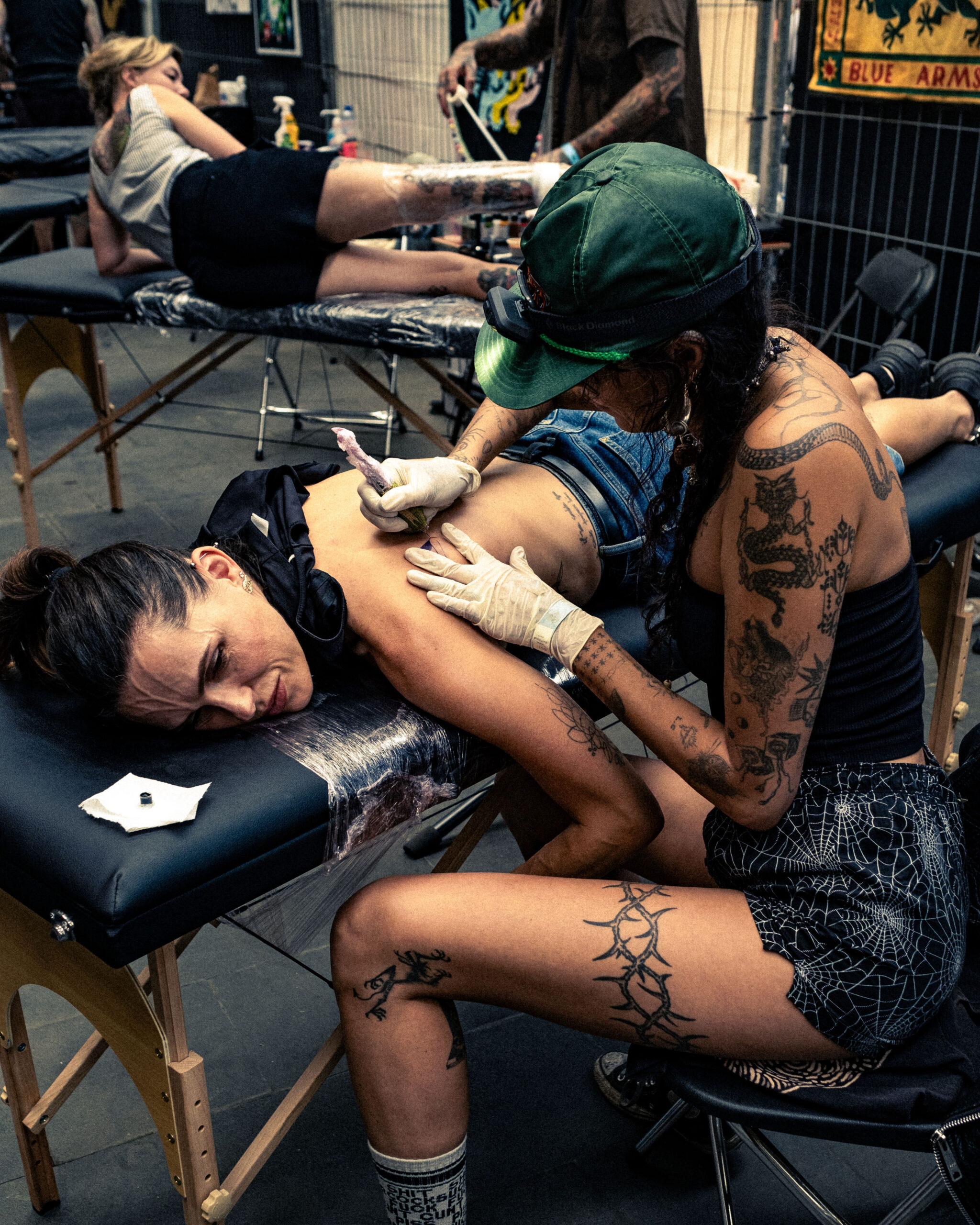
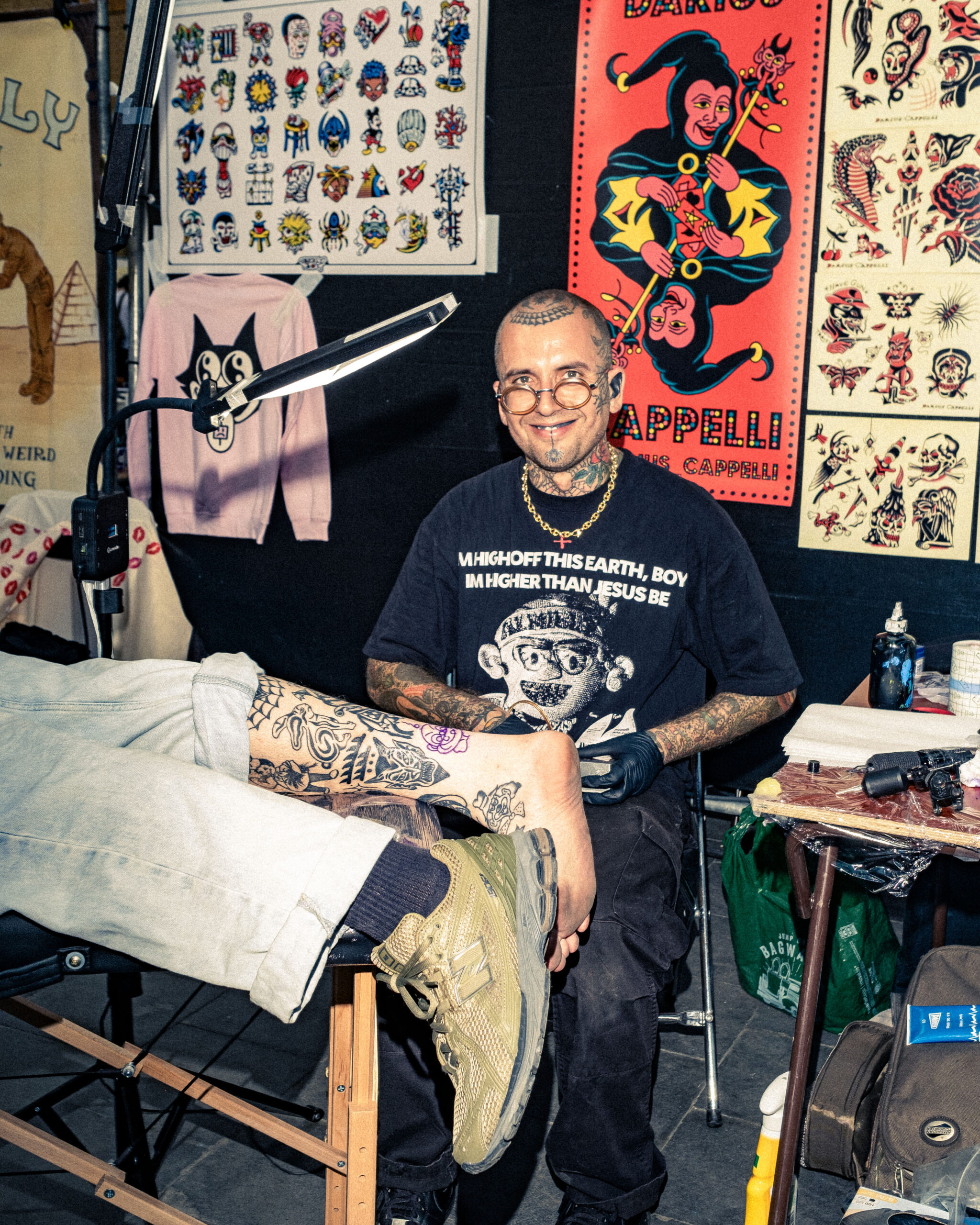
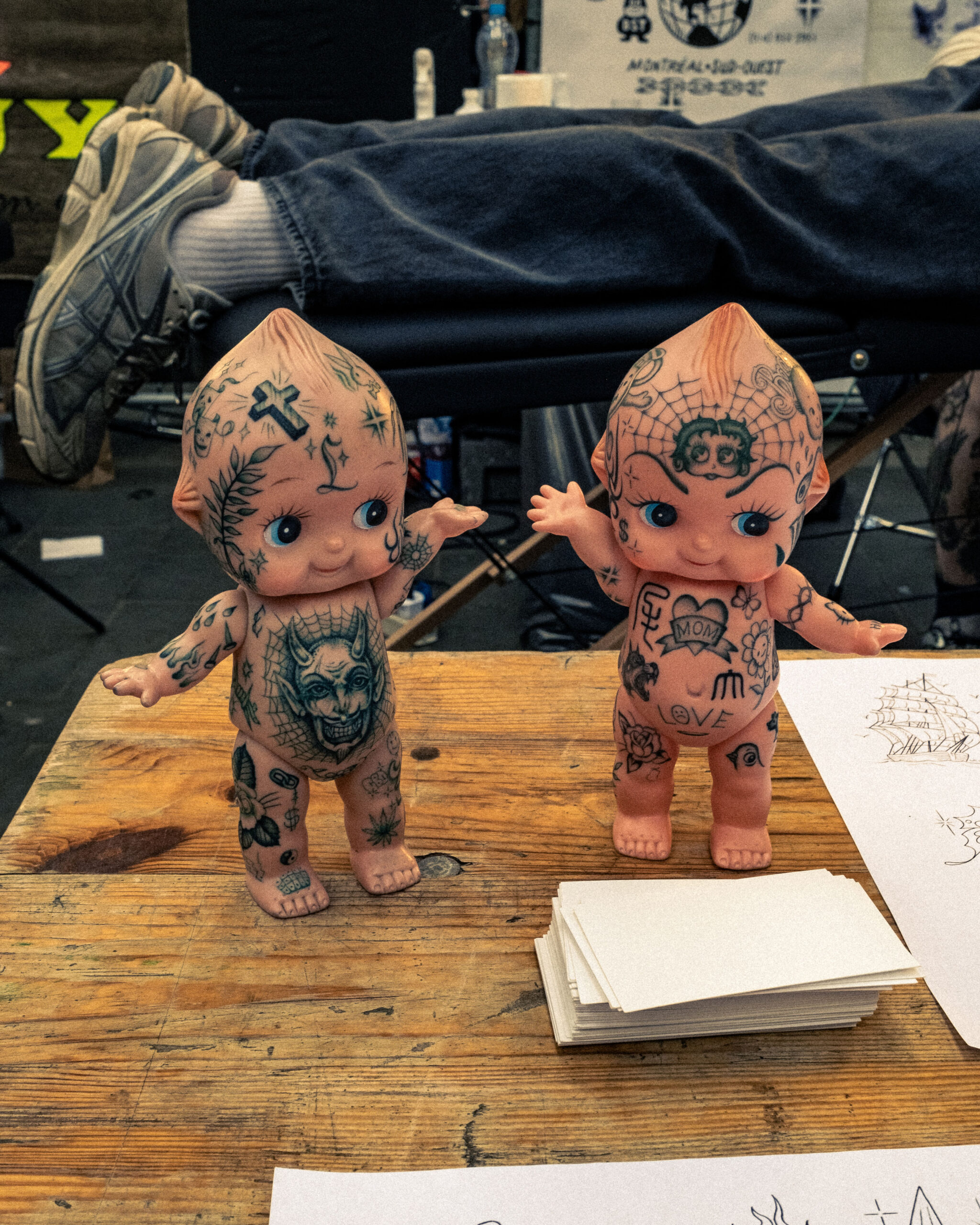
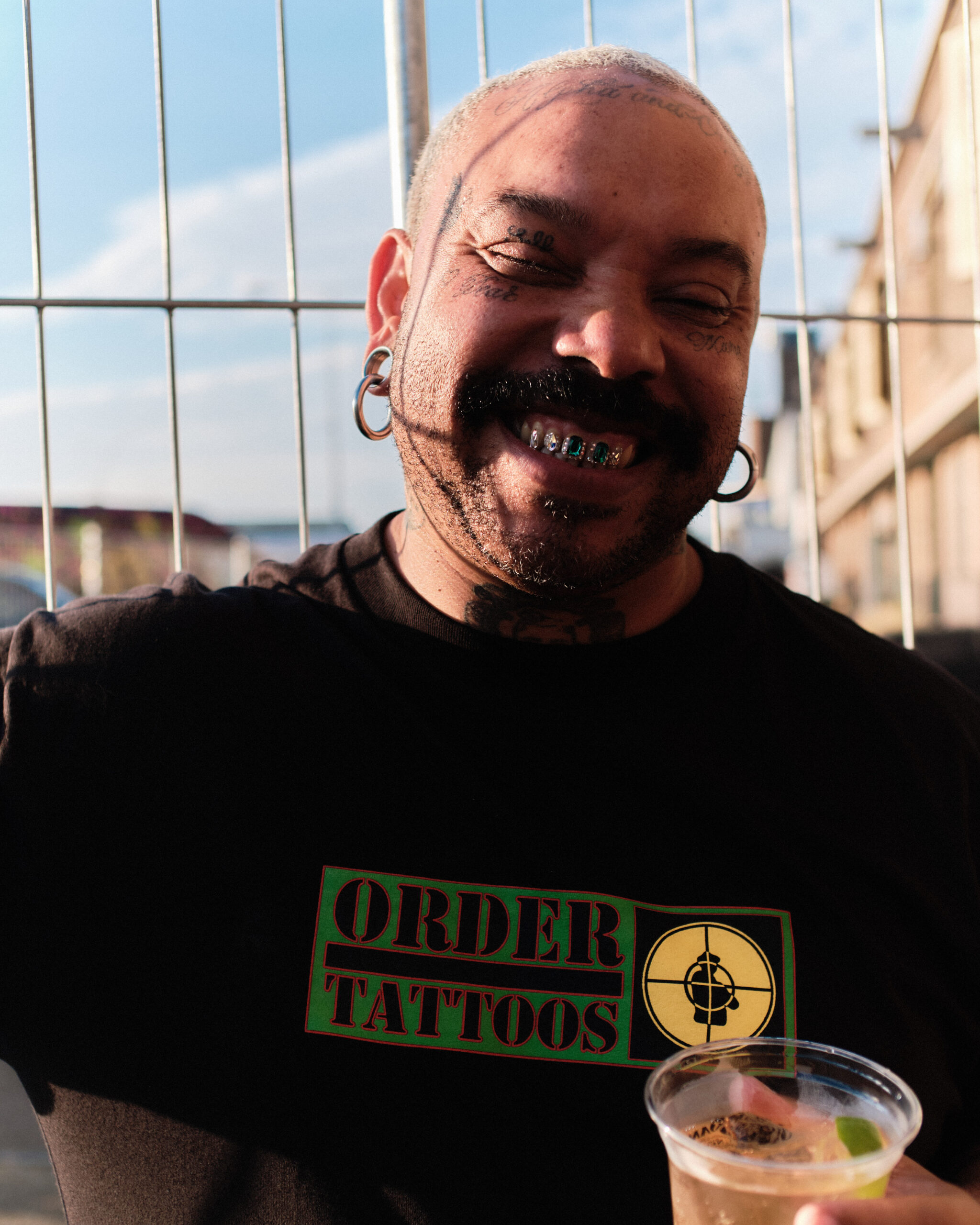
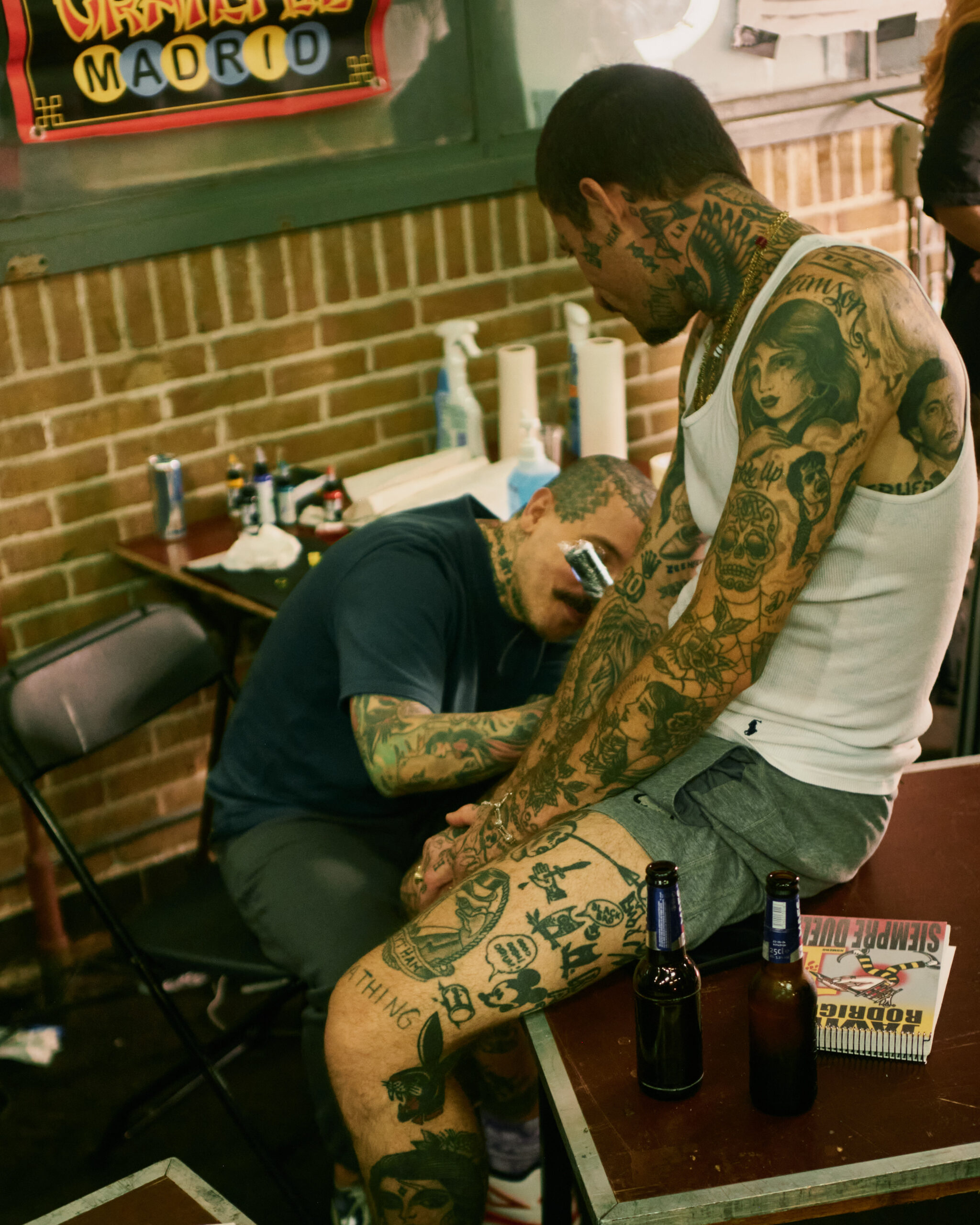
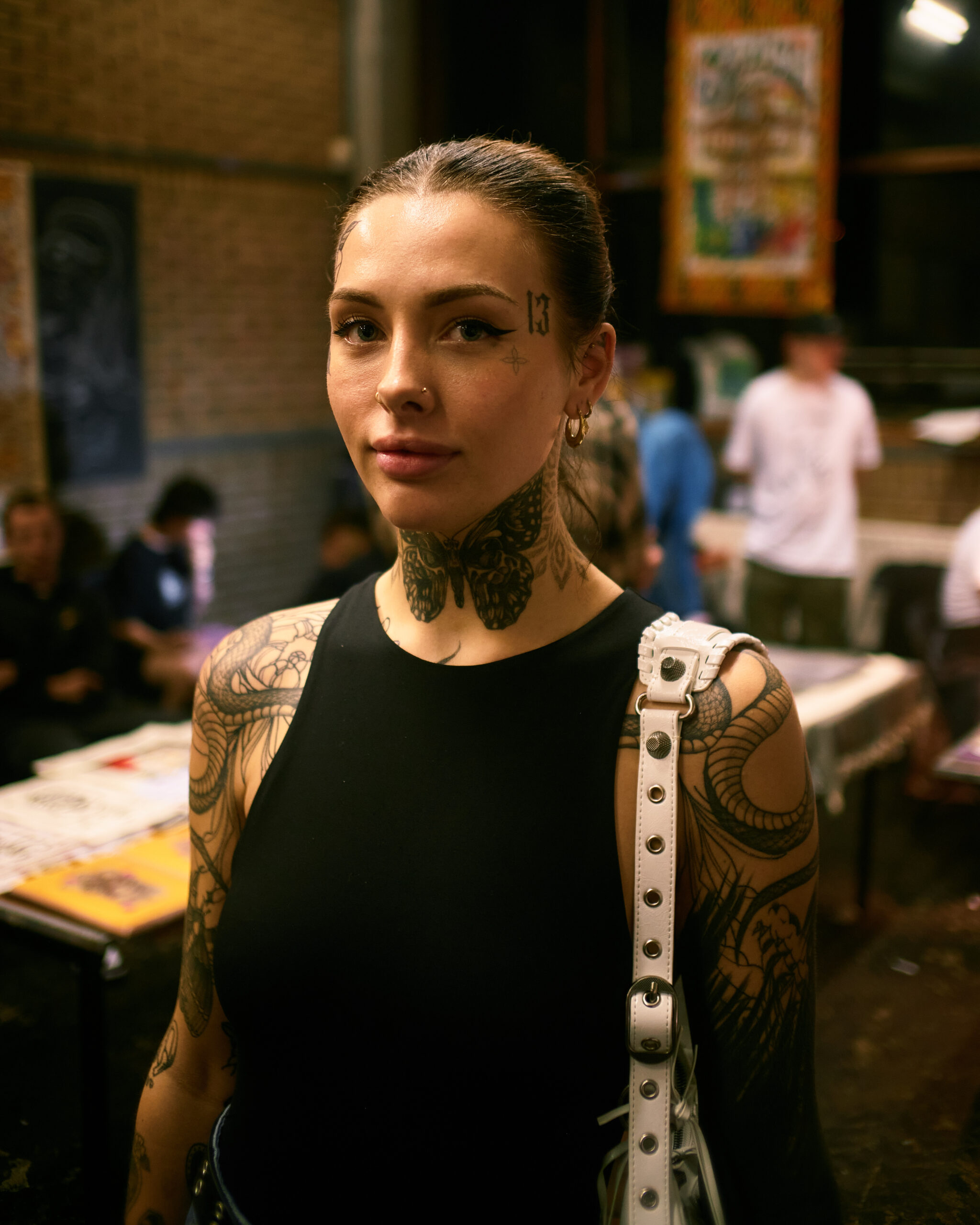
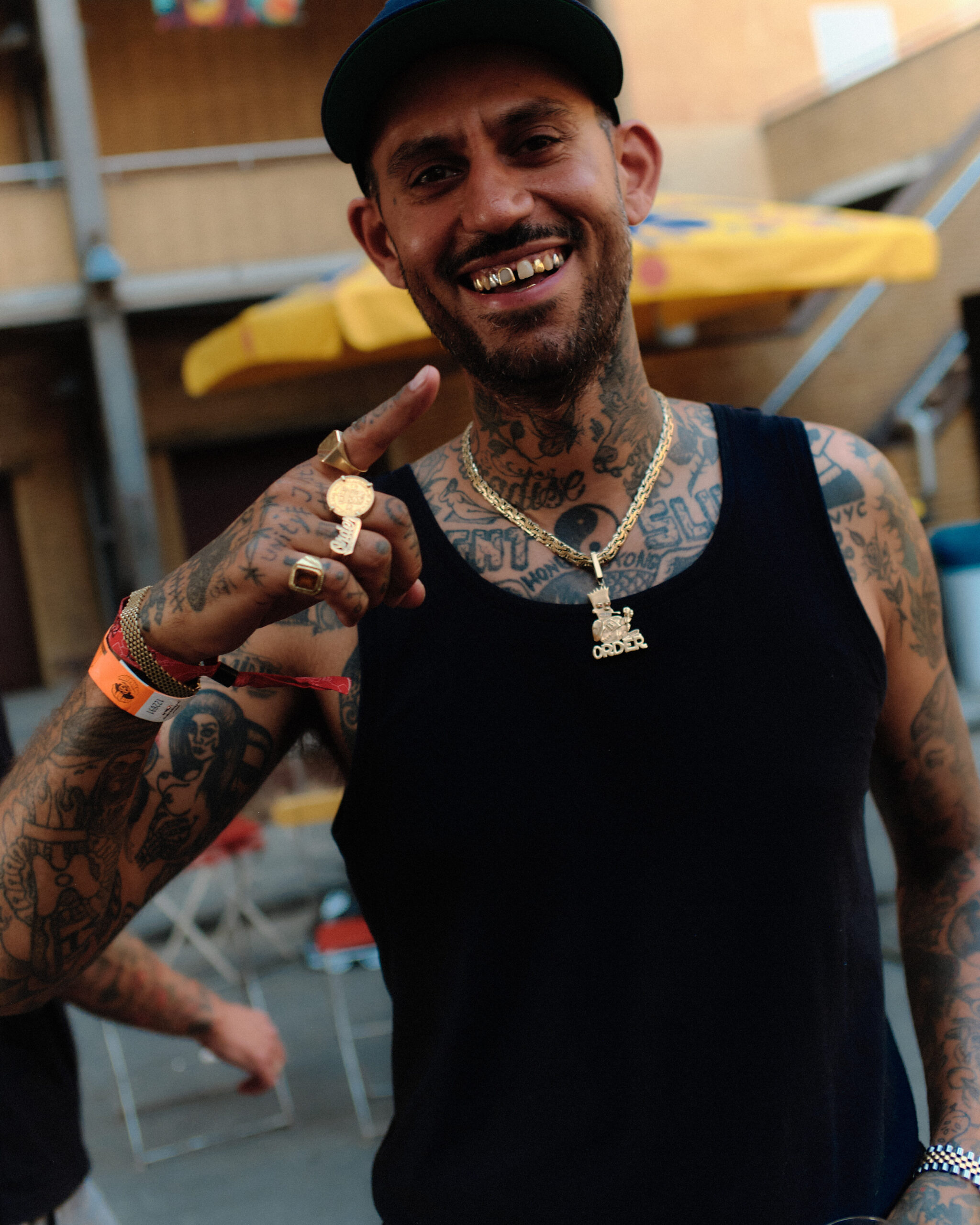
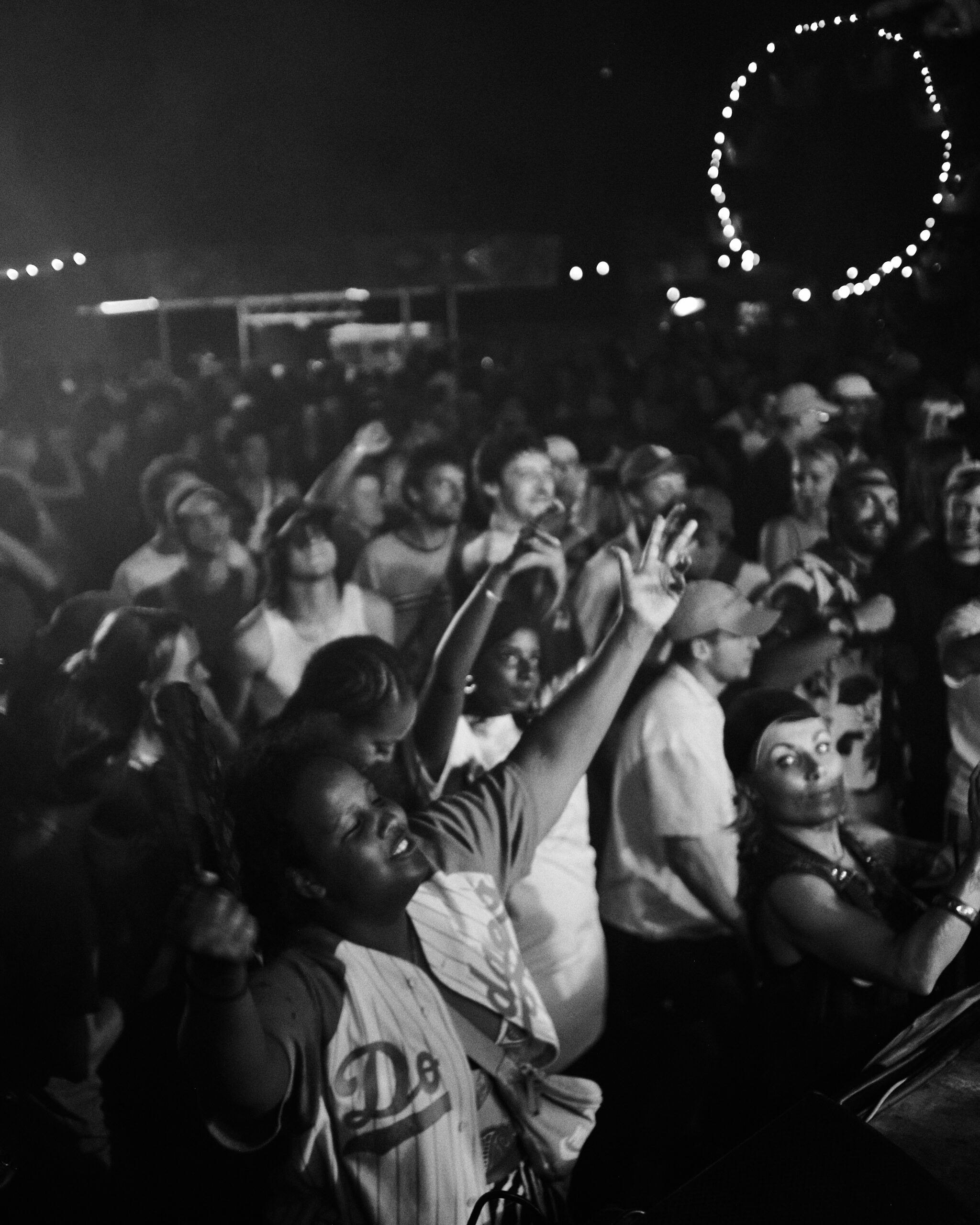
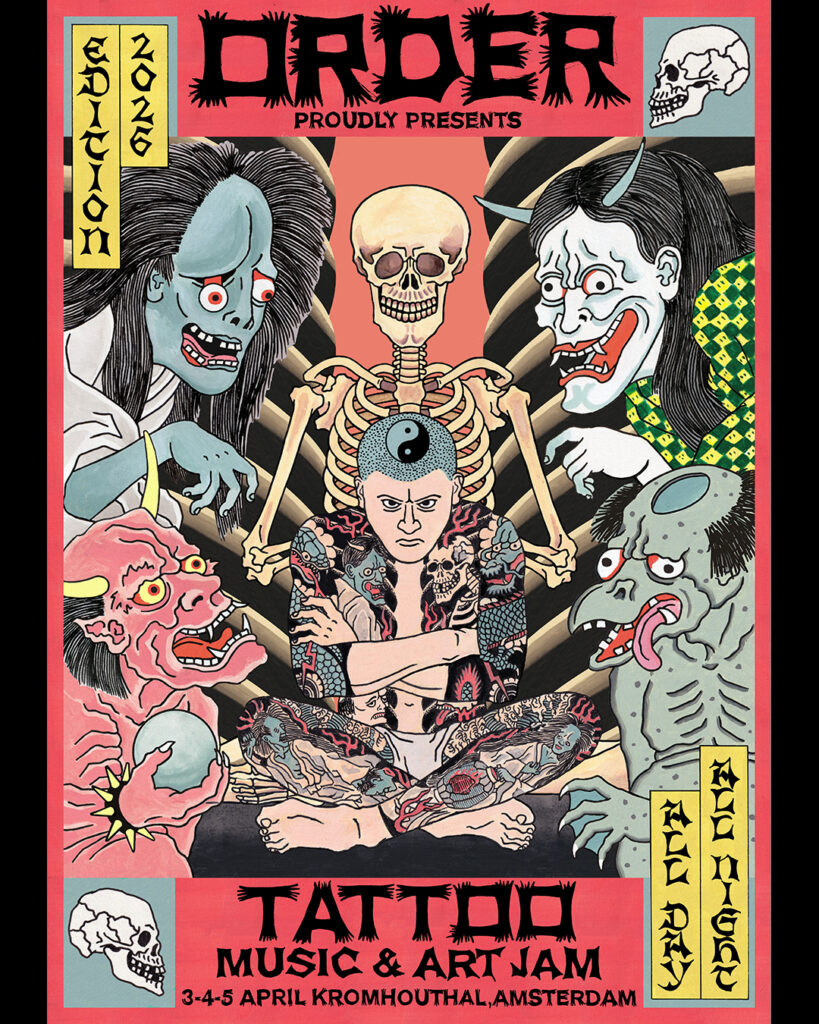
What hasn’t changed is the desire to be in the same room. Tattoo Jam, which returns this year for its sixth year, is built on exactly that. For three days, more than 200 artists come together in Amsterdam for tattooing, vintage markets, art, and parties that, if Christ could rise, so can you.
Ahead of the weekend, I sat down with Etiënne Memon to talk about how he first entered the tattoo world, the Amsterdam he encountered when he arrived, and why gatherings like Tattoo Jam still matter in a culture that increasingly lives online.
We met in his office in the Red Light District, in the alley he has watched transform over the past eight years from red light corridor to something more like an artisan neighbourhood. He has a tattoo studio here, a Sichuan restaurant in Amsterdam Noord, a magazine called Order Territory, and the Jam, and somewhere in between all of that is a story about how he got here that takes some time to tell properly.


Awa: You grew up near Amsterdam. What was your relationship with tattooing before you actually got into it?
Etiënne: I was always obsessed with tattoos when I was, like, super small, but I grew up in a small village where most people were not tattooed. There was this tattoo shop and those dudes looked like the coolest guys ever. It was such a mystic thing, tattooing at that time. Those dudes looked like rock stars.
He was also doing graffiti, seriously and constantly, travelling for it. School was not his thing. He dropped out. The two worlds were about to collide in Scandinavia of all places.
I was painting graffiti with a friend of mine from Paris, and we went back to my house, and he started drawing, and I was like, whoa, what are you drawing? And he’s like, yeah, I just started tattooing. I never knew that you actually could do that, you know? I had no reference to that.
And then you just started?
Yeah. I was 19. The first tattoo I ever did was on myself at 20. It’s on my knee. It’s a weird skull.
Getting into tattooing properly wasn’t straightforward, though.
An understatement. He tried to get an apprenticeship close to Leiden, but nobody would teach him anything, and at the time, there were maybe 2 shops in the entire city. He ended up in Oslo following a girl, then drifted to Copenhagen, where a friend of a friend had a shop and showed him a few things. He got an anchor tattoo, went back to Oslo, decided he needed to move to Amsterdam properly, called a friend, and crashed on his couch right behind this alley on the canal.
Then that same friend, who had never once mentioned tattooing, announced he had been offered an apprenticeship.
I was like, what? I’ve been trying for so long.
So Etiënne started showing up to that shop too, every day, until the owner said he might as well stay. This was at a tattoo shop on Jan Evertsenstraat, a place with a certain rough edge to it, the kind that made you feel like anything could happen and occasionally did. From there, he moved through several more shops, each with its own version of the same world.
The most memorable was a shop in the Red Light District.
I was 21, and I started working there. I was just very small and very hyped on tattooing, and those dudes were pretty weathered, you know what I mean? Like older guys.
There was a bar upstairs. Work hard, play hard, as they say. I don’t know who “they” is.
“The first day I came in, they were like, ‘Okay, all the money you make here, you spend it upstairs’, because they would just go work all day and then they would go and party.
”
He stayed focused. The boss noticed. Then the chapter closed in a very specific way.
At one point, the whole thing shifted in a direction that wasn’t exactly built for someone who shows up on a mountain bike, you know what I mean? This was my time to go.
After all that, he wanted somewhere more serious.
He travelled through Asia and Australia for tattooing and came back with one goal: get into Admiraal, the shop he had always wanted to work at.
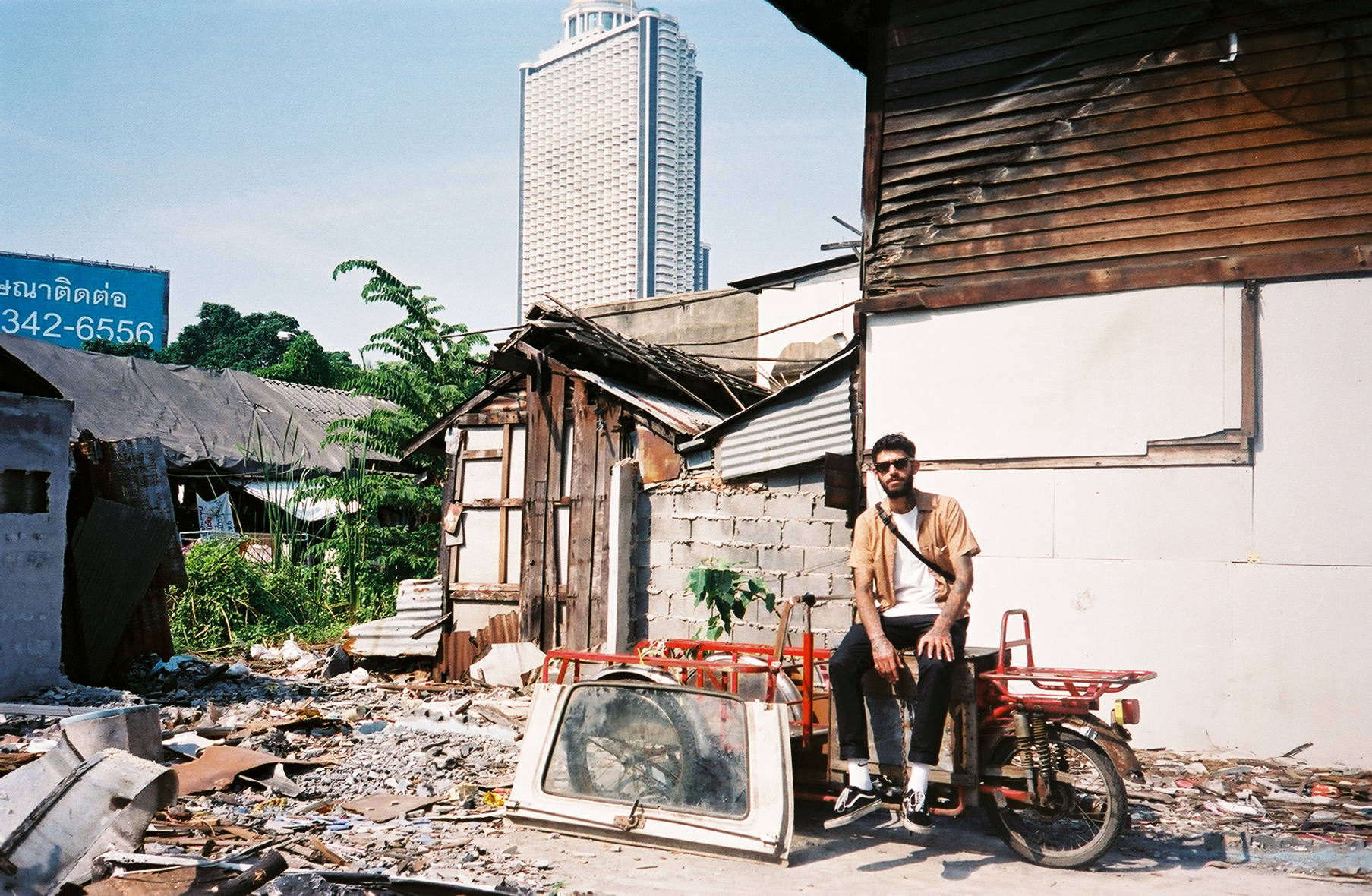
I contacted them while I was traveling. I told him that I would love to work there. I know you’re full, but not everybody works every day, so I will take any day that somebody’s not working, you know what I mean?
It worked. That is where his more professional tattooing life really started. Then, 8 years ago a space opened up in this alley. His friends at Red Light Radio tipped him off. A former brothel, part of a programme converting old windows into commercial units. Affordable. He took it immediately.
“I remember I got the keys, and I was there in the evening. The girls were just everywhere and it felt pretty intense. Right off the bat one girl told me that my light was too bright. Like, dim it down.
”
He dimmed the lights. Got to know the neighbours. Over time, it became genuinely warm.
They get treated so poorly by passersby daily. Within a couple of months, I got to know them as the people they are. I wanted to know their personalities.
His favourite story involves Sylvia, who worked the window next door 7 days a week without exception. Less a lifestyle choice than a structural reality. Windows rented for a minimum of six days, at €175 for a half-day shift, and at €50 per client, you needed five customers just to break even.
The first four dudes that come in pay your rent, the fifth dude pays you 50 bucks. So you have to get 5 guys before you have made 50 bucks.
Sylvia stacked her money carefully for years. One day, she came to him with news.
She came up to me one day and said, I’ve got to tell you something. I’m done. And I was like, okay, what are you going to do? You bought a house? She said I bought a house. And then, I bought a donkey farm. I was so happy for her.
500 donkeys. In Bulgaria. Sylvia is now the donkey queen, has recently had a baby, and they are still in touch.
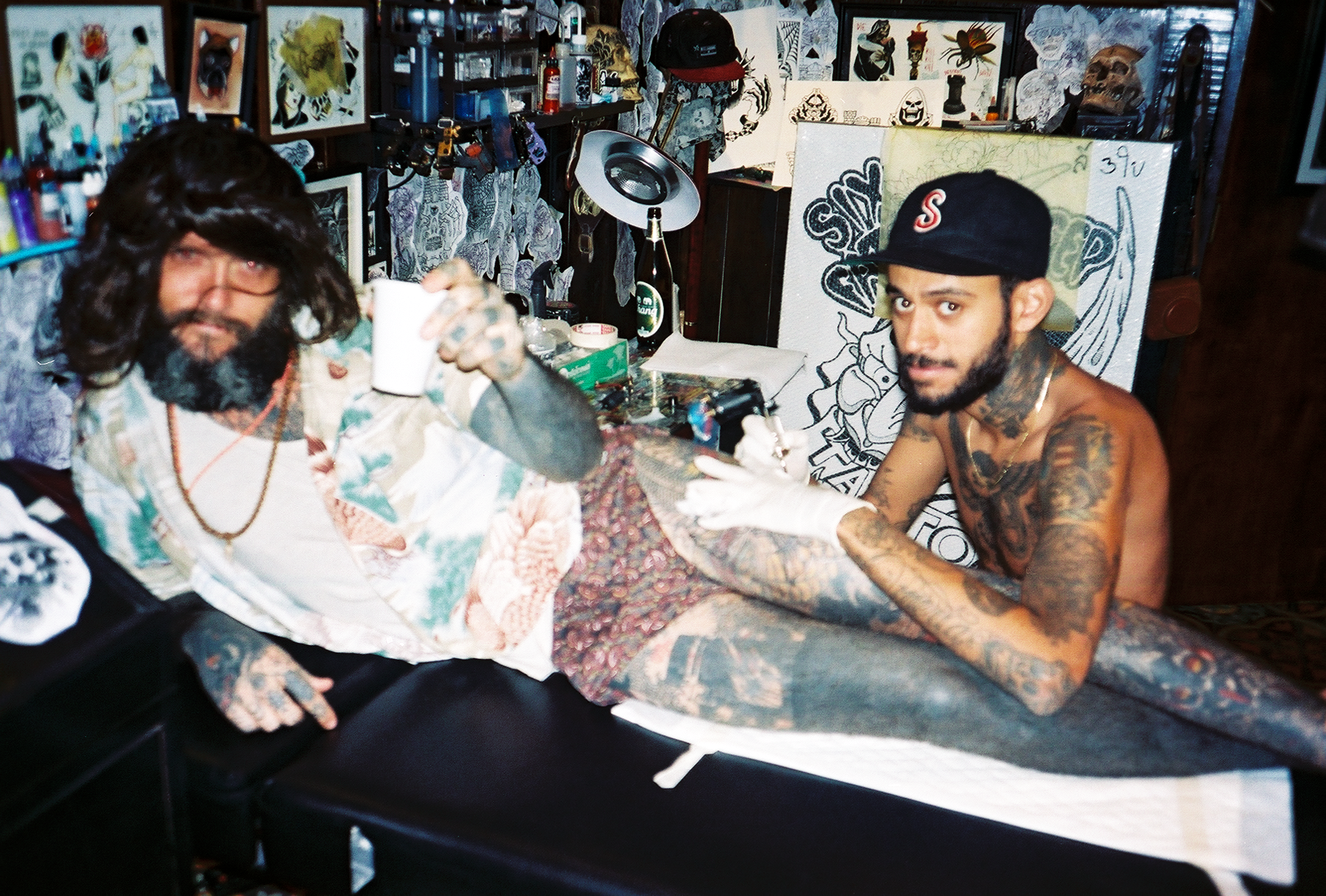
You have been here 8 years now. How do you see the neighbourhood changing?
He thinks about it for a second. The alley outside is quiet in the afternoon. By evening, it will be a different world entirely.
I think it’s pretty positive, actually. I like it. I really got to infiltrate it because I was living right behind this alley, my house was upstairs here.
He was the first to open something creative in the immediate area and has quietly shaped what came after. When spaces became available, he would put people he knew forward. The businesses that landed here are not accidental.
“Almost everybody who’s in this part of the neighbourhood, I got them in the place. POP, Glazed. I was the first one and I know those people very well. So always when something pops up, I’m like, oh yeah, maybe this person.
”
The result is a pocket of the city that feels genuinely coherent rather than just gentrified. People here know each other, chose to be here, share some loose sense of what they are doing and why.
Asked what he actually likes in the neighbourhood right now, he does not hesitate.
I think Zeedijk and the Red Light District are really cool. What happened there, like with Patta, SMIB, Bonne Suits, Glamcult, Pop Trading Company, etc. The TNO shop is nice. Obviously, the Sichuan restaurants. I just really like this neighbourhood. I’m here every day. I know a lot of people, I know a lot of the older people, a lot of the girls behind the windows still. I just like it. It’s just this weird small village in Amsterdam. I fuck with it.
Let’s talk about the Jam. Because that is a whole other story.
A jam, for the uninitiated, is what happens when people who are good at something get in a room together without too many rules. Originally rooted in music, the word has always implied a certain looseness, a certain trust that something good will come out of it. Etiënne borrowed it deliberately.
He saw how tattoo conventions were done and took that as an incentive to do things differently.
Just a massive space dominated by the same type of tattoo artist. Pretty big egos. A lot of people I knew felt the same way and just wouldn’t go near that world. I worked one day at a convention one time and I just left. It was three days. I hated it.
He didn’t want to call his version a convention either. The word carried too much of that energy.
I had a lot of tattoo friends from other countries who liked to party. So I was like, let’s just do a party. Tattoo and music. A jam. I didn’t want to call it a convention because I didn’t want to give it that name.
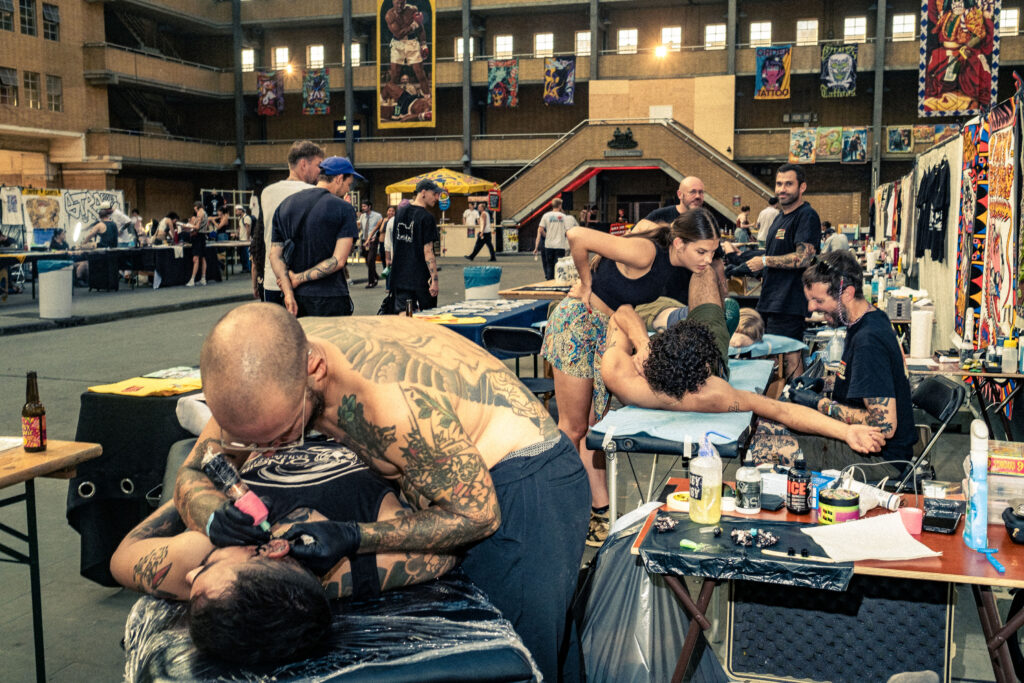
The first year was tiny. Skatecafé, DJ friend Victor Crezée whose radio show Whatever Forever already soundtracked the shop, and a handful of tattooers. Tattoo during the day, party at night.
People responded immediately. The next year he added a second room, then a second day, then moved to De School and sold 2500 tickets on a Saturday. The year after he scaled up further, bigger venue, bigger music budget, and it taught him something he has not forgotten since.
You can never take your last year into your new year. You always need to evolve and see everything new.
This year is the biggest yet, and genuinely the one he always had in mind. 200 tattoo artists, 65 market stalls, food, art throughout. Around 30 artists flying in from the United States alone, others from Tokyo, Australia, New Zealand, Korea. The Jam has built enough of a reputation internationally that getting a spot is now genuinely competitive.
“I hand-picked everyone. The tattoo level is really high. 80% of the people come from other countries. We really made a lot of noise with the Jam. The tattooers are really hyped to come.
”
Curation matters to him, and so does balance. In a field that skews heavily male, he has pushed deliberately to broaden the lineup.
I really try to have balance, a lot of women tattooers. I also try to be more open with it, more inclusive, more real.
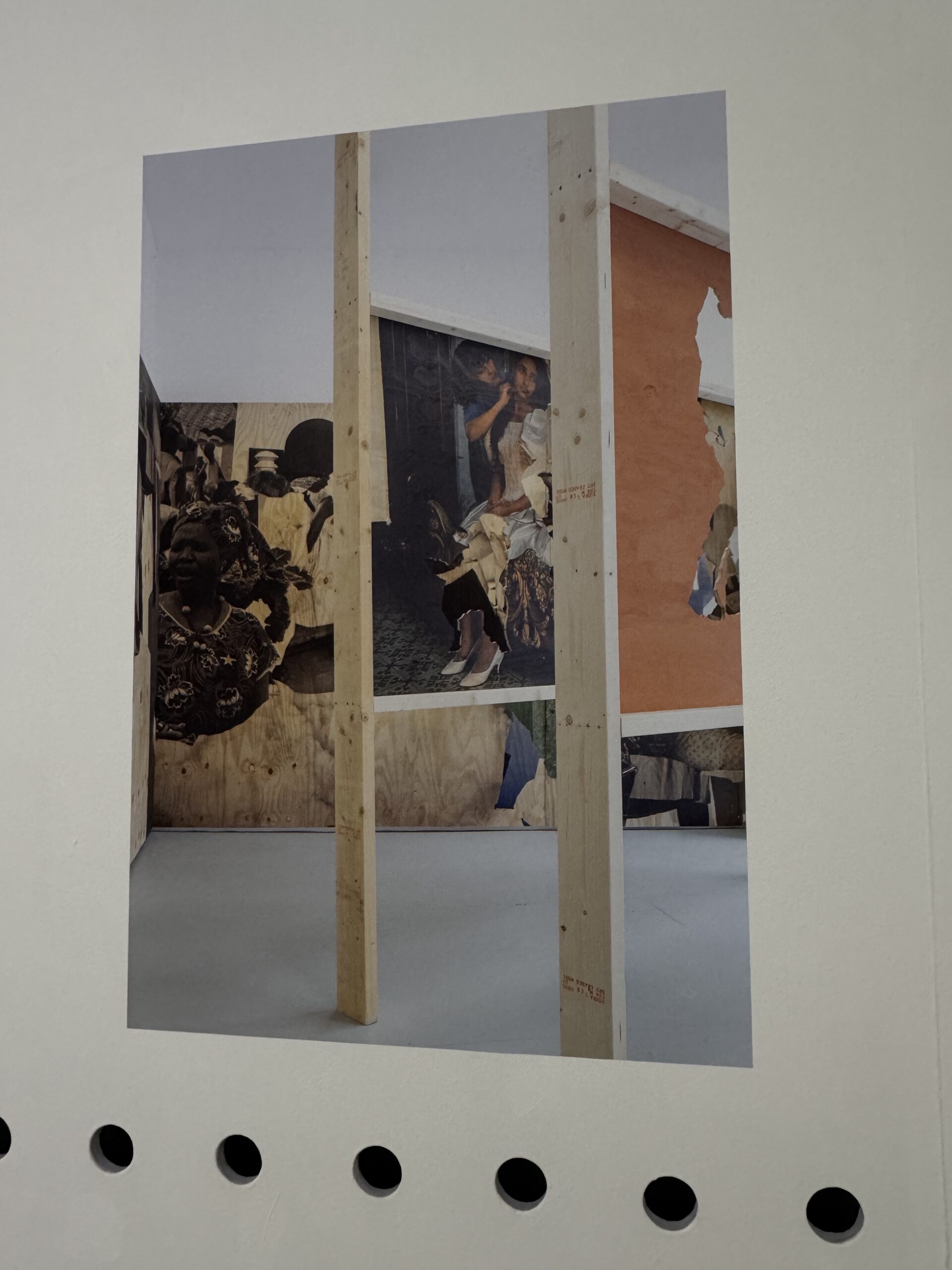
The programme runs across four days. Thursday opens with an exhibition at Café Voorwaarts, featuring work by artists from the US, Korea, China, Ghana and the Netherlands, including Deadly Prey: Ghana Movie Posters, Ryan Mettz, Wan Tattooer and Nobirs.
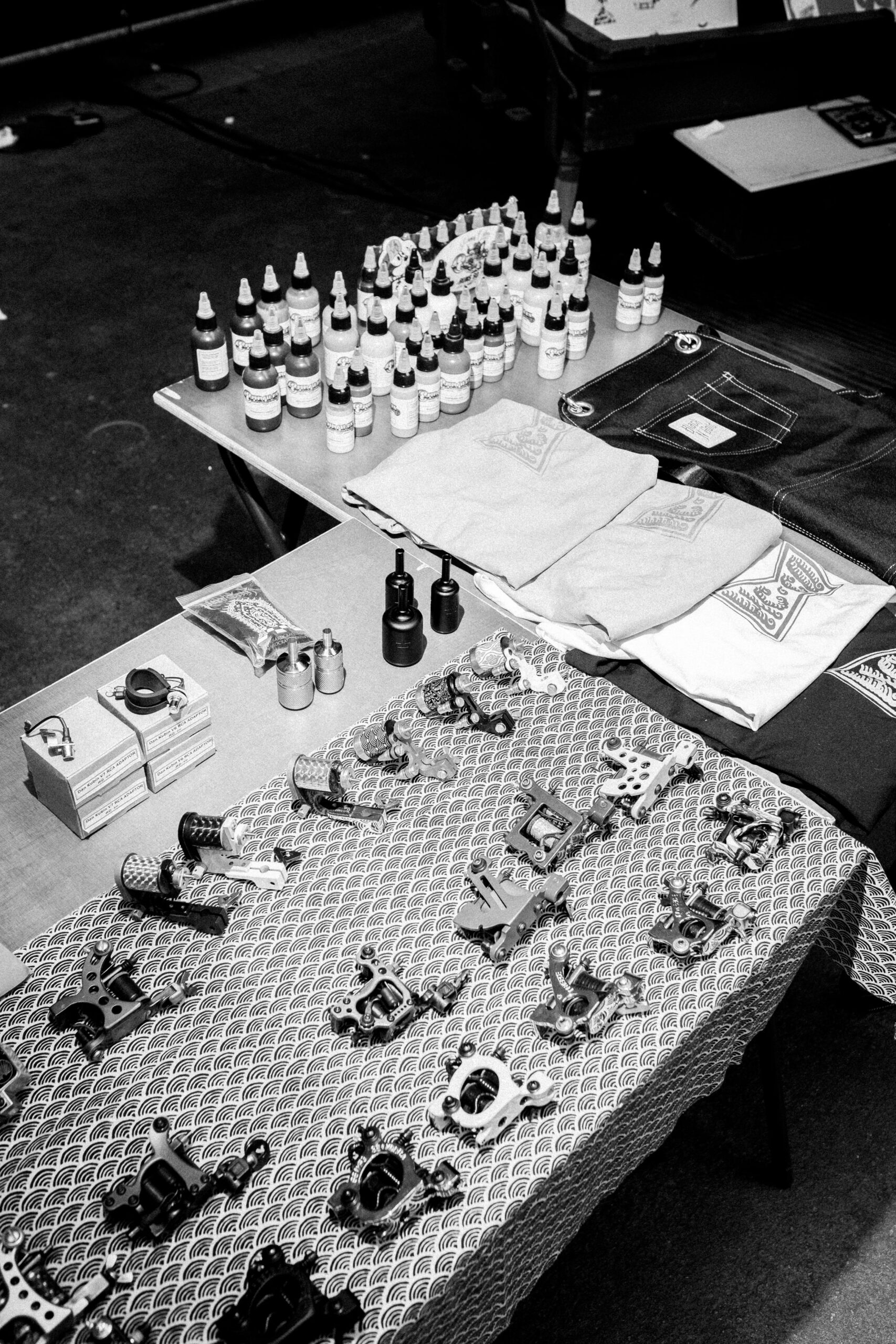
Friday and Saturday are the main events, parties running through the night, and 200 hand-picked tattoo artists working across both days. Among those tattooing across the weekend are icons Henk Schiffmacher, Paul Dobleman and Miss Nacar, among many others.The market runs alongside everything, 65 stalls covering art books, zines, prints, records, vintage clothing, antiques, jewellery, fashion, nail art and grillz, including Athenaeum Boekhandel, the Baby Souvenir Shop, and Etienne’s beloved neighbours Glazed.The parties are also looking very promising: Friday brings Tourist Trap and Cinnaman Soundsystem to the floor, whereas on Saturday we’ll be graced by AK Soundsystem and TGIB.
He has been working on it every day for months with a small but mighty team.
What do you want people to feel when they walk in?
Pretty curious, I guess. There’s a lot of stuff to see. It’s very welcoming. There’s not a tough edge about it.
I have Jesler, she’s the production leader, and a couple other guys and girls, but nobody works full-time. This has never been about building a commercial machine. So a lot of stuff I do myself, every day, all day long.
That is the point, really. The Jam is deliberately not the convention he walked out of. It is something closer to the city Amsterdam used to be before it got tidy: a little overwhelming, full of people from everywhere. Fine artists and food vendors alongside tattooers, designers and brands rubbing shoulders with graffiti writers, a daycare for those who want to bring the stroller, and somewhere in the middle of all of it, you might end up with a tattoo from someone who flew in from Philadelphia and is in Amsterdam for the first time.
Etiënne also runs Sichuan Territory in Noord and Order Territory magazine, and somehow finds time to show up to all of it. The through line, if there is one, is memory. A tattoo is permanent. A meal, a good one, stays with you. A magazine freezes a moment in time. He is, in every version of himself, in the business of making things that last.
He is also, genuinely, someone who draws enormous inspiration from people who are great at what they do, whatever that thing happens to be.
The restaurant, the magazine. How do you hold all of it?
I’m fascinated by people who are really good at service. If someone gives me good service, I’m fully into it. How do you give somebody a really nice feeling? In a restaurant you can do that. You take your ego out completely, just to give somebody else a good time.
The Sichuan restaurant came from a chance encounter with Jennifer, the daughter of the owner of the Sichuan place he had already been going to every week. As fate would have it, he was deep in a Tibetan art obsession at the time, and Jennifer happened to be half Tibetan. They hit it off immediately. The idea to do something together crystallised one evening, and he went to her the next day.
She was direct about it. Wow, that’s a good idea.
The magazine came when the collective he had co-founded, Order, wound down after 10 years. He wanted something that could hold all his interests without becoming a brand or a collective, without the limitations of a clothing line.
If you do a clothing brand, you can do maybe five collaborations in a year, and that’s already a lot. But in a magazine, I can feature a hundred people at once. The possibilities are endless.
Why do you think it’s all working?
“I think it’s honest. People really connect to it because it hits different subcultures. I’m always a graffiti guy, I’m really into music, and I love very different types of art. I just started connecting it.
”
He pauses for a moment.
I never expected it would be a Chinese restaurant, a tattoo shop, and now this. I never expected that.”
And that, more than anything, seems to be the point. There is no grand plan, no end goal. Just someone who keeps saying yes to the things that excite him, and figuring it out from there. A guy from a small village, obsessed with something most people around him didn’t understand, who just kept going until the city caught up with him.
Tattoo Jam runs from the 3rd to the 5th of April. See you there. And if you spot someone (me) with a tiny mic running around contemplating their next 25 tattoos, you’ll know you’re in the right place.