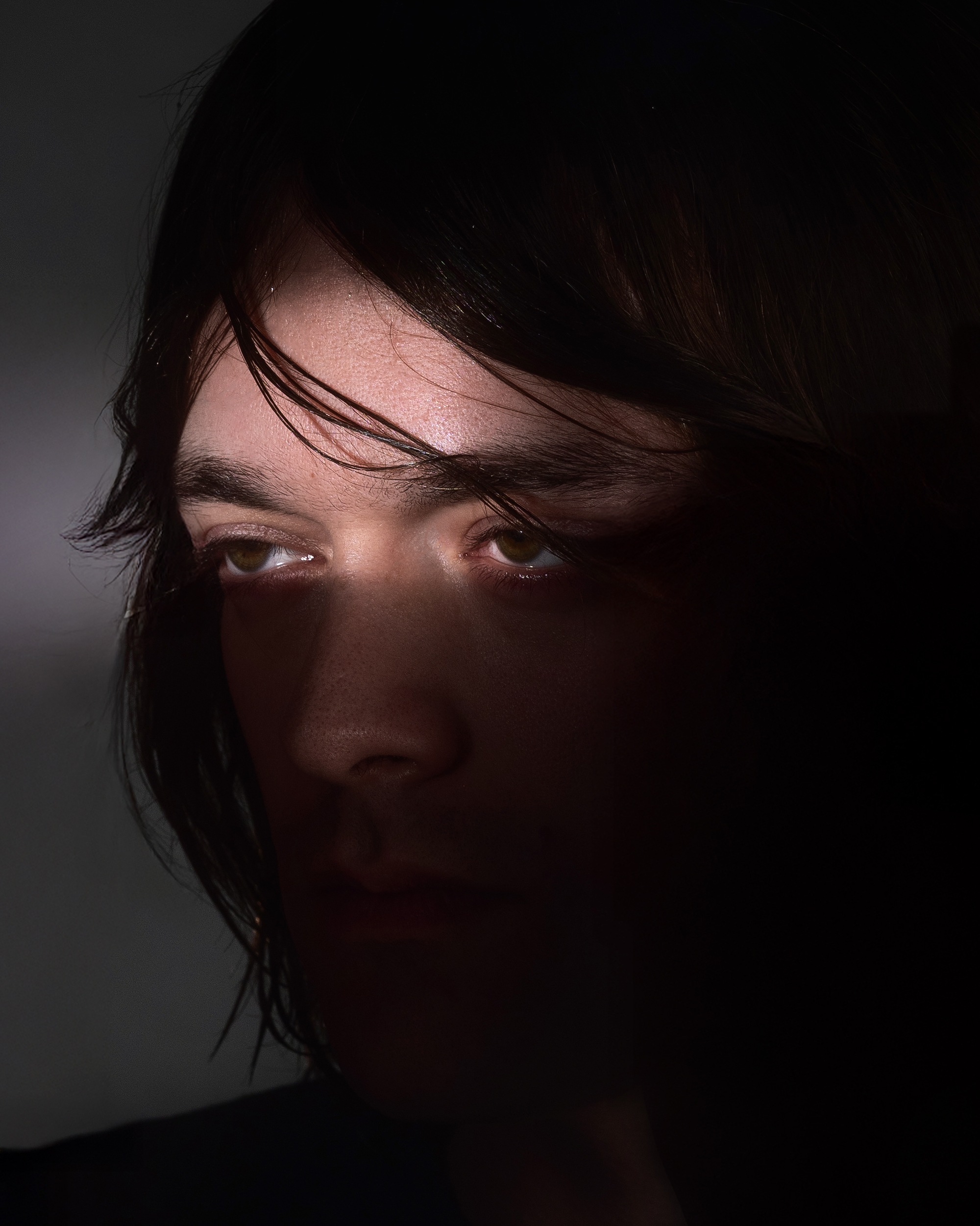
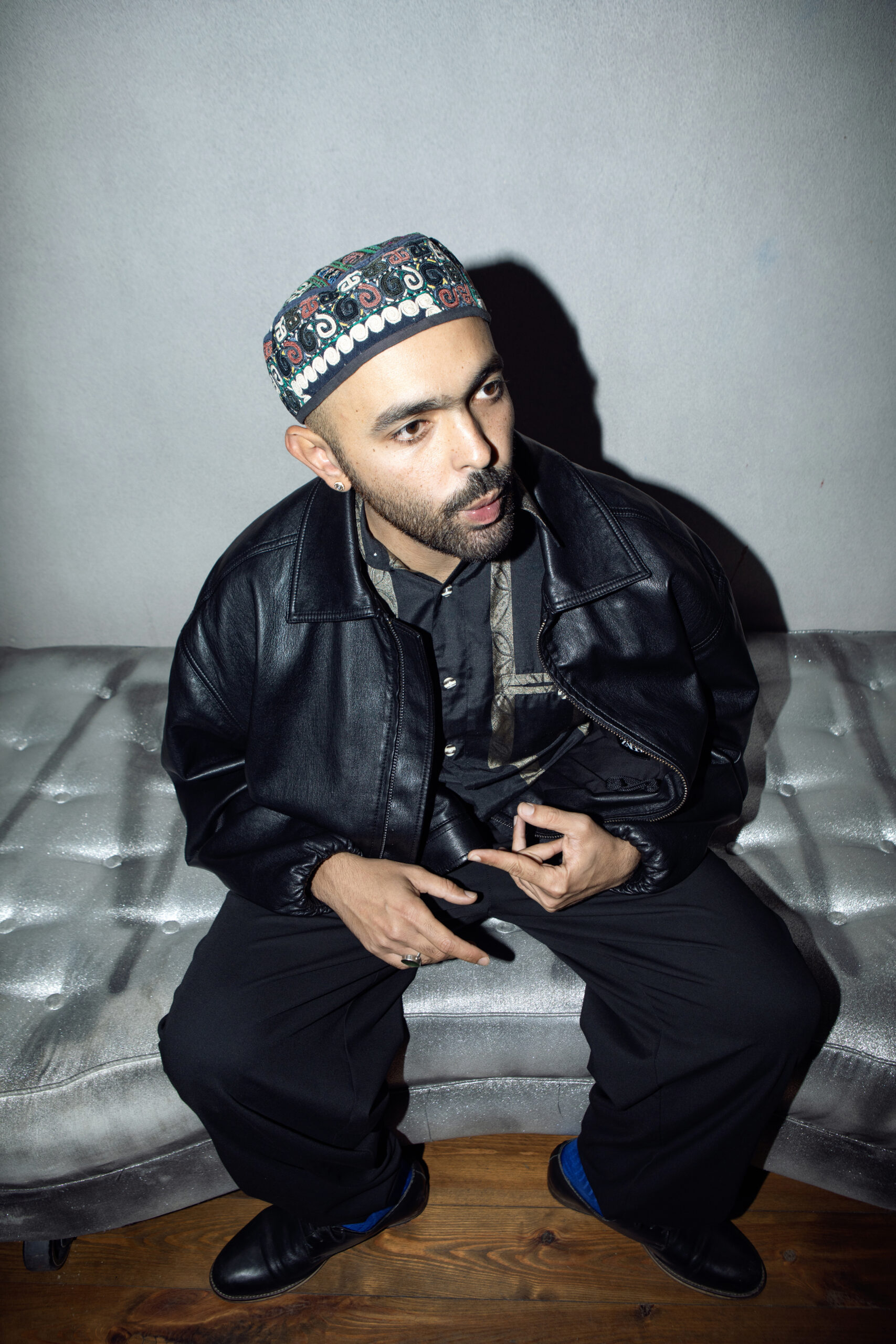
There is a type of artist who does not so much perform as channel. Whose work arrives not from a desk or a studio but from somewhere considerably harder to locate. Abdullah Miniawy is that artist. A poet, composer, vocalist, actor, and filmmaker born in Saudi Arabia, raised across borders, and now living between Cairo and Paris, he has spent his career making work that refuses to stay in one place long enough to be categorised. His voice has been heard in Tahrir Square during the Arab Spring. His words have appeared on walls in Syria’s Yarmouk Camp. His latest album, Dying is the Internet, made with French producer Simo Cell, was named Album of the Month by The Guardian earlier this year. None of this was planned. Most of it, by his own account, was channelled.
He performs at FIBER Festival in Amsterdam later this month, as part of a programme built around the theme of Fragile Forces. It is a fitting frame for an artist whose entire practice seems to live in the tension between fragility and an almost stubborn insistence on being fully, ferociously alive. FIBER, now in its eleventh year, has always been interested in that tension: the place where electronic music, audiovisual art, and the politics of sound meet and occasionally combust. It is one of Amsterdam’s most genuinely curious festivals that rewards people who show up not knowing exactly what they are about to experience.
I spoke to Abdullah over email in the lead-up to FIBER Festival, while he was in Catania, one month into a long and beautiful run of concerts across the world.
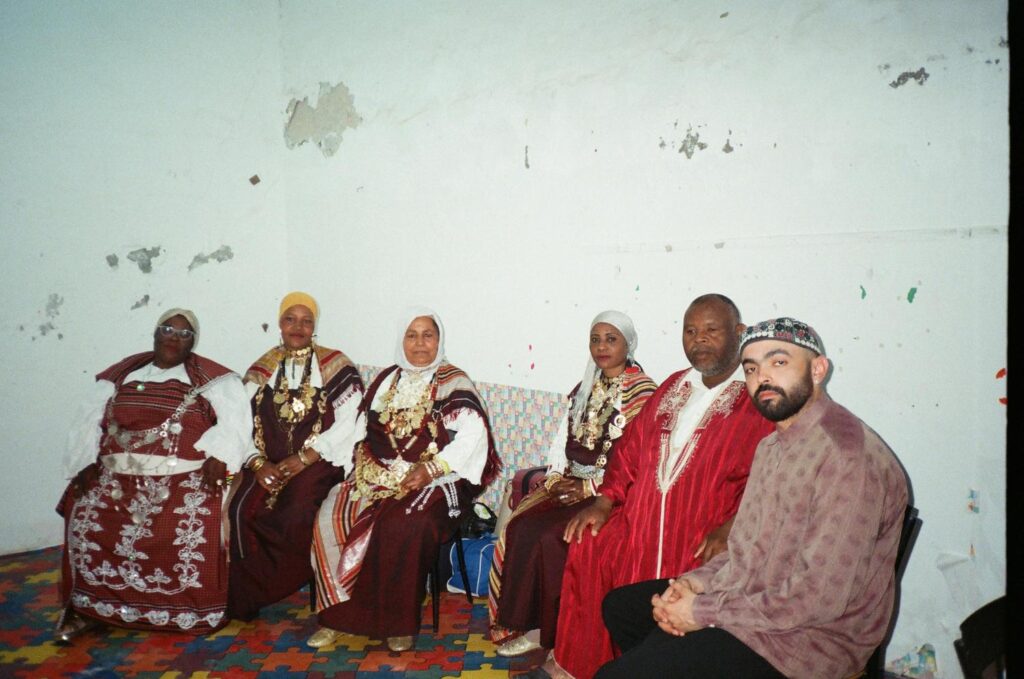
Awa: How are you today, and where are you in the world right now?
Abdullah: I’m well. Trying, as always, to look at life through the creative wound and the creative invitation at the same time. I’m speaking to you from Catania. Yesterday marked one month away from home, after the last concert of a long and beautiful run across the world, meeting audiences who somehow already knew the language before I spoke it.
What does your average morning look like when you are not performing or traveling?
I put the radio on first. I play basketball. I practice Qi Gong in a park in Paris with a beautiful group of souls. And then there is that other hour, the poet’s hour, around four in the morning, when the world is held between sleeping and waking, and I compose there quietly, in the company of the divine and the breathing rhythm of sleepers.
Is there something you have been completely obsessed with lately?
Romance. Not simply love, but the act of remaining vulnerable enough to still be astonished by another human being.
“I heard a vehicle full of prisoners singing my poetry. At that moment I understood the work no longer belonged to me. It had entered the bloodstream of other people’s lives.
”
What is your relationship with Amsterdam?
I’ve visited Amsterdam a few times for concerts, but I cannot yet say I have formed a deep bond with the city. Sometimes a place waits for you. Sometimes you must become the person capable of meeting it first.
Where is home for you?
Paris. Though home is also becoming less of a location and more of an interior state I keep trying to return to.
You were born in Saudi Arabia, grew up between multiple countries, and have been living between Cairo and Paris. That is a lot of climates to carry. How do all of those places live in your practice?
They speak through me whether I ask them to or not. Every place leaves a climate inside the body, and eventually it becomes sound. I think my work depends on embracing exploration fully. I channel more than I construct. The countries are visible in me; they become part of the voice itself.
You performed in Tahrir Square during the Arab Spring. Your words ended up on walls in Syria’s Yarmouk Camp and across the Arab world. At what point did you realise that what you were making was bigger than a song?
The strange thing is I realised it when I wanted to stop. I heard a vehicle full of prisoners singing my poetry. At that moment I understood the work no longer belonged to me. It had entered the bloodstream of other people’s lives. Since then, intuition has carried me. I rarely feel I am inventing a story, more that the story is speaking itself through me.
You perform in Arabic in rooms where most people cannot understand the words. What happens in that gap?
The question itself contains the answer. Something happens. Language, when it is truly alive, does not need translation. It needs presence.
His latest album, Dying is the Internet, made with producer Simo Cell and released on Dekmantel’s UFO series in March 2026, is a reflection on digital fatigue and the attention economy. It sounds like someone opened a window into what our collective brain actually feels like online, and then set it to a club soundtrack. The Guardian named it Album of the Month. It is over in 35 minutes and you will immediately want to go again.
Our generation grew up with the internet as a companion, and now seems to be collectively falling out of love with it, like weaning off something that raised us. Do you think we were poisoned by it, gifted by it, or is the answer somewhere far more complicated than either?
I think we abused it, certainly. We replaced our selfishness, our fears, our flaws with beautifully decorated virtual identities to hide behind. You meet some of these internet stars in real life, and there is such darkness there sometimes, empty minds carrying fashionable ideas with no rootedness underneath them. But I say this also knowing I was a victim of it too.
The internet keeps asking more of us, and eventually we begin demanding more from ourselves in ways we barely notice. We stop hearing our own breathing. That makes me sad. But someone had to signal it. The internet has its own hierarchy, its own invisible power structures. It was never truly owned by the users in the way we imagined.
You have said you never chase inspiration, you just live life and let things become poetry. But you have also described a period of enormous pressure when you were designing music rather than creating it. How do you tell the difference from the inside, when you are in it?
Design belongs to the later stages. It’s necessary, craft matters deeply, but if you stay there too long it can become empty, almost lifeless. It should be approached slowly and consciously. Creation is different. Creation feels like diving into the Red Sea of thought searching for pearls after holding your breath for days. There is danger in it. Relief too. As if something in you nearly drowned and returned carrying light.
“Too much of anything becomes its own hell.
”
Your practice moves across voice, poetry, composition, film, acting, and 3D. Is there a form you feel most yourself in?
The first image I see is what matters most. If you are true enough to yourself, the form becomes secondary. Everything can translate into everything else. I don’t experience these disciplines as separate territories. They complete one another.
Is there a collaboration or project from your past that you feel still has more to give?
My solo show Nigma Enigma. I still feel there are unopened rooms inside that work.
You lost your father in 2023, and recently returned to Saudi Arabia for the first time since you were a teenager to collect his books from the family home. How has grief changed what you make and how you make it?
Grief disorients you first. You begin adopting the thoughts of the person you lost, almost wearing them like clothing, and then slowly you realise you must find your own body again. Your own movement. Your own shoe size. Eventually you walk barefoot into the world ready to recognise others carrying the same absence. The books felt like my father’s final message to my mother. Before he passed, he repeated only two words: “Mama” and “books.” He believed the landlord had thrown them away, but I had this intuition they were still there. And they were. I brought them home.
FIBER’s theme this year is Fragile Forces. What does fragility mean to you as a performer?
I don’t actually believe human beings are as breakable as we fear. Fragility, to me, is important because it keeps us kind. It sharpens the senses. But too much of anything becomes its own hell. Turning fragility itself into an identity or performance can become another form of imprisonment. Better to go outside. Open up to a stranger. Risk being alive.
You are performing as a trio at FIBER with trombone players. How does it feel to bring other people into a practice that has often been quite solitary?
In some ways we amplify the solitude together. Jules Boittin, Jules Regard, Robin Khoury, and Filippo Vignato, they are extraordinary talents, deeply devoted to the work I composed. They approach the music with genuine passion. They don’t extinguish the flame; they help contain and shape it.
One thing you are done keeping to yourself, and one thing you are still holding on to.
I’m still holding onto hope, optimism, and the objectives that continue calling me forward. And something I’ve kept to myself for too long: I have this terrible thought of sticking chewing gums underneath the keys of a piano.
We appreciate the honesty.
Last message for the world?
Do not live entirely in the past. Live for change.
Abdullah Miniawy performs at FIBER Festival in Amsterdam on May 31st at BIMHUIS.