Chef’s choice, sake, raw fish, Japan – are some common keyphrases you might stumble upon in a conversation about omakase. Derived from the Japanese phrase meaning “I leave it up to you”, omakase is a dining experience in which guests entrust the chef with deciding what to serve, allowing them to guide you through a tasting of several courses shaped by their expertise, creativity and the ingredients at hand.
Hand brews and V60s? Rarely part of that equation.
So, at the height of this summer, when the team behind A Sense of Place, a former wine import shop turned coffee haven in Amsterdam’s Jordaan, invited us to discover their new Sunday morning ritual, we couldn’t hide our surprise. Or slight confusion.
Huh? Is liquid-based omakase a thing? What does a six-course coffee omakase even look like? And, perhaps most importantly, what kind of caffeine tolerance does one need to survive it? Curious and actively engaged citizens that we are, we decided there was only one way to find out.
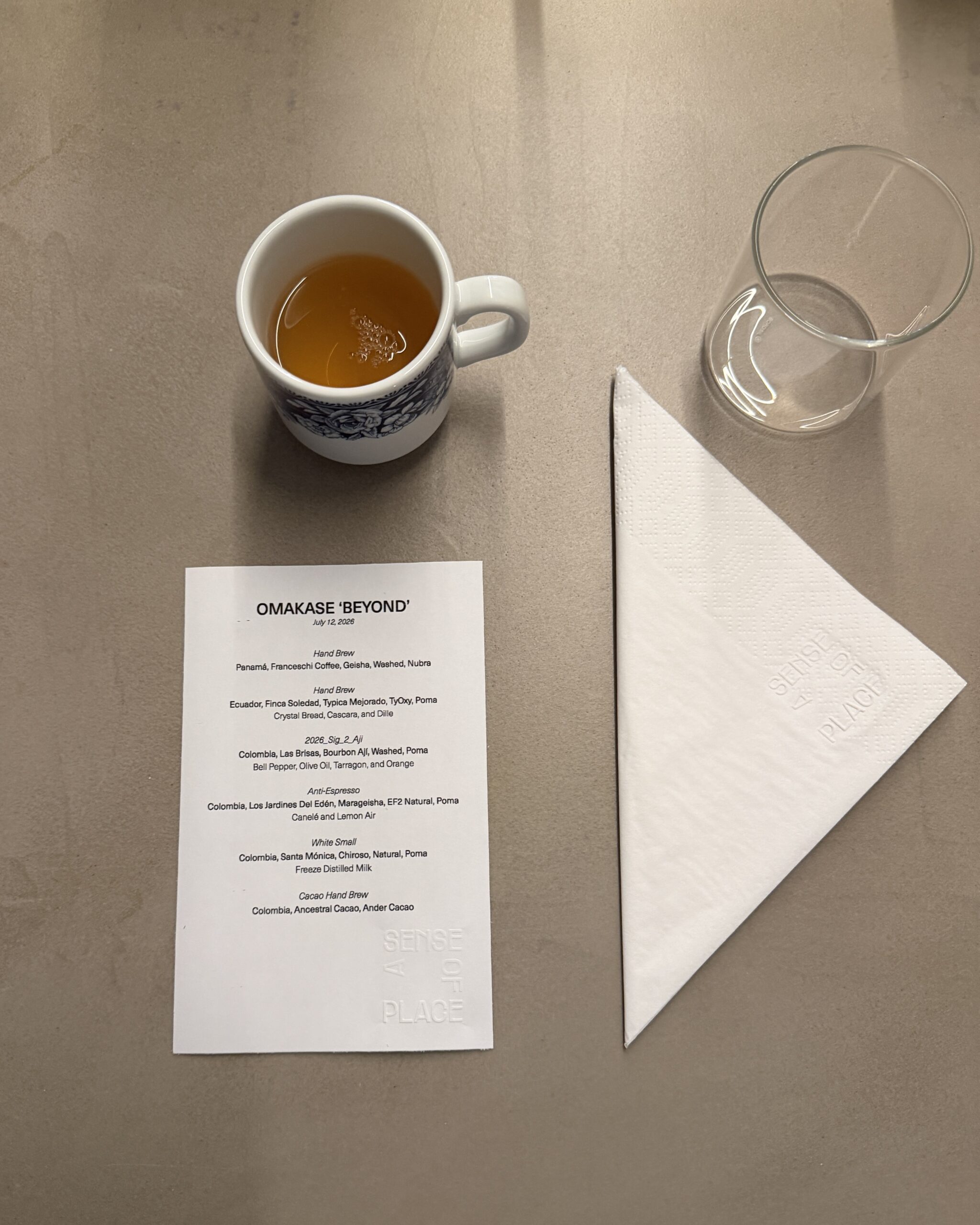
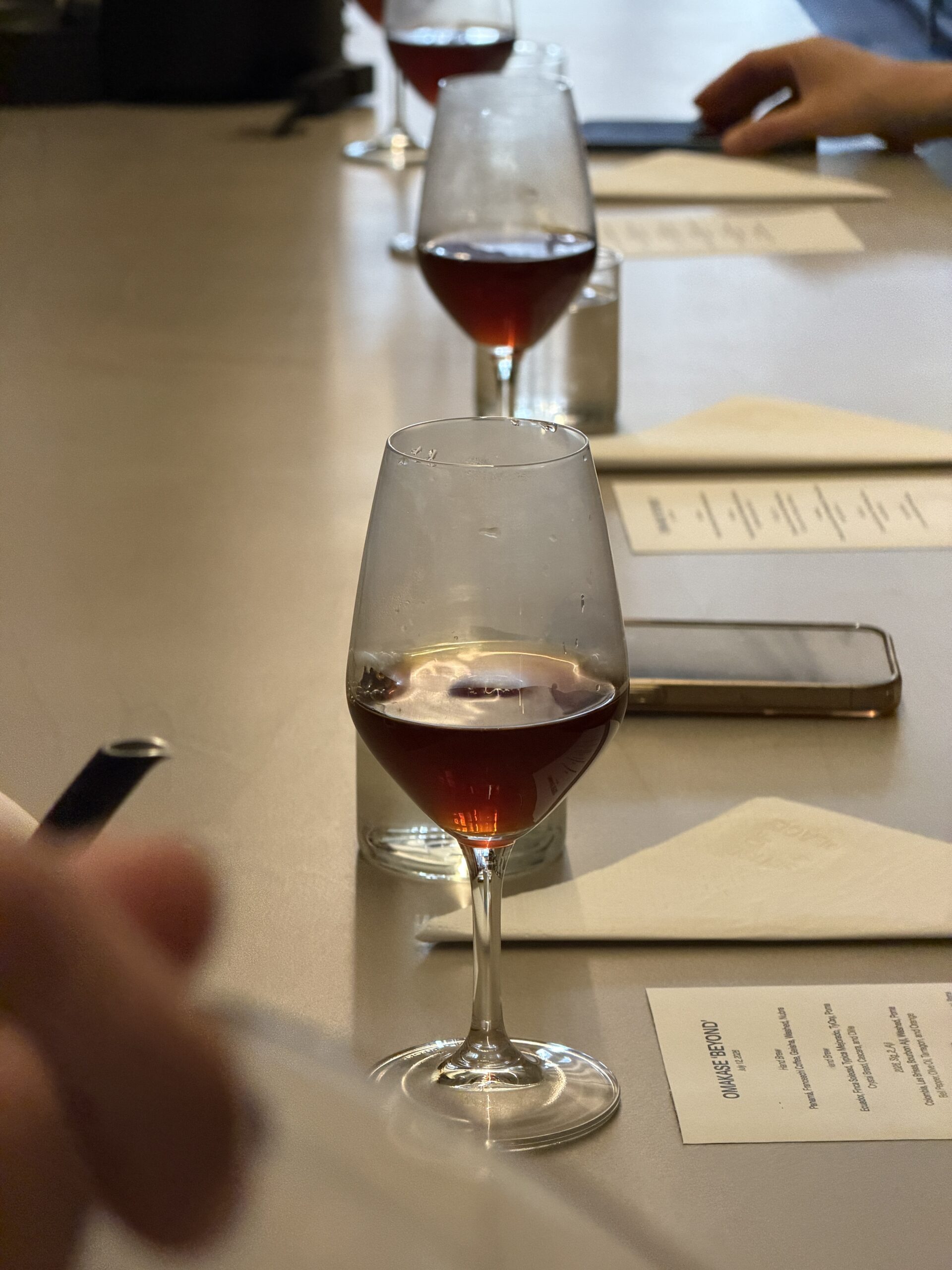
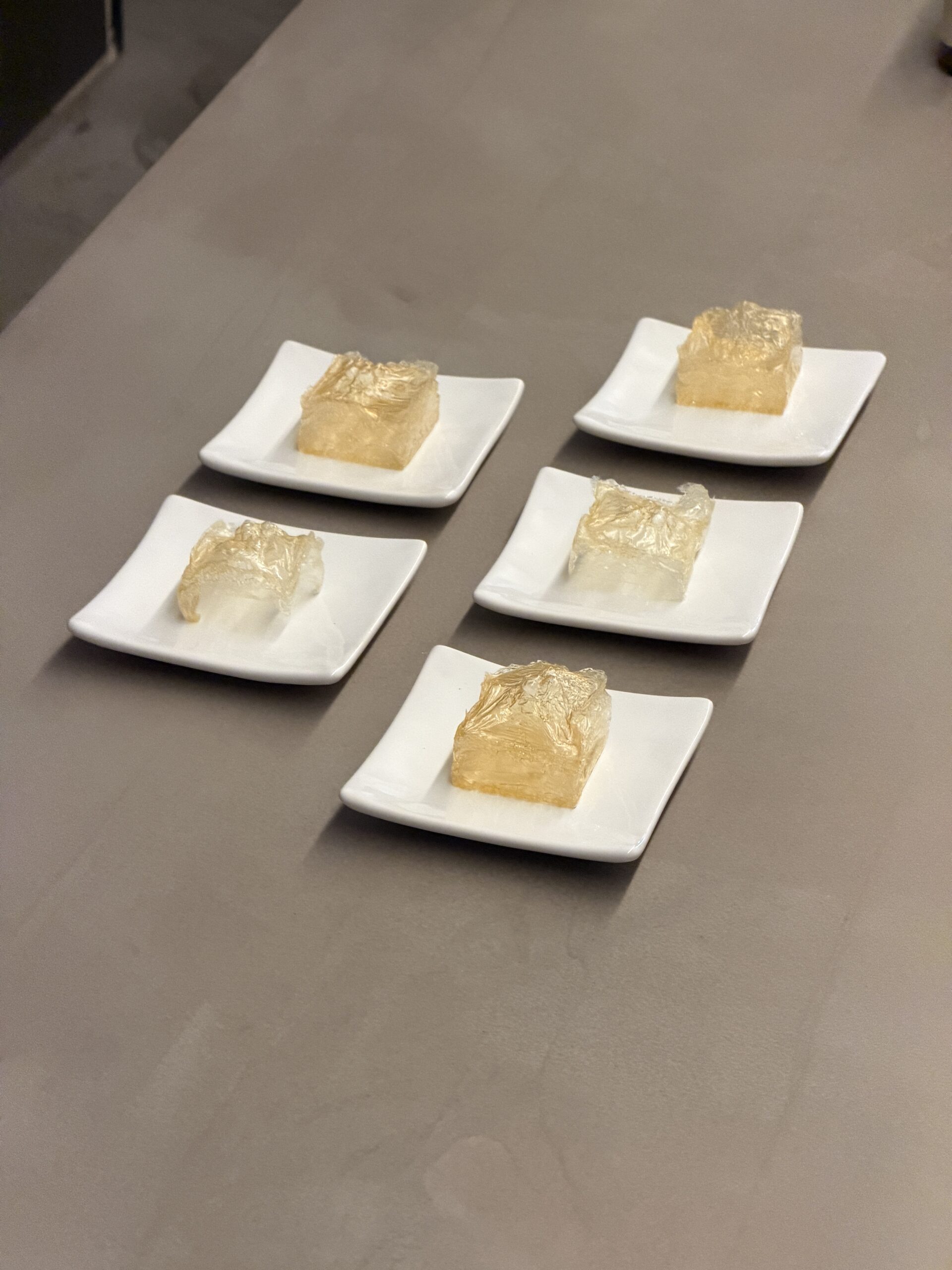
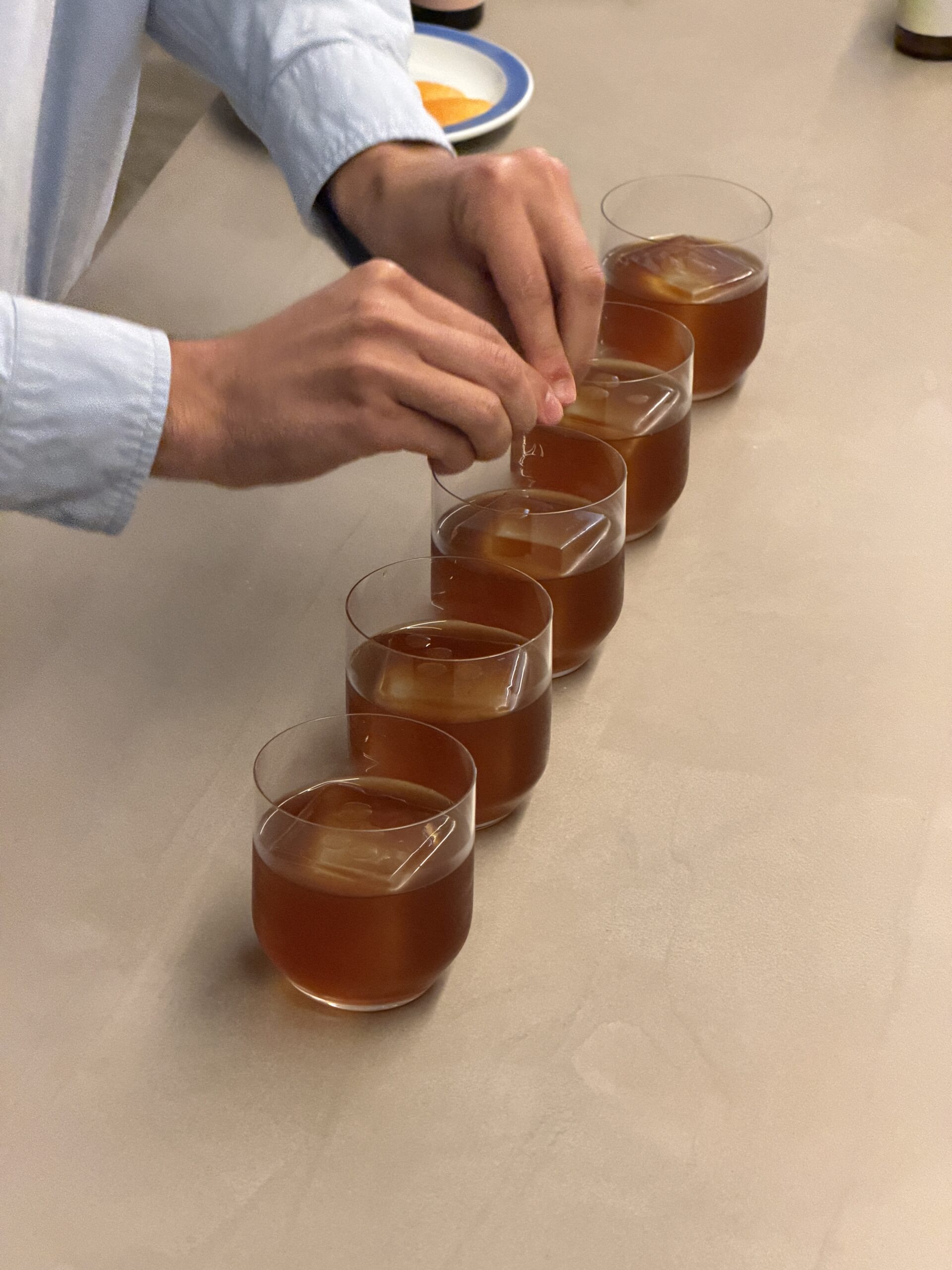
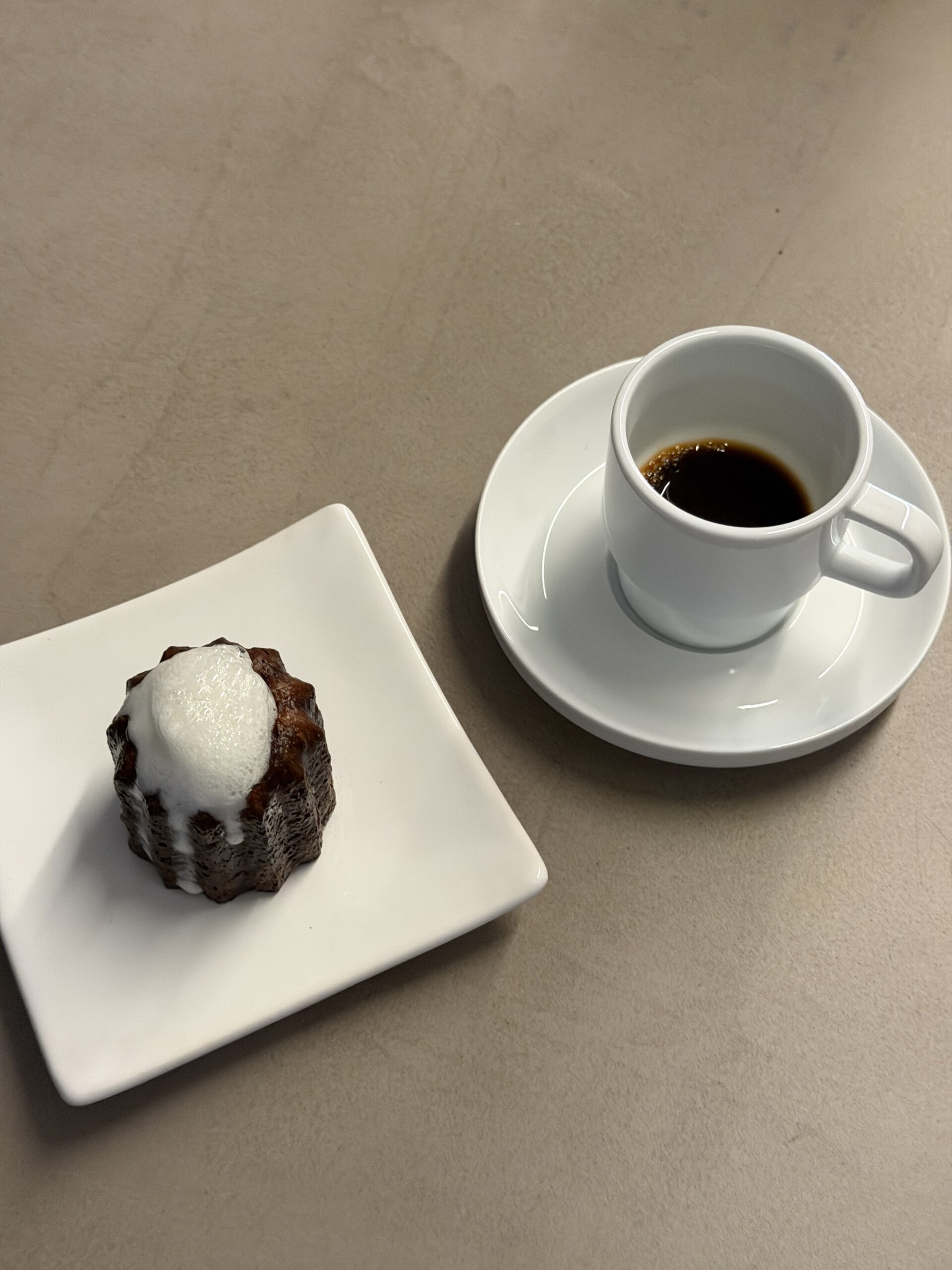
Imagined by master barista Lucas Hernandez, ‘Beyond’ is a 6-course omakase that moves from hand brews to cold brews, paired with unexpected little delicacies such as crystal bread (yes, you read that right) and accompanied by a thoughtfully curated playlist. A multisensory experience designed to push you to the edge of (dis)comfort and will make sure to leave you buzzing.
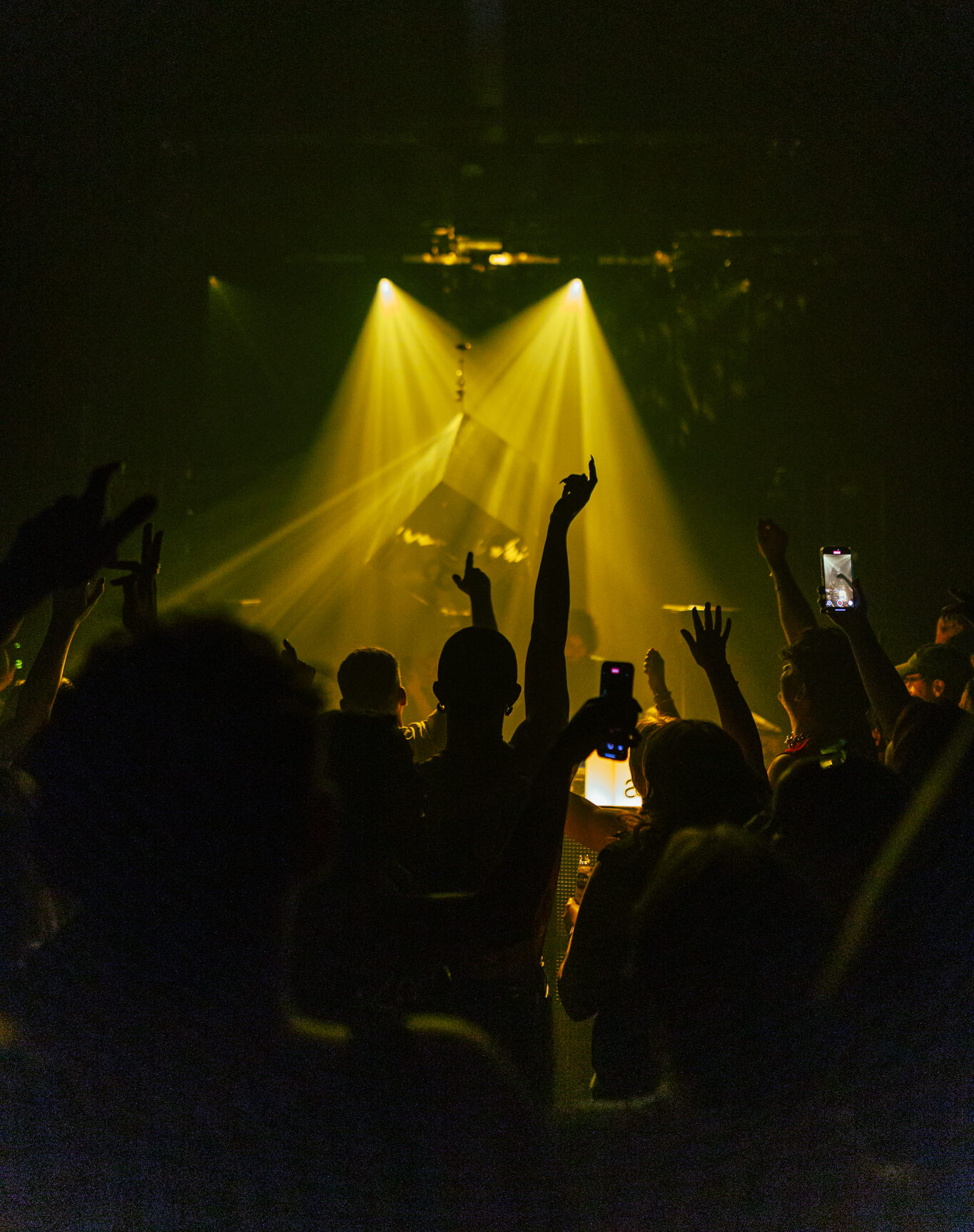
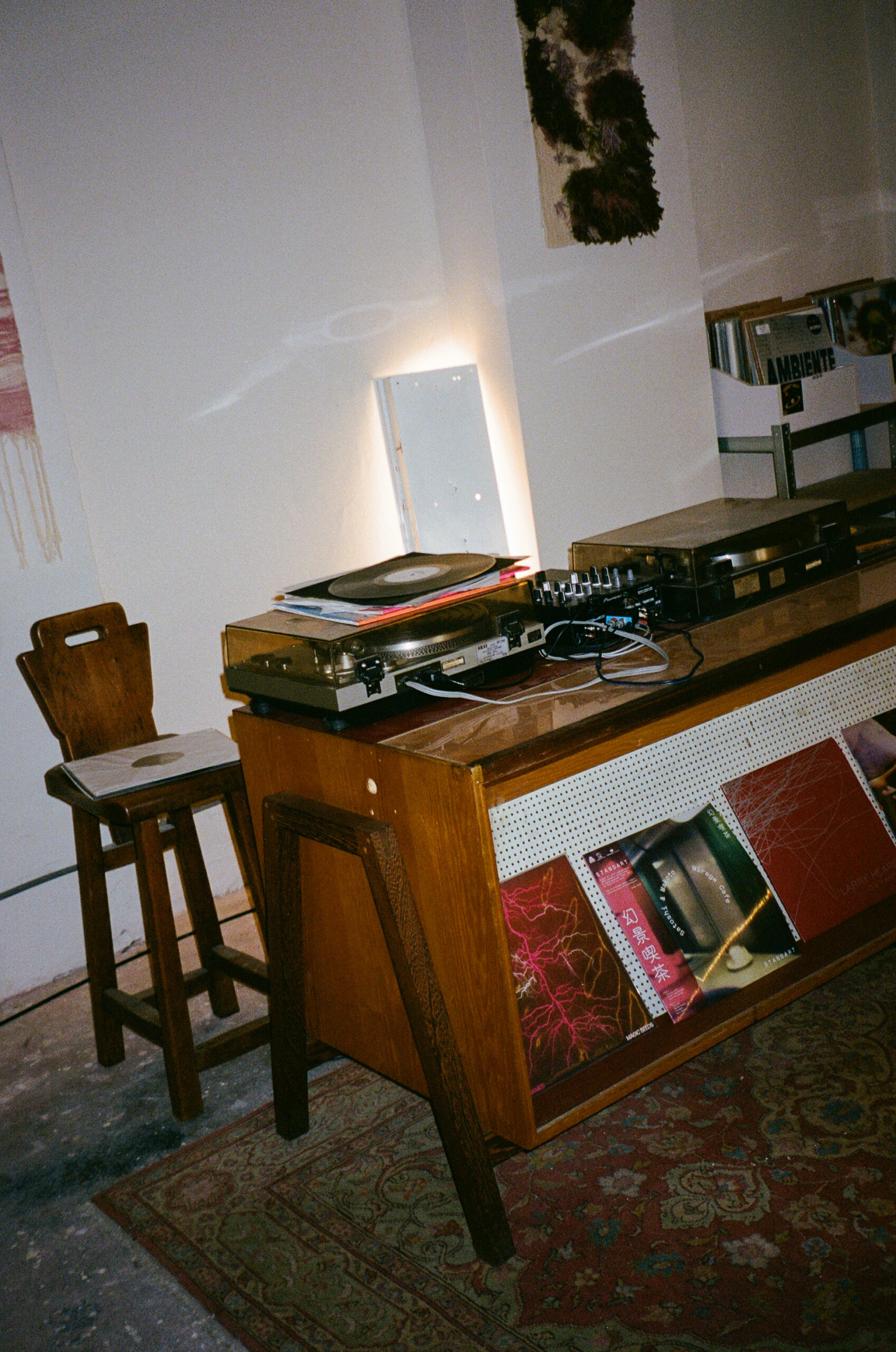
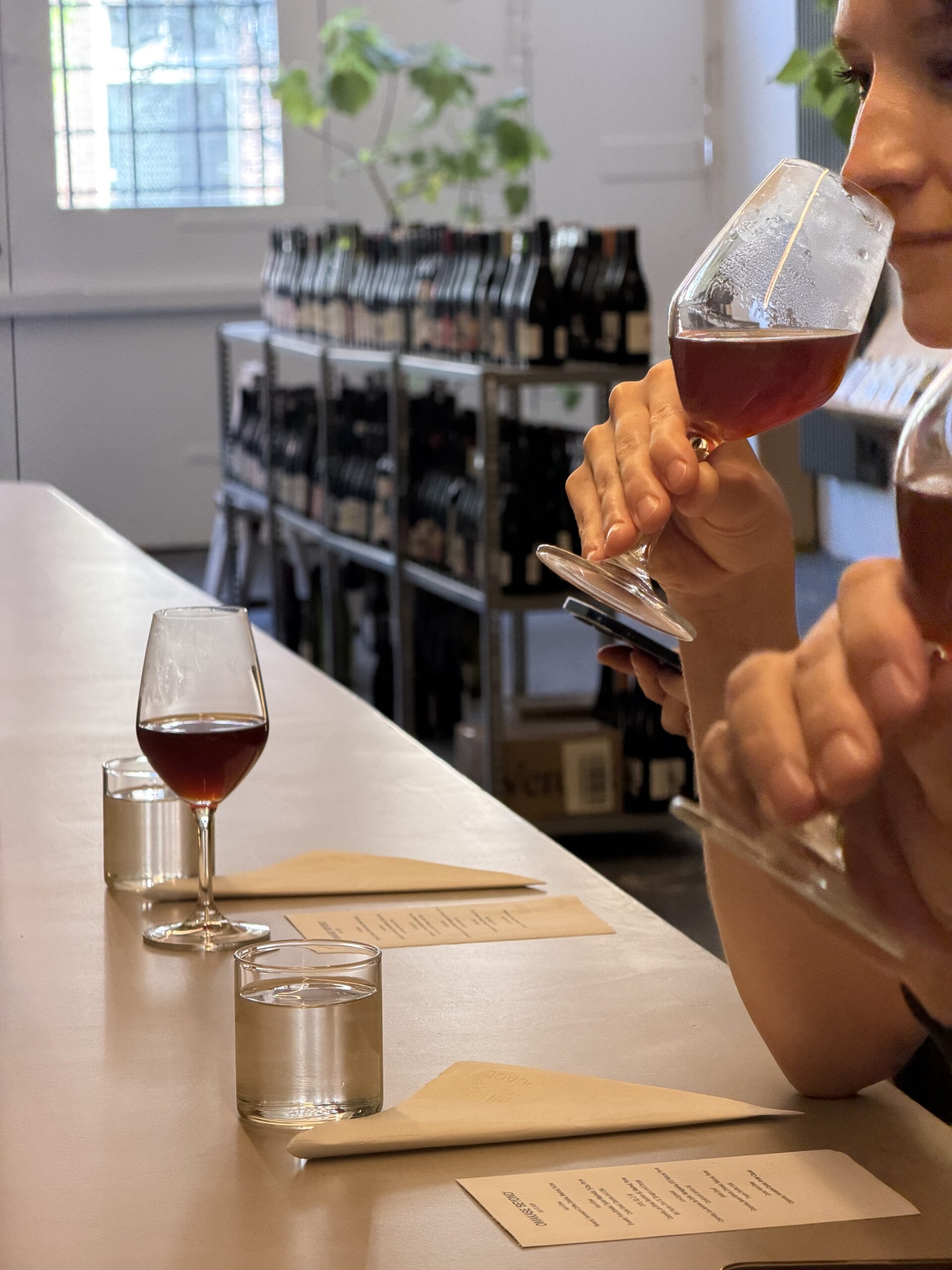
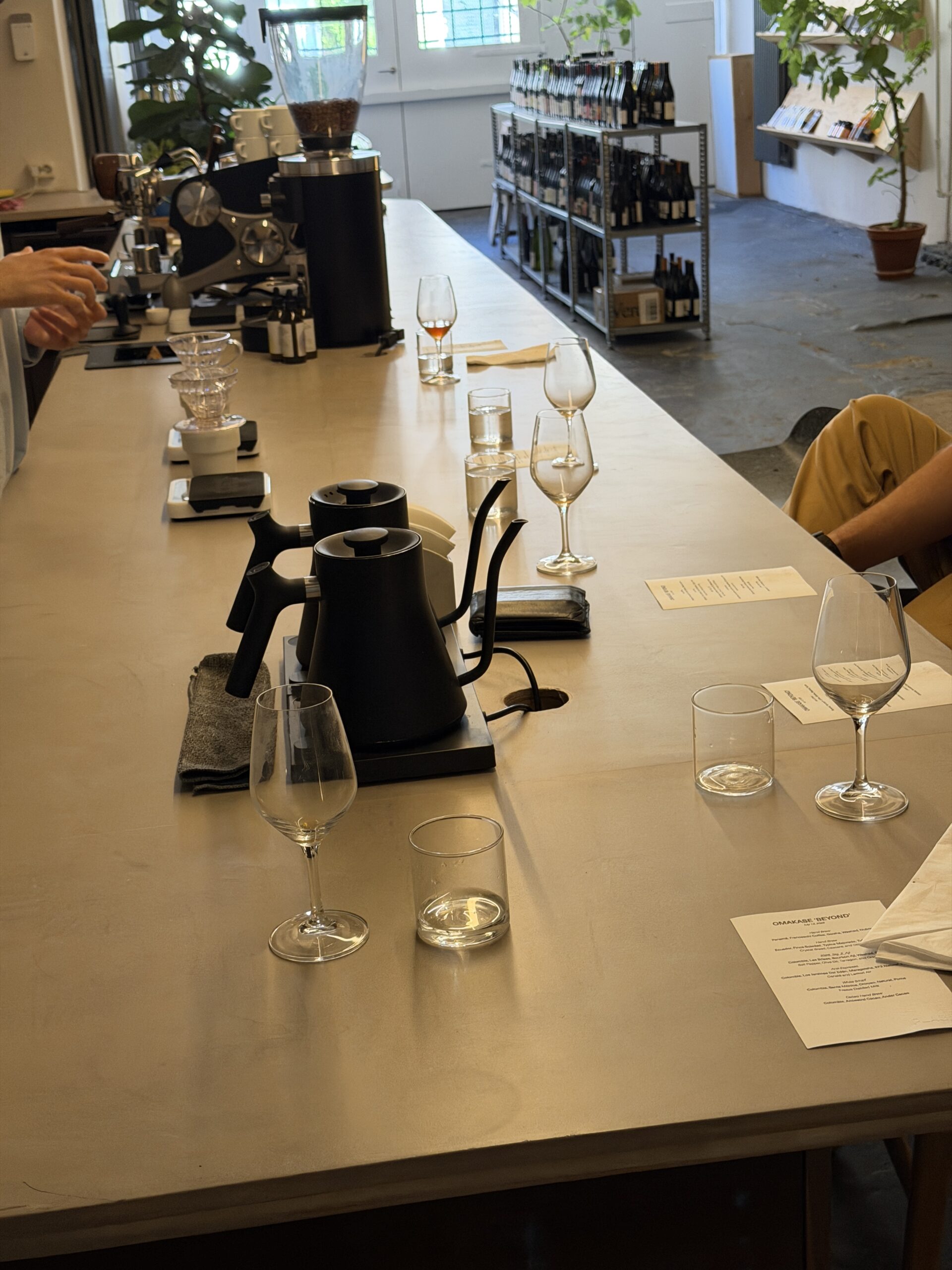
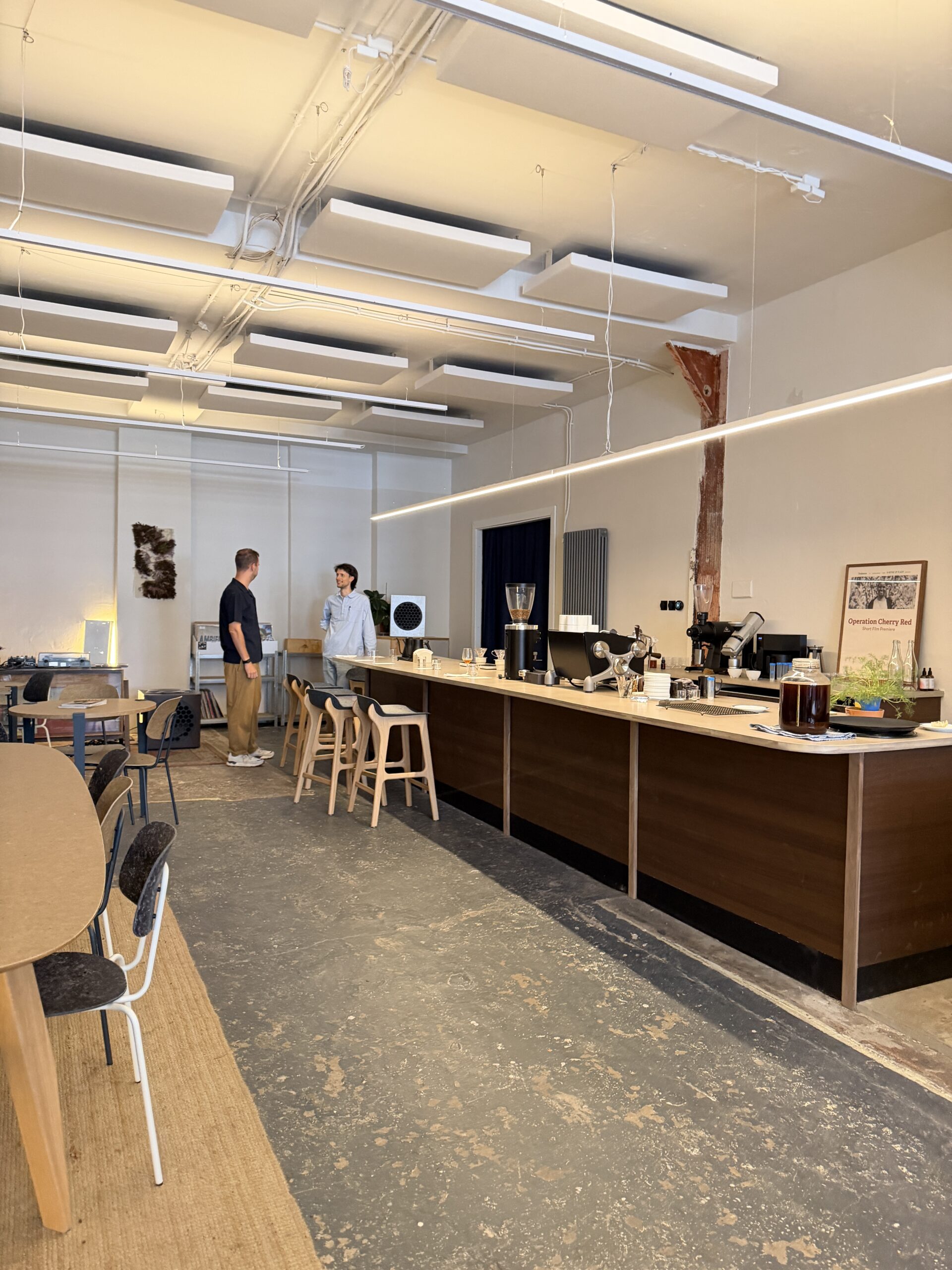
A Sense of Place is the ideal backdrop: Tucked away on Willemstraat, the former warehouse pairs lofty ceilings and bare walls with warm wooden details, colourful wine bottles and a record collection worthy of a seasoned audiophile. More than a café, it feels like the shared living room of the people behind it. A welcome departure from the increasingly interchangeable, “feed-friendly” specialty coffee spots, where every inox countertop looks suspiciously familiar. Here, every bottle, coffee, vinyl, and magazine has a personal connection to one of the founders.
Behind it all are three rather particular individuals.
The mind and eyes behind the perfectly proportioned light fixtures, artfully exposed wooden slabs, and millimetre-precise bar fittings belong to AJ. An architect and strategic partner, he has a keen eye for detail and an appreciation for craftsmanship. “The ultimate thing for me is finding the people who execute to perfection and building with them,” he says. In Dani and Lucas, he has found just that.
Dani joins AJ as a partner with a desire to build something that can be felt rather than just measured. He brings to the table, or should we say the countertop, a love for the finer things (which may or may not stem from the fact that he’s Italian), excellent musical taste, and 15 years of experience scaling digital ventures across the globe.
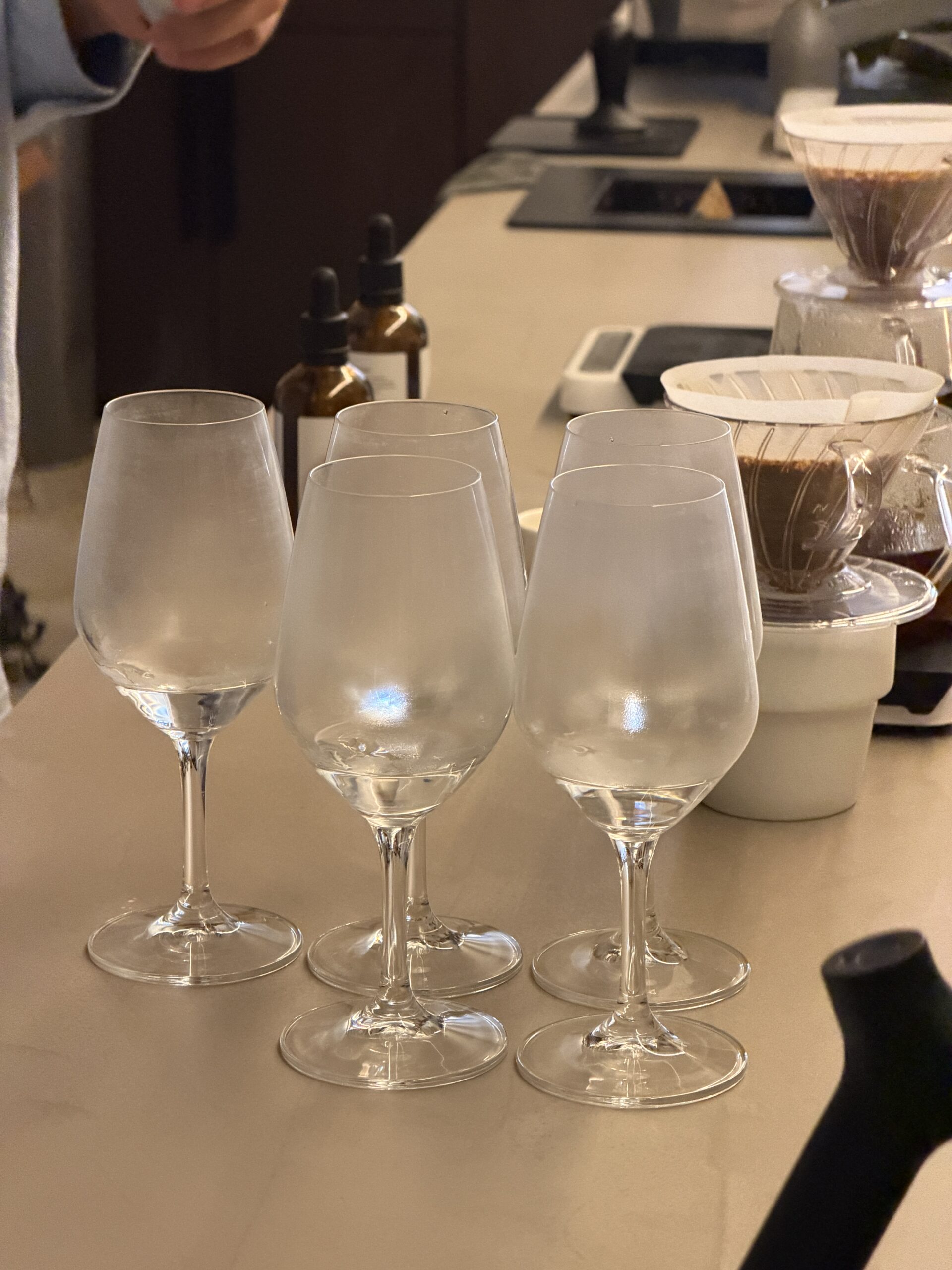
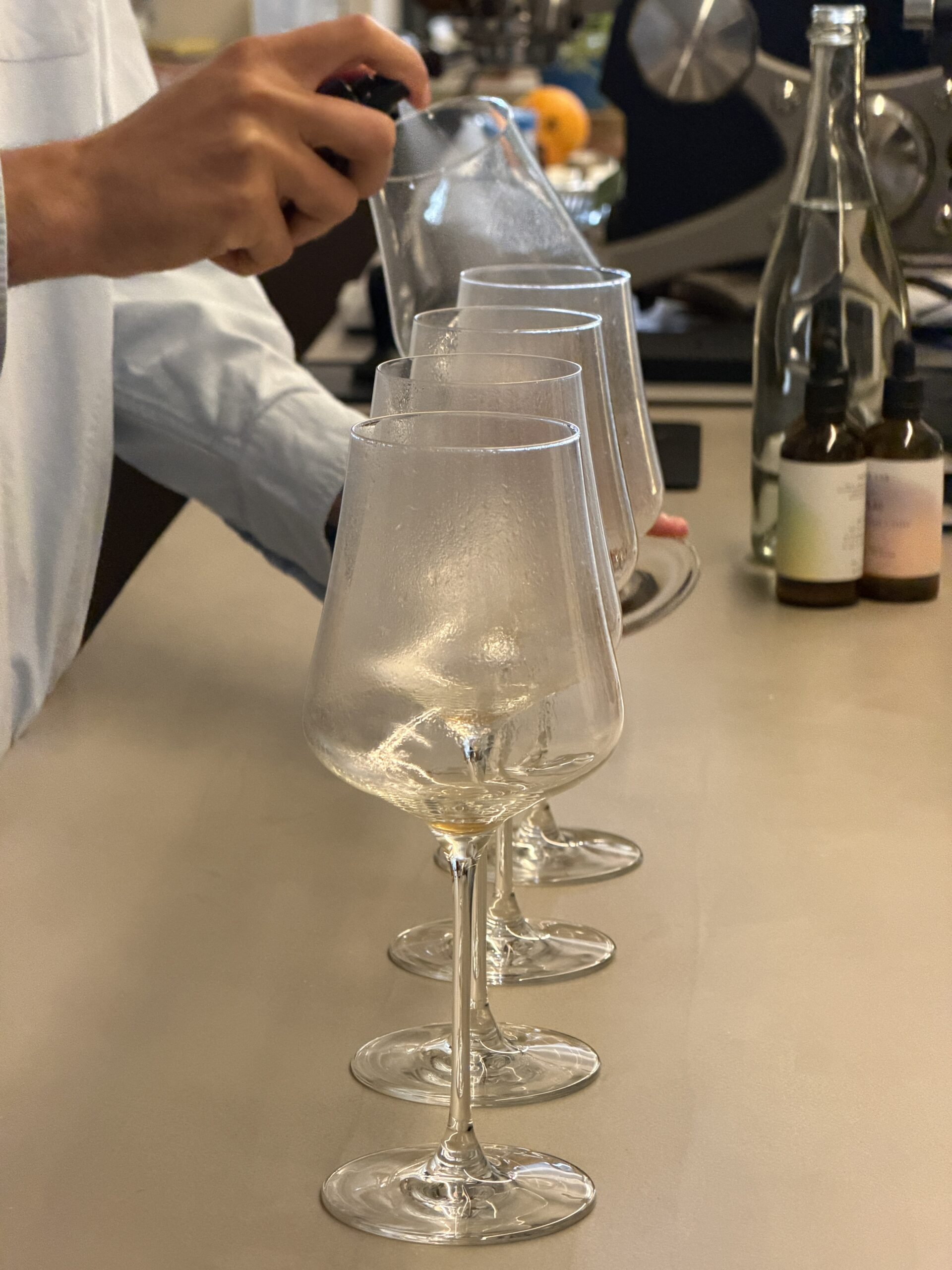
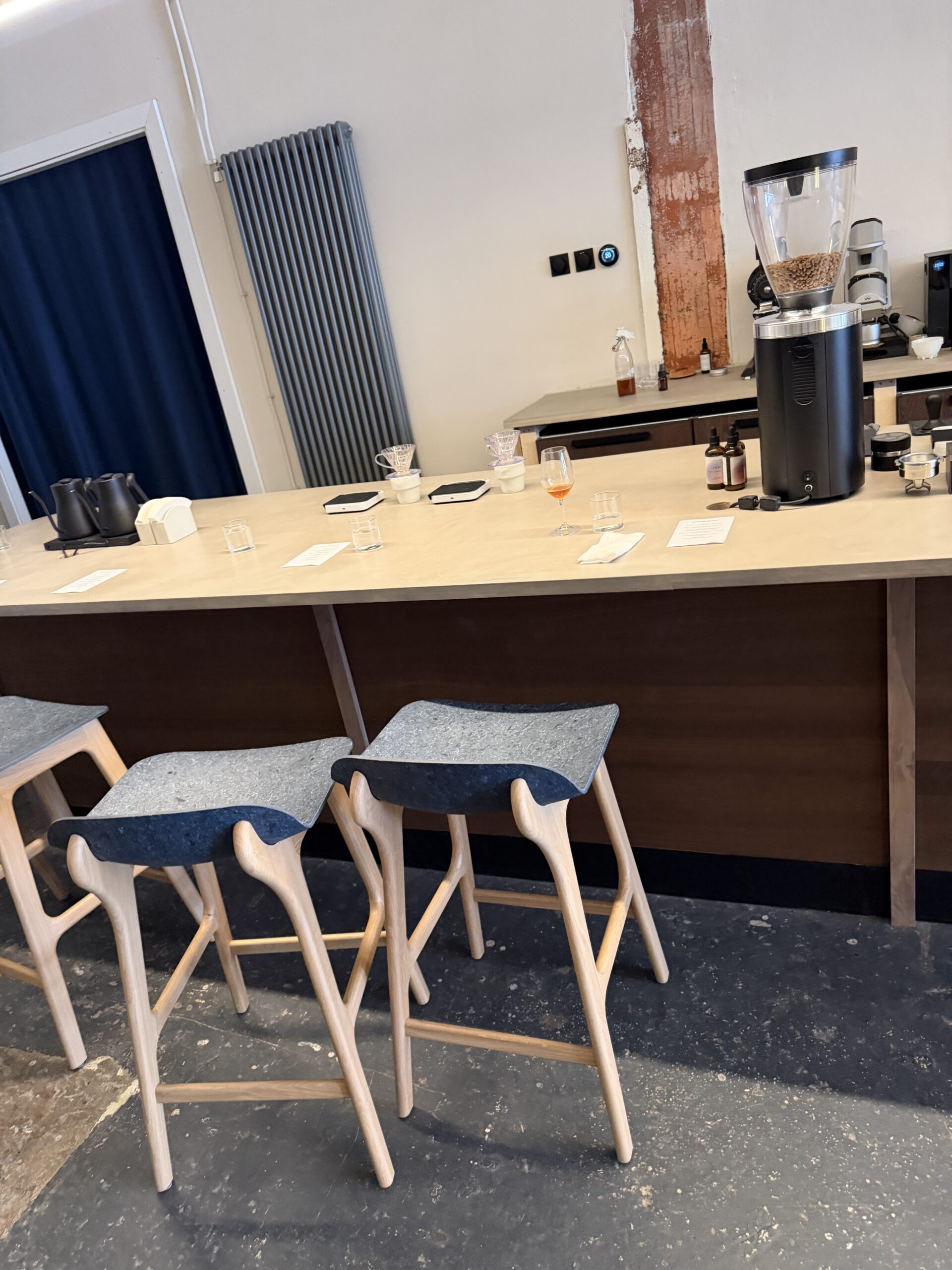
Lucas, a self-described “university drop out who fell in love with the gastronomical world” is in charge of the bar, which looks more like a chem-lab: stocked with beakers, pipettes, and spray tubes with mysterious liquids (minerals, as we later discover). He spends his days researching, testing, and sourcing the best of what the world of coffee has to offer. This passion is grounded in his daily practice of serving customers a world-class cup of coffee and is pushed to the edge through the omakase, an outlet for his creativity and a testament to his unwavering dedication to his craft.
As Dani and AJ fine-tune the clockwork of the shop, Lucas gets the space to seek perfection in the mastery of coffee – the kind of dedication and meticulous teamwork required to bring the experience that I had yet to receive into full motion. So what was it like? Let me take you back to that morning on a slow Amsterdam summer sunday.
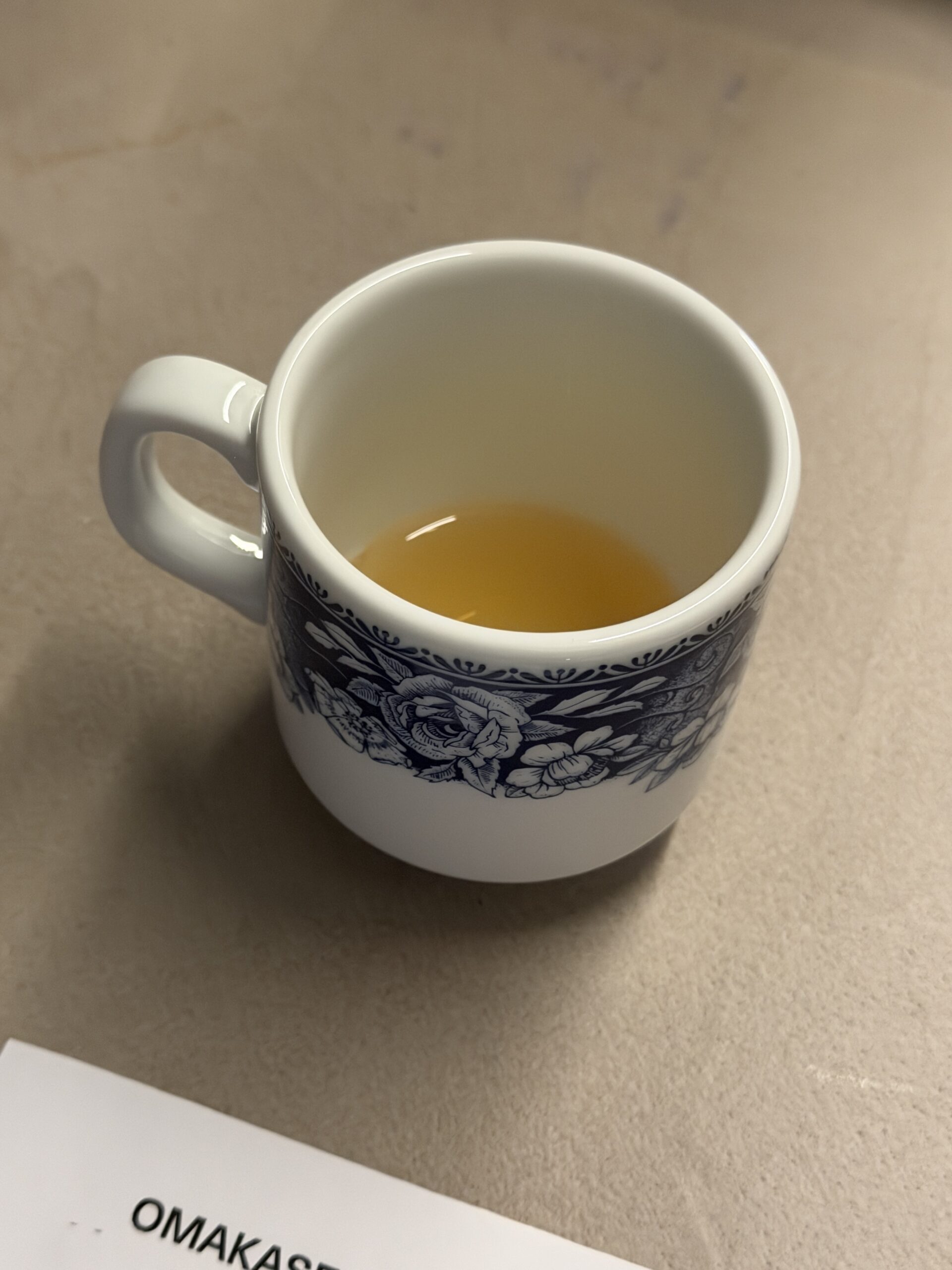
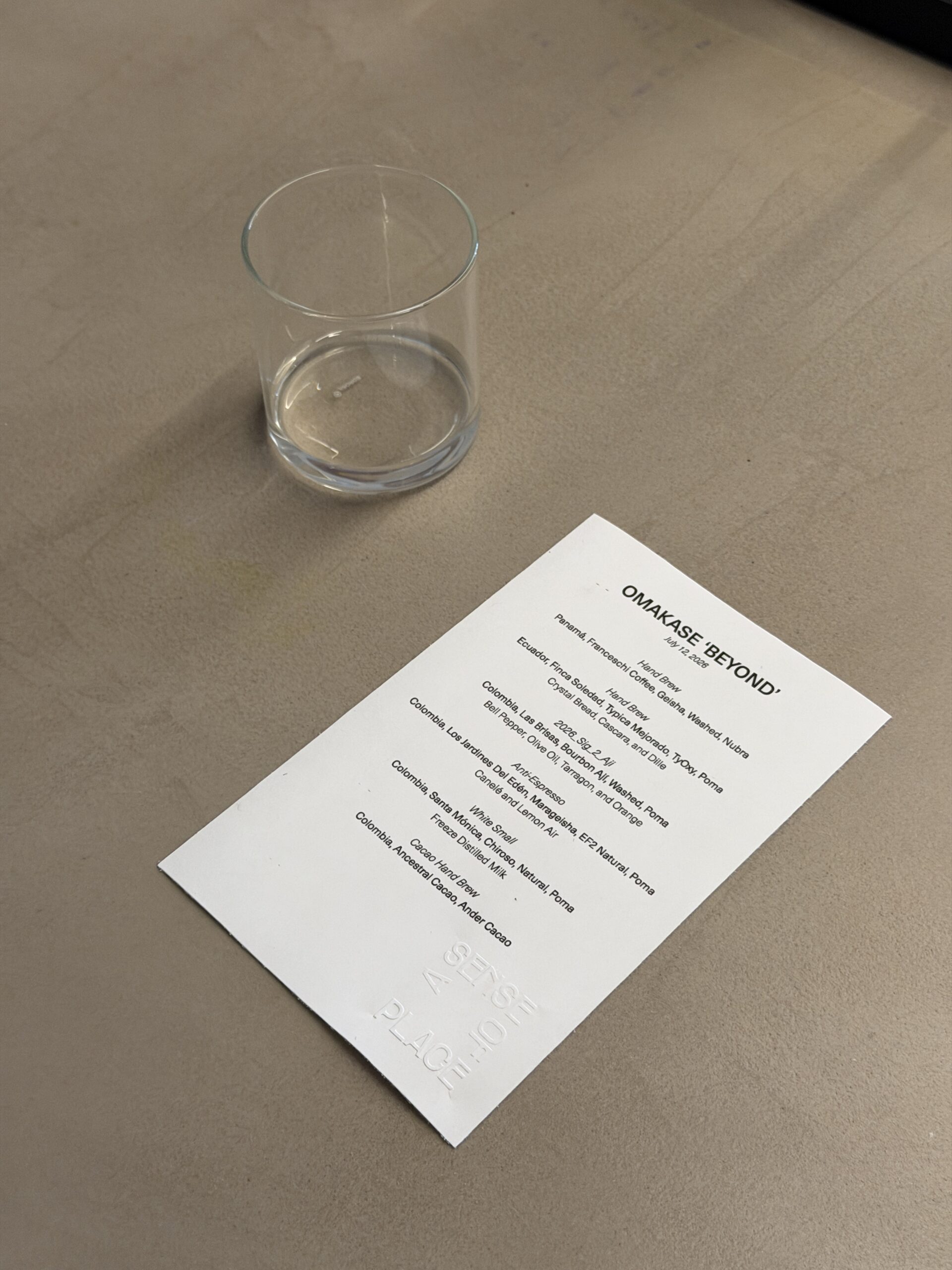
Carried away by a particularly lazy morning, I found myself rushing on my bike, arriving late, as custom has it. Awakened by the brisk ride, I pushed the gaping metal door and was met with instant stillness. I settled behind the bar, where 5 other attendees were just finishing up introductions, and greeted me with big smiles. In front of me, carefully arranged, lay a delicate porcelain cup, which was soon to get filled with a palate-cleanser tea. Next to it, a small paper menu outlining the six courses ahead.
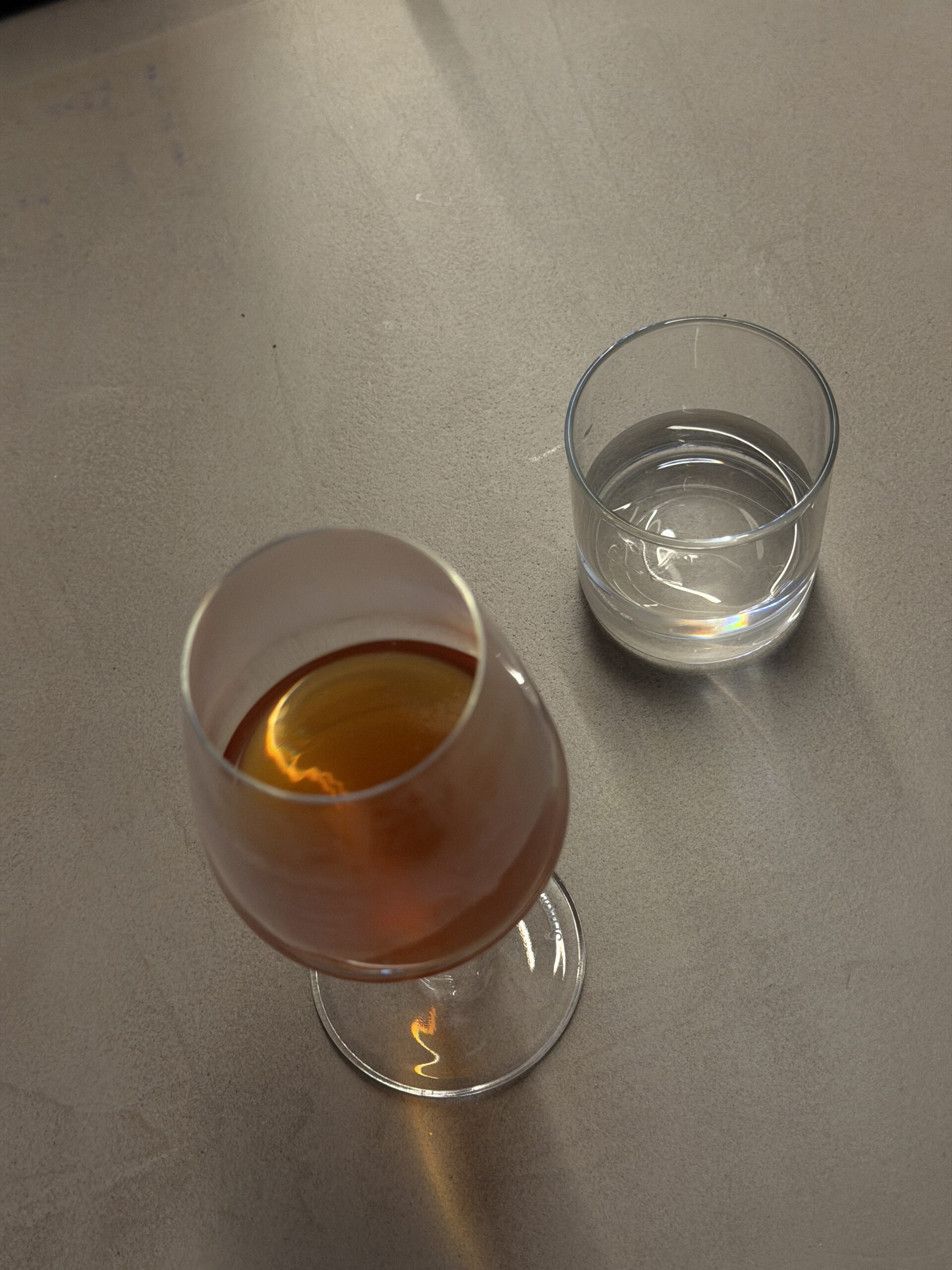
I won’t go into detail about each one, as I quite frankly would struggle to do the sensory experience justice through words. Some things are simply better experienced than described. What followed was totally new to me: coffees brewed with a scientific precision I didn’t think possible, unexpected pairings of flavors and textures, all brought together through Lucas’ deep knowledge and artful storytelling. The two-hour journey, beginning with a Panamanian handbrew and ending with a Colombian cacao, left me with a clear mind. I stepped out grounded, energized, and notably buzzing… With plenty of questions, too.
A couple of weeks later, I caught up with AJ, Dani and Lucas to get a peek behind the bar.


I’ll dive right in. Could you introduce yourselves, tell us what you each do at a Sense of Place, and how you all met?
Lucas: Born and raised in Barcelona, with a brief stay in Nashville, and an adult lifetime in Amsterdam. I’m a university drop out who fell in love with the gastronomical world, particularly coffee. I’m running the coffee and wine program at a Sense of Place as well as the day-to-day operations. I met AJ as a customer shortly after opening the first version of a Sense of Place: a coffee pop-up inside the wine shop. We connected over a shared interest in coffee and taste. When the opportunity came for me to take over the space, he was at the right time at the right place. He introduced me to Dani, a former colleague of his. The match was evident from the first moment. The perfect triumvirate, each adding value where they do best.
AJ: So, I actually live on the same street — Lucas’s pop-up was just my local. What kept me coming back was how scientifically he approached coffee; I could nerd out with him like nowhere else, and that shared obsession is what started everything. When the chance came for him to take over the space, doing it together was obvious — and I knew right away who else to bring in: Dani, a former colleague who shares my appreciation for high-quality, specialized experiences and is every bit as drawn to the good things in life as I am. So in a way, I’m the reason everyone’s in the room. Day to day I’m a strategic partner in the background — the architect or creative director.
“I like diving deep into topics until I’m fully in the know — I’m hands-on, but never the master craftsman; I go deep enough to recognize one — and then the ultimate thing for me is finding the people who do execute to perfection and building with them.
”
That’s Lucas with the coffee and Selim with the sound, both amazing at what they do; my work is to bring it all together.
Dani: Italian, 15 years (out of which 9 based out of Amsterdam) spent scaling digital ventures across Europe, Asia, and Latin America, and then at some point I wanted to build something I could actually taste and feel every day instead of just measuring. I’m the other strategic side, driving things into action. In practice, that’s financial rigor, business reviews, branding, partnerships, and managing our artistic program.
What gap do you think a Sense of Place fills in the Amsterdam coffee scene?
Lucas: Coffee places with real personality are hard to find in Amsterdam. Almost everything is made for the sole purpose of making money, not for elevating the game or taking the industry forward. They’re all using the same template, the same coffees…
“I wanted to create something that felt unique, that respected coffee and the work of all those involved in reaching the customers’ cup, that prioritized the customers’ journey, and that did everything in its power to protect this curated experience.
”
AJ: So, there’s this global wave of listening bars — in Amsterdam, murmur was early, though that’s more of a nighttime thing. We’re daytime and coffee-first; the reference that resonates most for me is somewhere like Trader HiFi in Hamburg — daytime, a real community space, where people come together over sound and coffee.
“Just coffee isn’t enough: what we’re building is the living room you wish you had.
”
A lot of our regulars have incredible machines at home and can pull a better shot than most — but they come in for the experience, the one thing they can’t make themselves: the coffee, the hi-fi, the space, the full sensory thing.
The sound side is personal for me. A couple of years ago I met Rune from NNNN — the Oslo horn-speaker company — at an ADE listening session, and I was super inspired; building my own speakers had always been a passion project at the back of my mind. Rather than build them myself, I found Selim to build it with. He’d come from architecture, same as me — which instantly clicked. We’re taking our own approach to horn loading: inspired by the classics — Altec, Klipsch, OJAS — but pushing it further, so you can hold a real conversation over coffee while the sound wraps around you. It will be built in raw fiberglass, leaning into mid-century and Amsterdam School design so it sits true in our 1930s garage — the speakers land this summer.
That same instinct — staying raw and true to our materials — runs through the whole space. Even the furniture ties in: Planq presses shredded materials, old suits, jeans, even coffee bags, into their surfaces — literally recycling a piece of our own supply chain, matching the raw steel and the decades-old concrete floor whose texture we pulled into our branding.
When you first took over, a Sense of Place was a wine import shop. What made you want to turn it into a coffee spot, and how do the worlds of coffee and wine overlap?
Lucas: Before taking over, I was already doing a coffee pop-up inside the wine shop which Markus was running. When my previous pop-up in Haarlem was coming to an end, he gave me a chance to set up my coffee corner in his shop. We started very differently: limited budget, different approach, more “commercial”. Something, however, wasn’t quite working. My customers wanted more, and expected more. I was not feeling accomplished, I also wanted more. Markus was (is) very passionate about wine and he would talk hours about fascinating stuff from vineyards he had visited, pruning techniques, and, of course, how different wines tasted.
“Through tasting loads of wines and overlapping theoretical concepts, it became apparent that the world of wine and coffee are radically similar. Surely it’s a different plant, a different product all together, but it’s produced and consumed with the same spirit and attention to detail.
”
Whenever I would develop a recipe for a new coffee he would always bring forth his wine tasting glasses, and it always tasted better when you were tasting coffee with those.
The wine industry has had the (dis?)advantage of time. In contrast, coffee as we understand it has just been born. The wine world has glasses for different styles of wine. In the coffee world we’re still using good-looking ceramics at the expense of taste. Not us, however. We’ve taken advantage of the work done by the wine industry and we serve our pour-over coffee in INAO tasting glasses. The wine world understands the plant, the soil, the pruning, the rootgrafting. The coffee world only now begins to seriously consider these things thanks to the work of pioneer producers in origin and initiatives such as Poma Coffee Research, our main roasting partner.
Music is a big focus in the space, with selectors playing live sets every weekend. What record does each of you have on repeat right now?
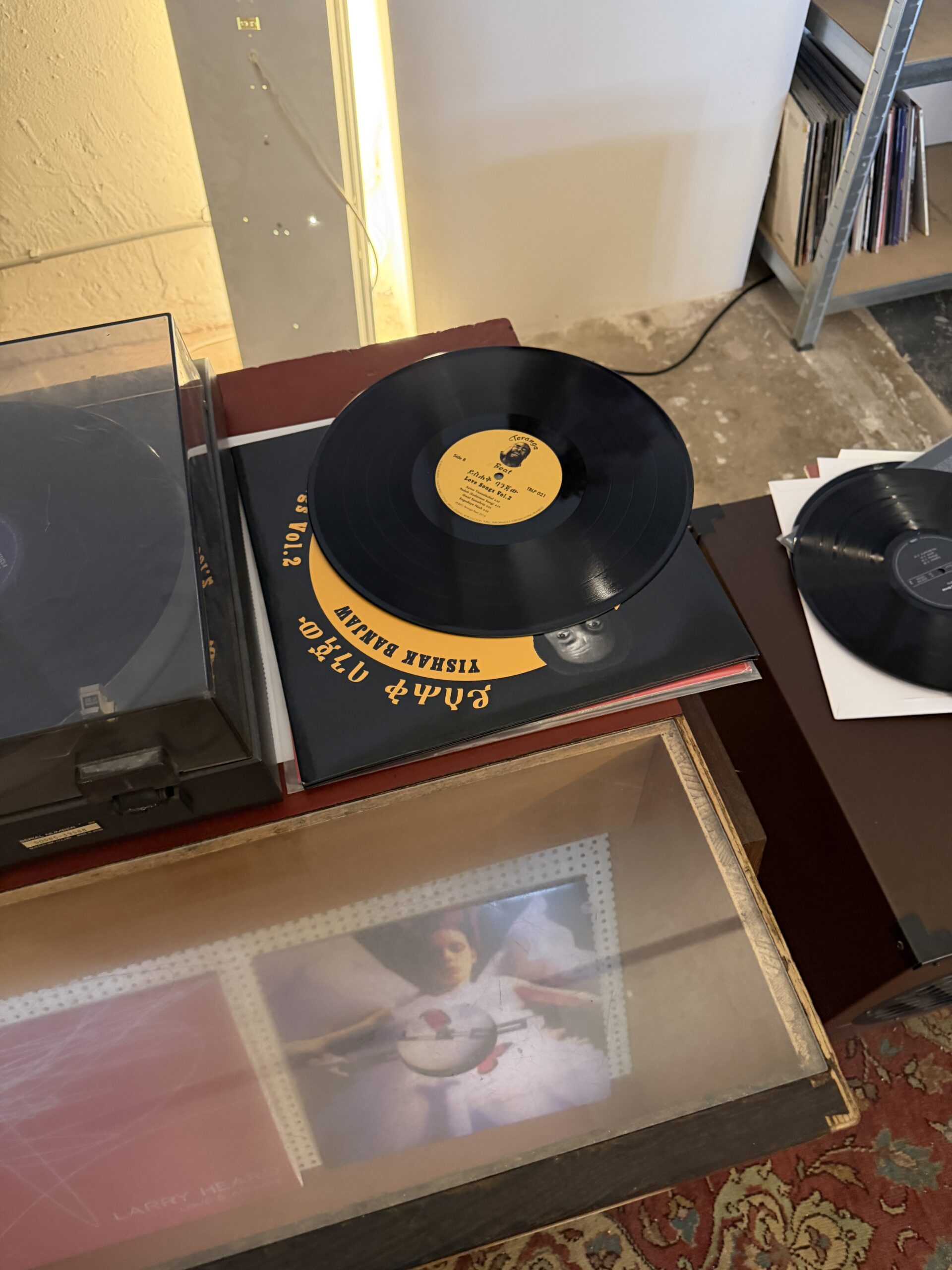
Dani: Impossible not to start with our place’s favorite record: Larry Heard’s Love’s Arrival. Percy , who runs our vinyl shop and is one of our residents at Selector’s Sunday, played it for us as his opening test — to see if he’d nailed our taste and vibe. 10/10, PASS!
As for my own pick: Trick Pony’s Pillow Talk. Not sure how I’ve missed that release in 2024… such a gem (again, thanks Percy!)
AJ: I’d have to look up what’s actually on repeat (Album: Embassy Cafe by Andras), but one of my all-time favorites — and one that really fits the space — is Radiohead’s Everything In Its Right Place. It hits me emotionally; such a well-composed, complete sound that I can put on far too loud and completely disappear into.
Lucas: Being in the shop everyday, no doubt that the most listened to record of the year for me is Love’s Arrival by Larry Heard… and the first record that comes to mind when I think of the new version of a Sense of Place. Another one that fascinates me is Silent Green by OK EG. I find it very intimate, introspective, and inspiring.
Dani, hospitality is a new venture for you after working in the corporate world. What pushed you to make that switch, and what’s been the most unexpected challenge in building a Sense of Place so far?
Dani: The most unexpected challenge is honestly always the next one and trying to make it “less unexpectable.” Which, even as I say it, sounds so corporate of me… but it’s also one of my biggest strengths and shadows at the same time.
Right now that means putting together our ADE program. I hadn’t built something like this since my last year of university in Milan (more years ago than I’d like to admit) so figuring out how to make it genuinely relevant while ensuring nothing will go wrong, is my current obsession.
About the switch… AJ knows exactly how to lure me into good stuff 🙂 That’s true, actually. But on a more serious note: it just felt like the right thing to do one year ago. The returns were starting to diminish, in more ways than one, and the world was changing fast enough that I wanted to step back, reconnect with myself and my passions, and try new things. I’ve been loving the journey so far.
Lucas, you’re the brains behind the coffee omakase. What was the initial spark that ignited your passion for coffee?
Lucas: Working in a fast-paced, busy café in Amsterdam I realized that most people did not approach coffee the same way I did at home or when I was going out for coffee. For me coffee is something to be consumed slowly and strictly for its sensorial attributes. Caffeine is simply a by-product of that much like alcohol is to a good wine.
Through travelling I discovered that there were “crazy” people offering high-end coffee experiences in a reservation-only context. These people would have their own style, reflected on the coffees they served, drinks, and space.
“I wanted to find my style. I searched by travelling, in gastronomy, in music, even in altered states of consciousness (iykyk :P)”
”
What makes your approach to coffee different from other baristas or coffee shops?
Lucas: Coffee-wise, everything I’m doing here I do for me. Every guest gets to benefit from this, if that’s what they’re into. We don’t presume to cater to all types of people, or for all types of coffee moments. We have found our niche in slow coffee, mindful consumption, and sensory discovery. We don’t bend our values or vision, which makes us genuine.
Which course in the omakase is your favorite, and why?
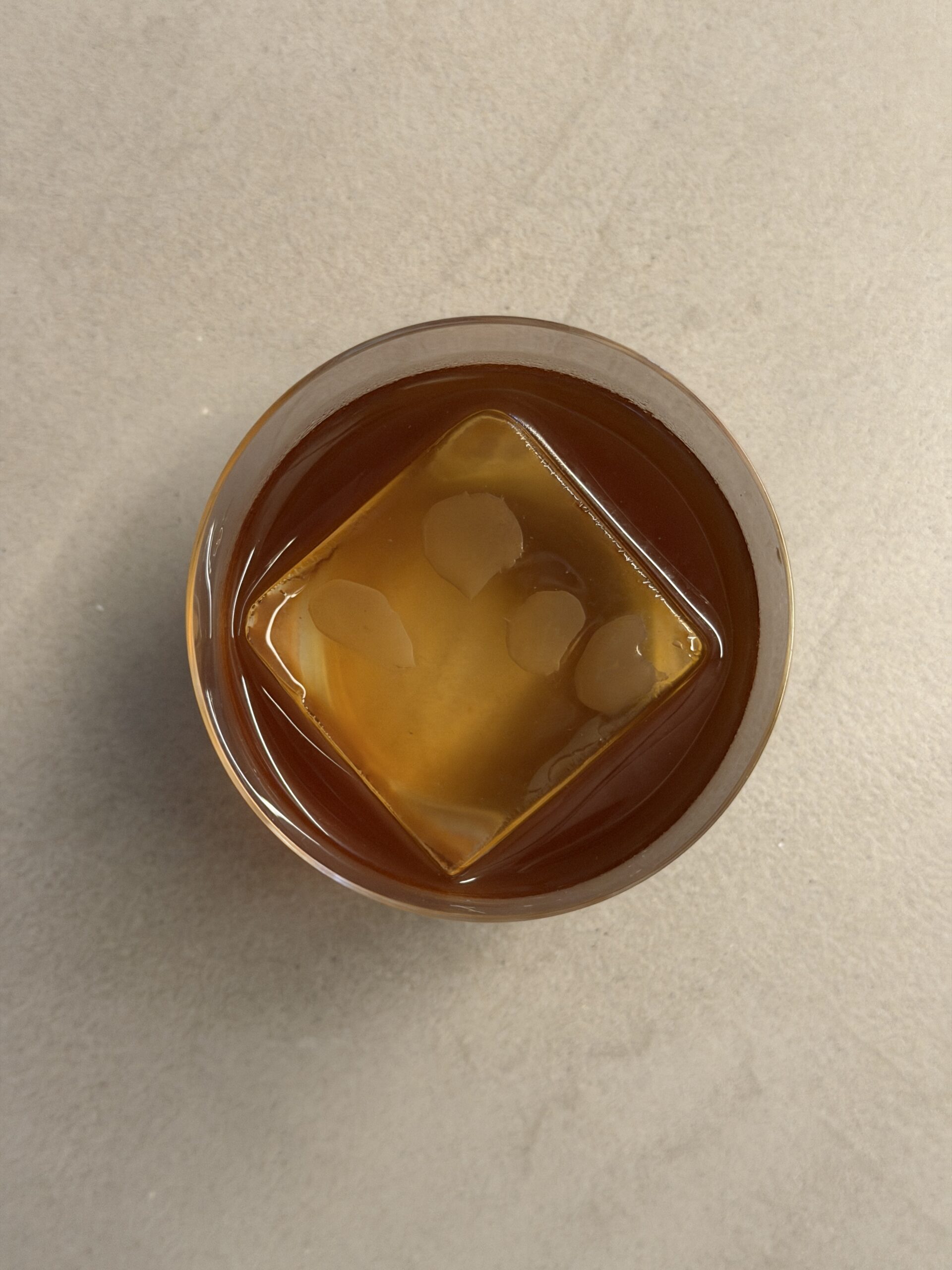
Lucas: It depends on the outlook. Personally I enjoy the signature drink (2026_Sig_2_Aji) the most – both in terms of taste and also conceptually. It’s been a fun process to dissect what the specific coffee variety is about, the bourbon ají, and create a drink from scratch that accentuates the main characteristics of this coffee variety. From a pairing perspective, the crystal bread with cascara and dille. The crystal bread itself took me so long to get right that I have to mention it here. And the cascara gel as well as the dille help highlight the main characteristics of the coffee from Finca Soledad in Ecuador it’s paired to.
The playlist is a key part of the experience. Was there a guiding principle behind curating the music?
Lucas: All the music in the playlist, including different genres and types of sounds, is inspired by my own journey within a Sense of Place. It captures the highs and the lows through the music that accompanied me during these times. In the context of the elaborations, I’ve done my best to time it to the things guests consume. Calm where the elaboration is smooth, lively where the elaboration is more provocative.
How do you hope people feel when they leave the omakase?
Lucas: I hope they feel inspired and that they understand that coffee can be so much more. That it can compete with wine, spirits or fine dining. I use the word “compete” as a manner of speech. It’s not about being better or worse but equally respected and understood. There’s still so many people for which coffee is “just coffee”…
“From a more selfish point of view, I also hope they mentally position a Sense of Place as something closer to fine dining for coffee, not a regular café.
”