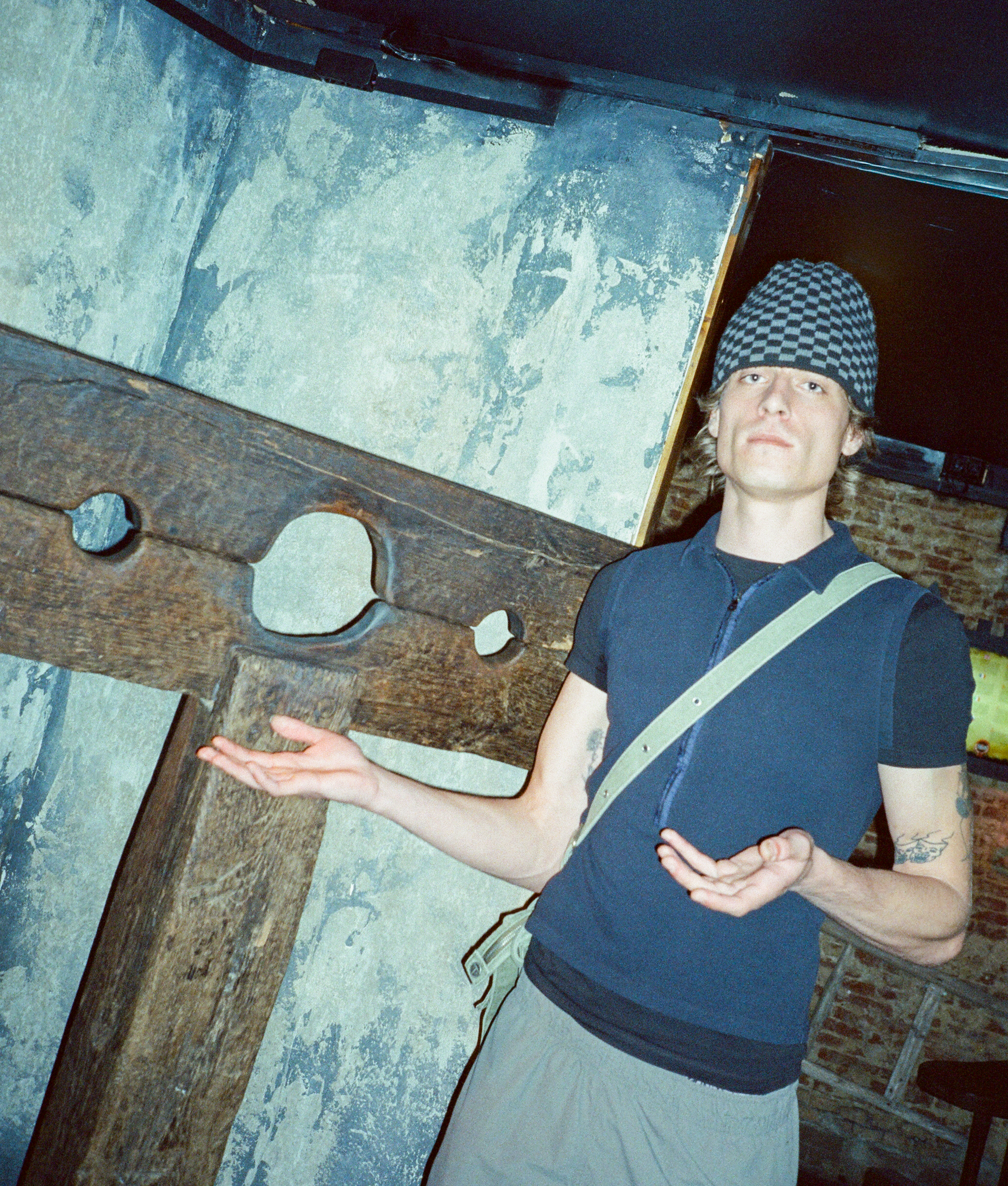
Photography by Anastasia Gviniashvili
There is a long and rather exhausting history of the tortured artist.
Van Gogh had the ear. Kafka had the daddy issues. Kurt Cobain’s eternal sadness. Sylvia Plath had quite a lot going on. Somewhere along the way, we collectively decided that making something meaningful requires a certain amount of suffering. Preferably lots of it. Pain makes great art, misery makes interesting people and apparently nobody ever wrote a good song after having a perfectly pleasant afternoon.
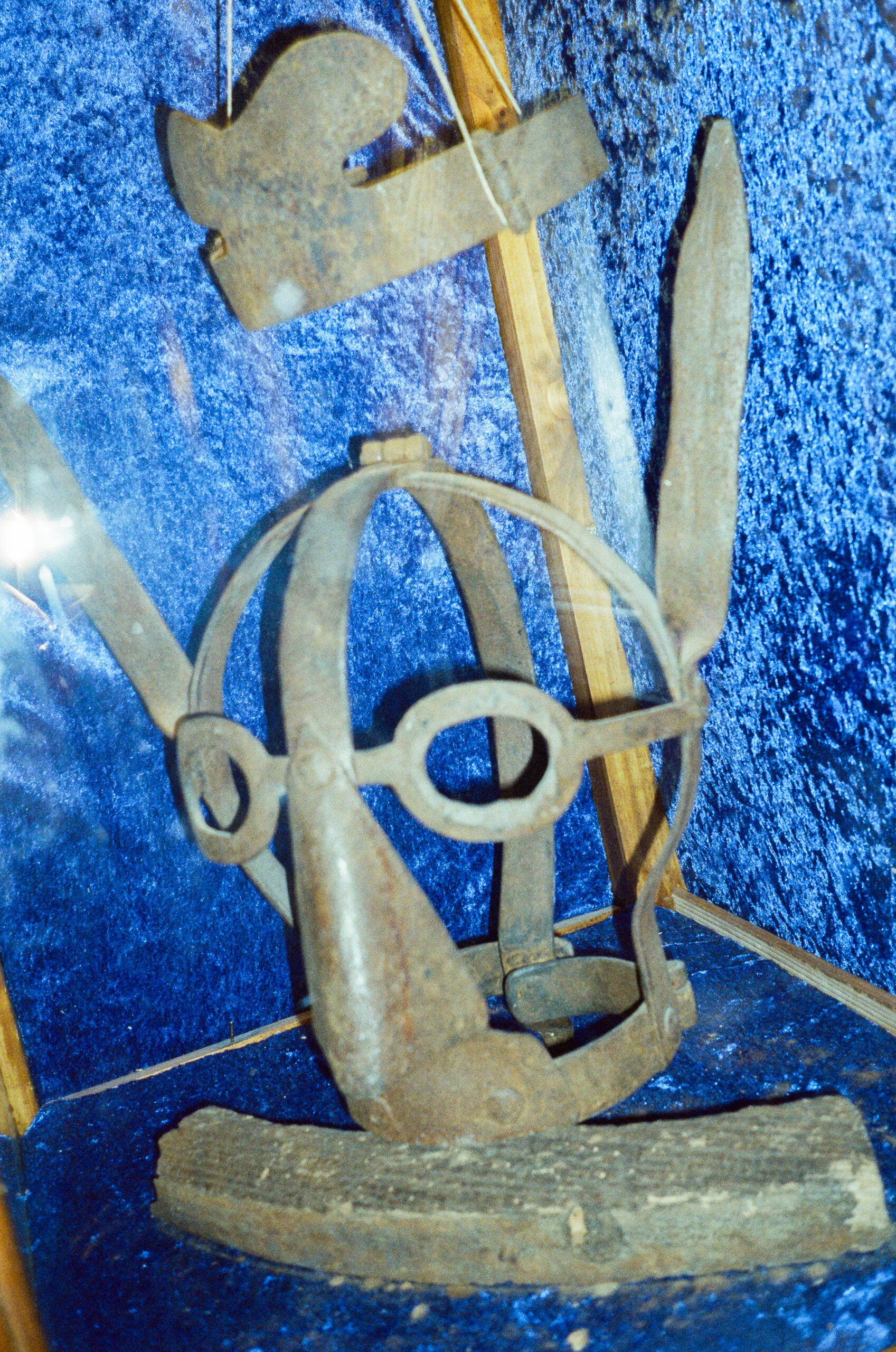
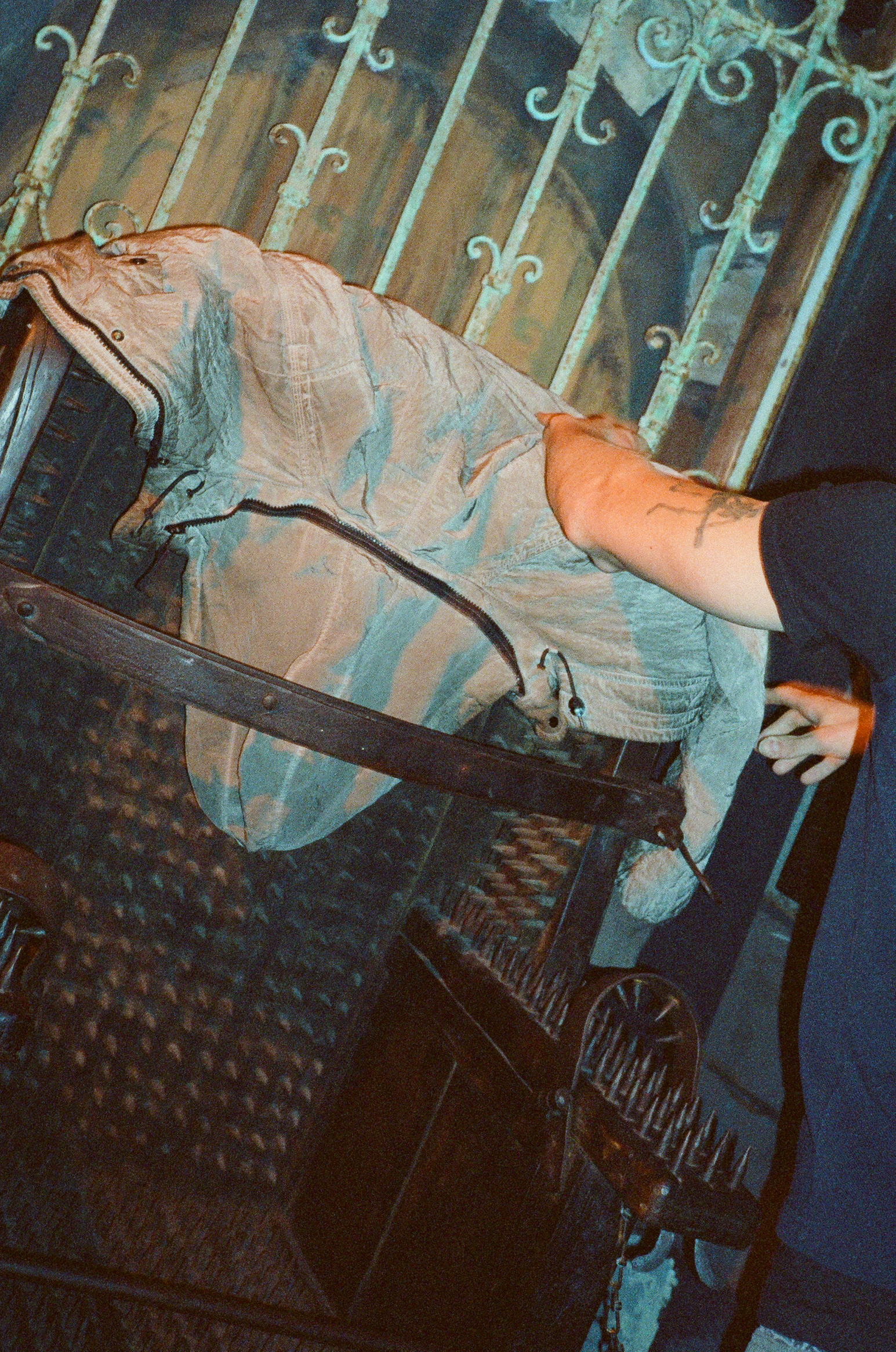
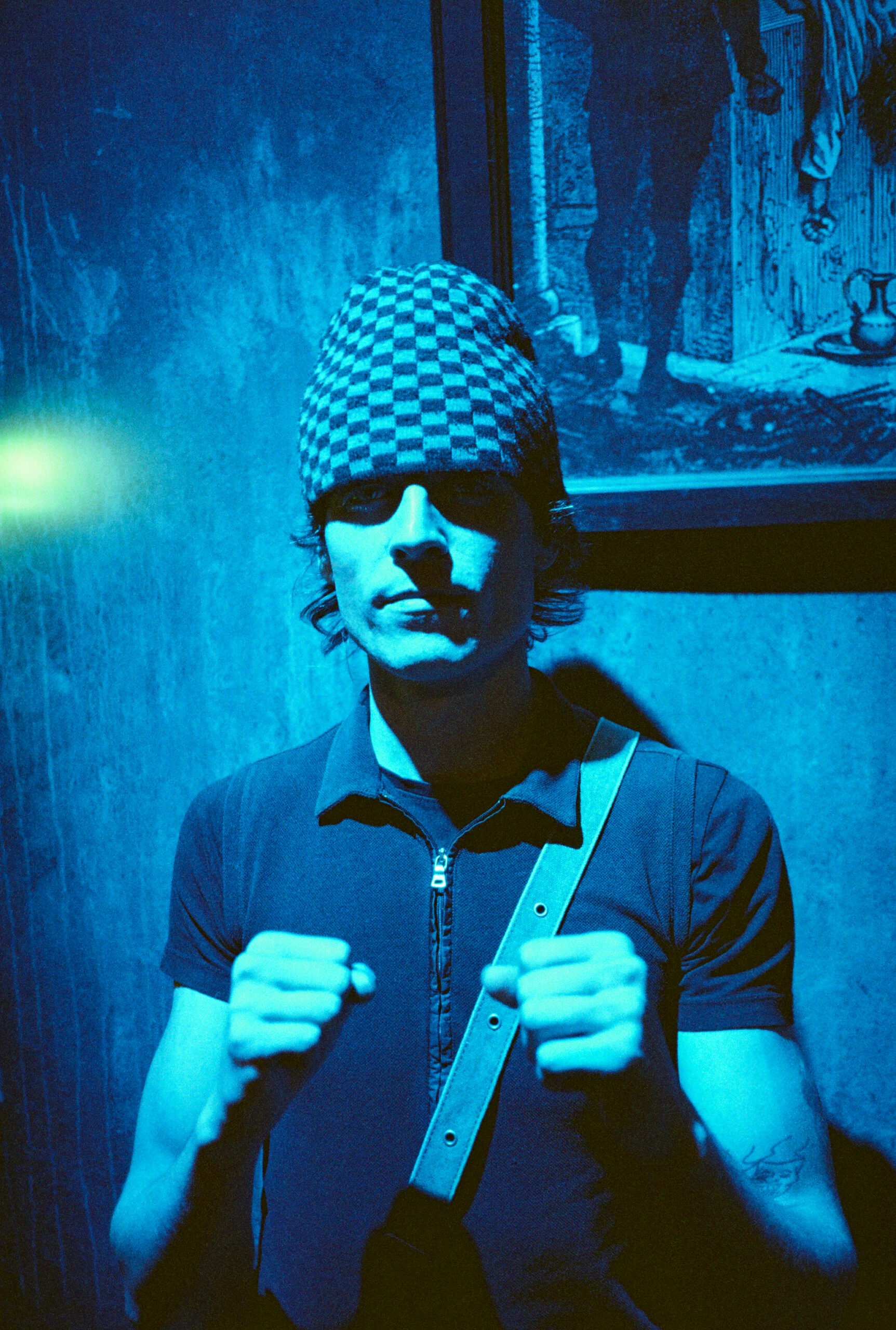
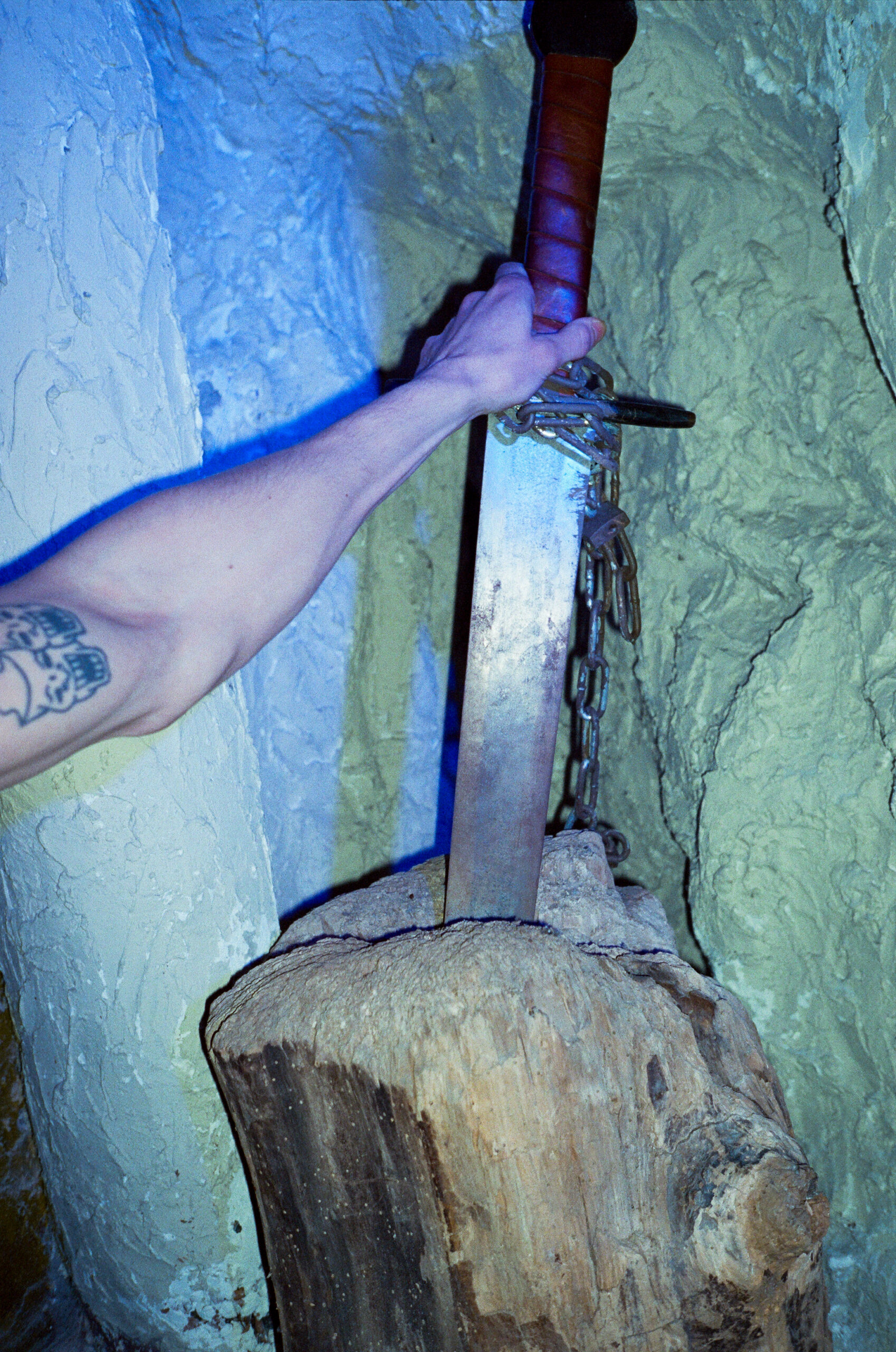
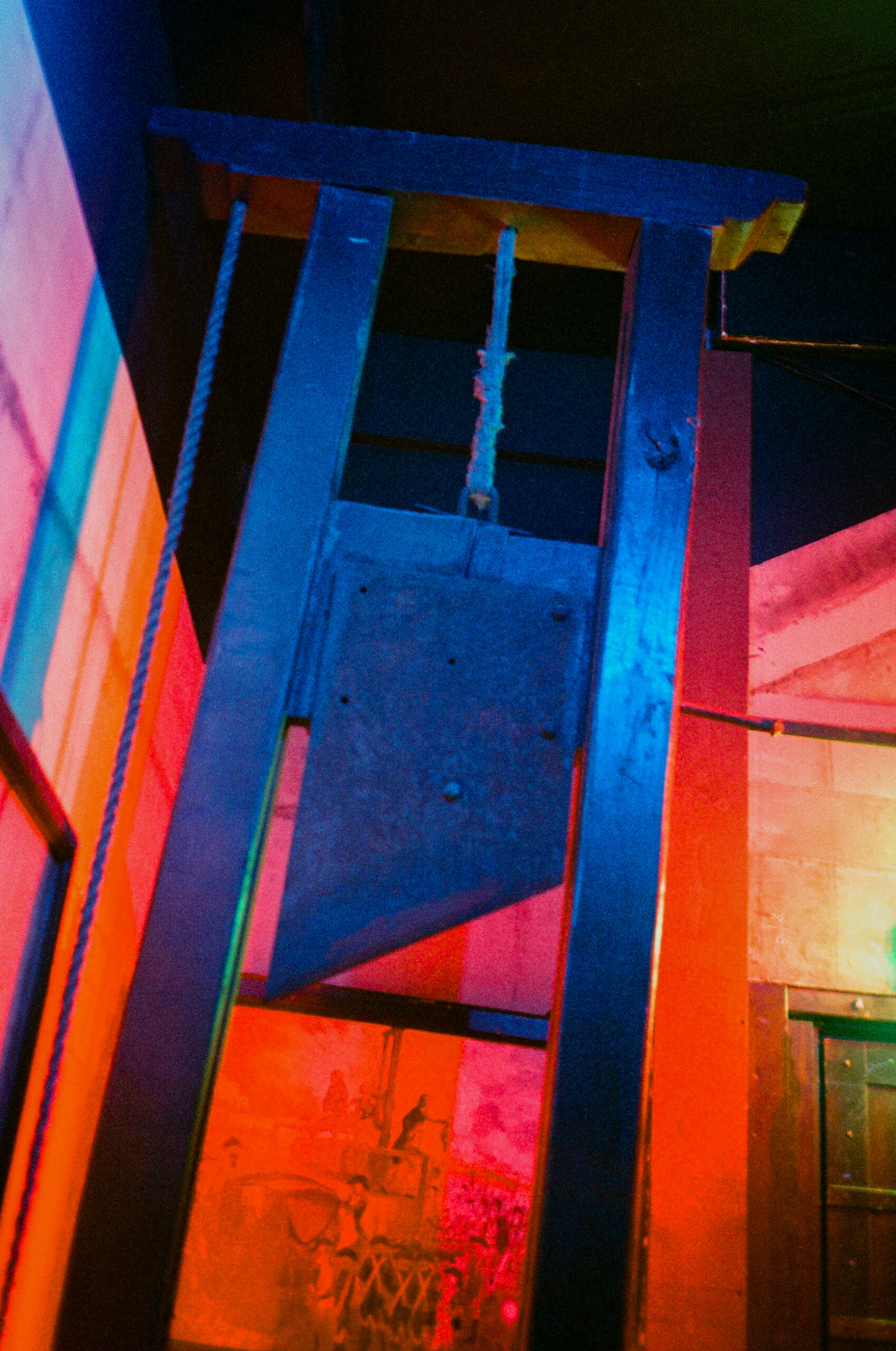
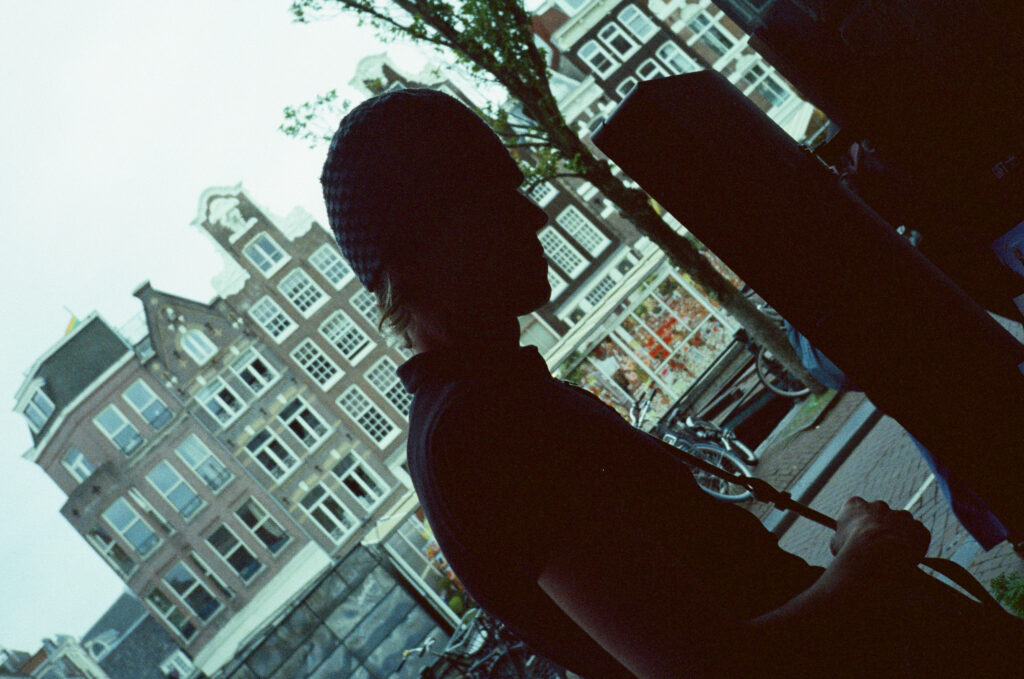
So when Jespfur suggested we meet at Amsterdam’s Torture Museum for our interview, it felt almost a little too on the nose.
But first, coffee.
We meet around the corner, where Jespfur arrives with very few intentions of giving us the kind of neat, media trained answers that make writing an artist profile particularly easy. When we ask how he is, days before the release of his new album Iftangible, he thinks for a moment.
“I don’t know how I am, really. Existing. Floating in space.”
Rooted yet floating?
“If you say so.”
This becomes something of a theme over the next hour. Ask Jespfur for a neat explanation and you are unlikely to get one. Ask what version of himself we are going to hear on the album and he reminds us that the beautiful thing about albums is that you can listen to them yourself. Ask him to describe himself and things get even less conclusive. At one point, he starts interviewing us.
Behind the intrigue, however, there is a lot to unpack. Jespfur is the project of Dutch composer and multi instrumentalist Jesper Vervoort, whose music has always been somewhat resistant to easy categorisation.
Growing up in a small village, his earliest creative education came less from music school than from disappearing into the woods, BMX and the DIY communities around it. Later came Amsterdam, self released music and eventually a friendship with MIKE that led him into the orbit of New York label 10k. His 2024 project Pedestrians of Bright Silence followed, and on October 9, he returns with Iftangible, a ten track record made during a period in which almost everything around him seemed to be moving.
By the time we meet, however, the album itself is old news to him.
“It’s been done.”
For someone accustomed to putting things out almost as soon as they are finished, sitting on an album for several months has been a new experience. Working with a team means, as he puts it, having to “let them do their job as well.” Luckily, they are people he has known for years. Strangers would be another story.
Still, the extra time has not made him want to reopen the project. Quite the opposite. He knew Iftangible, was finished because he no longer needed to be inside it.
“I was outgrowing the different characters that were happening in the thing. It’s like, oh, now I’m not relating. There’s no point of me staying in those songs anymore.”
He describes it almost like looking back through a photo book. Something tied to a very specific moment, preserved exactly because you have already moved beyond it.
Like outgrowing your favourite pair of dungarees, we offer.
“Sure.”
And there we were thinking we had done something.
The title itself is similarly slippery. When we ask what Iftangible, means, Jespfur starts talking about projection and the things we construct in our heads before reality has had a chance to catch up.
““If you’re always chasing some sort of romanticised idea of what something is or could be, you’re chasing a ghost. Because it’s never gonna be that.”
”
Iftangible.
The record came together during a year in which Jespfur was doing quite a lot of moving himself. After around eight years in Amsterdam, he spent a year travelling and subletting, moving between places rather than having one fixed base. Somewhere along the way, he started thinking differently about what home actually means.
“A place where zero thinking is involved.”
He compares it to riding a bike, driving or hikinh up a mountain. Moments where you are so completely in what you are doing that there is no need to consider whether you are present. You simply are.
“That’s home.”
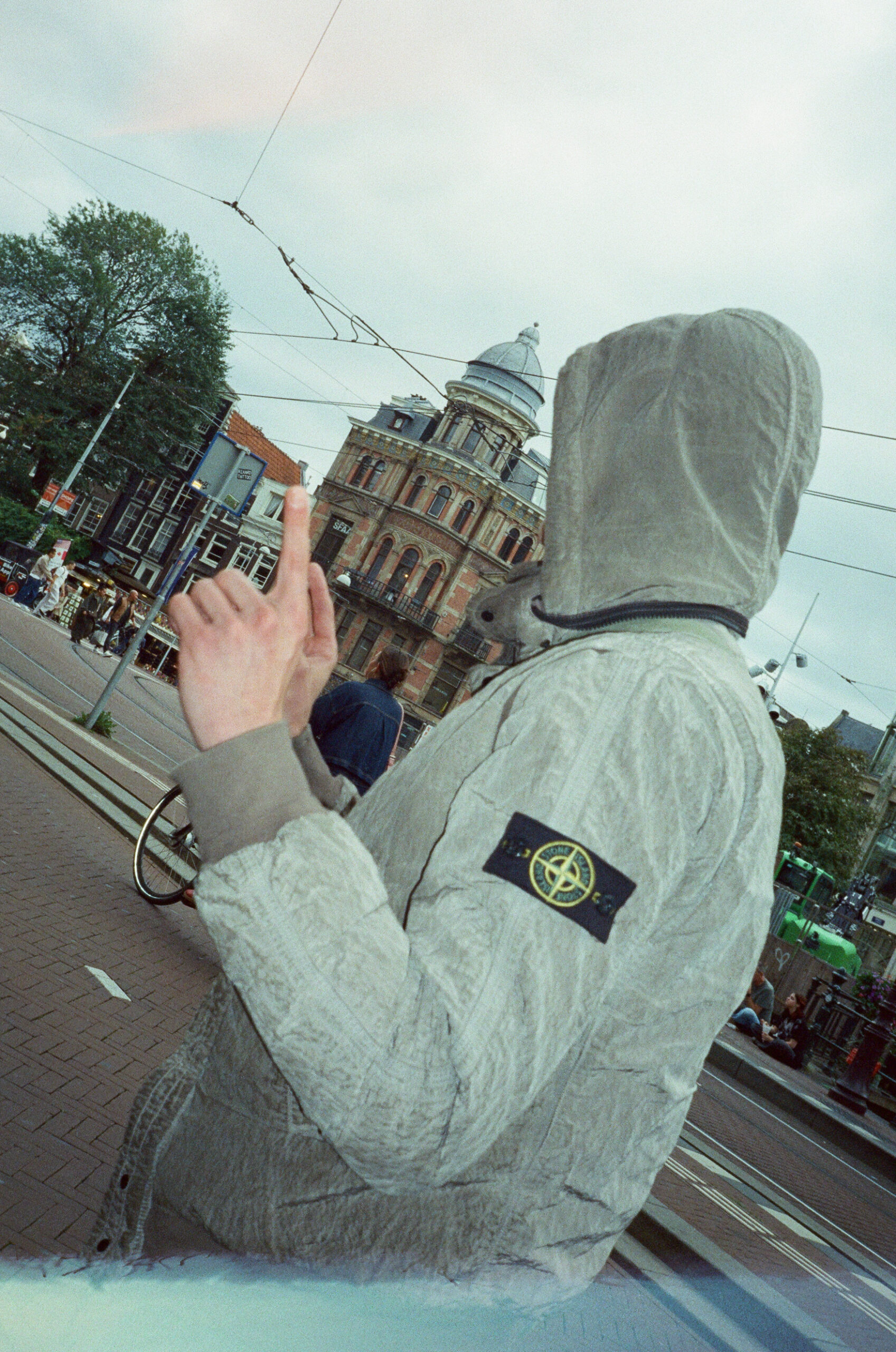
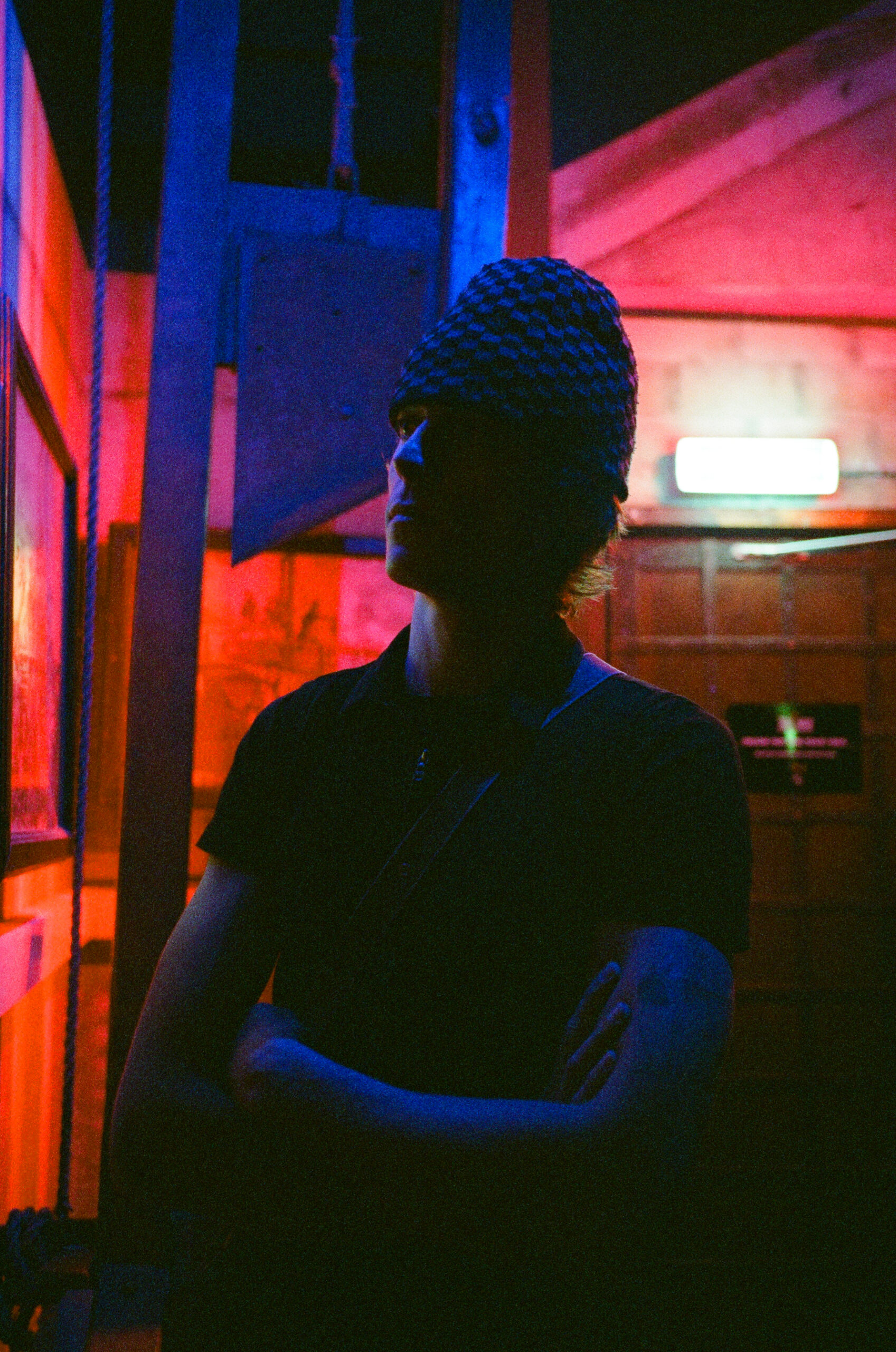
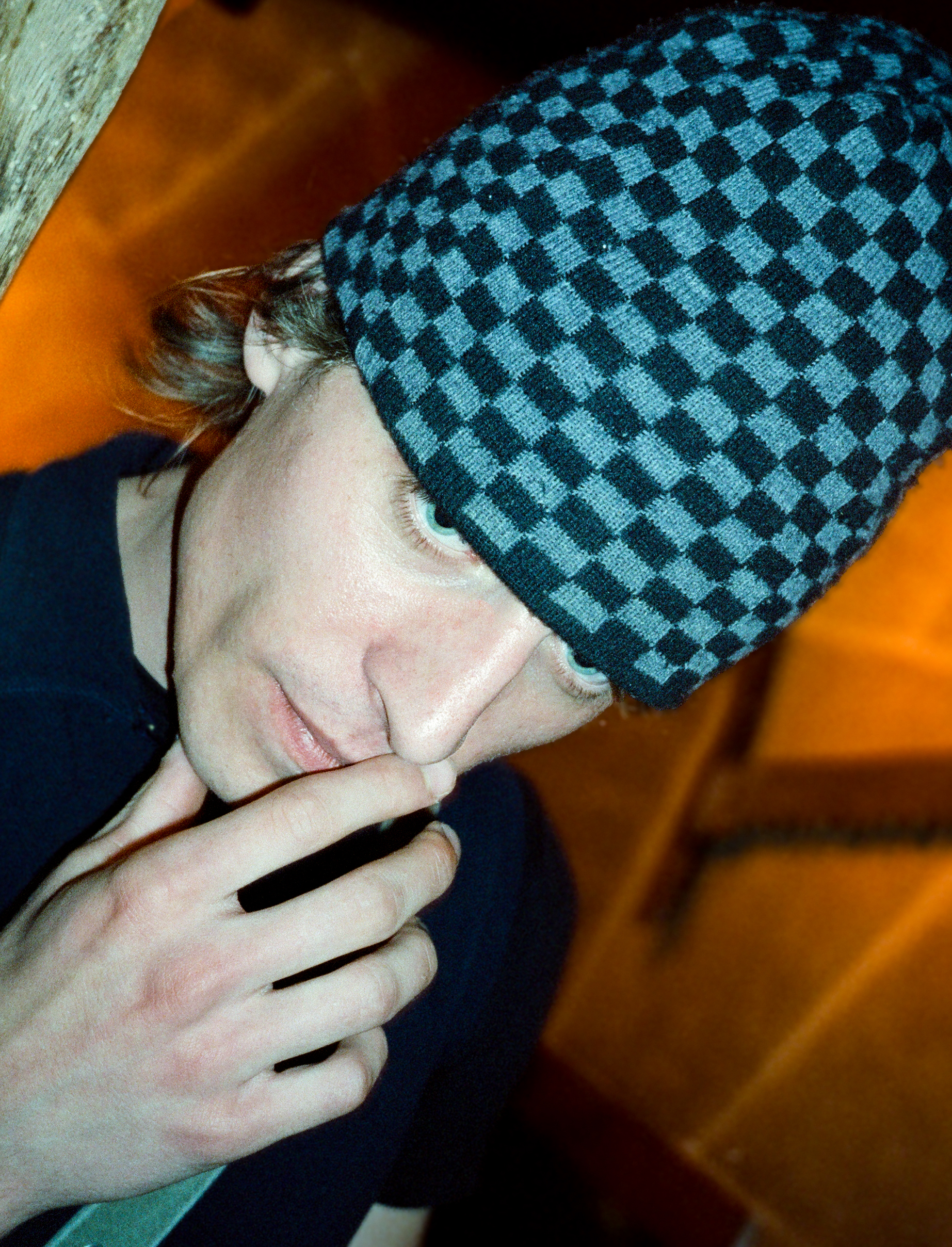
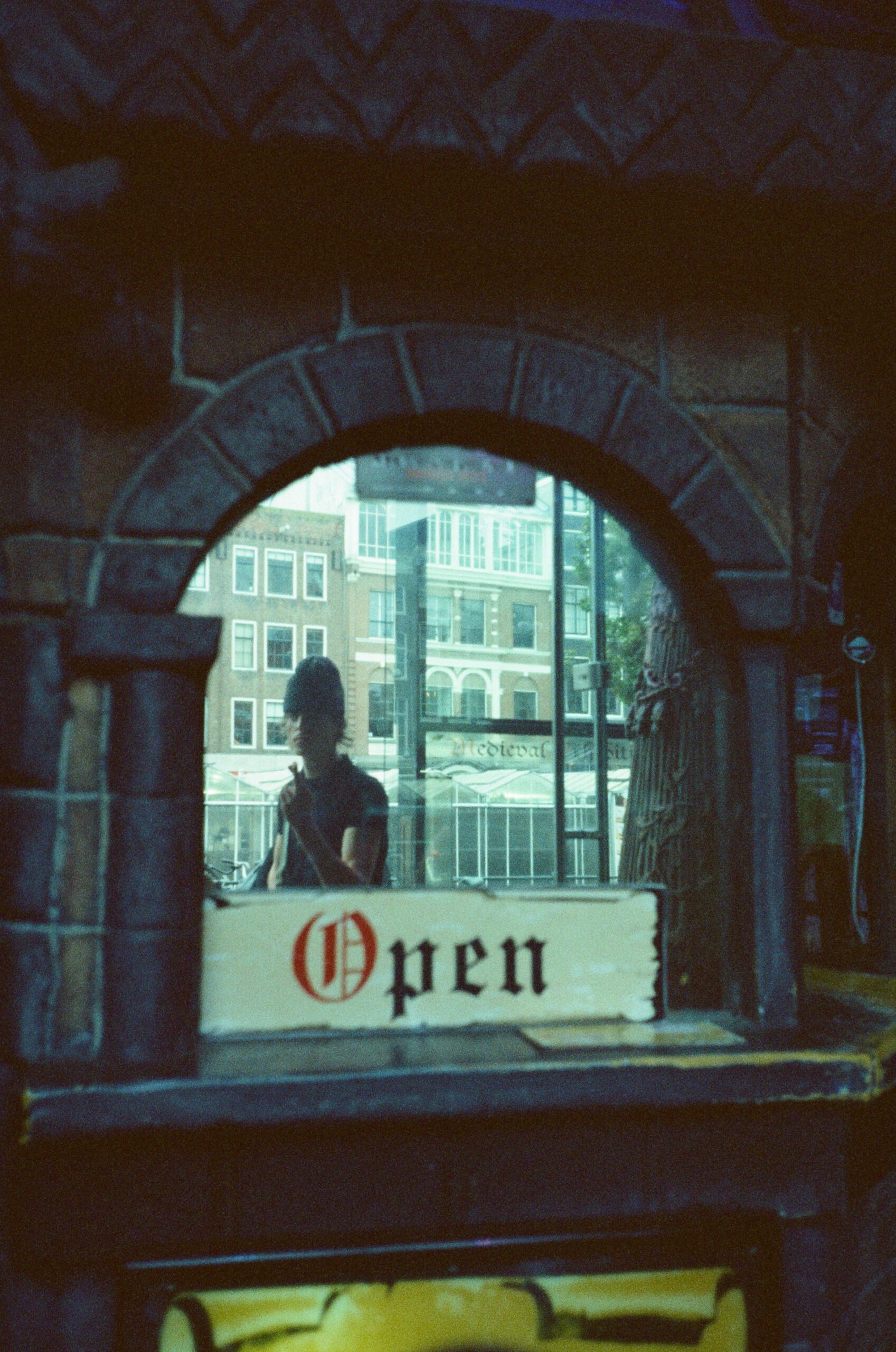


There is something funny about hearing this from someone whose work can appear intensely considered from the outside. Jespfur’s music and the visual world surrounding it feel like parts of the same strange universe. But ask him how consciously that universe is constructed and the answer is considerably less complicated.
“Genuine play. Like an inner child, literally. Not much thinking involved.”
Before there was music, there were the woods.
Jespfur grew up in a small village, where he and his friends would disappear outside and create worlds of their own. Then came BMX and skate culture, communities built largely around watching, trying, failing and figuring things out together.
“It’s never been any other way, really.”
He still rides BMX. He can apparently also do a backflip, although he has not attempted one in over six years.
““That shit’s scary.”
”
When we ask what those years taught him that still finds its way into his work now, his answer is simple.
“Having fun with it. Genuinely enjoying doing the things myself, with people around me.”
He compares it to seeing a friend land a trick. Watching someone do something well does not necessarily make you want to become them. It makes you want to go and figure out what your version might look like.
And BMX, it turns out, is also very good at sniffing out bullshit.
“You know what BMX taught me the most? People are gonna see if you’re copying somebody’s style.”
You can learn the same trick, but people can still tell how you ride. The same goes for skating. And, in Jespfur’s mind, making things.
Perhaps this is why he is a little suspicious when we ask about inspiration.
“There’s zero consciousness.”
Inspiration, as a concept, feels too neat. Put somebody in a wooden cabin in the forest for three years, he argues, and then ask them what inspiration means. We are constantly absorbing things without necessarily deciding to. The way someone dresses, what they cook, what they listen to. It all goes somewhere.
A few conscious references do eventually emerge. Frank Zappa comes first, particularly his thinking around popular music and the history of composition. Then Iannis Xenakis and John Cage, and the way their work stretched ideas around music, space and what composition could actually be.
But Jespfur does not seem particularly interested in sitting down and deciding which bits to borrow.
Play comes first. Which brings us, finally, to torture.
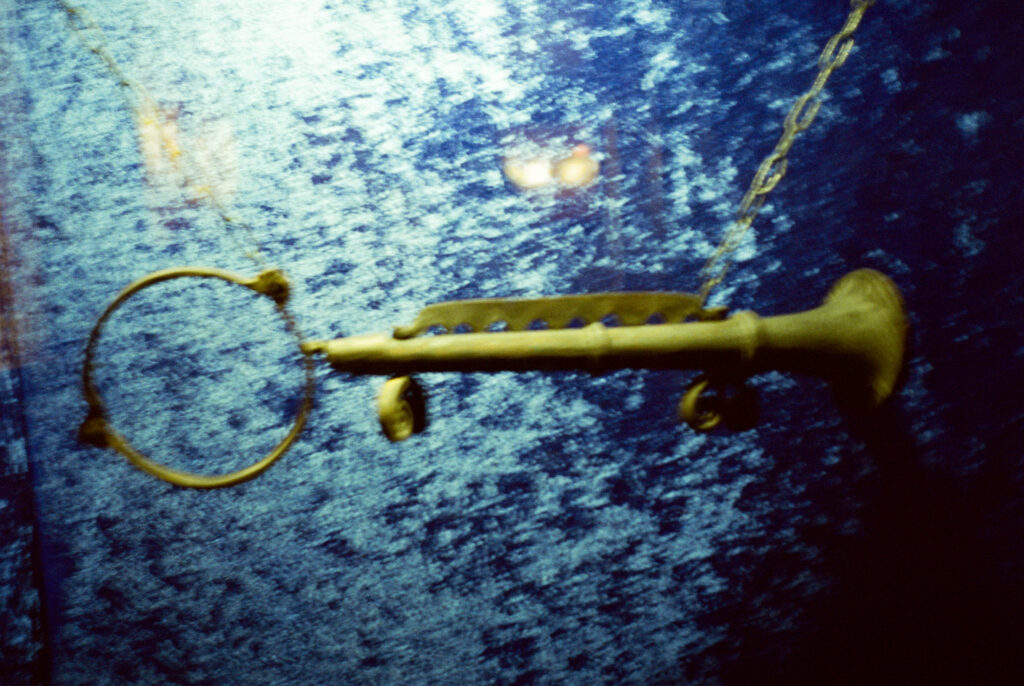
By now we have finished our coffees and are preparing to make good on Jespfur’s chosen meeting spot. Somewhere between the café and the museum, we tell him that ever since the Torture Museum was suggested, we have been imagining him sitting on one of the medieval torture chairs for the photos.
“Okay, low key.”
There is one condition.
“When making photos, I should not pose in the photos. That’s my only requirement.”
So much for that.
Still, the setting gives us an excuse to ask something we had been wondering anyway. There is this very persistent idea of the plagued artist. The Kafka of it all. The belief that in order to make something truly good, one must first have a sufficiently terrible time.
““I don’t fully believe in this. I do think you don’t have to suffer to be able to make something good.”
”
Instead of finishing the answer, he asks us a question.
Imagine something really terrible happens to you. You tell two people. One has never experienced anything similar but makes you feel completely heard. The other has been through something close enough that they recognise the feeling immediately. Who do you relate to more?
Suddenly we are the ones being interviewed.
We give an unnecessarily long answer involving empathy, emotional recognition and the fact that perhaps suffering can be a pretty effective catalyst for making something beautiful.
“So why did you agree to the suffering?”
What suffering?
“Having an interview.”
Right.
If suffering remains up for debate, failure does not.
““Failing is beautiful. That’s the whole thing. People start developing insane versions of themselves because they’re afraid to fail. But in the failure is everything.”
”
Again, we end up back at BMX.
When learning a backflip, you do not necessarily go straight for the wooden ramp. There is a foam pit first. Then a resi jump with a softer landing. Once you know you can do it, you try the real thing.
Naturally, we need to know whether Iftangible, had a foam pit.
“Straight on the wood.”
No foam pit?
“Straight on the wood. No middle.”
There is something particularly refreshing about this in 2026, when the fear of failing is accompanied by the additional fear that somebody might actually see you do it. Making things has become increasingly tangled up with being perceived making things. Being a musician now comes with the additional occupations of content creator, strategist and personal brand.
Jespfur has thoughts.
“We’re living in a time where the branding of the music has become more important than the music.”
He does not seem particularly interested in playing along.
““There is stuff in the world that’s way more important than some artist talking about their own sad life. Or a beautiful life, you know what I mean?”
”
An inconvenient thing to tell the people currently interviewing you about your life.
We move on.
By now, the conversation has covered home, BMX, suffering, failure, Zappa, crystal meth, the importance of having fun and whether you can truly know somebody until you have seen them hungry.
“You really know somebody if they’re really hungry.”
That one, we tell him, is going in the article.
It gets stranger. Jespfur has been sober for six years. His actual vice of choice, we discover, is theme parks.
“Literally theme parks. That shit’s drugs.”
We ask why.
“You’re stepping into a different universe.”
Efteling comes highly recommended, including, apparently, as a date. “You really gotta trust in the person. You see potential future in this person.”
If he could build a theme park of his own, there is one ride that absolutely has to make the cut: Falcon’s Flight, the record breaking roller coaster in Saudi Arabia.
It also happens to lend its name to the final track on Iftangible, “Falcons Flight (onride).”
Which feels like an oddly perfect place to leave things.
An hour earlier, Jespfur told us that chasing a romanticised idea means chasing a ghost. That home is the moment when you stop thinking. That failure is beautiful. That making things should, above all else, be fun.
Maybe Iftangible, does not need much more explaining than that.
We finish our coffees and finally head towards the Torture Museum.
Straight on the wood. No foam pit.