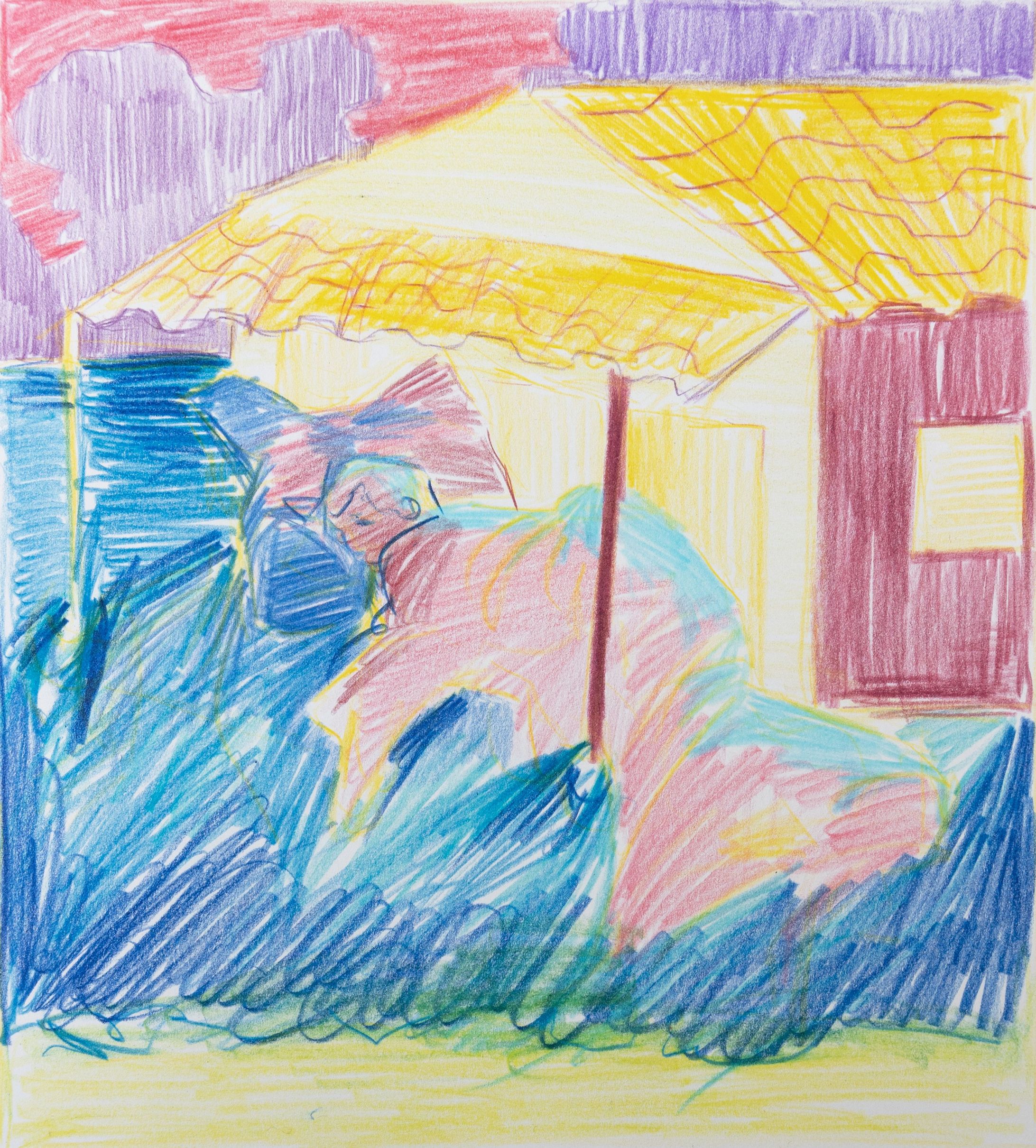
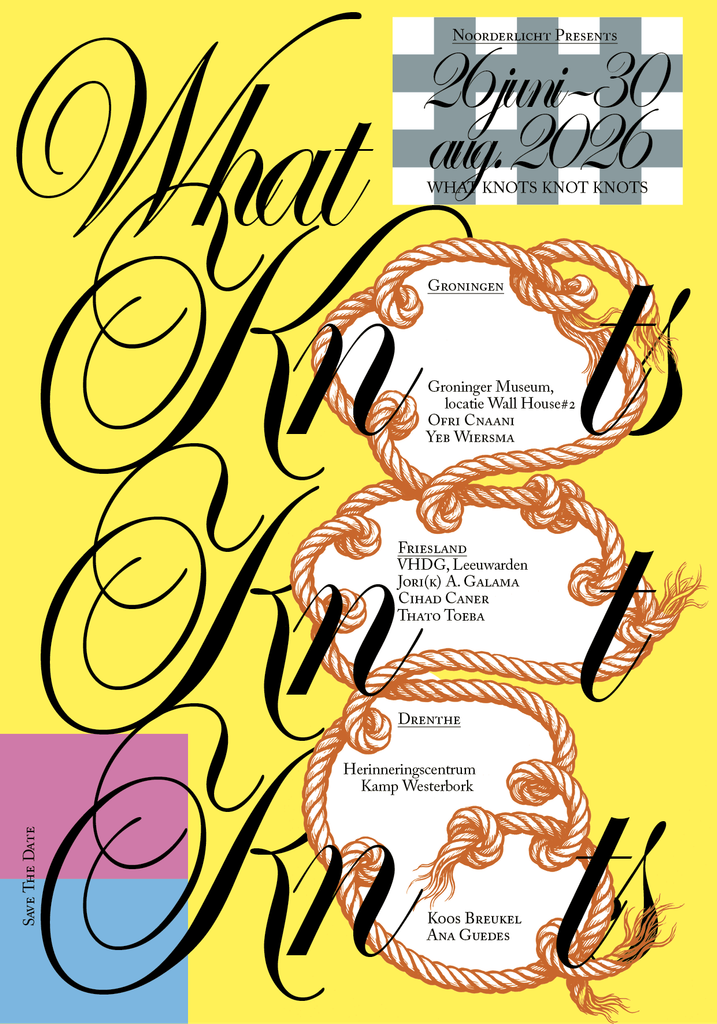
What Knots Knot Knots (26th June – 30th August) tied Drenthe, Friesland, and Groningen together in a shared painful history in the Northern Netherlands that confronts the past that never left. The name of the exhibition is inspired by Donna Haraway’s idea of “Staying with the Trouble”, that what stories we tell each other deeply matter. The Noorderlicht exhibition in Groningen and VHDG in Leeuwarden, brought together 8 artists who work with archives, colonial infrastructures and collective memories. Along the way, I spoke to Faisel Saro who shared his perspective on colonial heritage and Afro-Caribbean colonial history.
Noorderlicht is a lens-based platform for photography that sheds light on social issues & the Groningen exhibition connects well with the colonial architecture that reminds us of the merchant colonial elite from the past.
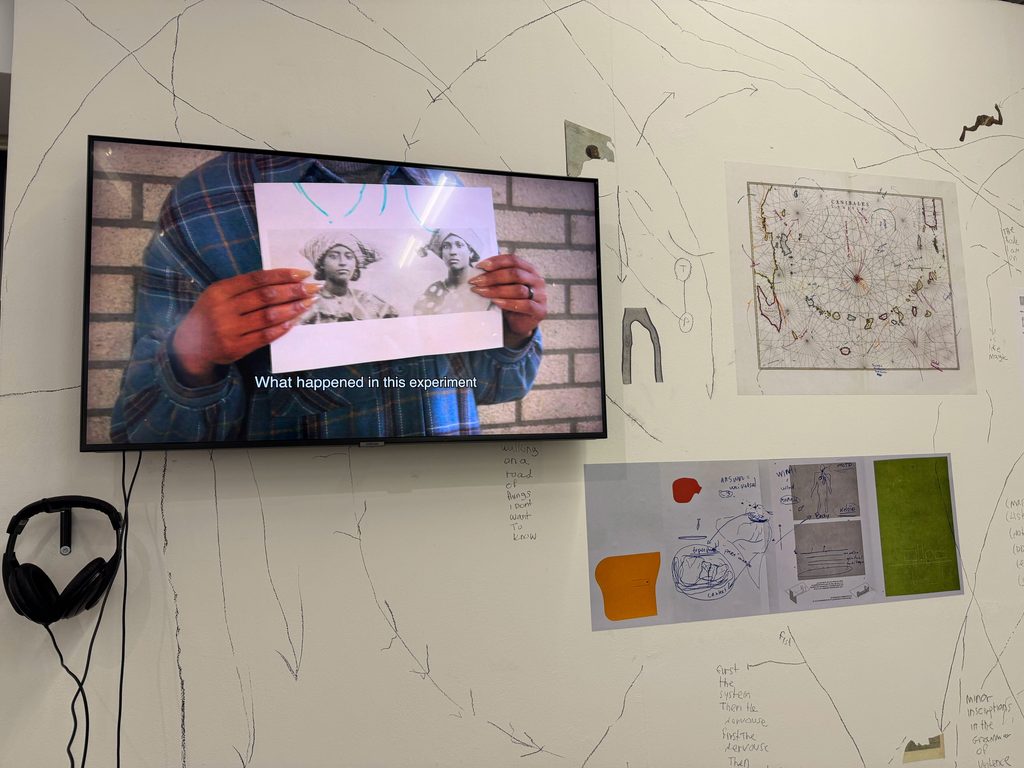
Ofri Cnaani’s video collage “Re-collect, Re-correlate, Re-colonise” focused on the Surinamese colonial archive and questioned the power of digitizing colonial archives. She re-collected archival images, recorded conversations & pages and asked how systemic violence is passed onto the next generations. What is held in the body? Where is the pain felt? It is ingrained in the nervous system & in painful habits. This is a symbol of how contemporary structures of power hold metadata and centralised official archives that re-create the unequal access to ownership and preserve the colonial legacy.
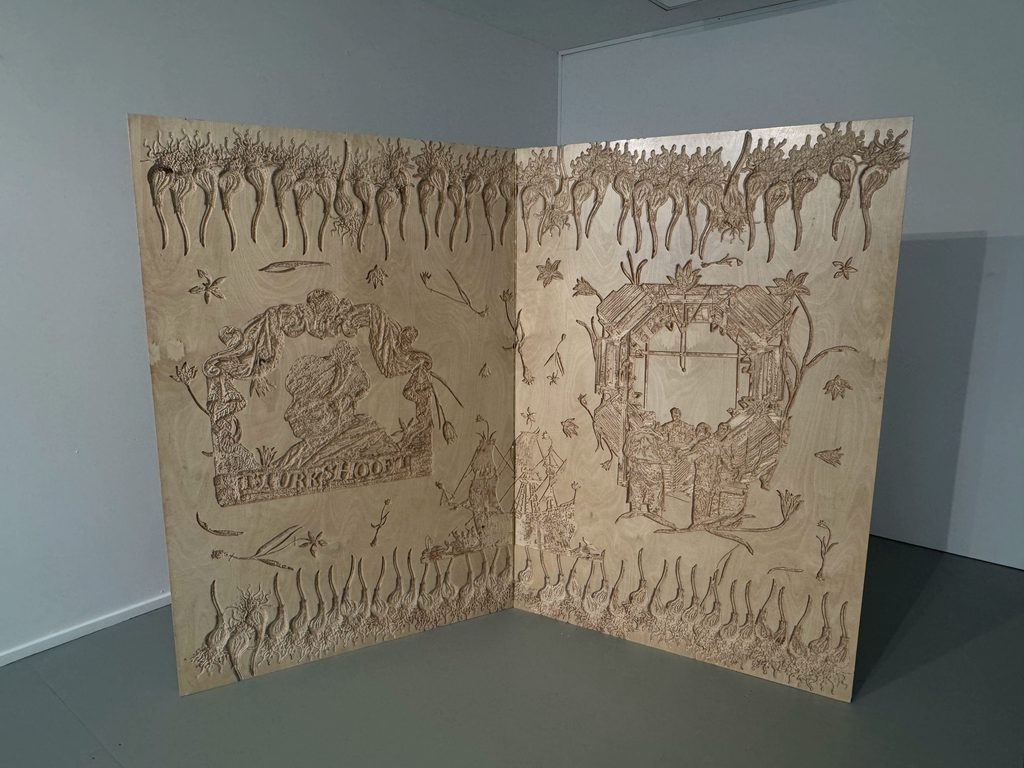
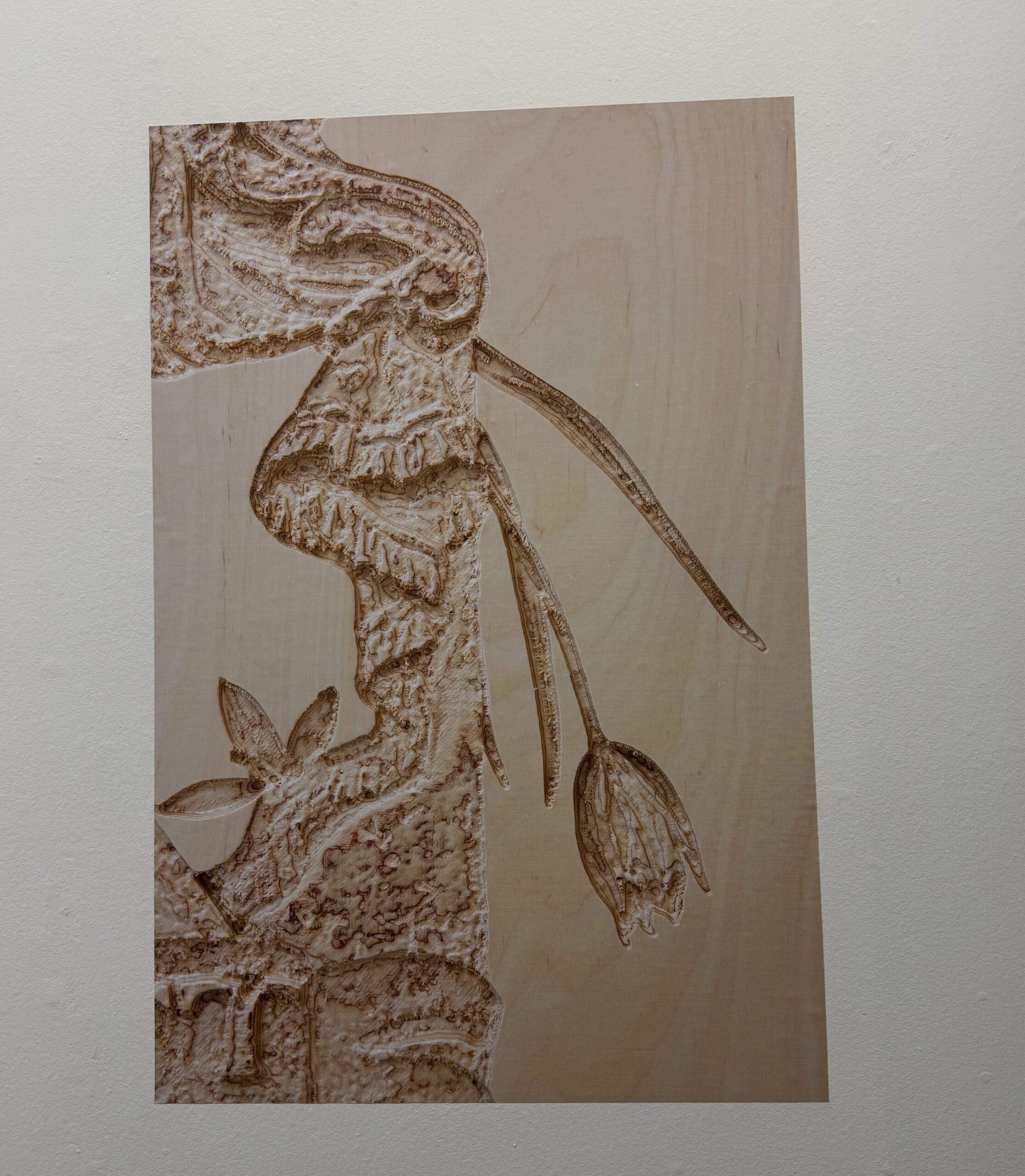
Cihad Caner engraved the wild tulip into wood – a symbol of the Netherlands, but also its forgotten history. The name “tulip” comes from the word “turban” as it is associated with the shape of the flower that resembles the headdress. Both works erase the traces of the absorption of something foreign that becomes a trademark for the coloniser.
I sat down to talk to Faisel Saro who is a visual artist and his finissage happened on August 30th where he created a monument-drawing of the Afro-Carribean diaspora.
Faisel is born in Curaçao & moved to the Netherlands at a very young age. He reflected on the diaspora as a seed that can start growing roots as a survival strategy for a new ground. However, the reality is hard as the colonial period is perceived as shameful and painful time for the oppressed.
Faisel shared that art is an important factor that can open the long-forgotten and uncomfortable conversations that can put different perceptions together, not only in the African diaspora, but in other diasporas such as the Moluccan.
The buried history is a slow process that unfolds with a local process with its own tempo. Taking a personal approach lets the white viewer experience the pain instead of registering it.
Moving to Leeuwarden at VHDG, where old VOC ships were built, the exhibition shifts to Friesland’s trade and settlements.
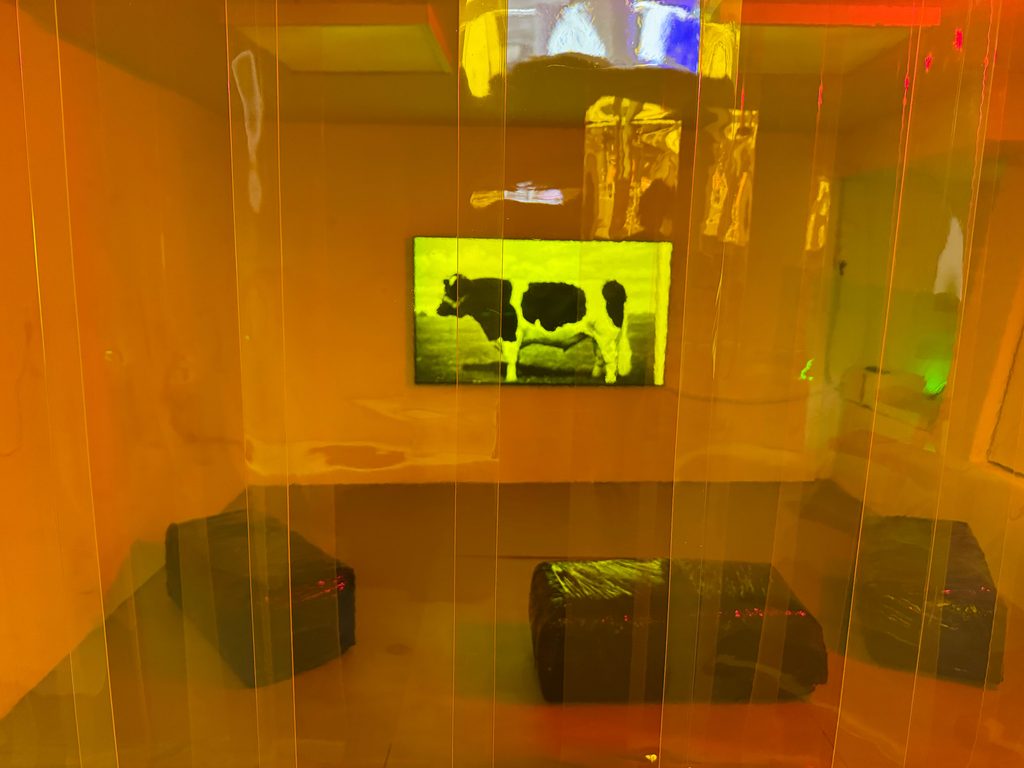
Jori(k) Amit Galama’s video takes us to Île Amsterdam in the Indian Ocean where there are still cows from Friesland. The video puts white Western identity under inspection and places dairy products and farming next to colonial expansion and exploitation.
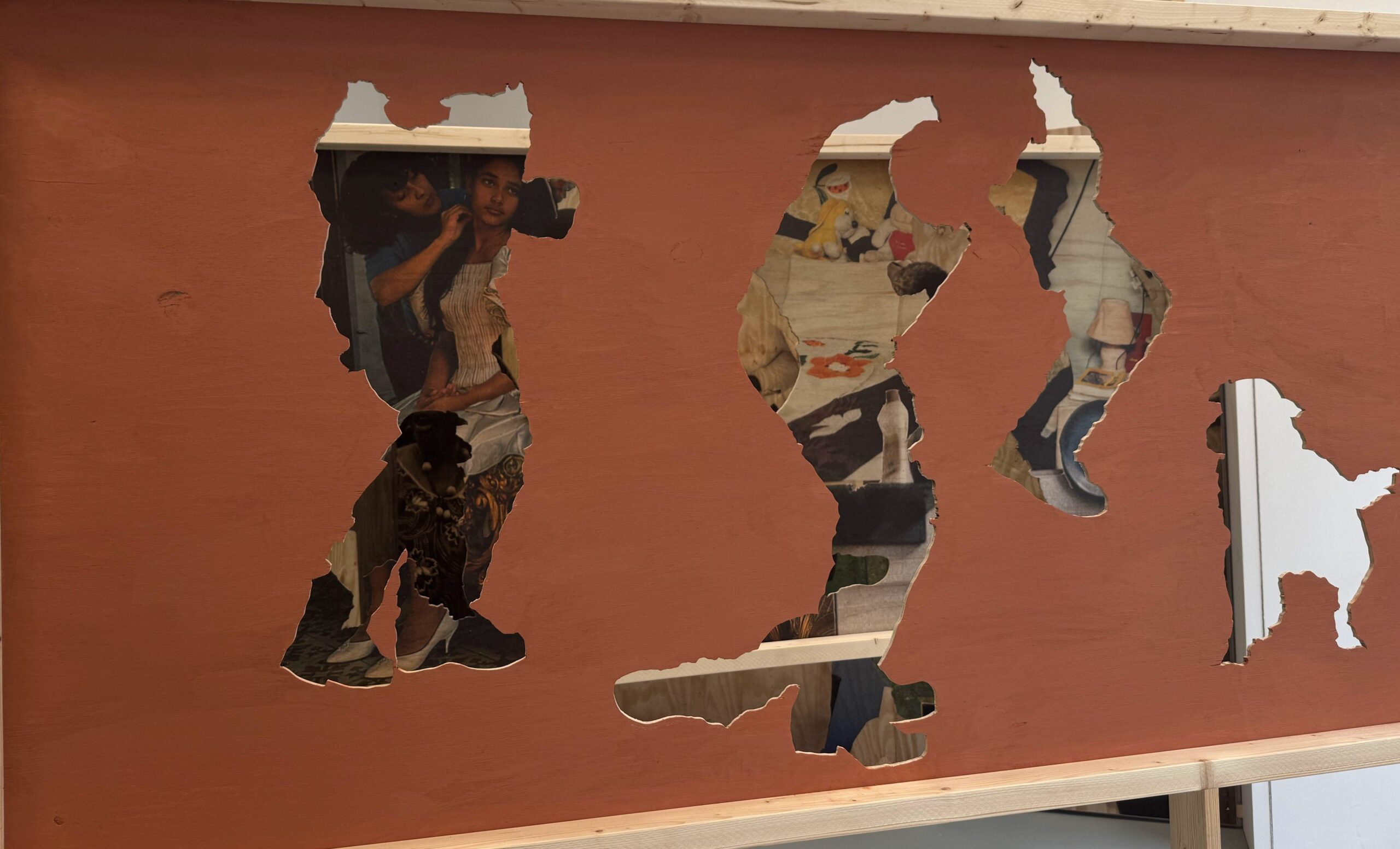
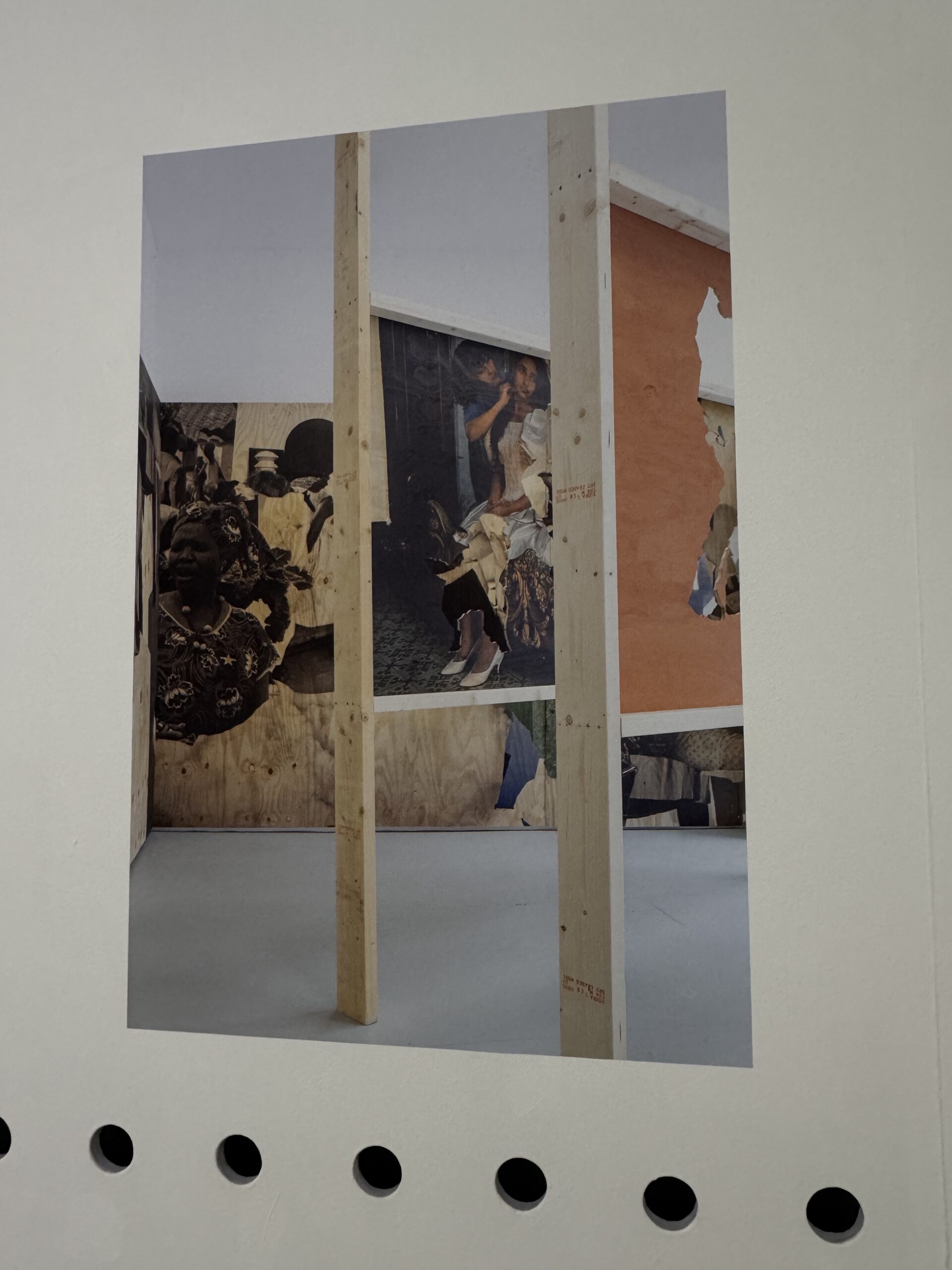
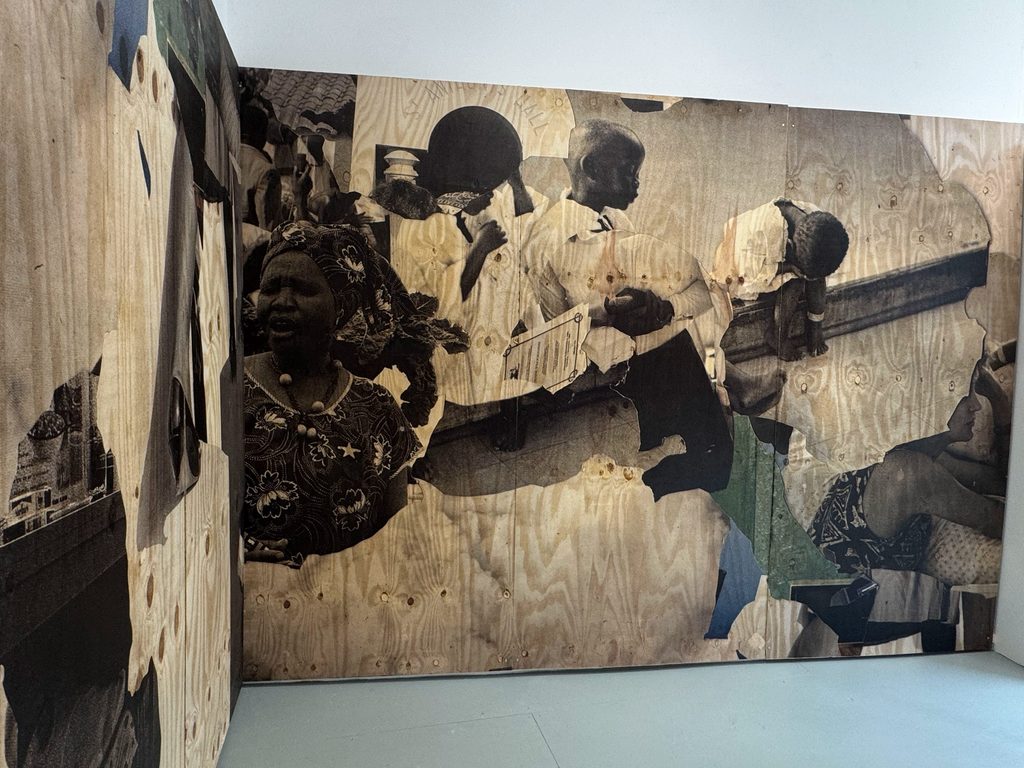
Finally, Thato Toeba’s “you are cold, you are warm” photomontage shows the archive as a state of violence which cut images and made-up stories. The archive becomes a well-working machine that benefits the dominant at the expense of those on the margins.
Together these works tie that confronting history is an ongoing uneven process. What What Knots Knot Knots left in me is that we need to loosen the knots of the current power structures and persist with the conversion and the efforts to make change.
In case you are curious about Noordelicht, the current exhibition, called Thinking Hands is on display between 12th September until 1st November & it centres on the idea of knowledge in our bodies.