Workwear, uniform, rebellion, fashion, practicality, sex appeal. Denim has spent the better part of the last century moving between all of them, picking up new meanings with every generation that puts it on. And few names are as entangled with that history as Wrangler.
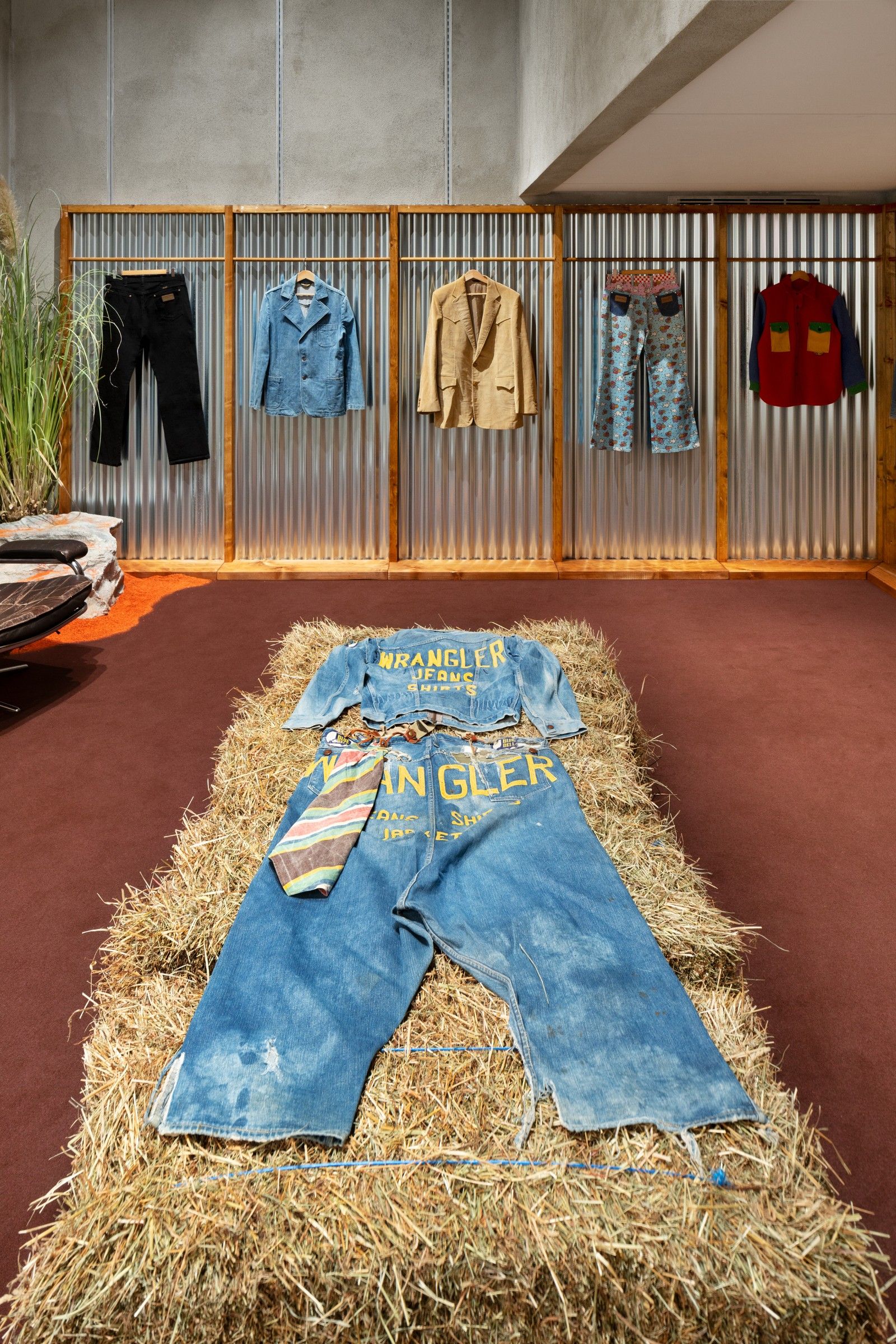
During Milan Fashion Week, we found ourselves at Slam Jam Center for a rather literal trip through that history. Wrangler had taken over the space with its Archives Gallery, built around the renowned collection of Japanese vintage collector Rikiya “Ric” Kanamaru. Old advertisements, worn denim, patches, photographs and pieces from across the brand’s history filled the space, tracing how a distinctly American piece of clothing travelled far beyond the world it was originally made for.
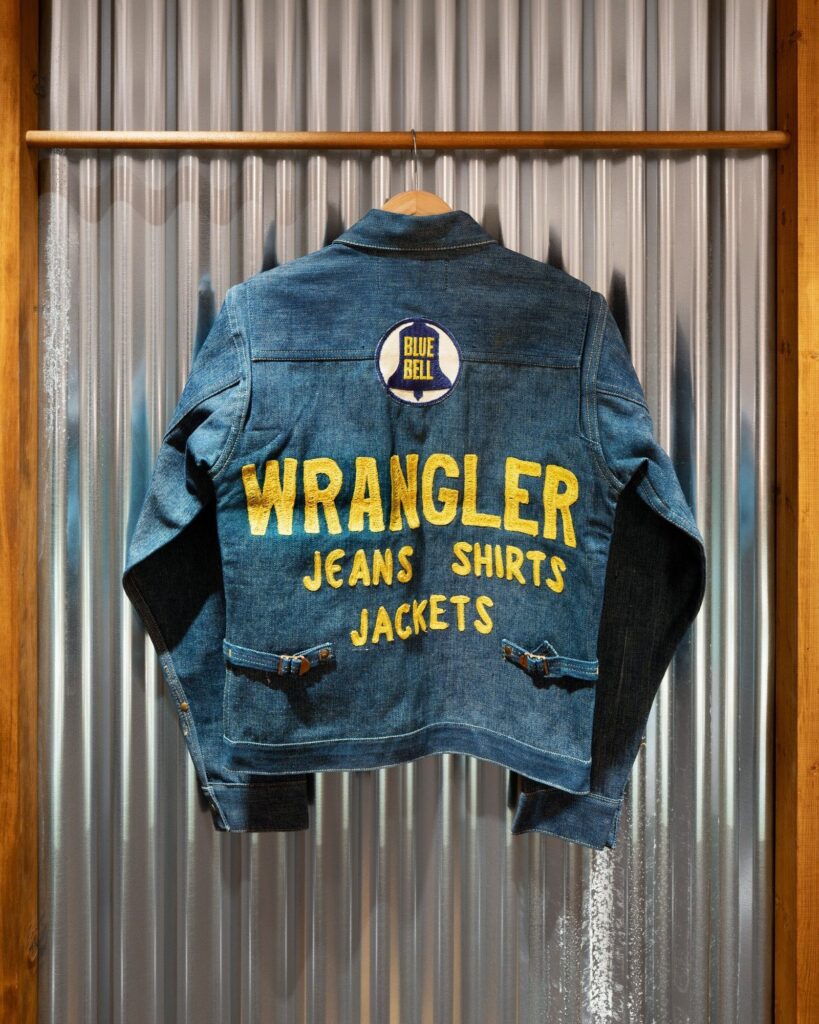
The timing was no coincidence. Wrangler was also in Milan to introduce Blue Bell, its new Fall Winter 2026 collection and its first standalone move into the premium market. The name reaches all the way back to Blue Bell Inc., the workwear company that acquired Wrangler in 1943, long before the name would become synonymous with cowboys, rodeos and a particularly enduring vision of American denim.
So yes, they went digging in the archives.
But Blue Bell is less interested in reproducing them than in figuring out what happens when you take the foundations of Wrangler and give them very, very nice materials.
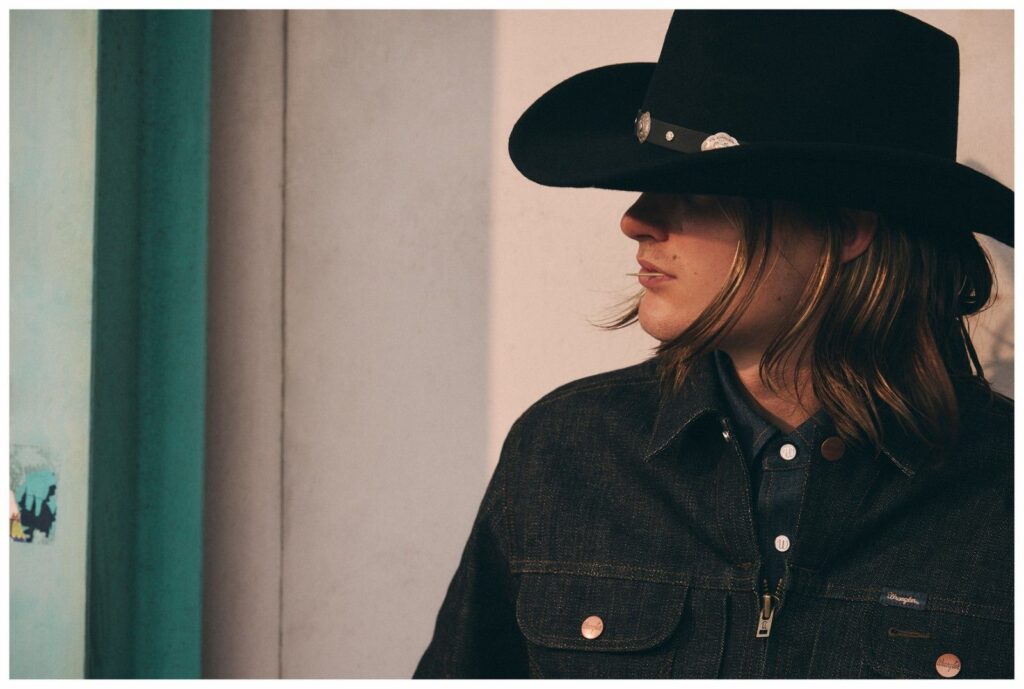
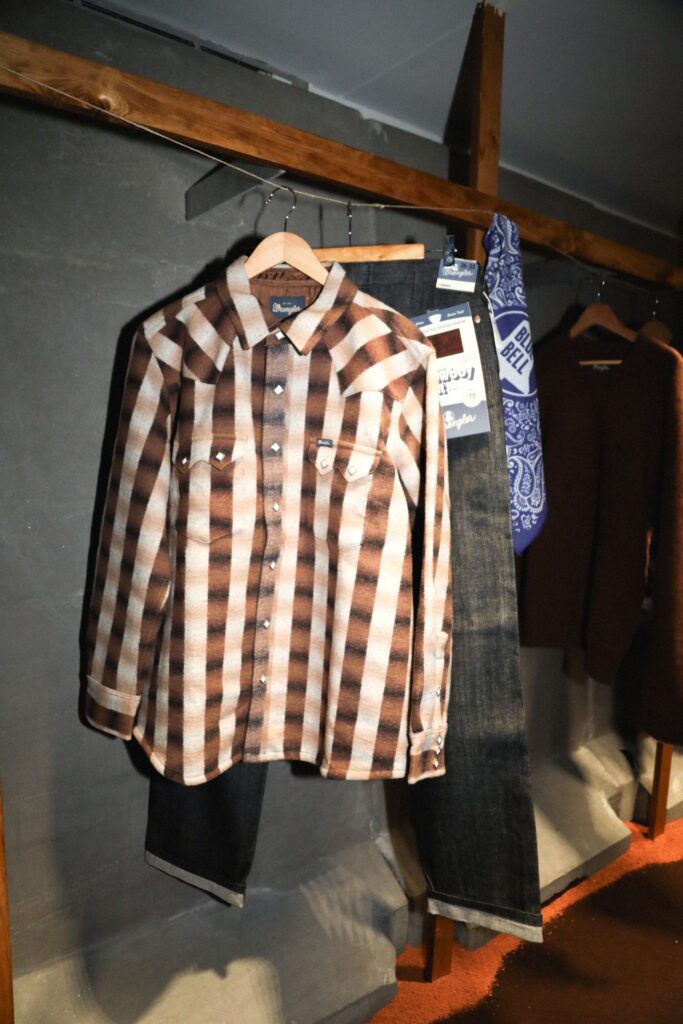
At the centre is the Cowboy Cut, including an elevated version of the original 13MWZ rendered in raw Japanese selvedge denim. Around it sit full grain suede jeans, Western wool shirts, raw denim jackets, a leather aviator and a rather excellent chocolate brown suede shearling coat. The familiar Wrangler language is still there, from Western yokes to copper hardware and the brand’s signature details, but everything has been reconsidered through material and construction.
“Perhaps most importantly, a lot of it is supposed to look better once you have actually lived in it.
”
The raw denim begins crisp and untouched. The leather is intended to soften and crease. Suede changes with wear. Rather than trying to preserve each piece in the exact condition in which it left the shop, Blue Bell treats the wearer as part of the design process. Every fade, scuff and crease becomes part of the garment. As Wrangler’s Global Design VP Vivian Rivetti puts it, the pieces are intended to be
““lived in, shaped by experience, and uniquely defined by the wearer.”
”
Which, standing in a room filled with decades old Wrangler, starts to make quite a lot of sense.
Because the most compelling pieces in an archive are rarely the pristine ones. They are the jeans that have faded around someone’s wallet. The jacket that has softened at the elbows. The patch someone decided to sew on twenty years ago. Clothes become interesting because people happen to them.
There is also something satisfying about Wrangler entering the premium conversation without abandoning the utilitarian thing that made Wrangler, well, Wrangler. A suede Cowboy Cut is objectively a rather different proposition from a pair of jeans designed for working cowboys, but the silhouette remains recognisable. The new collection plays with that friction throughout, taking garments built around function and asking what they look like when material, finish and construction become the luxury. Blue Bell is Wrangler’s first standalone entry into the premium space, with the collection ranging from €165 to €1,200.
After more than 75 years, Wrangler has accumulated plenty to choose from. Blue Bell takes some of the best bits, gives them a little more room to breathe and sends them back out into the world to get dirty all over again.