Photography by Katya Yadrishchenskaya
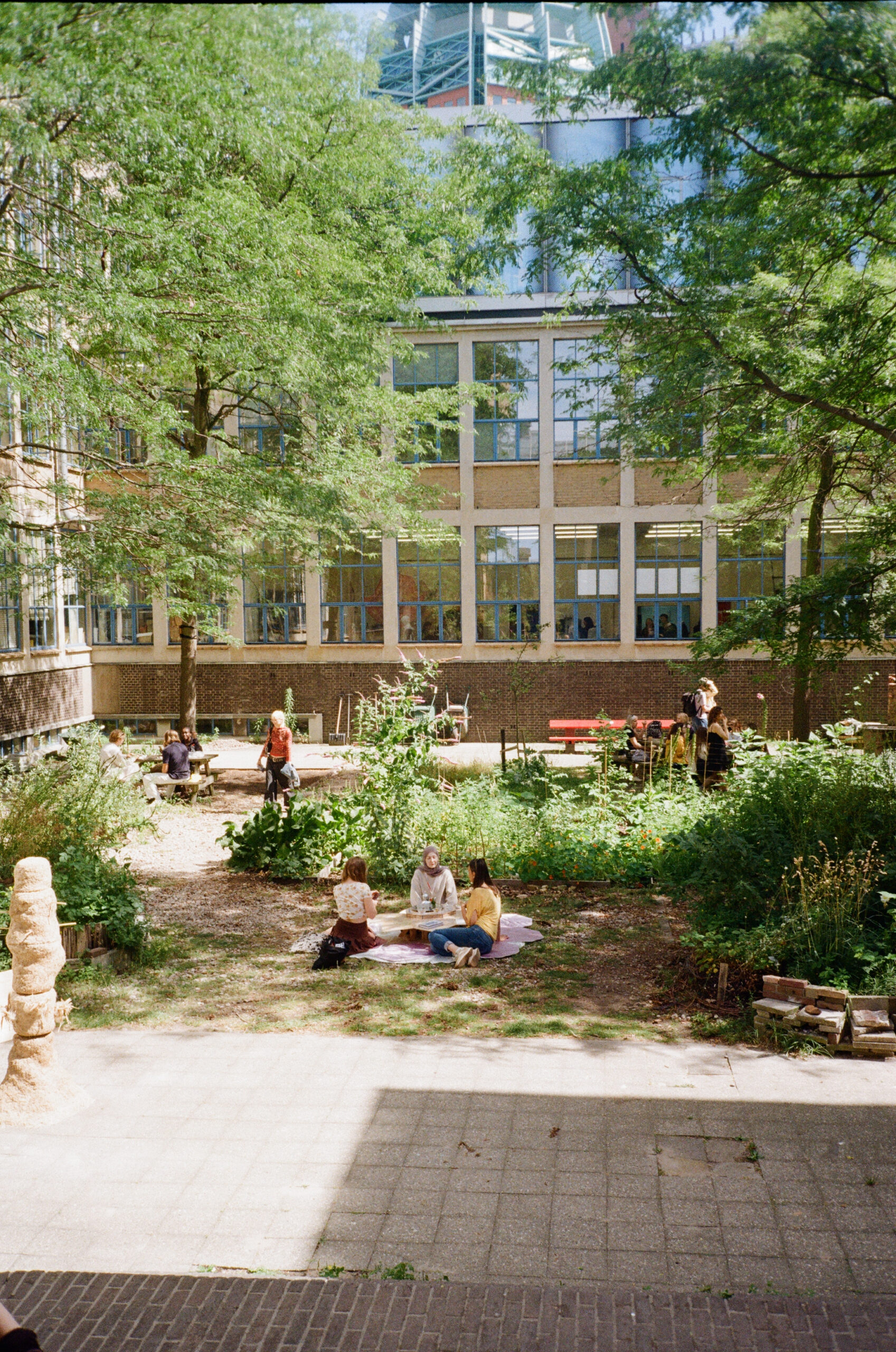
‘The city, the beach, The Hague’ is how the Dutch political capital tries selling itself to tourists, and perhaps the very reason it escapes a second glance. Ask any Amsterdammer about The Hague, and you’ll likely get a shrug. A mention of the International Court. Rewire, maybe, if they know. But somewhere between parliament and promenade, the city has acquired a reputation for being respectable rather than exciting. And while that might feel true, the bustling art scene with the Royal Academy of Arts (KABK) at its heart, begs to differ.
Until last year, I wouldn’t know better. I moved from Amsterdam to The Hague for the Academy myself, and since my admittance, I’ve started noticing how strongly KABK’s pulse runs through the city. Mushroom Radio at Club Laak, Studio 202 taking over Pip, and regular openings at Paradise are just few examples of how student-led initiatives continue to pop up like mushrooms after a rain. It’s an energy that reverberates beyond the Academy’s walls, into The Hague, and claims the city as its campus.
Towards the end of the year that energy reached its peak; piles of mess left and right, hour-long queues at the printing room, and graduating students frantically strutting the hallways en route to scramble their final bits together. Being at the academy felt like standing in the eye of a storm. Even after a year, the constant buzz and strange workshop equipment lurking behind half-closed doors remind me I’m still new to this place.
Yet the veil of mystery has slowly started to lift off from KABK’s 1937’s façade, and with it, from the institution itself. Over time I’ve come to realise that the Academy’s influence rests on far more than heritage alone. Its pioneering spirit made it one of the Netherlands’ most respected academic institutions, exemplified by being the first to sever ties with Israel following the siege of Gaza. That same urgency to take a stance, I’d soon find out, is reflected throughout the graduation show as well.
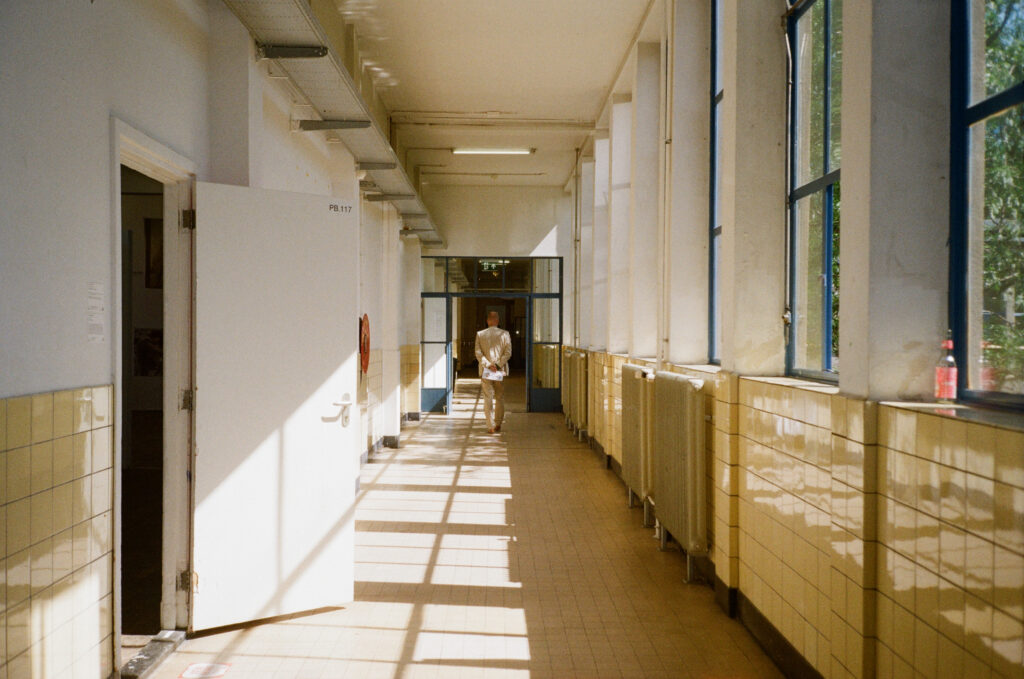
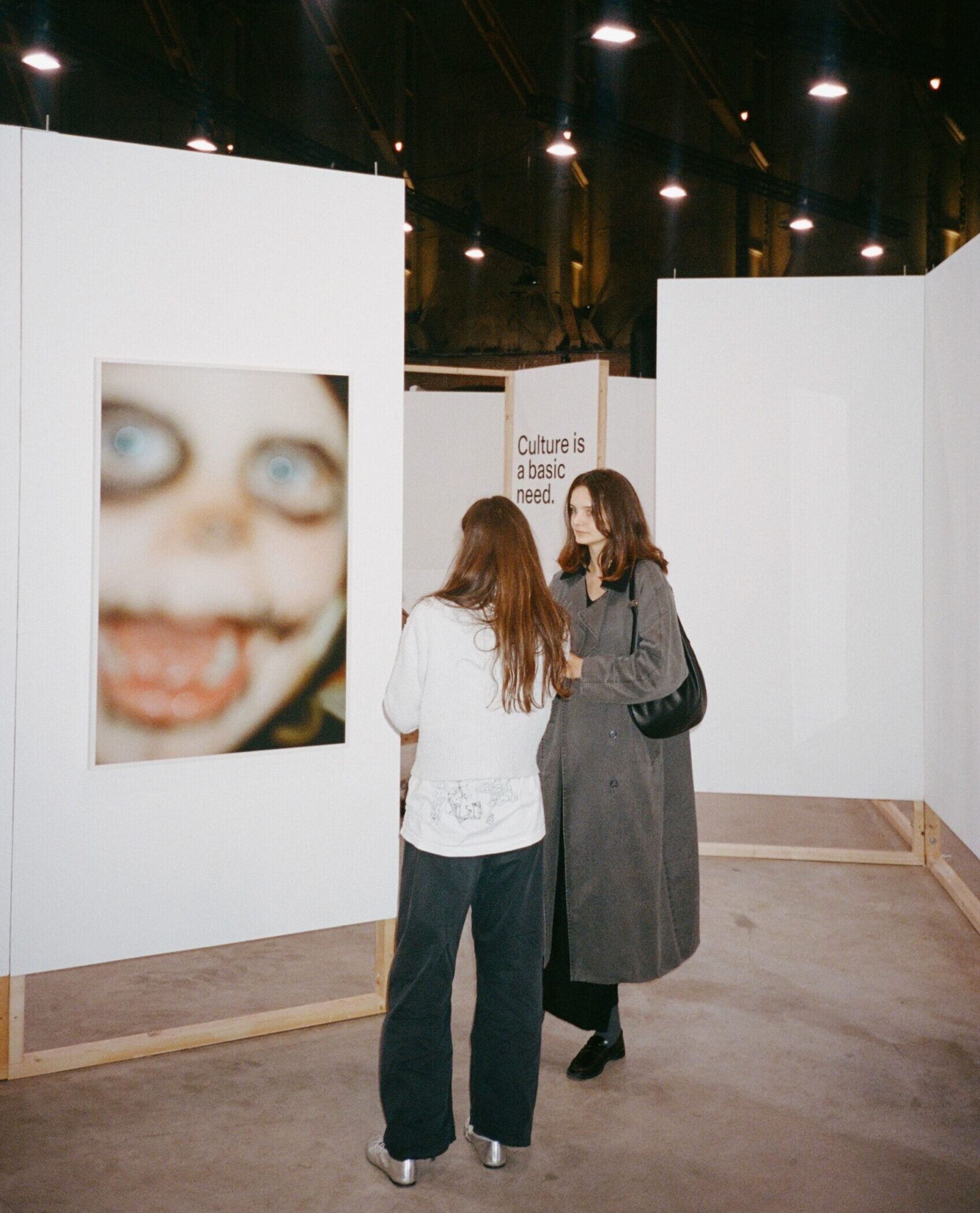
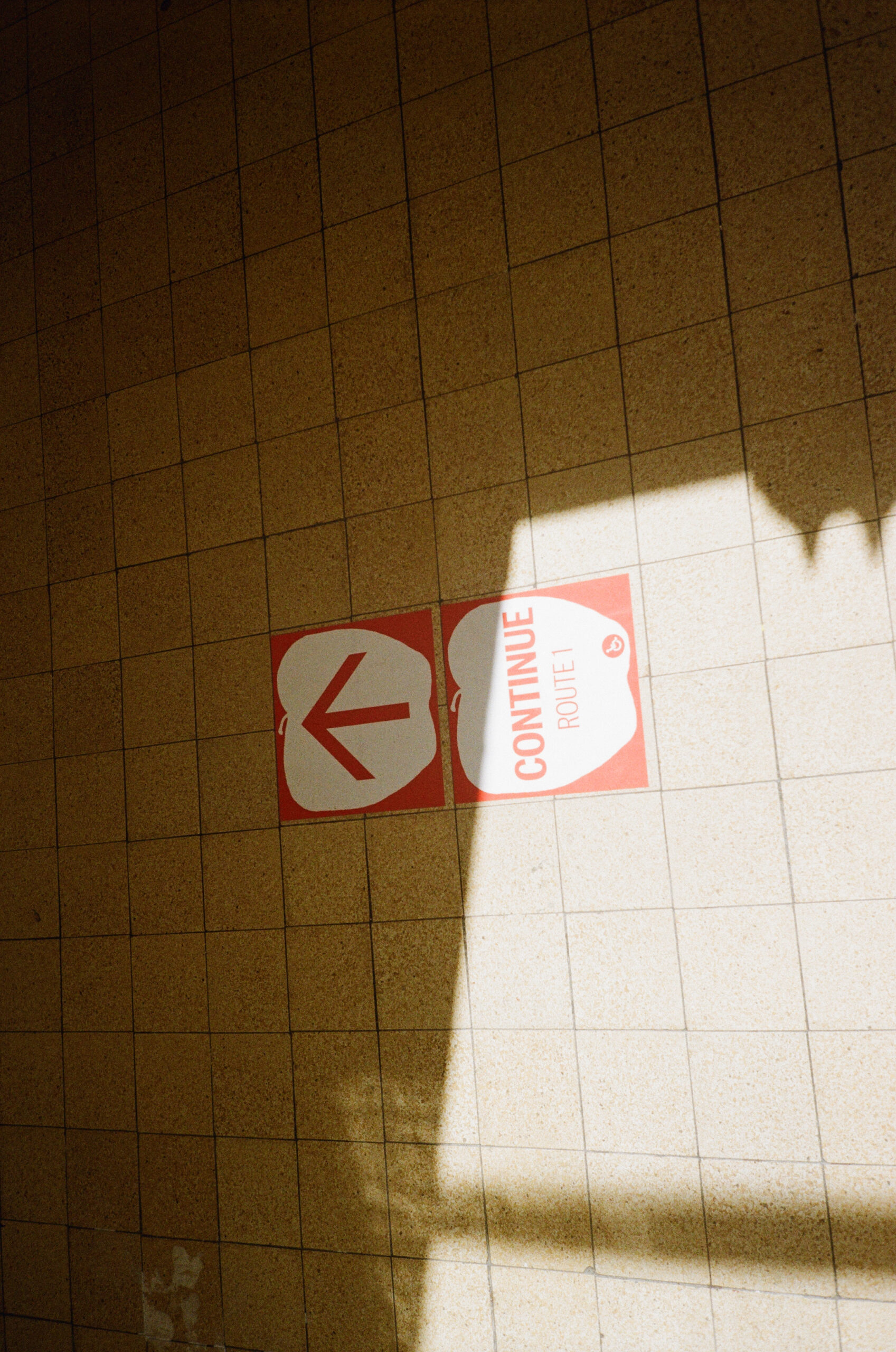
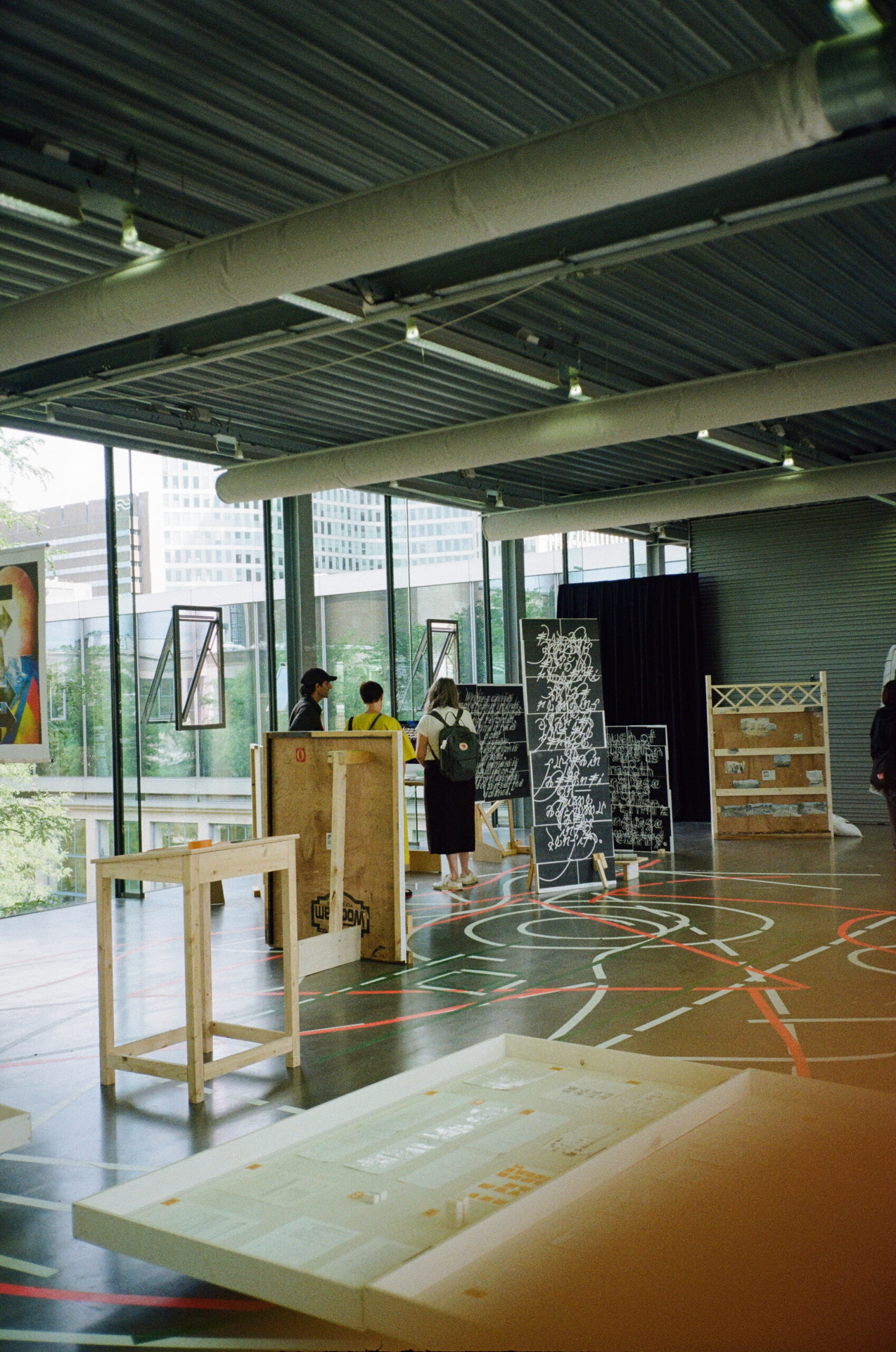
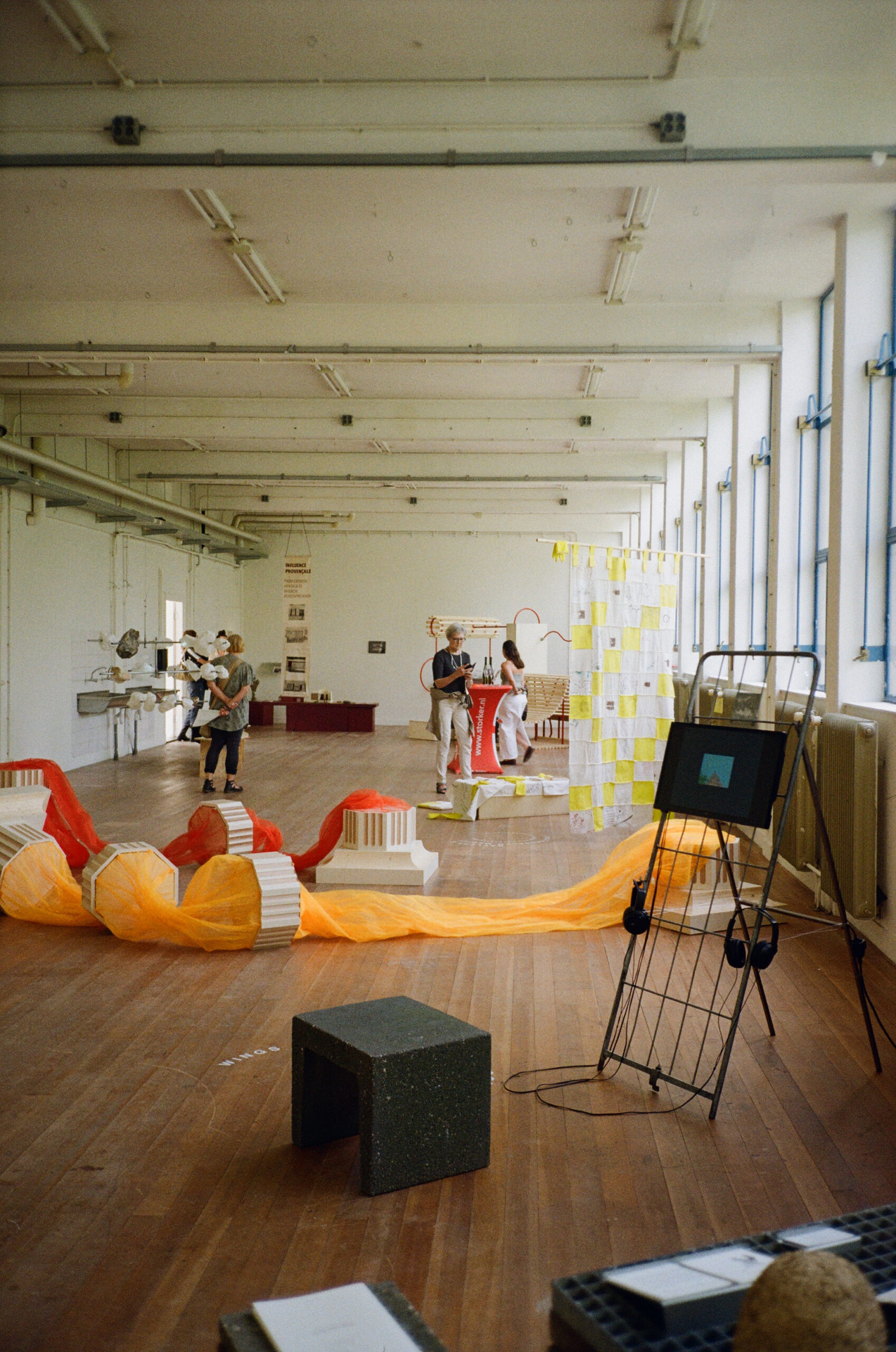
With the show’s arrival, the building that looked chaotic a day before has somehow been wiped of every trace that made it impossible to navigate. No signs of random chairs in the hallways, gone with the piles of mess that reminded me of all the hard work. Revealing neat spaces after every turn, the map you’re greeted with at the entrance guides you on a journey that could easily take two days. The galleries look at their very best, and like magic, only show the remarkable outcomes that took a year to build. A presentation concealing the sleepless nights that brought together the repertoire of this year’s graduating class.
Covering the show in full would be impossible, so instead I set out to give you a glimpse. After traversing, lingering, and revisiting, I talked with five graduates whose stories left me the strongest impressions. Impressions that, going forward, might have you look at The Hague differently.
Photo scans and development by Analogue Amsterdam.
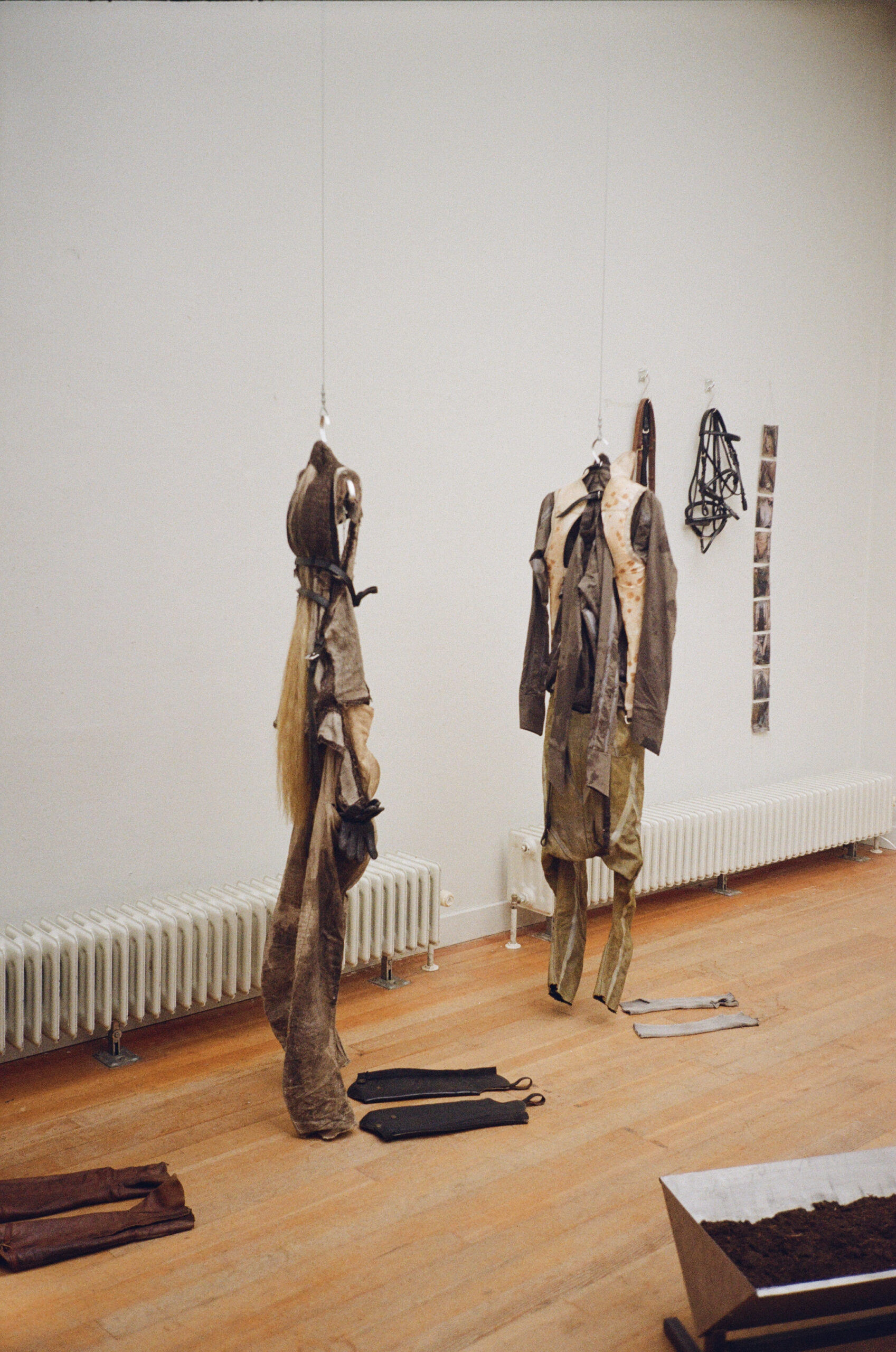
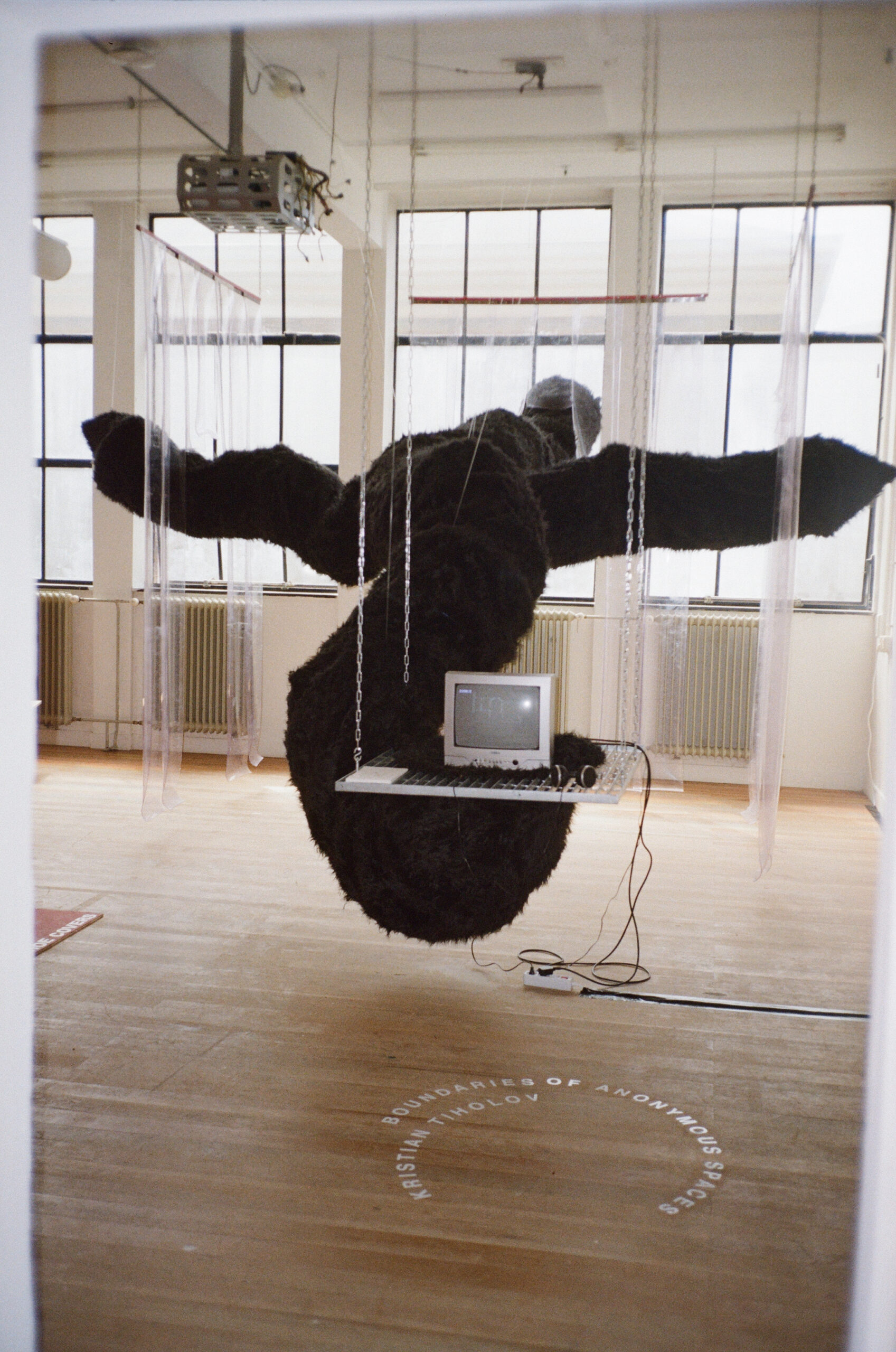
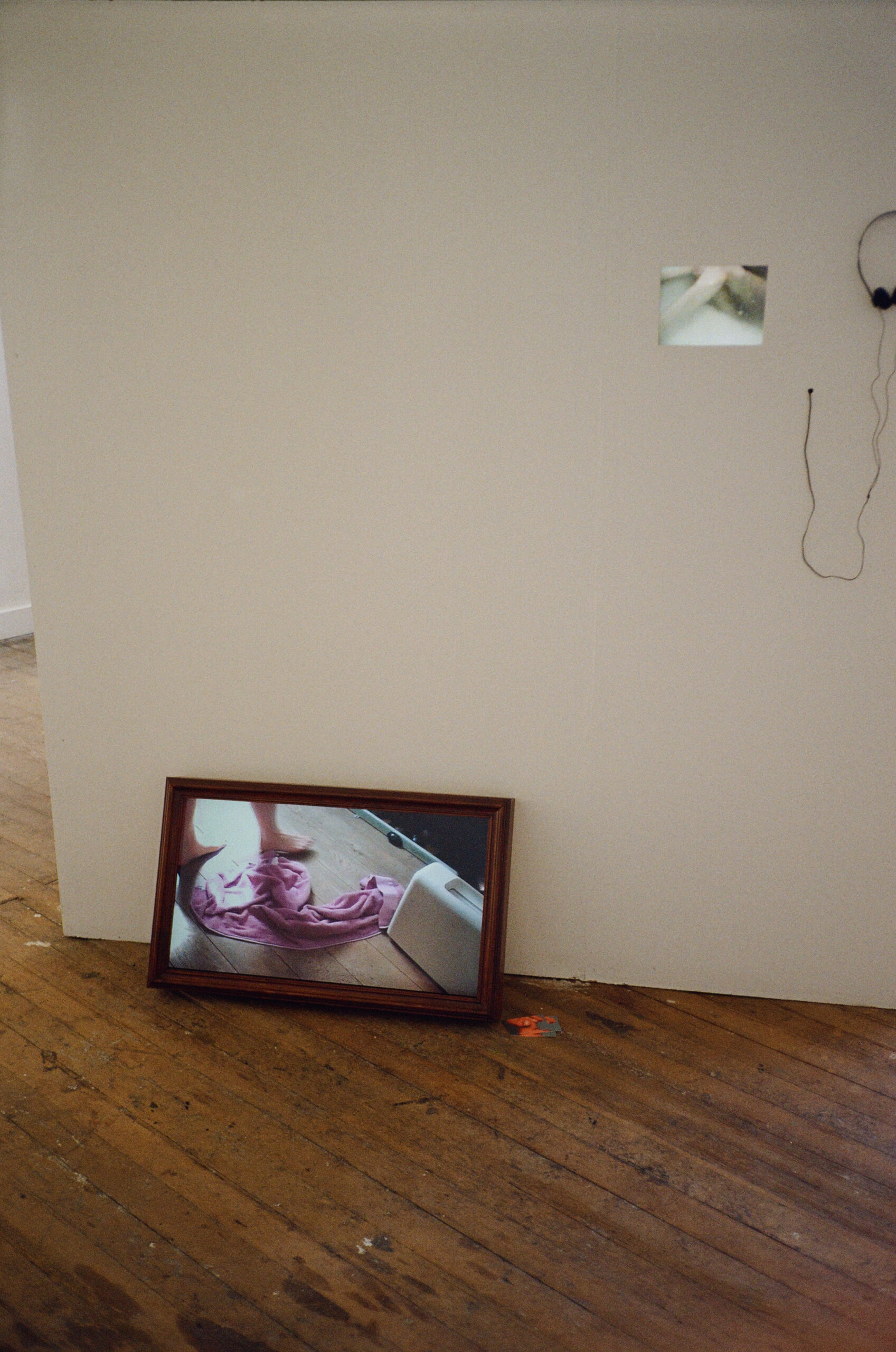
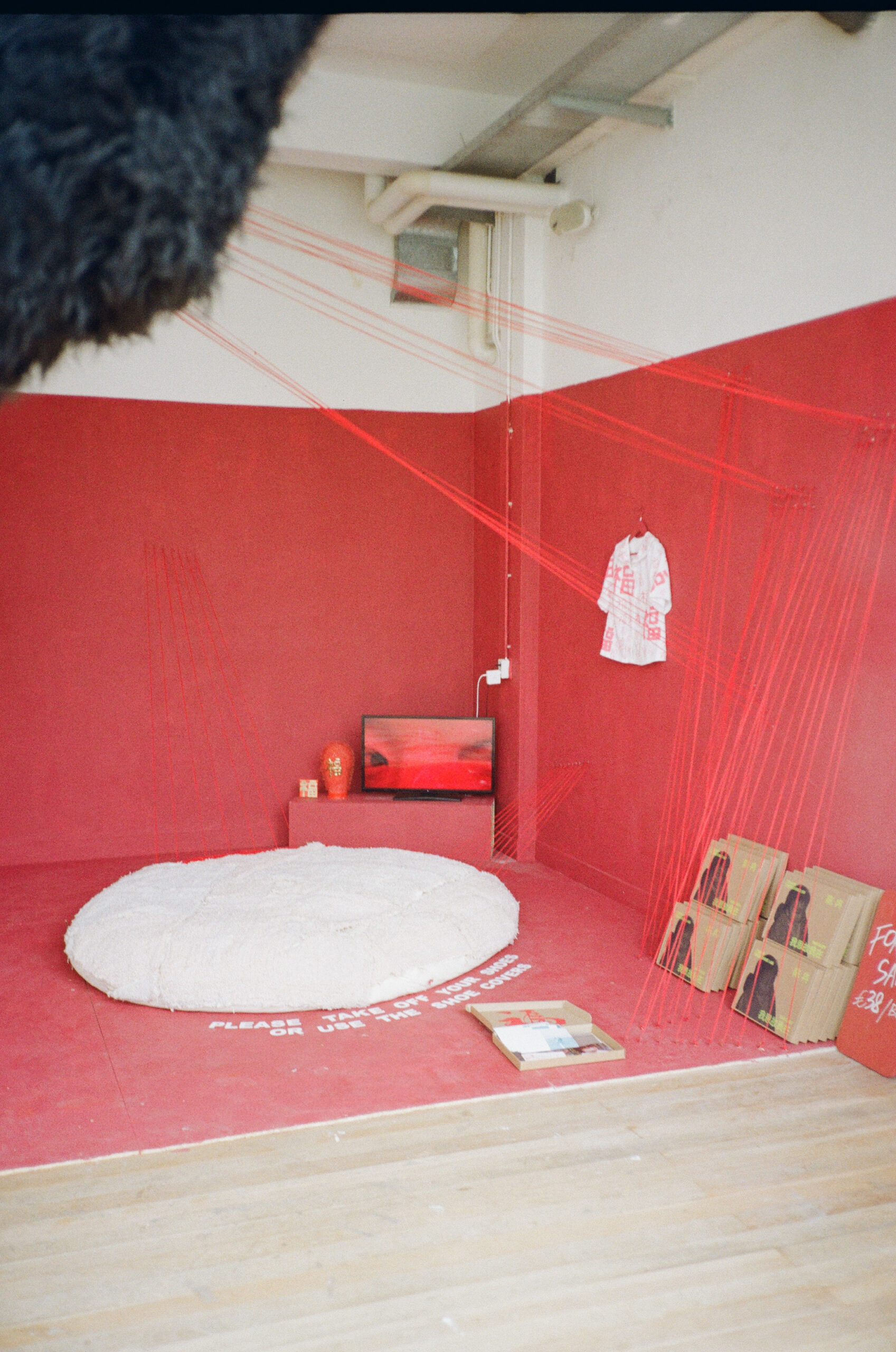
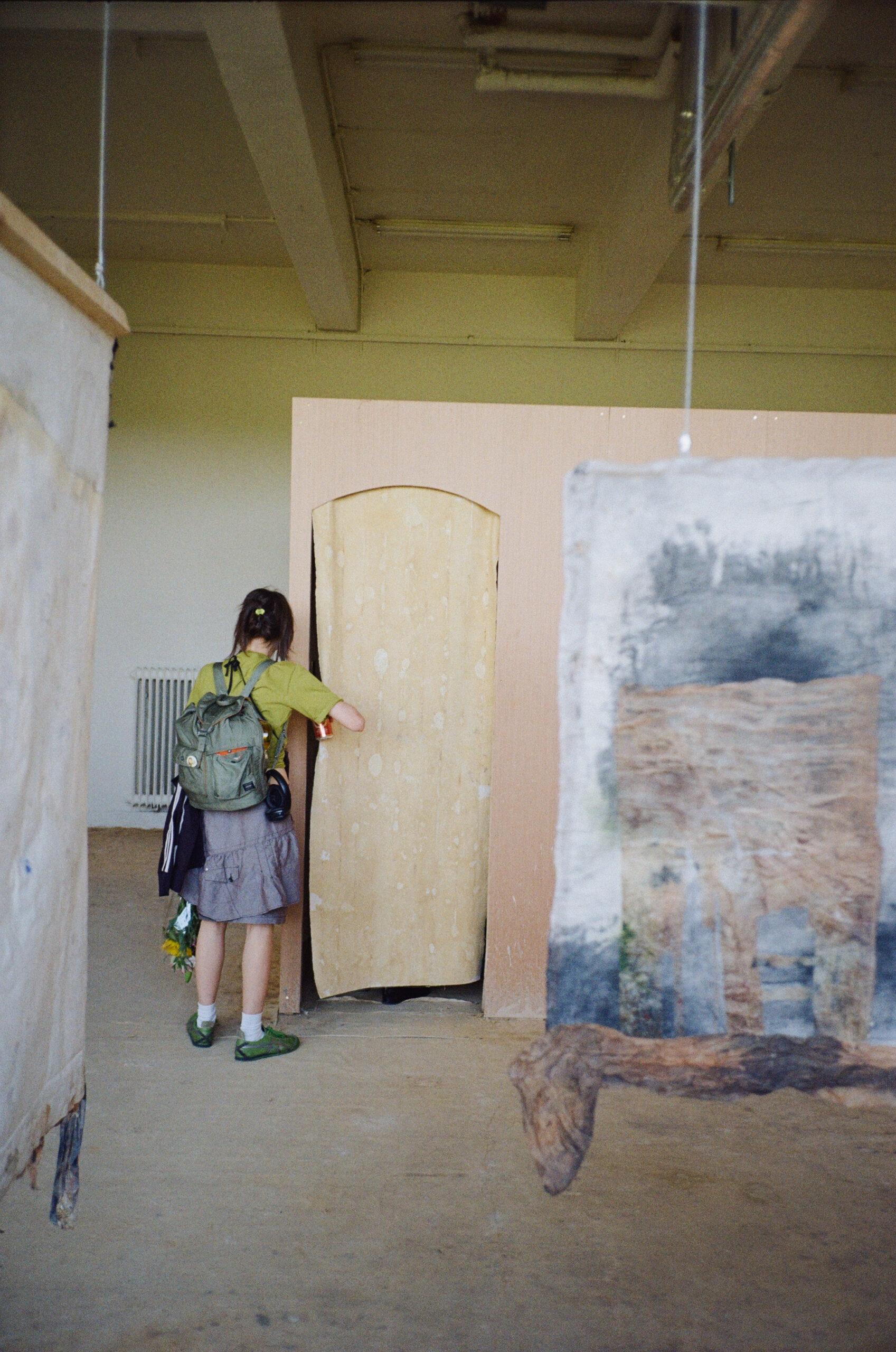


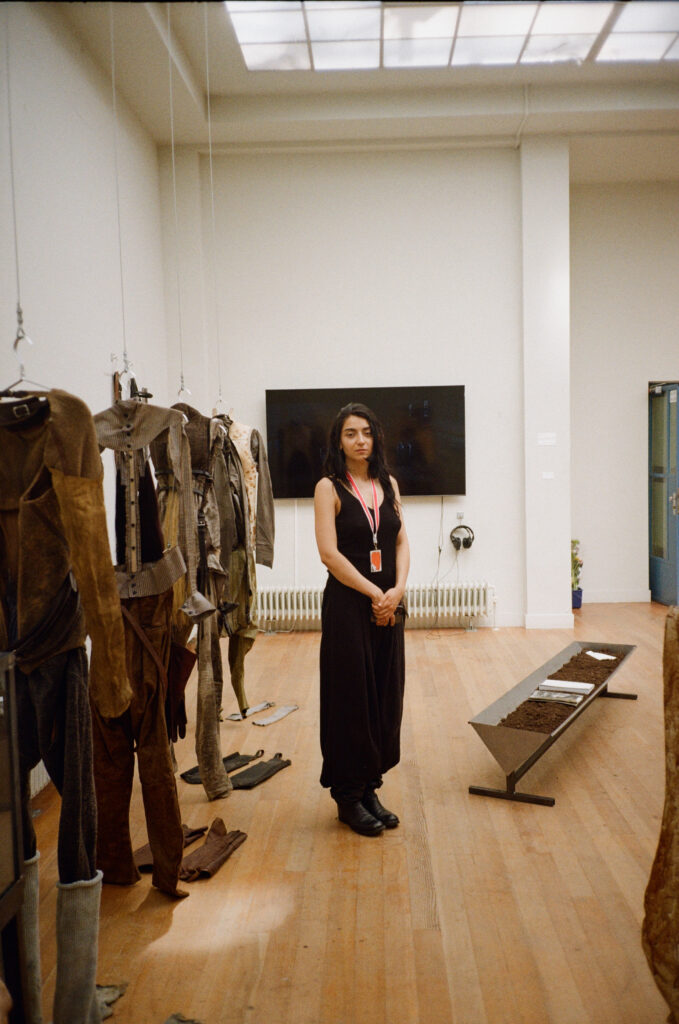
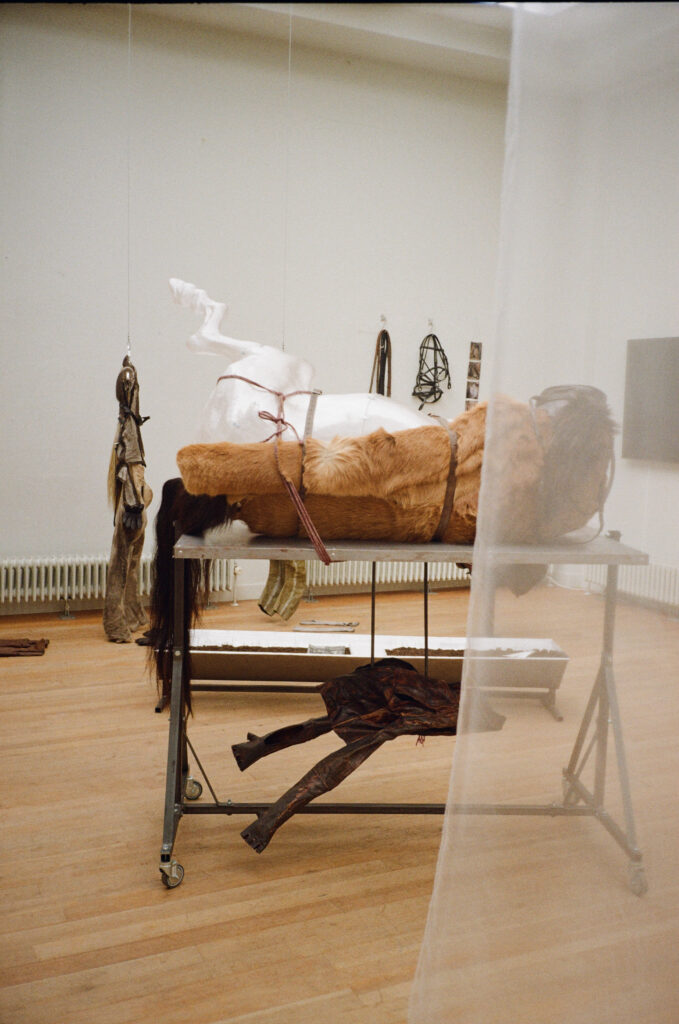
Anahita Karimi – Fashion – ‘Between Reins and Teeth’
Can you tell me about your project?
‘Between Reins and Teeth’ began with multiple inspirations, one of which was Jacques Derrida’s The Animal That Therefore I Am, in which he questions the anthropocentric idea that humans place themselves above animals. Another writer I looked at is Donna Haraway, who argues that instead of being independent, humans and other species are fundamentally interconnected and dependent on one another. That idea of entanglement, of sensing the other half, became important to my work.
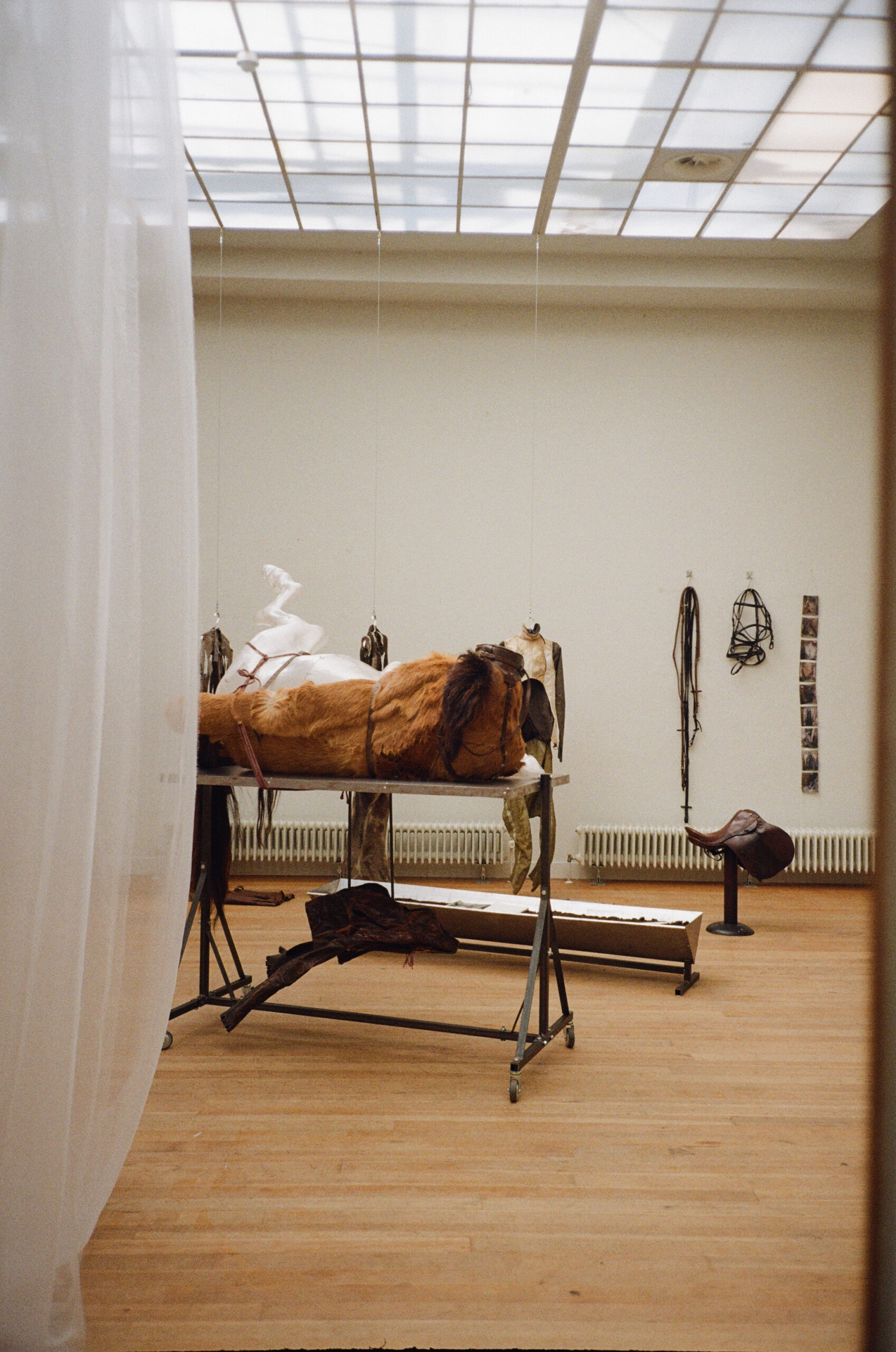
Through my garments, I wanted to explore this relationship we have with animals, and bring a sense of vulnerability to it. I incorporated secondhand horse tack, reins, and other horse pieces, which introduce ideas of restraint and control over the body.
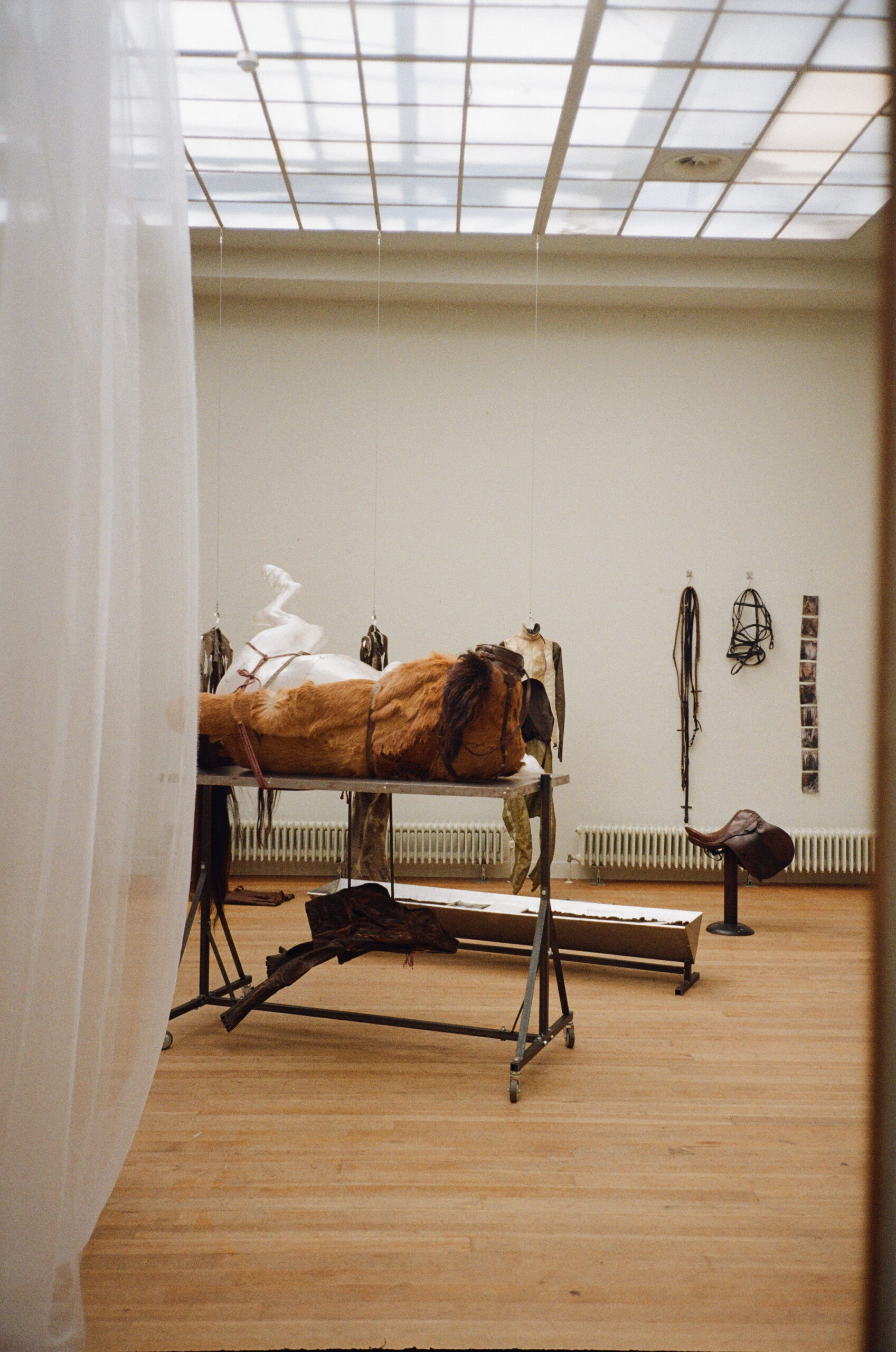
In my final installation work, a horse is balanced on one side of a table, and a jacket, representing the human body, on the other. With the ability to push and tip over the work, one rises as the other falls. It reflects the unstable relationship between humans and animals.
What role does material play in your work?
All my materials are organic. I wanted the clothes to feel connected to nature, so even the color palette is mostly earth tones. I treated my garments using natural methods: some pieces are blood dyed, some are dyed with iron oxide or copper oxide, others with tea or coffee. I’ve also used soil to create a muddy effect. There’s a lot of horse in the work too, like horsehair, horsetail, and rawhide, plus leather and wool. It’s material I can connect with.
One of my pieces I made out of leather and silk. The leather is vegetable tanned and uncoated, and the silk is a protein based fiber, so mealworms can eat it and colonize the garment. I wanted to place them as close to the human body as possible, because leather alone can’t give you that sense of two living things coexisting. That was something I experimented with over the summer: how to get the mealworms right up in the fabric, against the body, so they’re alive, not dead, actually consuming this body of work while wearing it. I wanted to show how something small, once let in, can take over completely.
Is there anything that surprised you during your process?
With all the treatments I did for the clothes, I didn’t actually know where I was going. I just wanted to give them that aged, worn look, but the outcome was always unexpected. That was tricky. There was a lot I had to figure out, how to assemble everything, how to put it all together. There were surprises, but the good kind because I feel like I learned from all of it. I’m glad I got stuck at some points, honestly. It taught me how to tackle a problem.
Any hobby that gave you a breather from working on such an intensive project?
No. Honestly, I was working on this project literally seven days a week, constantly, and that’s something I genuinely enjoyed. In a way, this became my hobby. It’s not that I’d shame myself if I just sat down to watch a movie, but I would probably feel useless. However, working on this, with my hands, making things, putting them together, that’s what I love.
What are you most proud of, looking back?
I’m really glad I had the courage to step outside of fashion and become more of a multidisciplinary artist. I don’t see myself fitting into the fast-paced production cycle of fashion, working on other people’s ideas. That path makes sense for some people, but I don’t think it’s something I could do, or even want.
What I’m most proud of is bringing the installation, fashion, and other mediums together to create an atmosphere, one where people can really understand my work themselves—without needing me to explain it.
What would you love to be remembered for, here at the academy?
Being hardworking. I don’t want to sound pretentious about it, but I do like working a lot, pushing myself, being ambitious… More than anything, though, I’d want people to look at a piece and know, ‘this is Anahita’s work.’ That would be great.
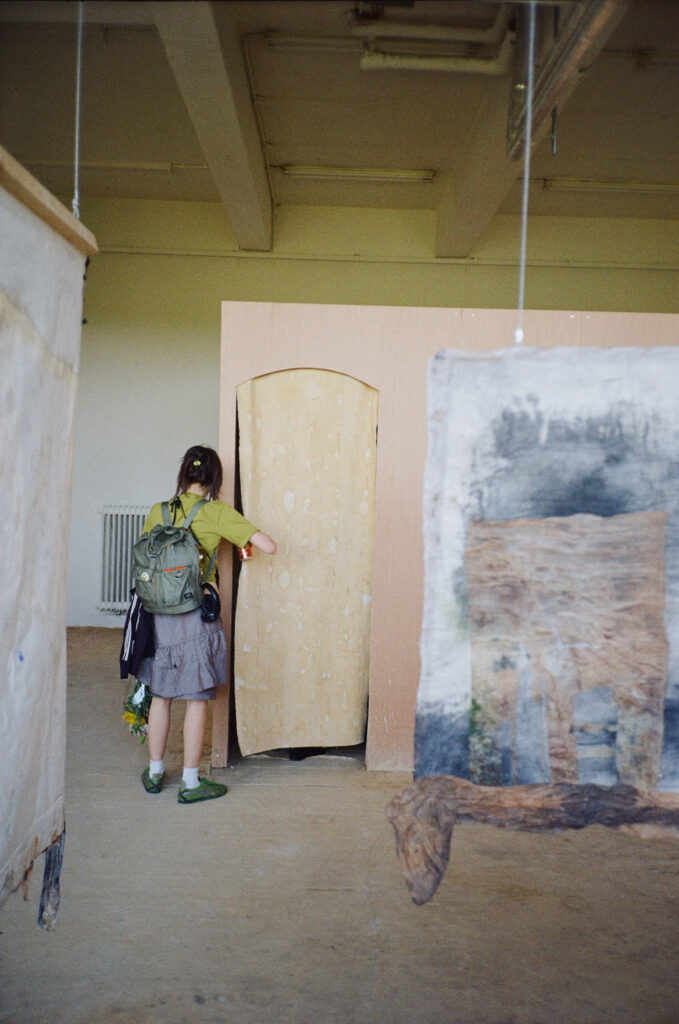
Kimia Khedri – Fine Arts – ‘Something to Hold On’
What is your graduation project about?
I’m from Iran, and the work here connects to my background. The video for example was filmed there in October, where I met with spellcasters, so called wizards, to understand why people go to them. They told me how people ask for love spells, separation spells, and all kinds of other things.
It made me think about how, as humans, whenever there’s a difficulty in life we can’t control, we just want something to hold onto. That’s how I saw it: people go to spellcasters because they don’t have control over their lives, and this is how they deal with it.
I brought that into my own practice. The past few months, the war really affected me. I was constantly worried about my country, and it became obvious that I wanted to make images of my city, the one I keep seeing in photos and videos every day, getting burned and destroyed. I realized that I was making these landscapes to preserve a city that’s already gone, at least for myself. I’m holding onto the artwork to keep something I maybe don’t actually have anymore. It’s mostly gone, but this is an attempt at saving it.
What role does material play in your work?
I like when things are as layered as possible, because it reflects myself too. One of my pieces consists of three different works from different years that I cut up and put together into one. Each part had already been treated differently, and through experimenting I found the language I wanted.
Part of my work happened entirely by accident. I like working intuitively like that. I don’t sketch beforehand, I don’t know what I’m going to make. I let the material decide for itself and take its own shape. That’s something I find valuable, realizing what the material is and what colors and textures I want through doing, not planning.
That said, I do work slowly and carefully, even if the results look spontaneous. Half of it is the material reacting in ways I don’t expect, and honestly, half of my works fail because I can’t get the material to do what I want. But when it works, I like that the piece decides for itself, that it isn’t entirely under my control.
Did you have any hobbies or activities that helped you clear your head?
The thing is, with everything happening back home while I was making this work, I found myself in a position where working was the only thing that gave me relief. I had so many emotions in me, but I’m a calm person by nature who doesn’t really show much. Working became the only way I could express anger, sadness, anything at all. So work was also my hobby, my life, whatever you want to call it, it was what I needed. I was at school from 8am to 10pm, completely focused on this work. It saved me, and it paid off.
Retrospectively, what are you most proud of?
I’m proud of all of it, the whole room. I had this vision in my head, and I managed to actually make it work. I knew I wanted to build this box, have my other works suspended around it, but I didn’t know if it could actually come together. Now that it has, I think it’s amazing. I look at it and feel proud that it all worked out. I don’t mind whether other people like it or not. I like it, and that’s all that matters.
Zuzanna Dziedzic – Fine Arts – ‘Connective (T)issues’
What is your graduation project about?
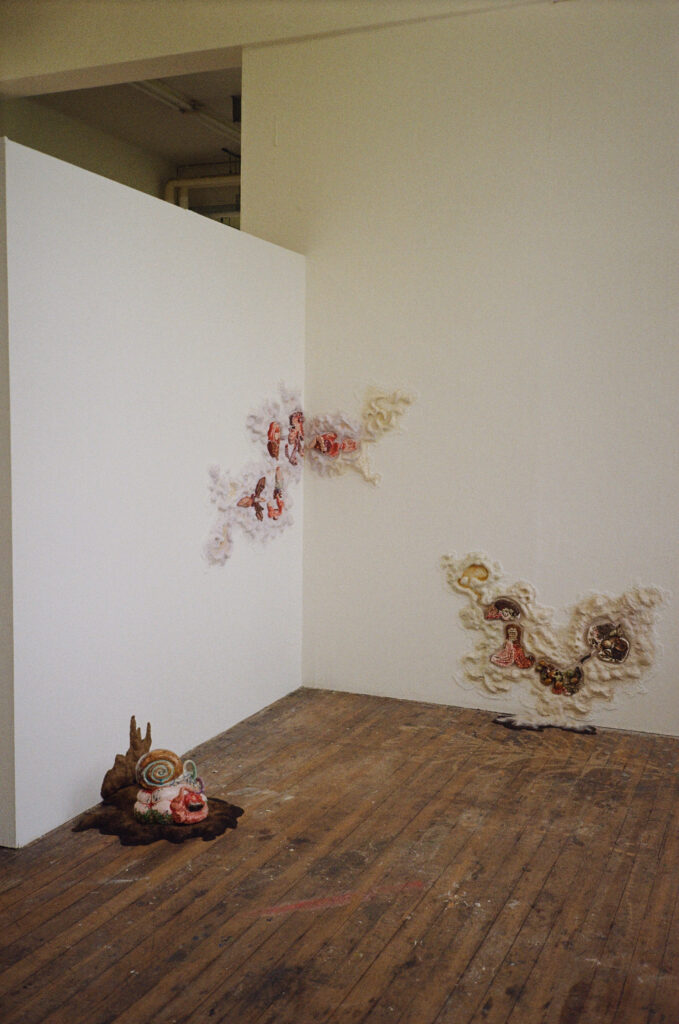
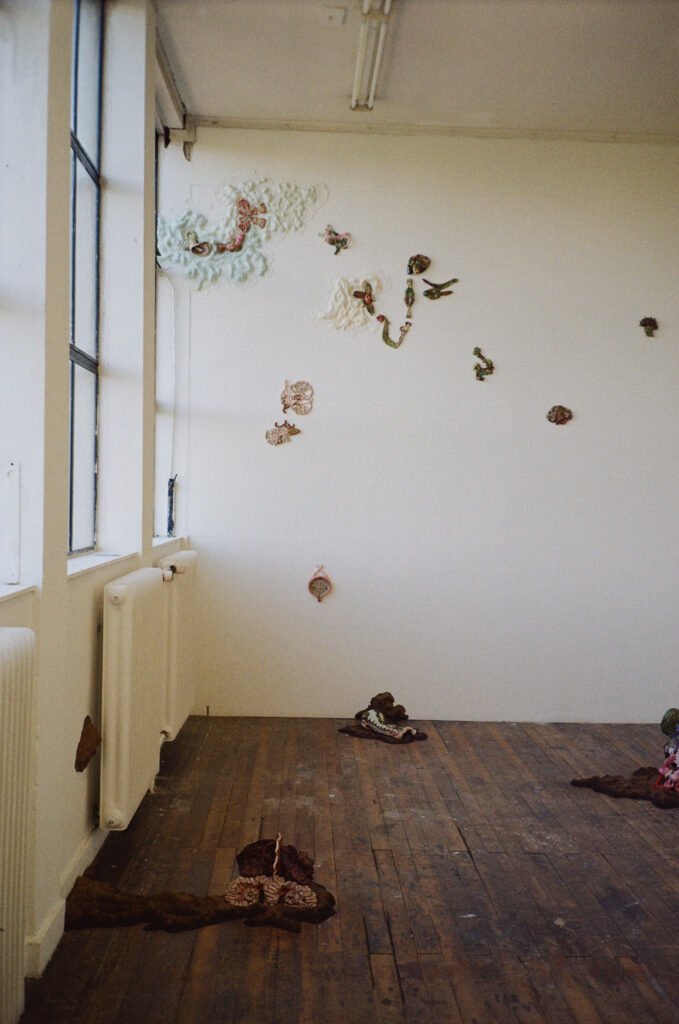
My work is titled Connective (T)issues, and it’s an installation consisting of ceramic sculptures, alongside materials like papier mâché, latex, and aluminum. The title alludes to its main subject, the internal organs of various bodies, both animal and human. Together they create these large hybrid body systems that spread across the room.
My main objective was to blur the line between the human and non-human aspects of nature, to signal this interconnection and interdependency, but also to point to shared concerns that all of those bodies face in the contemporary world. Each ceramic piece is based on a different bodily part, but I tried to make them appear ambiguous, so the viewer encounters something both familiar and alien, maybe recognizing part of themselves in it while also seeing something completely strange. Every sculpture can be read differently and hold multiple meanings, and each reading is influenced by how the installation unfolds in the space. I wanted it to invite revisiting, so parts you’ve already seen shift in meaning, as you reposition yourself in relation to the work.
How did you decide on the materials?
What I like about working with clay is that it has its own agency. As someone who’s a bit of a control freak, it forces me to step outside my comfort zone and let the material impact me, to be open to outcomes I’m not necessarily expecting. That also connects to the idea behind the work, because clay is fragile and organic. While working, I’m in this constant reciprocal relationship: I’m shaping the clay, but it also shapes the work in return.
The papier mâché was about signalling the connection between the work and the space. I wanted the impression that the work is emerging from the surface itself, taking its insides and bringing them outside. That’s also why I positioned all the sculptures directly on the floor rather than on pedestals, I wanted them to be married to the space.
What have you surprised yourself with, during the process?
Glazing the ceramics is always surprising. Even though I do a lot of test firings beforehand to see how different colors interact, you can never be a hundred percent sure what will come out of the kiln. But more generally, the final outcome of the work surprised me too. I was really just going with the flow, without a clear picture of how the elements would come together. I made each piece independently, then explored different connections between them. The final setup only came together after every component already existed.
What do you think your younger self would think of your work?
I think my younger self would be surprised that I’m working with sculpture right now. I was trained as a painter, and even when I started at KABK, I was mostly interested in two dimensional work. Three dimensional work felt unfamiliar, as I had no experience with it. It’s still fairly new to me, I’ve been working with this medium for about two years now, maybe a bit longer, though I didn’t take it seriously at first. It’s been nice to see how my painterly past still comes through in the current work. I can see it in the colors, in the detail.
What are you most proud of?
I’m mostly proud that I allowed myself to step out of my comfort zone and experiment with mediums I was a bit scared of. I opened up to unfamiliar processes and learned to work without a fixed outcome in mind, letting the work speak to me. Working more intuitively, noticing how the piece develops and what new choices I can make, rather than starting with a clear vision of how everything should come together.
Annabel Schipper – Photography – ‘Zonnesteek’
What is your graduation project about, and how did you experience these past four years?
‘Zonnesteek’ is about the transformation of grief, which I had to navigate after losing my mother. She was diagnosed terminally ill right when I started studying at KABK, so my entire time here became deeply intertwined with her sickness and, eventually, her passing. For me, this place saved me. It became my therapy. It taught me how to cope with sudden change, death, and very personal emotions. Through both this project and my trajectory at the Academy, I’ve learned how to work with these fears.
What role does material play in your work?
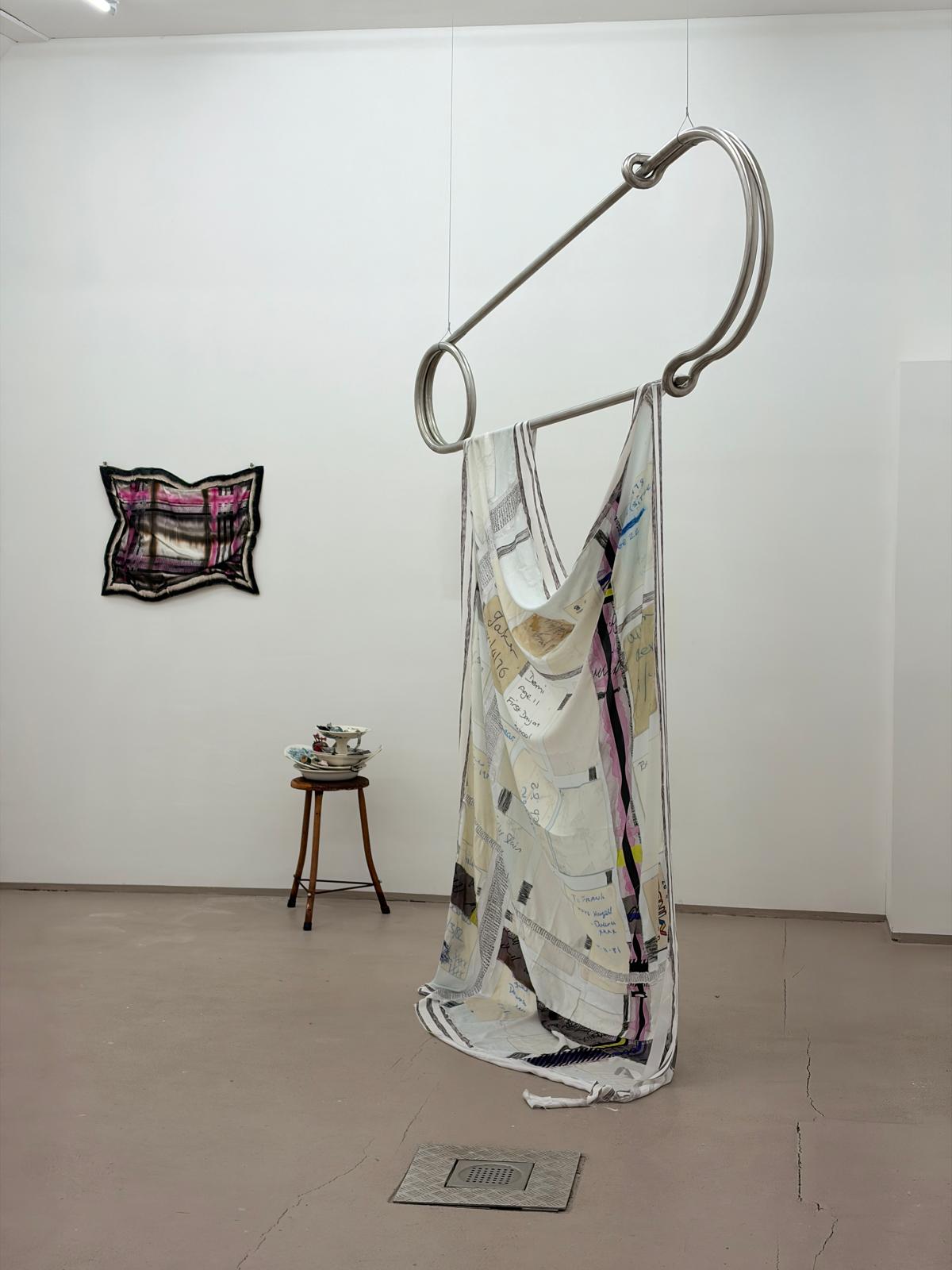
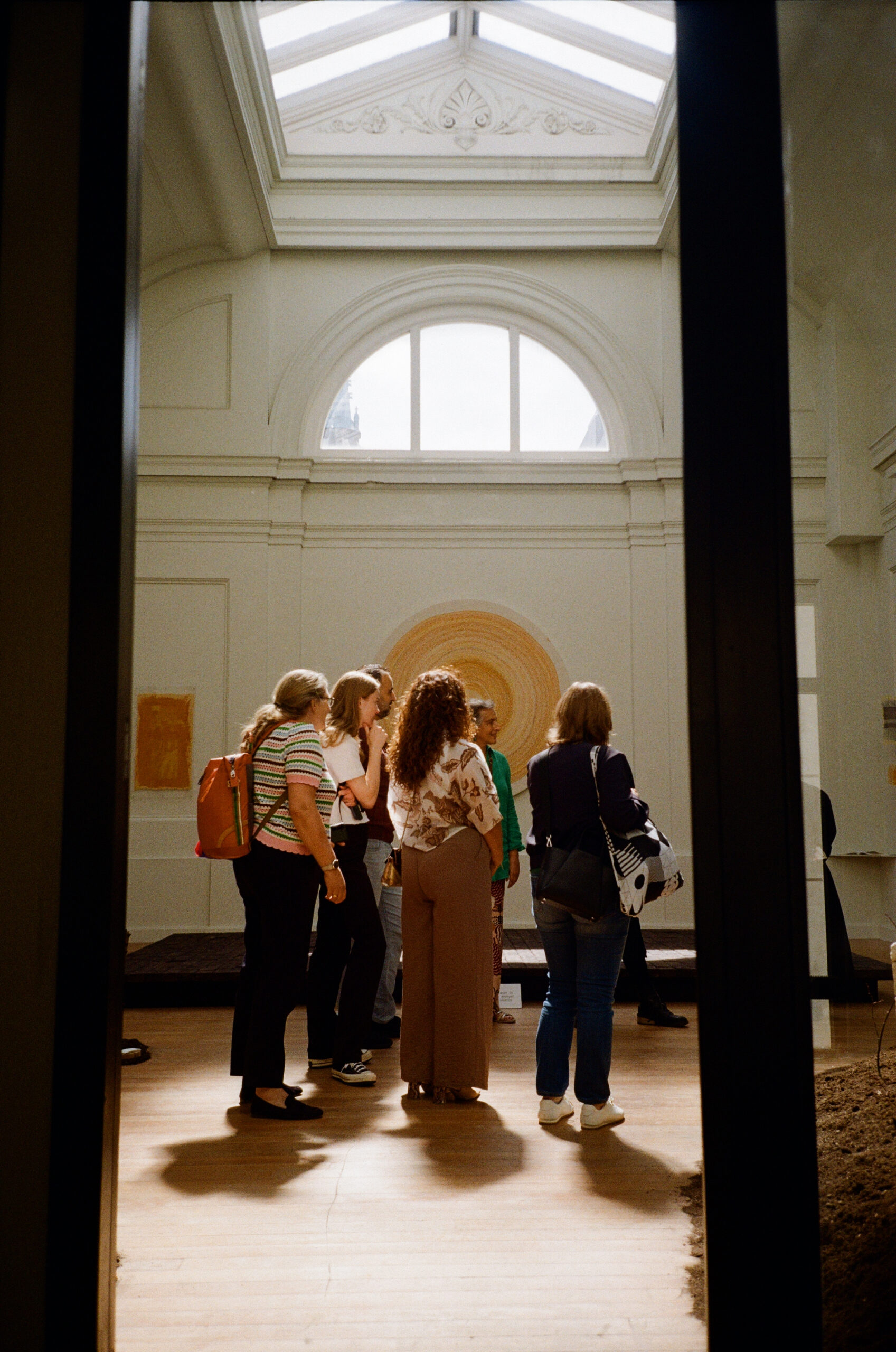
Especially in this project, but also in general I have always focused on material and tactility. For Zonnesteek, the fabrics that once had been clear, turned into cyanotyped photographs before I embroidered them back into my sun. In addition to physical material, nature and even smells trigger emotions in me as well. They’re very important to my work.
How do you think your younger self would look at your graduation work?
I think as a little girl I would be very intrigued by my embroidered Sun. I have always loved nature, animals, and horses. They’ve always been of comfort to me. I think I’d be proud of myself.
Any hobby that gave you a breather from working on such an intensive project?
Throughout my project I got into such a trance that working on the embroidery itself became a way to relax. I would get completely absorbed by it. Back when I still had my horses, spending time with them in nature both gave me rest and inspiration.
Retrospectively, what have you surprised yourself with over these past months?
As a photography student, I usually tried to visually depict my stories. But when it clicked that this project should take on a totally different format, with the threads and fabric, I’ve learned the importance of process, and the meticulous way of making which is exactly what this project revolved around, rather than the end result itself; The creation tells the story. Unlike hiding this away, I wanted to emphasise it; ‘I revisit the image, I digest the Image, I transform the Image.’
Have you taken a moment to think about what you’re most proud of, right now?
To me, this project feels very grounded. I feel at peace. I’m proud that I’ve been able to fully get back to my memories as written in my publication, which proved to be more difficult than I thought. ‘Zonnesteek’ is truly mine, and doesn’t feel like I’ve solely made it to graduate. I’m proud of how it’s on display here, in this gallery.
Roni(a) Johansson – Fine Arts – ‘Maintenance is maintenance is maintenance is maintenance’
Can you tell me about your project?
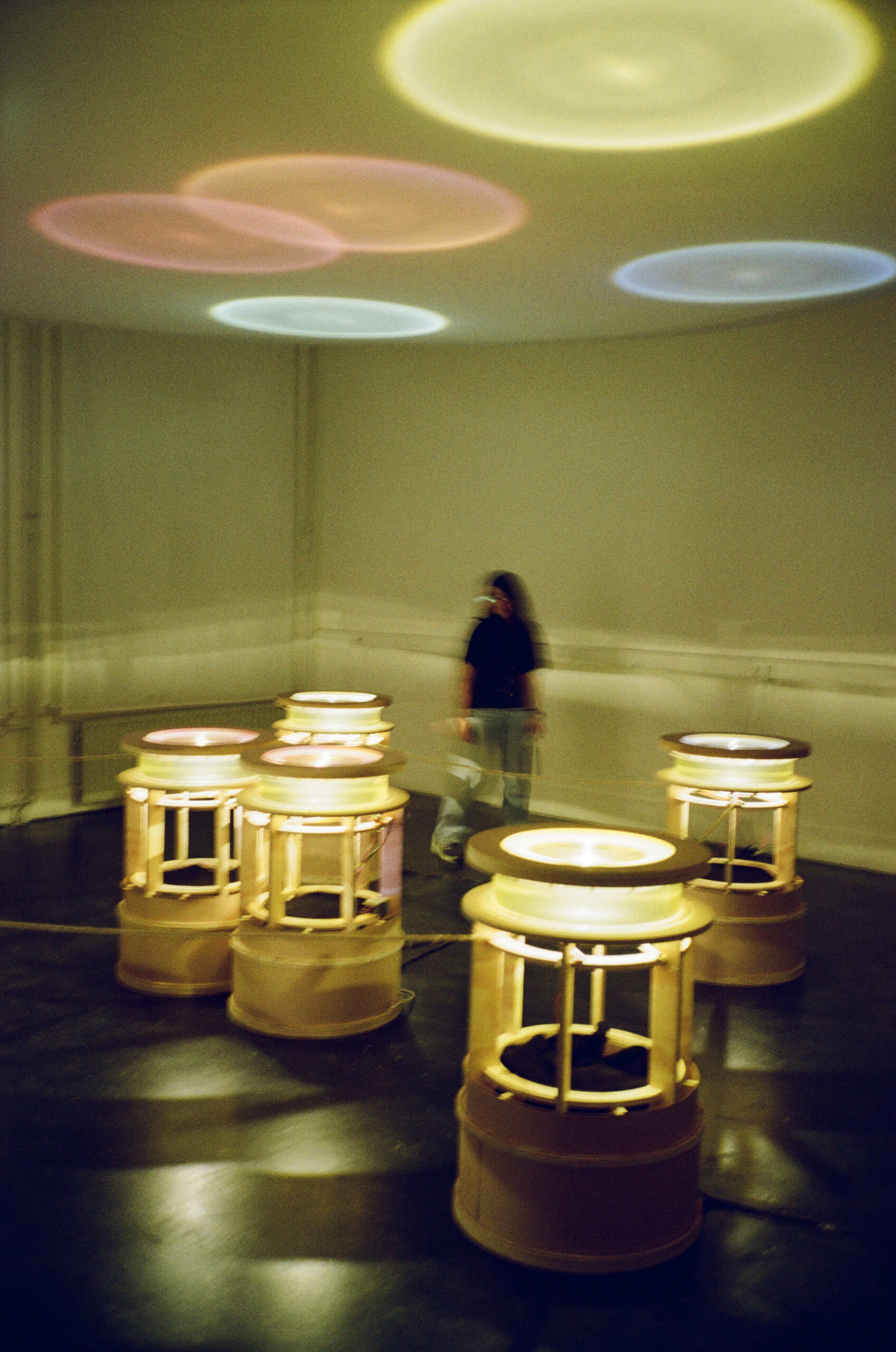
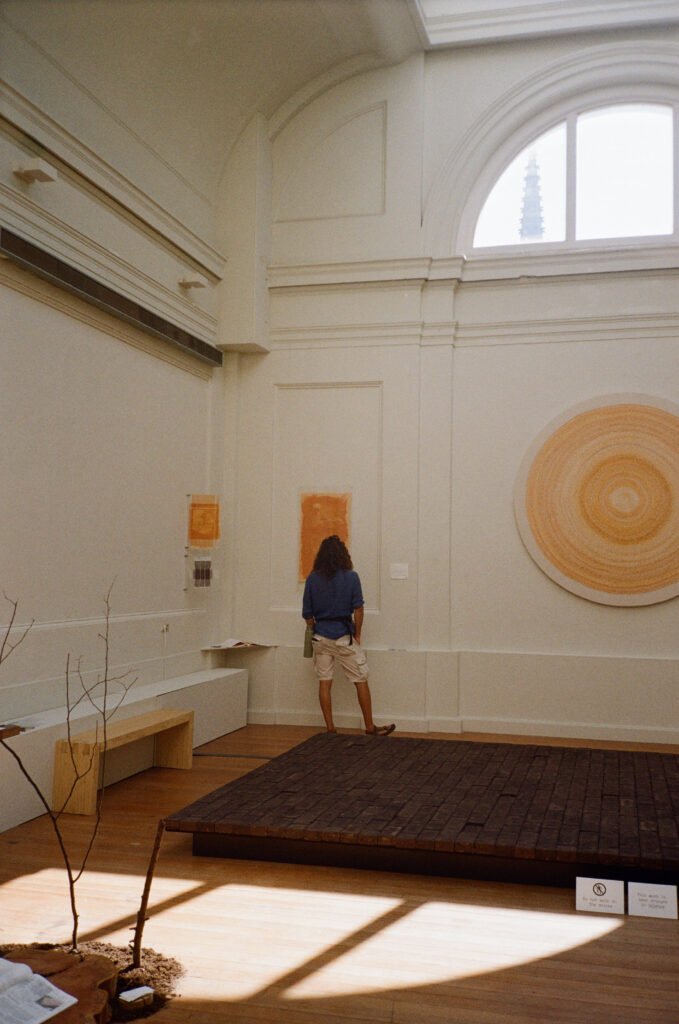
‘Maintenance is maintenance is maintenance is maintenance’ holds several threads that are central to the work. Maintenance being the main gesture, that’s how I’ve come to think about it. Care is another important aspect. All of it comes from the tension between dominant systems of time, productivity, and gender legibility, and the lived experiences that persist within or alongside these systems.
The labor and maintenance I’m interested in is labor that gets neutralized within these dominant systems. I’m interested in how labor is linked with care, and how relationships form through that. That’s how I use the whole installation, the sculptures, to create these bonds of care between me as a body and the work as a body. My work climates, in that sense, because everything in it affects everything else.
How did you come to choose these materials?
I use water as a thread specifically because it’s such a saturating material, it transfers onto everything, and it’s very sensorial too. So when I’m dressed in wet suits, it alters how I move through the space, and it alters how the audience uses their own bodies too.
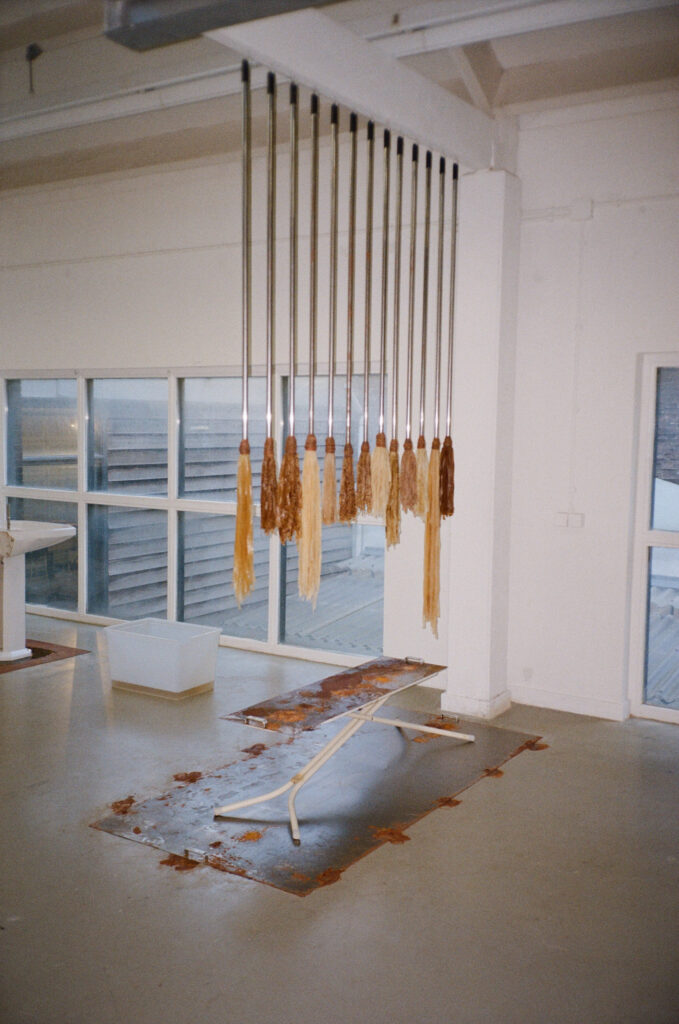
Most materials I’ve used are quite precarious, such as clay and latex. Both are affected by their surroundings: humidity, people touching them, water being added, and they affect each other in turn. They’re continuously changing. I don’t see that as just decay, though decay is definitely part of it. I think decay can be generative and transformative.
There’s something in the work that needs care, and that care creates labor, and the labor creates certain conditions, which then need care again. It’s cyclical. I also mix clear, industrial or domestic structures with more bodily, organic sculptures, to create that relationship as well.
What have you surprised yourself most with over the course of working on this project?
One fun thing a lot of people comment on are the suits. The suits I’ve used are all secondhand, so they carry dyed residue. As the water drips, chemicals from previous washes or maybe even traces from previous owners appear. I ended up really liking that, it wasn’t something I could have anticipated. My point in making the work is to create a context that requires labor itself. It’s not a representation of maintenance, the maintenance sparks from the context itself, which means there are always going to be surprises in how things actually affect each other.
The rusting on one particular plate was a real surprise. I’d put it on the ground, and there was vinegar trapped beneath it. When I lifted it, it had created this beautiful pattern I never would have gotten if I hadn’t accidentally left it there. There’s a lot of that transformative, surprising quality throughout the work.
Have you taken a moment to consider what you’re most proud of?
I think it’s put a lot of things into perspective, learning about the value of care. I was interested in care before I even understood that I myself, perhaps, needed care too. I’ve come to realize that the things I’m interested in in my work are often things I’m either lacking, or have too much of, in my own life.