Some collectives arrive with a bang, and then there are the ones that slowly become part of the fabric around them. No big launch campaign, no overly polished manifesto, just people continuously showing up for one another, throwing things together, experimenting, building, and inviting others in. Then one day you look around and realise something has taken shape. Kurashi feels like one of those.
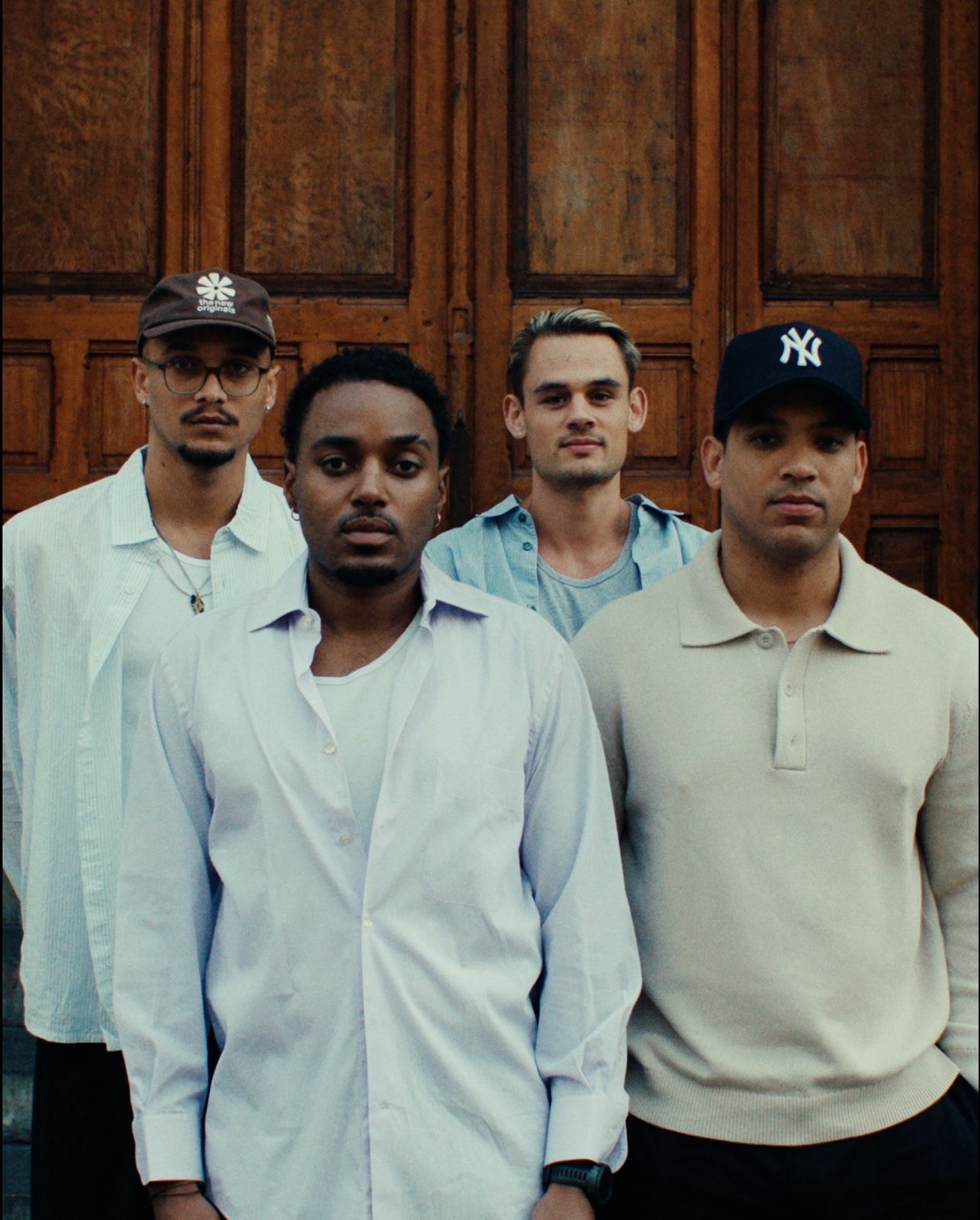
Founded by six friends, Lennert, Malik, Jack, Karel, Daniël, and Pablo, the Amsterdam and Curaçao based crew started, as many of the best things do, out of boredom. COVID hit, everyone was stuck, and two of them decided to design a shirt. That shirt became a launch party, the launch party became a series of club nights, and somewhere along the way a clothing brand called Kurashi merged with a DJ crew called DJ Airhorn and became Kurashi Soundsystem. Four years, countless events, an Echobox radio show, clothing collections, and nights at venues from Skatecafé to Sissi’s, they are now taking over Paradiso.
The name says everything about the way they move. Kurashi means courage in Papiamentu, a word pulled from a dictionary that immediately felt right. Strong in meaning, rooted in the islands, simple enough to travel everywhere else. That spirit has become the foundation of everything they do: stepping out, trusting instinct, trying things beyond the comfort zone, and doing it all with intention.
What makes Kurashi feel special is that it has never only been about music. Their world stretches through fashion, food, sound, set design, radio, and community building, all tied together by a deep connection to Caribbean culture and the wider diaspora. Salsa melts into bubbling, soca crashes into jungle, tambú slips into UK garage, and somehow it all makes perfect sense. Not because the genres are the same, but because the energy behind them is.
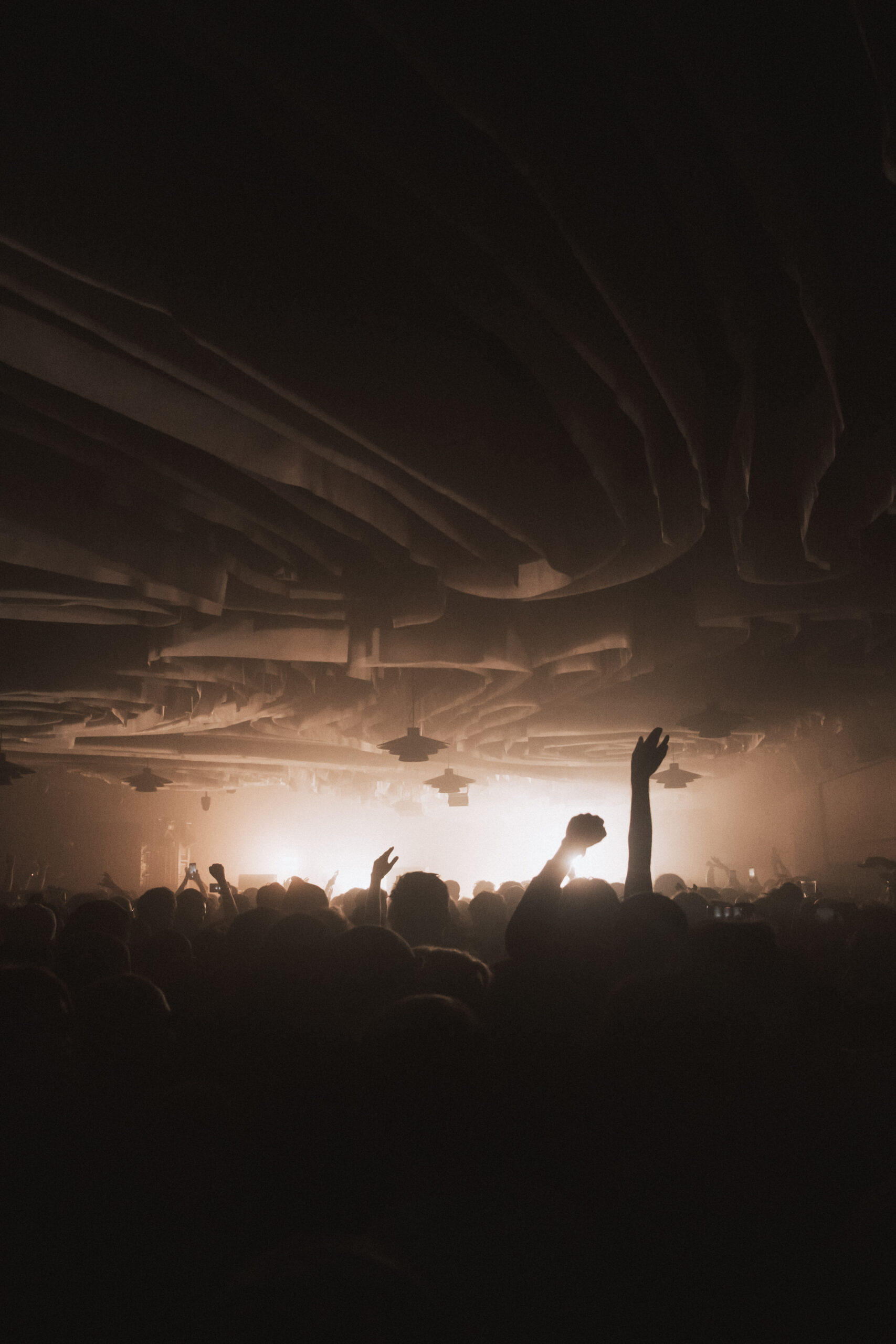
On May 23rd, they bring that entire universe to Paradiso for the first time. A face to face DJ setup. A live band. Hybrid performances. A basement room curated by Caribbean DJs. Four years of building towards one night that feels less like a booking and more like a culmination. Not just a party, but proof of what can happen when people keep betting on each other long enough for the vision to become tangible.
We sat down with the collective ahead of the night to talk about friendship, courage, club culture, and building a little piece of paradise inside Amsterdam nightlife.
Awa: How are you all doing today?
Kurashi: Marvelous – Masha bon mes!
Kurashi was founded by a group of friends and family. How did the idea of turning that into a collective actually happen? Was there a specific moment, or did it just grow naturally?
We started DJing during COVID out of pure boredom. Then, right after the lockdown ended, Dani and Karel designed a shirt as the first item of what was supposed to be a clothing brand. They asked the rest of us to DJ at their launch party, which escalated into a full-on party and sparked a series of club nights. Shortly after that first event, we decided to build everything together to amplify each other.
The idea of turning into a collective arose at the block party. Two guys who wanted to start a clothing brand called “Kurashi” joined forces with a new DJ group called “DJ-Airhorn”, and that’s how “Kurashi Soundsystem” was born.
What is it like to work together as a collective, and how do you navigate the natural tensions that come with building something with people you are also close to?
We talk a lot! We have been doing weekly meetings since the start (almost 4 years now), where we discuss business and life, and never shy away from a good discussion. Sometimes we spend hours discussing the tiniest decisions to make sure we are on the same page. Often exhausting but always worth it. By doing this, we’ve learned to communicate and hear each other out.
Why Kurashi? Where does the name come from and what does it mean to you?
Kurashi means courage in Papiamentu, and it defines our attitude towards everything we do: stepping out, staying true to ourselves, trying things outside our comfort zone, and doing so with confidence.
The word came from a Papiamentu dictionary. We knew we wanted the brand name to be in Papiamentu, and as soon as we saw “Kurashi”, we knew it was the one. It had a strong meaning, was commonly used on the islands, and was easy to pronounce in most languages.
The collective has roots in both Curaçao and Amsterdam. How do those two places live inside what you make and the events you put on?
Musically, we draw a lot from Curacao and the Caribbean more broadly, but the way in which we organize our events also taps into the electronic music scene here in Amsterdam. With the venues at which we organize and the way we present the music, we try to bridge the two worlds to spark an exchange between people from the Caribbean community, the broader international diaspora in Amsterdam, and native Amsterdammers.
Your sound travels through salsa, bubbling, baile funk, dembow, soca, tambú, tumba, jungle, drum and bass, UKG and beyond. Is there a thread connecting all of those sounds for you, or is the whole point that there does not need to be one?
The connection between all these genres is that they arose from specific subcultures around the world. The idea with Kurashi is to provide a platform for these cultures and show that they can be played as club music here.
You bring food, fashion, and community into your events, not just music. Why has it always been important to you that it is more than a party?
Presenting music is about representing culture. The context matters a lot. Making sure the right people are there who have a connection with the cultures you play is the first step. And then everything else, the food, the fashion, the set design are all different cultural expressions that make the experience of coming to a Kurashi event more immersive and memorable.
What makes Amsterdam special to you as a city, and what does it give you that you could not find elsewhere?
Despite being small, Amsterdam is very diverse. This makes it easy to connect with many different kinds of people. We’ve worked together with amazing musicians and DJs from Brazil, Ghana, Suriname, the Dominican Republic, to name a few. In any other city, it would be hard to build up such a diverse network through our own organic connections.
Amsterdam has a lot going on culturally, but Caribbean music and culture do not always get the space it deserves in the city’s mainstream venues. Do you feel that is changing?
The representation is definitely improving. Since COVID ended, many DJs playing Caribbean music have grown alongside us and venues like Skatecafé and Kanaal40 (RIP) have played a big role in pushing the sound to a broader audience. While we think Caribbean music definitely deserves its spot in venues like Paradiso (and it has with parties like Jamrock), it’s up to collectives like ours to bring our community along. That’s what we hope to do on the 23rd.
Paradiso on May 23rd is a big moment. What does it mean to you to take over a venue like that, and how are you approaching it differently from a regular Kurashi night?
Paradiso feels like a huge milestone, and we’re treating it as a moment to stand still, look back at what we’ve achieved over the past 4 years, and think about what’s next. The event will have all the elements that we’ve picked up over the years, Caribbean & Latin music, live & DJ sets, rave energy & sexiness, wrapped up into one night. At the same time, the lineup, stage design and documentation are being done at a more professional level than ever before. If it goes well, this event could hopefully be the blueprint for many more in legendary places like Paradiso.
We are about a week out from Paradiso. Take us behind the scenes. What is going smoothly and where are you betting on a miracle?
Well, Paradiso being a concert venue first means that we have very little time to build up between the end of the concert and the start of our program. Since we put together quite a challenging production with a live band, a hybrid performance and a face-to-face DJ setup, I think we’re all a bit nervous to see if we can pull it off. But we’ve put together a good plan and have enlisted the help of some extra people so we’re sure we can make it work.
The face-to-face DJ setup is a specific choice. What does that format do for the energy of a night that a standard setup does not?
The setup brings out a playful energy and pulls the crowd into the conversation between the two DJs. While it may look like a battle, it’s really about listening and understanding each other. Unlike a regular B2B, where both DJs face the crowd, a F2F makes you feel part of the exchange as you watch them go back and forth. The focus shifts away from a single DJ and towards the chemistry and teamwork between the two.
Club culture has shifted a lot in recent years, in terms of who gets to take up space, what sounds get platformed, and what people are actually looking for when they walk through a door. Where do you think it is heading and where does Kurashi sit in that conversation?
Because of social media it has become a lot easier for specific cultures and trends to reach a large audience, so people have a strong idea of what they like and don’t like these days. That can be fun, because everyone might know a song already and go crazy when they hear it in the club. But on the other hand it also means people sometimes come to a party with fixed expectations and are less open to new things. We believe it’s important to try not to cater too much to what you think people want to hear, and stick to what feels genuine and what makes us most excited, and to create space to present that music in the right way.
When people leave a Kurashi night, how do you want them to feel?
Sweaty, satisfied and very sexy. We want our parties to make people feel connected to each other, whether they come from Caribbean and Latin cultures or are discovering them for the first time.
Curaçao sits at the intersection of Portuguese, Spanish, Dutch and English influences. That mix naturally shapes how we move, listen and connect. Through our events, we want to bring these cultures closer together, showing their differences while celebrating the rhythms, energy and similarities they share.
One thing you are done gatekeeping and one thing you are holding on to a little longer.
We don’t gatekeep. If Kurashi’s philosophy helps other people grow, we only encourage that. The Caribbean is too small to hold each other back, and the world is big enough to host all of us. Kurashi is for the people, not for a select few.
Kurashi Soundsystem is taking over Paradiso on May 23rd.